
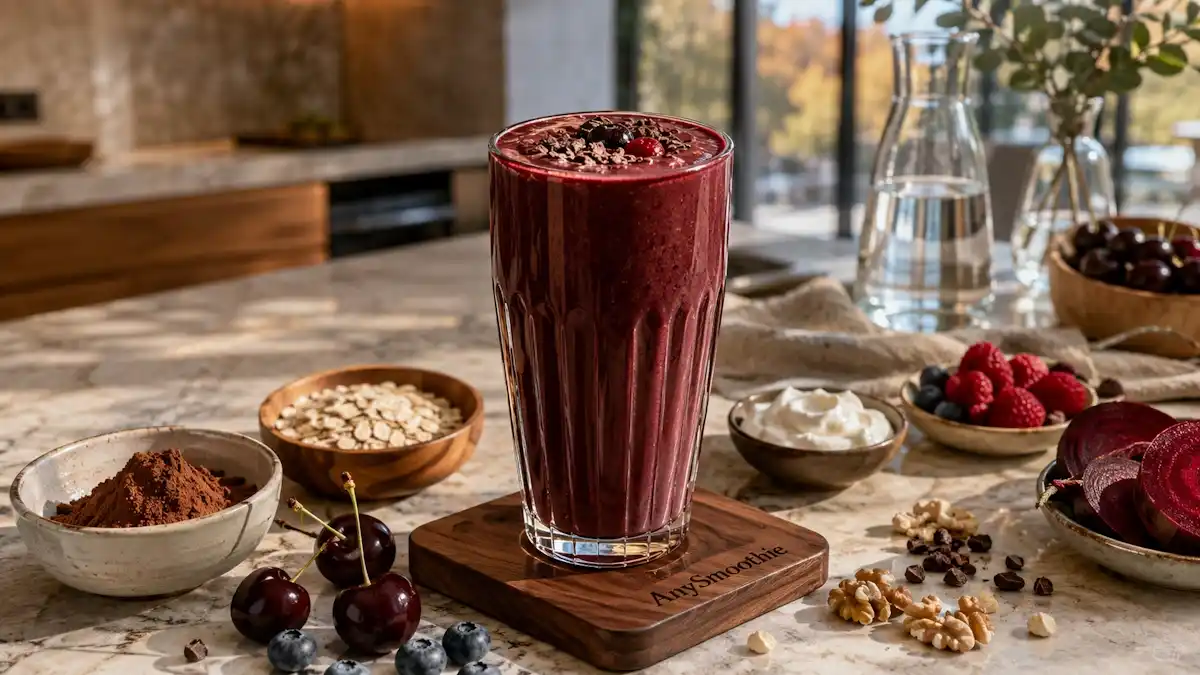
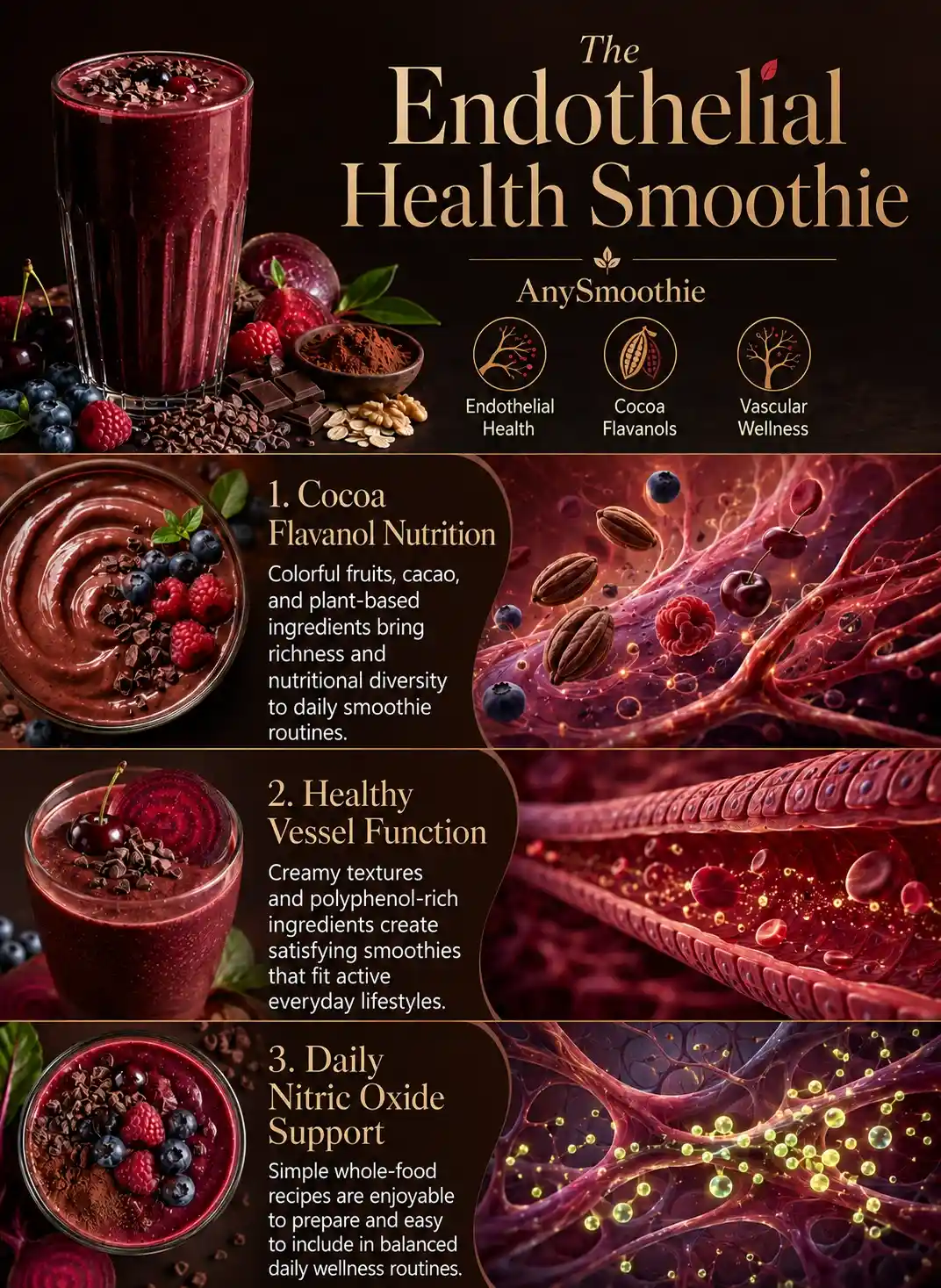
Cocoa flavanols are natural plant compounds found in cacao, and they matter because the endothelium helps regulate blood vessel tone and blood flow. When that lining works well, vessels stay responsive to everyday demands like movement, meals, and stress.
That makes smoothies a useful place to start. Cocoa flavanol smoothies for endothelial health can fit a simple routine without turning breakfast into a science project.
This guide keeps the focus on practical choices, from cocoa quality to smart pairings. You’ll see what the endothelium does, how cocoa flavanols may support nitric oxide pathways, and which smoothie builds are worth repeating.
How cocoa flavanols support endothelial health
The endothelium is the thin layer of cells that lines your blood vessels. It helps vessels widen or narrow, and it also helps manage the exchange between blood and tissues. When that layer responds well, circulation stays flexible instead of stiff.
Cocoa flavanols, especially compounds like epicatechin, are studied for their role in supporting nitric oxide production and antioxidant defense. Nitric oxide helps blood vessels relax, which is one reason cocoa gets attention in vascular nutrition. A review on cocoa flavanols and vascular nitric oxide explains this relationship in more detail.
What the endothelium does in the body
Think of the endothelium as a control surface inside your arteries. It helps blood vessels respond when you walk uphill, eat a meal, or move from rest to exercise. It also helps guide signals that affect circulation.
That flexibility matters in everyday life. A responsive vessel network can adapt more smoothly to changing needs, instead of staying tight and sluggish. You do not need a dramatic intervention to support that system. Small dietary patterns matter.
Why cocoa flavanols are different from regular chocolate ingredients
Not all cocoa products bring the same flavanol load. Unsweetened cocoa powder and cacao powder usually keep more of the compounds people want, while heavily processed chocolate products often come with more sugar and less of the useful plant chemistry.
Processing matters too. Alkalizing, also called Dutch processing, can soften flavor but reduce flavanol content.
Cocoa that has been alkalized often tastes smoother, but it usually gives up some flavanols.
That does not make every chocolate drink off-limits. It does mean the label matters more than the brand name.
How to build cocoa flavanol smoothies that actually work
A strong cocoa smoothie starts with the right base, then stays balanced. If you want a broader framework for texture and structure, the beginner guide to making smoothies at home covers the basics well. For this topic, the goal is simple, unsweetened, and steady.
Here’s a quick comparison of common ingredients and how they fit.
| Ingredient | Why it helps | Flavanol impact | Best use | Watch out |
|---|---|---|---|---|
| Unsweetened cocoa powder | Gives the main cocoa flavanols and deep flavor | High, if minimally processed | Base ingredient | Alkalized or sweetened versions |
| Berries | Add polyphenols, acidity, and color | Neutral | Bright, antioxidant-rich smoothies | Too much juice or syrup |
| Greek yogurt or kefir | Adds protein and creaminess | Neutral | Breakfast or post-workout | Added sugar or dairy issues |
| Chia or flax | Adds fiber and body | Neutral | Thicker, more filling blends | Too much can get gloopy |
| Nut butter | Adds fat and smooth texture | Neutral | Creamier smoothies | Portion size can creep up |
The pattern is clear. Cocoa carries the flavanols, while the other ingredients shape taste, texture, and satiety.
Choose the right cocoa base
Look for unsweetened cocoa powder or cacao powder with a short ingredient list. The taste should be rich and slightly bitter, not candy-like. A teaspoon or two can be enough if the rest of the blend is built well.
For many people, a little cocoa goes a long way. That keeps the drink pleasant without burying the flavor under sweeteners.
Balance flavor, fiber, and fats without overpowering the cocoa
Berries give cocoa a sharp, clean edge. Banana makes the drink smoother and helps with sweetness. Yogurt or kefir adds protein and tang, while chia, flax, or oats make the smoothie more filling.
A little fat also helps with mouthfeel. Nut butter works well, as does a small amount of avocado. Keep the portion modest, though, because rich add-ins can crowd out the cocoa flavor fast. A cocoa smoothie should still taste like cocoa.
Common mistakes that lower the value of the smoothie
Sweetened cocoa mixes are the biggest trap. Syrups, flavored creamers, and dessert-style add-ins can turn a focused smoothie into a sugar bomb. Large portions can do the same.
Caffeine sensitivity matters too. Cocoa has less caffeine than coffee, but some people still feel it. Digestion matters as well, especially if you use a lot of dairy or fiber at once. A cocoa flavanol and cardiovascular health review also highlights how flavanol-rich cocoa behaves differently from heavily processed chocolate products.
3 Cocoa flavanol smoothies for endothelial health
These three blends keep the cocoa flavor clear while changing the texture and fruit profile.
Berry Cocoa Smoothie for a Bright, Antioxidant-Rich Start
Ingredients
- 1 cup mixed berries
- 1 tablespoon unsweetened cocoa powder
- 3/4 cup plain kefir or Greek yogurt
- 1/2 cup unsweetened milk
- 1 teaspoon chia seeds
Blend until smooth and creamy.
The berries bring tartness and color, while the cocoa adds depth. This combo fits well when you want a polyphenol-rich breakfast that still feels light.
Estimated Nutrition per Serving
Estimated with mixed berries, unsweetened cocoa, plain low-fat kefir, unsweetened soy milk, and chia seeds.
- Calories: ~330 kcal
- Protein: ~18 g
- Carbohydrates: ~47 g
- Fat: ~9 g
- Fiber: ~12 g
- Sugars: ~27 g
Creamy Banana Cocoa Smoothie for an Easy Daily Habit
Ingredients
- 1 medium banana
- 1 tablespoon unsweetened cocoa powder
- 3/4 cup plain Greek yogurt
- 1 tablespoon almond butter
- 1/2–3/4 cup milk or soy milk
Blend until creamy.
This version works well after a workout or on a busy morning. Banana gives natural sweetness, yogurt adds protein, and almond butter keeps the texture smooth without a lot of added sugar.
Estimated Nutrition per Serving
Estimated with one medium banana, unsweetened cocoa, plain nonfat Greek yogurt, almond butter, and 1/2 cup 2% milk.
- Calories: ~450 kcal
- Protein: ~29 g
- Carbohydrates: ~52 g
- Fat: ~17 g
- Fiber: ~7 g
- Sugars: ~31 g
The ripeness of the banana makes a noticeable difference here: a heavily spotted banana gives the cocoa a sweeter, almost dessert-like finish, while a firmer banana keeps the flavor less sweet and more breakfast-like.
Green Cocoa Smoothie for a More Nutrient-Dense Blend
Ingredients
- 1 cup unsweetened milk or soy milk
- 1 packed cup spinach
- 1/2 frozen banana
- 1 tablespoon unsweetened cocoa powder
- 1 tablespoon ground flaxseed
Blend until completely smooth.
Spinach stays in the background, so the cocoa flavor still comes through. This is a good choice when you want more micronutrients without turning the drink into a salad in a glass.
Estimated Nutrition per Serving
Estimated with unsweetened soy milk, spinach, half a medium frozen banana, unsweetened cocoa, and ground flaxseed.
- Calories: ~260 kcal
- Protein: ~13 g
- Carbohydrates: ~30 g
- Fat: ~11 g
- Fiber: ~9 g
- Sugars: ~11 g
For the smoothest green-cocoa texture, blend the spinach with the soy milk before adding the frozen banana, cocoa, and flax. That extra first pass helps the greens disappear into the drink instead of leaving small leafy pieces behind.
Making cocoa flavanol smoothies part of your daily routine
Use these smoothies as part of a larger pattern, not as a shortcut. They make sense at breakfast, after a walk, or as a midmorning meal when you need something steady. A 12 to 16 ounce serving is plenty for most people.
Two to four times per week is a realistic rhythm for many homes. Pair the smoothie with sleep, movement, hydration, and a diet built around whole foods. If you want a morning blend that also supports steady energy, the energy-boosting smoothie formula is a useful companion idea.
Conclusion
Cocoa flavanol smoothies can be an easy, enjoyable way to support endothelial health when the ingredients are chosen with care. The best versions keep cocoa unsweetened, add fiber and protein, and avoid turning the glass into a dessert.
Start with one recipe, keep added sugar low, and adjust for your taste and tolerance. That simple habit can fit neatly into a heart-friendly routine.

Medical Disclaimer: AnySmoothie content is for educational purposes only and is not a substitute for professional medical advice. Consult a healthcare provider for personalized guidance. See our full Disclaimer & Terms of Use. AI Transparency: AnySmoothie may use AI to support content development. All content undergoes human editorial review for accuracy, clarity, and editorial quality. See our full AI Transparency.