

Tissue hydration is about keeping water available where your body uses it most, in skin, joints, connective tissue, and recovery after effort. When that balance stays steady, tissues feel cushioned and less dry.
Hyaluronic acid helps bind water, so it fits naturally into a hydration-focused routine. Cleveland Clinic’s hyaluronic acid overview notes that it helps keep tissues hydrated and joints lubricated. Smoothies can support that routine by adding fluids, minerals, and protein, but they don’t replace medical care. This guide shows how it works, what to add, and three smoothie ideas you can use right away.
What hyaluronic acid does in the body, and why hydration support matters
Hyaluronic acid is a water-binding molecule found in skin, joints, eyes, and connective tissue. It helps create a moist, cushioned environment where tissue can move and hold shape.
Why water alone is not the whole story
Fluid balance depends on more than plain water. Electrolytes help move fluid, carbs help the body hold onto it, and total food intake shapes how steady that balance feels. A smoothie can bring those parts together in one glass.
If you want a more workout-ready version, smoothies for active lifestyles has a useful fluid-first template.
Where hyaluronic acid fits in tissue health
Hyaluronic acid sits in the spaces around cells, where it helps bind water and support a slippery, moist environment. That is one reason oral hyaluronic acid has been studied in relation to skin hydration. A PubMed Central review on oral hyaluronic acid looked at skin hydration changes over 2 to 8 weeks.
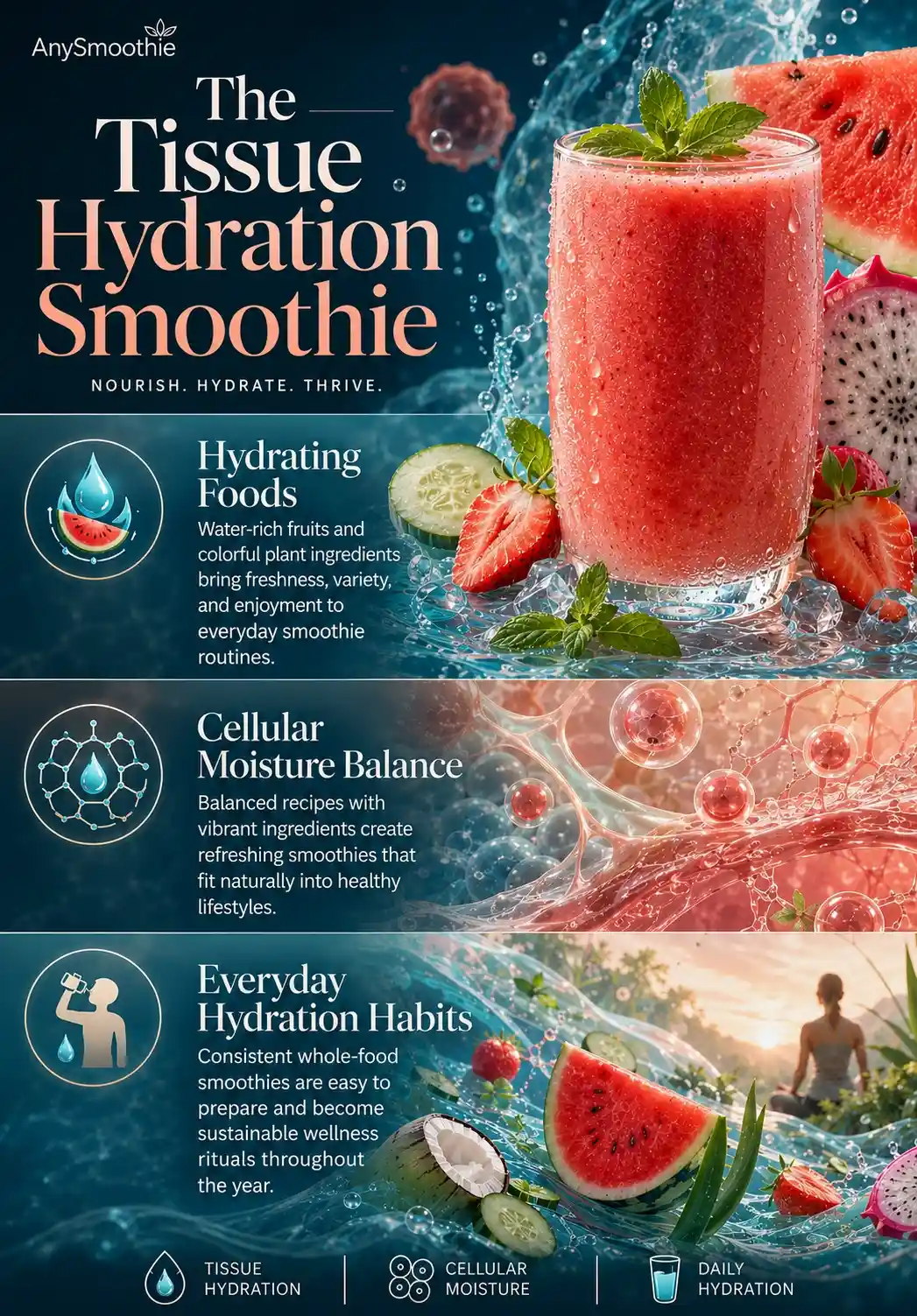
Who may be interested in this approach
Active people, busy adults, and anyone who wants a simple hydration habit may like this format. It works well when breakfast feels rushed, lunch is light, or post-workout hunger hits before a full meal. For mornings when dryness is part of the problem, smoothies for hydration and comfort offer a softer starting point.
What to put in hyaluronic acid smoothies for better hydration support
A good smoothie starts with a fluid base, then adds fruit or greens, then finishes with protein, fat, or fiber. The supplement comes last, after the label is clear and the blend is right.
| Ingredient | Main role | Hydration support | Taste | Best use |
|---|---|---|---|---|
| Water | Thin base | Keeps the smoothie light | Neutral | Quick daily blends |
| Coconut water | Electrolyte base | Adds potassium and fluid | Mildly sweet | After heat or workouts |
| Kefir or yogurt | Protein and texture | Adds body and a little fluid | Tangy and creamy | Breakfast or recovery |
| Milk | Protein-rich base | Makes a fuller smoothie | Soft and smooth | When you need staying power |
| Spinach or cucumber | Water-rich produce | Adds volume with few calories | Fresh and mild | Everyday green blends |
| Chia or flax | Fiber and gel texture | Slows the drink down a bit | Almost neutral | When you want more balance |
The best choice depends on how light or filling you want the drink to feel.
Hydration-friendly bases and liquids
Water keeps the blend clean and light. Coconut water adds a little sweetness and a better electrolyte profile. Kefir and yogurt bring protein and a tangy edge. Milk gives the most staying power, while unsweetened plant milks stay mild and easy to mix.
Fruits, greens, and add-ins that support fluid balance
Berries add flavor and color without making the drink heavy. Cucumber brings water and a cool taste. Citrus brightens the mix and keeps sweet fruit in check. Spinach blends in easily. Avocado, chia, flax, and yogurt add texture, fat, or fiber, so the smoothie feels more like food than juice.
How to add hyaluronic acid the right way
Use a form meant for oral use, and follow the label. Powder is usually the easiest option for smoothies, but capsules and blends still need a clear dose and source. Look for third-party testing when possible, plus simple ingredient lists and directions that make sense.
3 Hyaluronic acid smoothies for tissue hydration
Each of these blends supports hydration in a different way. One feels bright and light, one is creamy and filling, and one is built for recovery after training. Use the hyaluronic acid product according to its instructions.
How to make these smoothies work in real life
Timing matters less than consistency. Breakfast is easy for most people. Between meals works when you want a lighter snack. After activity is useful when you need fluids and carbs together.
How to keep the texture and flavor balanced
Start with enough liquid to keep the blender moving. If the drink gets too thick, add water or coconut water. If it tastes too sweet, pull back on banana or juice and add cucumber or spinach. If it feels flat, a little citrus or a small pinch of salt can sharpen the flavor.
Common mistakes to avoid
Too much sugar can turn a hydration drink into dessert. Skipping protein or fat can make the smoothie wear off fast. Ignoring the label can lead to the wrong dose or the wrong form. Expecting instant changes can also set you up for disappointment. Small, steady habits usually work better than a perfect recipe.
Conclusion
Hyaluronic acid smoothies can fit neatly into a practical hydration routine. They work best when you pair them with a smart base, water-rich produce, and a product meant for oral use.
The bigger pattern matters most. Tissue hydration comes from what you do across the whole day, not one quick fix. Start with one of the three blends, adjust the taste and texture, and make it something you actually want to drink again.
🛡️ Safety Notes & Dietary Interactions
- Product Selection: Choose an oral hyaluronic acid supplement from a reputable manufacturer with transparent ingredient lists, third-party quality testing when available, and clear serving recommendations designed specifically for dietary use rather than topical application.
- Recommended Serving: Follow the dosage provided on the product label instead of increasing the amount on your own. Pairing the supplement with a balanced smoothie and consistent hydration habits is generally a more practical approach than using larger servings.
- Medical Considerations: If you are pregnant, nursing, taking prescription medications, or managing an ongoing health condition, consult a qualified healthcare professional before introducing hyaluronic acid supplements into your regular wellness routine.
- Daily Hydration: Hyaluronic acid supplements work best as part of an overall hydration strategy that includes adequate fluid intake, balanced nutrition, and healthy lifestyle habits. A smoothie complements these practices but does not replace proper hydration throughout the day.
FAQ
What is hyaluronic acid and why do people add it to smoothies?
Hyaluronic acid is a naturally occurring molecule found throughout the body, especially in the skin, joints, eyes, and connective tissues, where it helps retain water and maintain normal tissue hydration. Many people add oral hyaluronic acid powder to smoothies because it blends easily into everyday recipes, making supplementation convenient while combining it with fluids, protein, and nutrient-rich ingredients.
What ingredients work best in a hyaluronic acid hydration smoothie?
Hydration-focused smoothies pair well with coconut water, berries, cucumber, spinach, citrus fruits, yogurt, kefir, chia seeds, flaxseed, and avocado. Together, these ingredients provide fluids, electrolytes, protein, healthy fats, fiber, and minerals that create a balanced smoothie while supporting an overall hydration-focused eating pattern that is practical to maintain every day.
Can I drink a hyaluronic acid smoothie every day?
Many people choose to include hyaluronic acid smoothies as part of their everyday wellness routine by following the serving recommendations provided with their supplement. Consistent hydration, balanced meals, regular physical activity, and selecting a high-quality oral product generally contribute more to long-term habits than increasing the amount used in each smoothie.
Does hyaluronic acid powder affect the taste or texture of smoothies?
Most oral hyaluronic acid powders have a neutral or very mild flavor, making them easy to incorporate into fruit smoothies without noticeably changing the taste. Ingredients like berries, banana, pineapple, yogurt, coconut water, or citrus fruits usually create a smooth texture while naturally masking any subtle differences introduced by the supplement.
Who should speak with a healthcare professional before taking hyaluronic acid supplements?
People who are pregnant, nursing, taking prescription medications, preparing for surgery, or living with ongoing medical conditions should discuss oral hyaluronic acid supplements with a qualified healthcare professional before regular use. This helps ensure the supplement fits appropriately within their overall health plan, nutrition routine, and individual medical circumstances.

Medical Disclaimer: AnySmoothie content is for educational purposes only and is not a substitute for professional medical advice. Consult a healthcare provider for personalized guidance. See our full Disclaimer & Terms of Use. AI Transparency: AnySmoothie may use AI to support content development. All content undergoes human editorial review for accuracy, clarity, and editorial quality. See our full AI Transparency.