
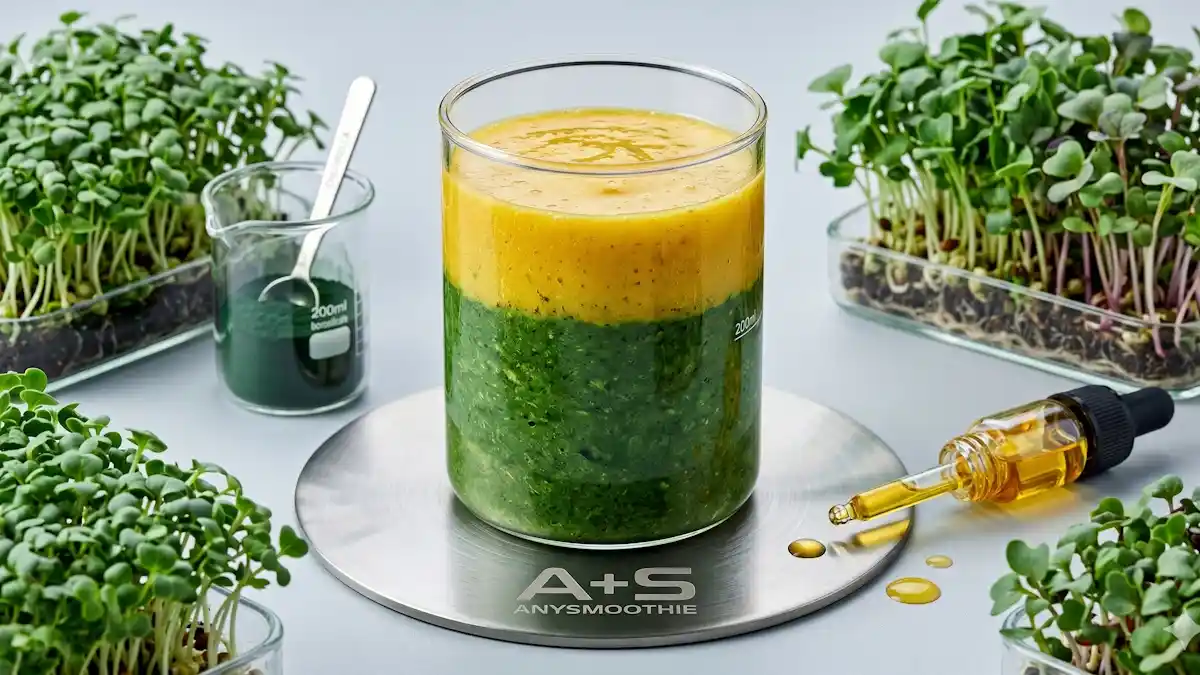
A smoothie for high-density nutrient flux is a drink built to move useful nutrients fast, in a form your body can use. The goal is not just calories. It is efficient delivery of micronutrients, fats, fiber, and cofactors so digestion, absorption, and cellular energy all get cleaner input.
When the formula is right, the blender becomes more than a mixer. It becomes a tool for metabolic efficiency.
Nutrient Partitioning: Mechanics of Intestinal Micellarization
The body does not handle every ingredient the same way. Some nutrients move quickly through watery fluid, while others need fat, bile, or a better food matrix to travel well. That is why smoothie design matters as much as ingredient quality.
Lipophilic vs. Hydrophilic Flux: Optimizing Carrier-Mediated Transport
Fat-soluble nutrients, such as vitamins A, D, E, and K, are lipophilic. They move better when the drink includes fat, because fat helps form tiny transport packages called micelles. Water-soluble nutrients, such as vitamin C and many B vitamins, are hydrophilic. They enter faster, but they can also clear faster.
That difference changes how you build the drink. Avocado, nut butter, yogurt, seeds, or sunflower lecithin can support fat-soluble nutrient transport. Meanwhile, berries, citrus, leafy greens, and coconut water add the water-side nutrients that move quickly. For a clear overview of micelles and fat absorption, see here.
Why the smoothie matrix can improve transport and uptake
Blending changes particle size and surface area. That means the gut has less work to do before enzymes and transporters can act. A well-built smoothie also mixes fiber, liquid, and fat in a way that shapes release speed.
A smoothie can be nutrient-dense and still easy to process when the matrix is built with care.
This is where nutrient partitioning matters. Whole-food fibers slow release. Lipid-rich blends can support the handling of fat-soluble compounds. Ionic fluids, like mineral water or coconut water, can move fast into the system.
| Nutrient Delivery Matrix | Physiological Mechanism | Bioavailability Rating | Best Smoothie Pairing | Target Physiological Compartment |
|---|---|---|---|---|
| Whole Food Fibers | Gradual luminal release | Moderate | Berry, greens, seed blends | Gut lumen |
| Liposomal Suspensions | Facilitated membrane diffusion | High | Lecithin, avocado, fat-soluble vitamin blends | Mucosa and lymphatic route |
| Ionic Solutions | Direct ion channel entry | High for simple minerals | Coconut water, mineral-heavy recovery drinks | Intestinal fluid and plasma-ready uptake |
Liposomal-like matrices in smoothies, built with lecithin and fats, are the most practical way to support the flux of fat-soluble vitamins inside a drink.
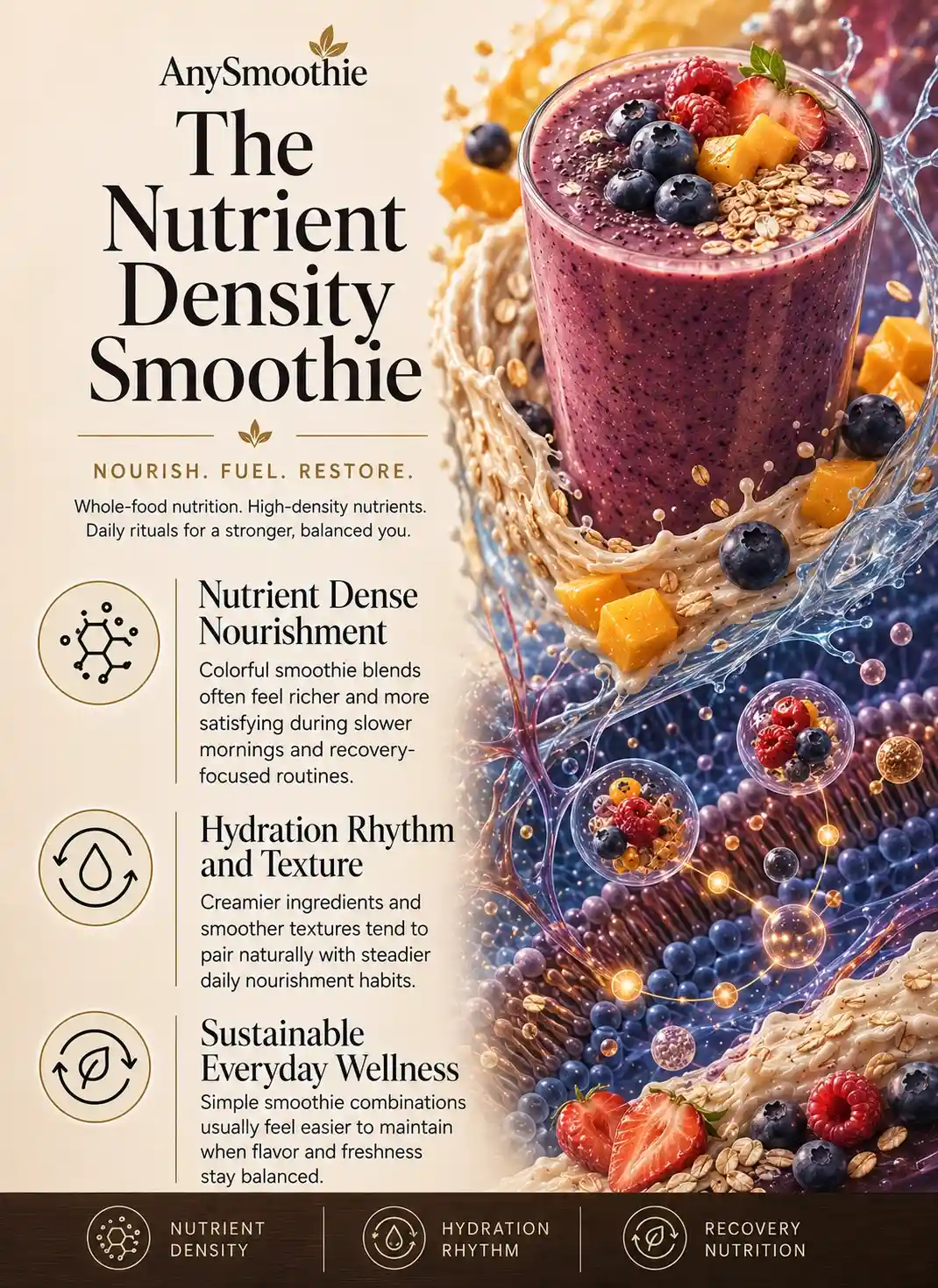
The Bioavailability Gradient: Overcoming Mucosal Saturation
A dense smoothie can still underperform if it overloads the gut. Too much sugar, too much fiber, or too many actives at once can slow the whole process. The aim is not volume. The aim is a clean bioavailability gradient, where nutrients enter in a balanced way.
Choose a strong base, then layer nutrients with intention
Start with a base that matches your goal. Unsweetened kefir or Greek yogurt adds protein and texture. Fortified plant milk gives a smoother profile for dairy-free blends. Coconut water helps when hydration and minerals matter more. Filtered water keeps the drink light when the add-ins already do the heavy lifting.
From there, layer nutrients with purpose. One fruit for carbs, one green for minerals, one fat source for transport, and one protein source for retention is often enough. More ingredients do not always mean better uptake.
Enzyme Cofactors: Loading the Cytosol with Essential Cations
Minerals help the machinery run. Magnesium, potassium, and sodium support fluid balance and enzyme activity. Vitamin C and polyphenols help protect the blend from oxidative stress during digestion, while also adding more micronutrient depth.
Small amounts matter here. A spoon of chia or flax can slow release without making the drink gluey. Avocado, olive oil, or sunflower lecithin can support fat-soluble delivery. Too much fiber, though, can trap the drink in a slow lane.
3 “Density-Max” Nutrient Flux Smoothie Recipes
These three blends show different ways to build a smoothie high density nutrient flux without making it heavy or overly sweet.
The Hyper-Load Microgreens, Chlorella, and Liposomal Lipid Blend
Ingredients
- 1 packed cup mixed microgreens
- ½ avocado
- ¼ cup frozen pineapple
- 1 cup plain unsweetened kefir
- ¼ teaspoon chlorella powder
- 1 tablespoon fresh lemon juice
- ½ teaspoon freshly grated ginger
- ½ cup ice, optional
Pour the kefir into the blender first. Add the microgreens, avocado, pineapple, chlorella, lemon juice, ginger, and ice if using. Blend until creamy and completely smooth.
Microgreens contribute vitamins, minerals, carotenoids, and other plant compounds, although their nutrient profiles vary considerably by variety. Avocado supplies fiber and unsaturated fat, while dietary fat can support absorption of certain fat-soluble nutrients such as carotenoids. Chlorella adds additional nutrients and plant compounds but should not be expected to provide a predictable “hyper-load” of micronutrients.
Estimated Nutrition per Serving
- Calories: ~310 kcal
- Protein: ~12 g
- Carbohydrates: ~29 g
- Fat: ~19 g
- Fiber: ~9 g
- Sugars: ~16 g
The Mineral Recovery Smoothie for Morning or Post-Workout Use
Ingredients
- 1 medium banana
- ¾ cup frozen mixed berries
- ¾ cup plain Greek yogurt
- 1 tablespoon unsweetened cacao powder
- 1 tablespoon pumpkin seeds
- Pinch of salt
- ½ cup cold water
- ½ cup ice, optional
Pour the water and Greek yogurt into the blender first. Add the banana, berries, cacao, pumpkin seeds, salt, and ice if using. Blend until completely smooth.
Banana, berries, cacao, pumpkin seeds, and Greek yogurt provide a mixture of carbohydrates, protein, potassium, magnesium, and other micronutrients. The carbohydrates can contribute to glycogen replenishment after exercise, while the yogurt provides high-quality protein. This can be a practical recovery smoothie, but it should not be expected to prevent a sugar spike or guarantee a steadier glucose or energy response.
Estimated Nutrition per Serving
- Calories: ~400 kcal
- Protein: ~23 g
- Carbohydrates: ~61 g
- Fat: ~10 g
- Fiber: ~10 g
- Sugars: ~36 g
If I were making this immediately after training, I’d blend the pumpkin seeds with the water and yogurt first. That breaks them down more thoroughly and gives the finished smoothie a smoother texture without losing their slightly nutty flavor.
The Liposomal-Style Smoothie with Lecithin and Healthy Fats
Ingredients
- 1 cup frozen berries
- 1 packed cup spinach
- 1 tablespoon sunflower lecithin
- ¼ avocado
- 1 tablespoon chia seeds
- 1 cup unsweetened soy milk
- 1 teaspoon MCT oil, optional
- ½ cup ice, optional
Pour the soy milk into the blender first. Add the spinach and blend briefly until finely incorporated. Add the frozen berries, sunflower lecithin, avocado, chia seeds, MCT oil if using, and ice. Blend until creamy and completely smooth.
Sunflower lecithin contains phospholipids and can function as an emulsifier, helping create a smooth mixture of fat and water. Avocado and chia provide additional unsaturated fats and fiber. Dietary fat can support absorption of certain fat-soluble nutrients, but blending lecithin with these ingredients does not create a true liposomal delivery system or guarantee enhanced absorption of vitamins A, D, E, and K.
Estimated Nutrition per Serving
- Calories: ~430 kcal
- Protein: ~16 g
- Carbohydrates: ~37 g
- Fat: ~28 g
- Fiber: ~15 g
- Sugars: ~15 g
Biohacking Cellular Uptake: Supporting the Glycocalyx Interface
A great smoothie still depends on the terrain it lands in. The gut lining, the glycocalyx, and the cell surface all shape how nutrients are received. If the drink is too sweet, too thick, or too rushed, the system works harder than it should.
What helps the glycocalyx interface do its job
The glycocalyx is a thin protective surface that helps cells interact with nutrients and signals. Hydration supports that interface. So do polyphenols from berries, cacao, greens, and herbs. These compounds do not force anything, but they help keep the environment cleaner for uptake.
Mitochondrial Priming: Energy Flux for Active Nutrient Internalization
Cells need usable energy to move nutrients where they belong. That is the logic behind mitochondrial priming. Protein, minerals, and balanced carbs help create a better energy state, which supports active transport and downstream metabolism.
When the cell has enough fuel, nutrient handling feels less strained. When it does not, even a good smoothie can feel flat.
Conclusion
The best smoothie for high-density nutrient flux is not the biggest one. It is the smartest one. It balances fats, fiber, liquid, protein, and micronutrients so the body can handle them without clutter.
Start with one formula that matches your needs, then adjust the texture, sweetness, and fat level based on how it digests. That is where the real payoff starts, because flow matters more than force.
🛡️ Safety Notes & Contraindications
Micronutrient Toxicity and Saturation: Highly concentrated “green powders” (such as chlorella or spirulina) combined with fortified plant milks can deliver hyper-doses of Fat-Soluble Vitamins (A and D) or heavy metals if sources are unverified. Excessive daily accumulation can cause hepatic storage stress. Strictly monitor your cumulative intake from all supplements.
Chlorella and Immunological Flare-Ups: Chlorella contains immunomodulatory cell-wall polysaccharides. If you have active autoimmune conditions (e.g., Crohn’s disease, Ulcerative Colitis) or are taking prescription immunosuppressants, introduce microgreens and algae with extreme caution, as they can trigger localized immune defense responses in the GALT.
Oxalate Overload from Microgreens: Dense concentrations of spinach microgreens or specific leafy fields are rich in oxalic acid. Individuals with a history of hyperoxaluria or calcium-oxalate kidney stones must couple this nutrient flux with a rich calcium base (like Greek yogurt or calcium-fortified bases) to bind oxalates within the intestinal lumen.
Rapid Transit Osmotic Shift: Delivering highly concentrated ionic solutions (heavy mineral bases) paired with rapid-acting sugars (pineapple/banana) can create an acute osmotic draw into the bowel lumen. If consumed too quickly, this fluid shift can cause transient cramping, gurgling, or osmotic diarrhea. Sip the blend slowly over 15-20 minutes.
Lecithin and Choline-Sensitive Dynamics: Sunflower lecithin is an exceptional lipid emulsifier but drastically raises systemic choline pools. If you are highly sensitive to cholinergic shifts or are managing clinical depression protocols, observe your neurological baseline when adding high doses of lecithin to your morning routine.
FAQ
How does “Micellarization” optimize the flux of fat-soluble nutrients?
Vitamins A, D, E, and K are lipophilic, meaning they are insoluble in the watery environment of the gut. Biochemically, the presence of healthy fats and phospholipids (like sunflower lecithin or avocado) triggers the formation of micelles—tiny transport spheres. Supporting this physiological system through lipid-anchored smoothies optimizes the natural pathways of “facilitated diffusion,” ensuring these critical nutrients enter the lymphatic system rather than remaining unabsorbed in the lumen.
Why is “Particle Size Reduction” via blending a mechanical advantage for uptake?
The process of high-speed blending mechanically reduces the particle size of whole foods, significantly increasing the surface area for enzymatic action. Biochemically, this decreases the “digestive tax” the body must pay to liberate nutrients from plant cell walls. Supporting this physiological system facilitates the biochemical mechanics of “rapid luminal release,” allowing transporters in the small intestine to begin active uptake with less delay.
What is the role of “Ionic Solutions” in Supporting Intracellular Mineral Flux?
Hydration and mineral intake are governed by osmotic gradients. Biochemically, utilizing ionic solutions like coconut water or mineral-rich bases (adding a pinch of sea salt) provides electrolytes in a form that can move through ion channels with minimal resistance. Supporting this physiological system facilitates the biochemical mechanics of “direct ion entry,” helping to load the cytosol with essential cations like potassium and magnesium for enzyme activation.
How does the “Glycocalyx Interface” shape nutrient reception?
The glycocalyx is the delicate, sugar-rich coating on the surface of the intestinal brush border that acts as a filter for incoming nutrients. Biochemically, this interface can be supported by the polyphenols found in berries and cacao, which protect it from oxidative stress. Supporting this physiological system through “redox-rich” smoothies optimizes the natural pathways of “membrane interaction,” ensuring a cleaner environment for nutrient internalization.
Why is “Mitochondrial Priming” required for active nutrient transport?
Moving nutrients against a concentration gradient (active transport) is an energy-intensive process that requires ATP. Biochemically, the cells of the intestinal lining must have efficient energy turnover to power these transport “pumps.” Supporting this physiological system with a balanced mix of amino acids and minerals facilitates the biochemical mechanics of “bioenergetic flux,” providing the cellular fuel necessary to pull high-density nutrients into the bloodstream.

Medical Disclaimer: AnySmoothie content is for educational purposes only and is not a substitute for professional medical advice. Consult a healthcare provider for personalized guidance. See our full Disclaimer & Terms of Use. AI Transparency: AnySmoothie may use AI to support content development. All content undergoes human editorial review for accuracy, clarity, and editorial quality. See our full AI Transparency.