
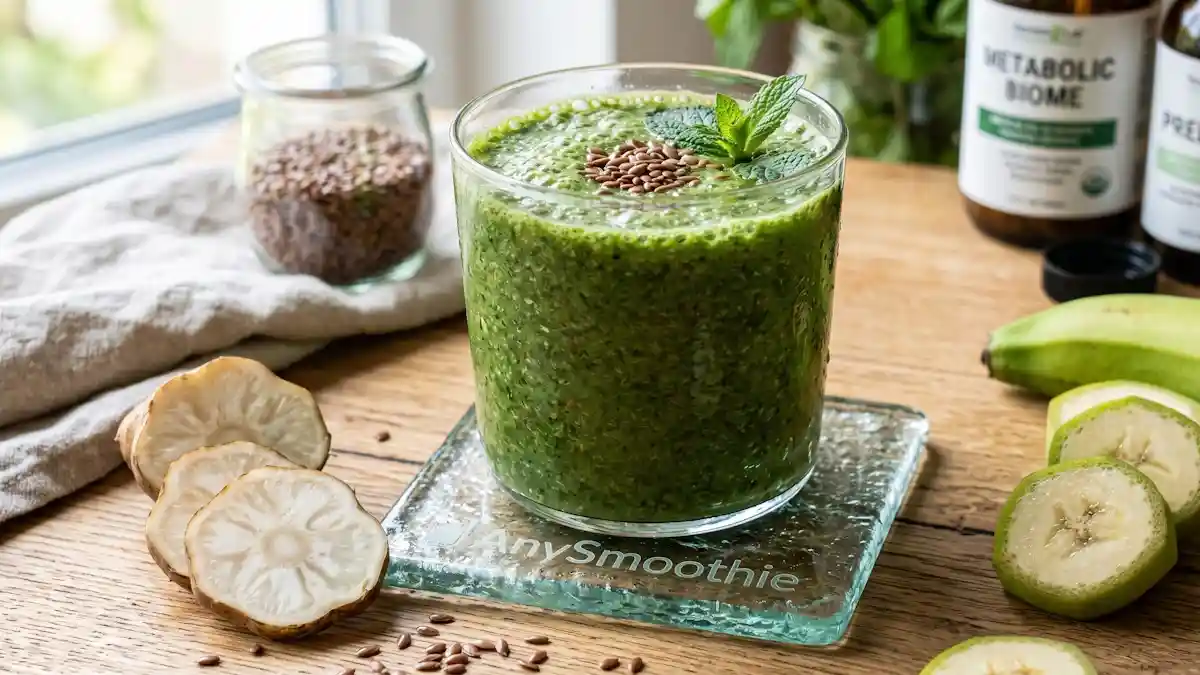
A high fiber smoothie for microbiome-driven lipolysis is about support, not shortcuts. The goal is simple, feed the gut microbes that turn fiber into short-chain fatty acids, then let those metabolites help the body manage fuel more efficiently.
That matters because your microbiome does more than help digestion. It also shapes satiety, energy use, and how smoothly nutrients are handled after meals. If you build the smoothie well, you can support fullness, steadier energy, and better nutrient partitioning without making breakfast feel heavy.
The best versions are balanced. They combine fermentable fiber, a little protein, and enough liquid to keep the texture easy to drink.
The Microbial Engine: How Gut Bacteria Control Fat Burning
Gut bacteria break down the right fibers through fermentation. That process produces short-chain fatty acids, or SCFAs, which support the gut lining and send metabolic signals through the body.
A well-built smoothie can feed beneficial microbes without flooding the system with sugar. That is the key difference. You are not chasing a sugar hit, you are feeding the bacteria that help create a cleaner metabolic environment.
A useful review in Nutrients found that fiber effects on SCFAs depend on the dose, structure, and type of fiber. That means ingredient choice matters more than people think.
How butyrate and propionate support fat-use signaling
Butyrate and propionate are two SCFAs worth paying attention to. Butyrate helps support the gut barrier and gives colon cells a preferred fuel source. Propionate also takes part in energy signaling and may help shape glucose handling.
These compounds do not act like magic switches. They help create conditions that support fat-use signaling, steadier appetite, and better energy use. In practical terms, that can make a high-fiber smoothie feel more satisfying and less spiky.
Why fiber type changes where fermentation happens in the colon
Different fibers ferment at different speeds and in different parts of the colon. Some feed microbes fast in the proximal colon. Others keep working farther downstream.
That matters because a broader fermentation pattern can support more diverse microbial output. In other words, the right mix gives gut bacteria more to work with. It also helps avoid a one-note smoothie that finishes too quickly.
Fiber Stratification: Balancing Soluble and Resistant Starch for Weight Loss
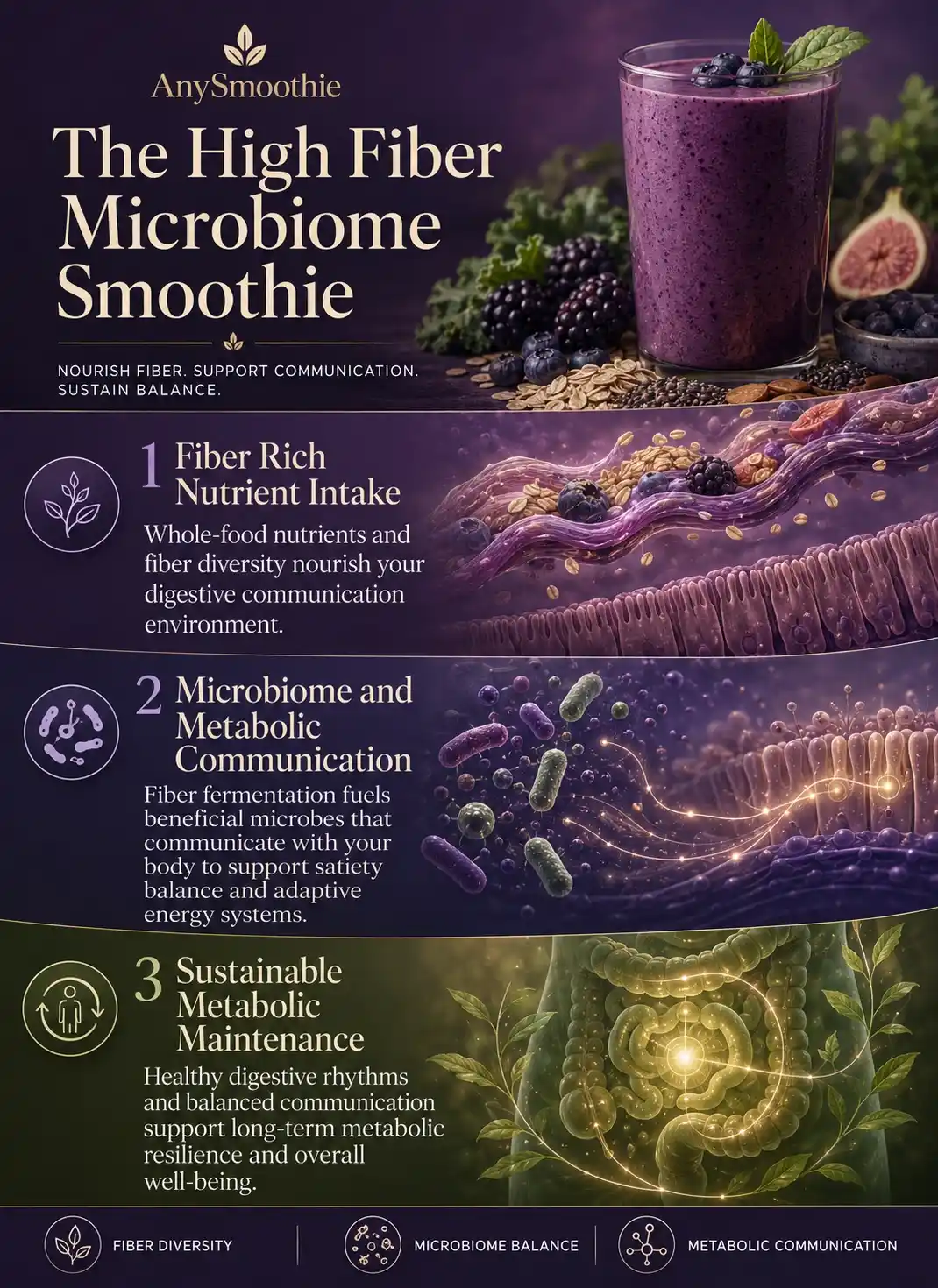
A smart smoothie uses fiber stratification, meaning you blend fibers that behave differently. Soluble fiber can thicken the drink and slow digestion. Resistant starch can reach deeper into the colon and support stronger microbial fermentation.
That mix matters for satiety and for metabolic efficiency. It also helps the smoothie feel like food, not a chore.
The best high-fiber smoothie for microbiome-driven lipolysis usually includes one fast-fermenting fiber, one slower fiber, and a little protein for balance. Resistant starch is the strongest option if your goal is metabolic switch signaling.
A human trial in European Journal of Clinical Nutrition found that resistant starch and inulin affected post-meal responses in different ways. Resistant starch reduced second-meal glucose and insulin responses, while inulin raised serum SCFAs. That split is useful. It shows why each fiber plays a different role.
The GLP-1 Pathway: Natural Hormonal Optimization Through Fermentation
Fermentation can support the body’s own satiety signals, including GLP-1-related pathways. That does not mean a smoothie acts like a drug. It means microbial byproducts can help nudge the body toward better appetite control after the meal.
This is where balance matters. Too much fiber at once can make the smoothie harsh. Too little, and you miss the microbial payoff.
| High-Fiber Substrate | Fermentation Site | Primary SCFA Produced | Impact on Insulin Sensitivity | Satiety Duration |
|---|---|---|---|---|
| Inulin from chicory | Proximal colon | Acetate, some propionate | Moderate support | Moderate |
| Resistant starch from green banana | More distal colon | Butyrate, propionate | Strong support | Longer |
| Beta-glucans from oats | Proximal colon | Acetate, propionate | Moderate support | Moderate to long |
Resistant starch is the strongest driver for metabolic switch signaling here. It tends to work well when you want a slower, steadier energy curve.
3 “Microbiome-Burn” High Fiber Smoothie Recipes
These smoothie ideas keep the ingredient lists short and the logic clear. Each one supports the gut in a slightly different way.
Metabolic Efficiency: Enhancing Nutrient Partitioning via the Gut
A smoothie like this works best when it fits the day cleanly. It can be breakfast, a post-workout meal, or a light replacement for a rushed lunch.
The main idea is nutrient partitioning. Fiber slows the rush of calories, protein supports fullness, and the microbiome handles part of the fuel load in a more useful way. That can make the meal feel steadier for longer.
Why protein and fiber together can improve fullness and fuel use
Protein plus fiber is a simple pair that works. Fiber slows digestion, and protein helps the meal feel more satisfying. Together, they make the smoothie act more like a meal and less like a snack.
That balance also matters for people who want a cleaner energy curve. A smoothie with only fruit often burns fast. Add protein and fiber, and the pace changes.
Anti-Inflammatory Shield: Reducing endotoxemia to support metabolism
A better-fed microbiome may help support a healthier gut barrier environment. That matters because a stable barrier helps keep digestion calmer and reduces stress on metabolic pathways.
The role of SCFAs in gut barrier function and metabolic health is well described in this review on microbiota-generated SCFAs. The takeaway is simple, when fermentation goes well, the gut tends to support the rest of the system better.
Conclusion
The best high fiber smoothie for microbiome-driven lipolysis feeds beneficial microbes, supports SCFA production, and helps the body use energy more efficiently. It should also taste good enough to repeat, because consistency beats complexity.
Start with one formula, then adjust the fiber type, protein, and texture based on how you feel. A smoothie that digests well, keeps you full, and supports your gut is the one worth keeping.
⚠️ Safety Notes for Microbiome-Driven Lipolysis Smoothies
The “Fiber-Flush” Effect: Introducing high doses of inulin or resistant starch too quickly can cause significant bloating, flatulence, or osmotic diarrhea. Start with one-third of the recommended dose and increase gradually over 14 days to allow your microbial population to expand without distress.
Hydration Criticality: Fermentable fibers absorb massive amounts of water. If you do not drink an additional 750ml of water daily, these fibers can paradoxically cause constipation or “fecal bulking” that stalls digestion.
SIBO Caution: If you suffer from Small Intestinal Bacterial Overgrowth (SIBO), high-prebiotic smoothies (especially those with inulin) may exacerbate symptoms like severe bloating and brain fog. Consult a gastroenterologist before using fermentable substrates.
Blood Sugar Management: While these fibers stabilize blood sugar in the long term, the initial metabolic shift can affect insulin sensitivity. If you are on diabetic medication, monitor your levels closely to prevent nocturnal hypoglycemia.
Lupine Protein Allergy: Lupine is a legume closely related to peanuts. If you have a peanut allergy, avoid lupine protein as it can cause cross-reactive anaphylaxis. Swap for hemp or pea protein.
How can fiber in a smoothie trigger fat burning
Fiber itself isn’t what burns the fat; it’s the metabolites created when your gut bacteria ferment that fiber. Specifically, short-chain fatty acids (SCFAs) like butyrate and propionate enter the bloodstream and bind to receptors (like GPR41 and GPR43). This biochemical mechanism signals your physiological systems to increase energy expenditure and optimize the pathways responsible for breaking down stored adipose tissue for fuel.
What is the role of SCFA signaling in weight management
SCFAs act as powerful signaling molecules that communicate directly with your metabolic organs. They support the body’s natural production of satiety hormones like GLP-1 and PYY, which help regulate appetite. Furthermore, they improve insulin sensitivity by optimizing glucose uptake in the muscles, ensuring that nutrients are partitioned toward energy production rather than fat storage.
Why is Resistant Starch a key ingredient for lipolysis
Resistant starch is unique because it passes through the entire small intestine without being digested. When it reaches the large intestine, it becomes a preferred substrate for specialized bacteria. The fermentation of resistant starch produces a high ratio of butyrate, which is the primary energy source for your gut lining and a critical signal for maintaining a healthy metabolic rate and reducing systemic inflammation.
Can a high-fiber smoothie reduce “metabolic endotoxemia”
Yes. A diet lacking in specific fibers can lead to a “thinning” of the gut’s protective mucus layer, allowing inflammatory molecules (LPS) to enter the blood—a state called metabolic endotoxemia that stalls fat loss. By providing a diverse range of fibers in your smoothie, you support the structural integrity of the intestinal barrier, reducing this inflammatory load and allowing your metabolic pathways to function without interference.
Should I focus on one type of fiber or a variety
Variety is essential for microbiome-driven lipolysis. Different bacterial species “feed” on different fiber architectures. By including a mix of soluble fibers (like acacia), insoluble fibers (from seeds), and resistant starches, you ensure that you are “priming” a diverse ecosystem. This diversity is the hallmark of a resilient metabolism, as it ensures a constant and balanced production of all the chemical signals needed for efficient energy management.

Medical Disclaimer: AnySmoothie content is for educational purposes only and is not a substitute for professional medical advice. Consult a healthcare provider for personalized guidance. See our full Disclaimer & Terms of Use. AI Transparency: AnySmoothie may use AI to support content development. All content undergoes human editorial review for accuracy, clarity, and editorial quality. See our full AI Transparency.