
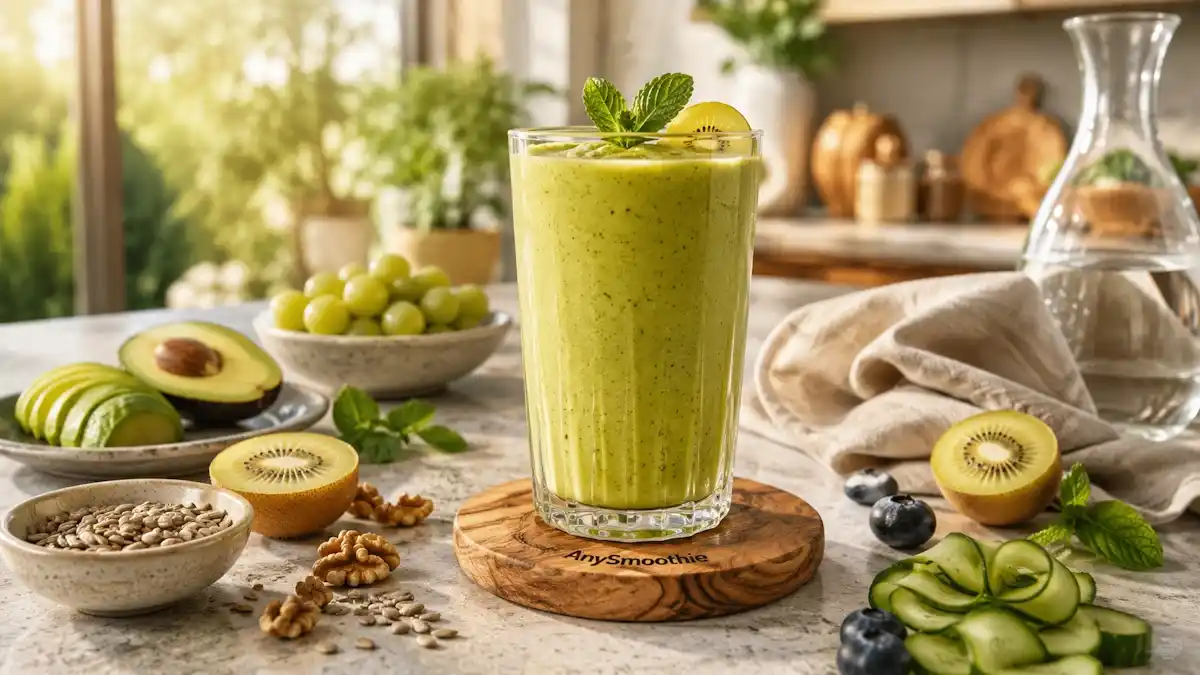
Phospholipids are fat-based molecules that help build each cell’s outer layer. That layer needs to stay flexible, because it helps control what enters, what leaves, and how cells communicate.
Phospholipid smoothies can make it easier to fit these foods into a normal routine. They are not a shortcut, and they work best with balanced ingredients. A good blend can taste rich, feel satisfying, and fit into breakfast or an afternoon meal.
What phospholipids do for healthy cell membranes
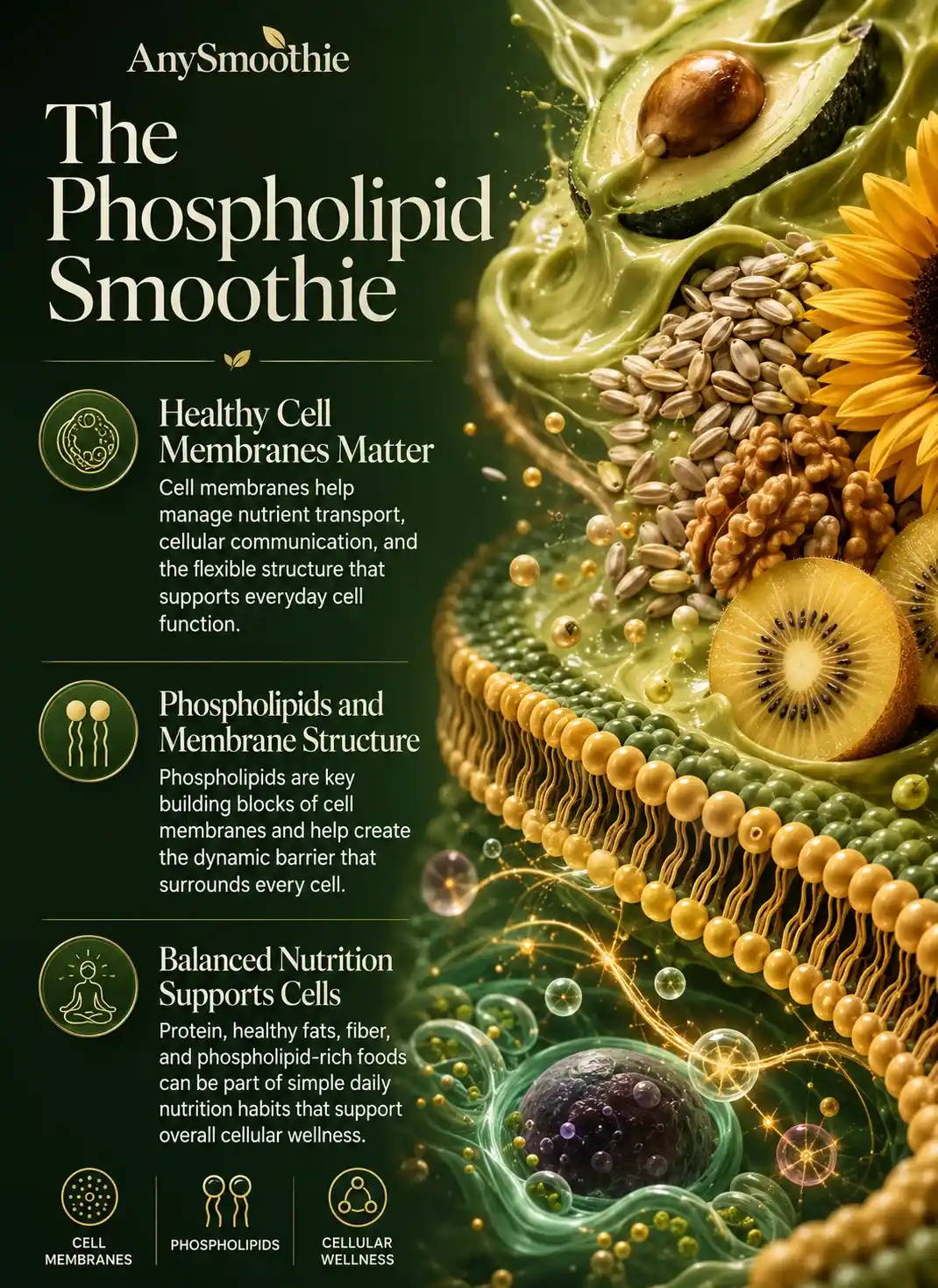
Cell membranes are thin barriers with a big job. They protect the cell, yet they also let nutrients, signals, and waste move in a controlled way. Phospholipids are the main structural pieces of that barrier.
Their shape matters. One end likes water, the other likes fat, so they line up in a bilayer. That setup gives the membrane both strength and movement.
For a closer look at the membrane role of these lipids, the PubMed Central review on phospholipids gives a clear scientific overview.
Why membrane fluidity affects how cells work
Fluidity means the membrane can bend and shift without falling apart. When that balance is good, transport proteins can move nutrients, receptors can receive signals, and the cell can respond to its surroundings.
If the membrane is too stiff or too loose, those tasks become less smooth. In plain terms, cells work best when their outer layer stays flexible enough to do its job.
Where phospholipids show up in everyday foods
You can find phospholipids in eggs, soy foods, sunflower lecithin, dairy, and some seafood. Smoothies are useful because they let you pair these sources with fruit, yogurt, or greens in one easy glass.
Choose the foods you tolerate well, then build from there. That makes the habit easier to keep.
How to build phospholipid smoothies that actually taste good
Start with one phospholipid source, then add protein, fiber, and a creamy fat. That mix keeps the drink steady and helps it feel like a meal instead of sweet juice.
A small amount of lecithin usually goes a long way. After that, use fruit for flavor, yogurt or milk for body, and a little nut butter or avocado for staying power.
A good smoothie has a phospholipid base, a creamy body, and enough flavor to drink without effort.
| Ingredient type | Examples | Main role | Flavor impact | Best use |
|---|---|---|---|---|
| Phospholipid source | Sunflower lecithin, soy lecithin | Adds membrane lipids | Mild, barely noticeable | Base of the smoothie |
| Creamy protein | Greek yogurt, kefir | Adds body and protein | Tangy, rich | Morning blends |
| Healthy fat | Avocado, nut butter | Makes it filling | Nutty, smooth | Thick smoothies |
| Fiber fruit | Berries, banana | Adds carbs and fiber | Sweet, bright | Everyday recipes |
| Flavor boosters | Cocoa, cinnamon, vanilla | Rounds out taste | Strong, pleasant | Hides lecithin taste |
That pattern keeps the texture smooth and the flavor easy to repeat.
Best phospholipid-rich ingredients to start with
Lecithin granules or liquid lecithin are the easiest add-ins. Soy and sunflower lecithin are the most common, and many people choose sunflower when they want a soy-free option.
Eggs, dairy, and seafood also contribute natural phospholipids. Use the forms you digest well and can buy consistently.
Flavor, texture, and absorption tips
Frozen berries, banana, and mango make the texture thick. Nut butter, yogurt, and avocado add body. Cocoa, cinnamon, and vanilla cover the mild taste of lecithin.
A bit of fat also helps the smoothie feel more filling and supports the handling of fat-soluble nutrients. That matters when you want one drink to carry more of the meal.
3 Phospholipid smoothies for healthy cell membranes
Each recipe uses a simple phospholipid source and familiar ingredients.
Who may benefit most from adding phospholipid smoothies to their routine
Busy adults often like these smoothies because they are fast and filling. They also work well for people who want more healthy fats without eating heavy meals.
Anyone who prefers blended food over pills or powders may find them easier to keep up. If you have an egg allergy, soy sensitivity, or a special diet, read labels carefully.
When a smoothie works better than pills or powders
A smoothie puts phospholipids, protein, fiber, and flavor in one place. That makes it easier to turn a single ingredient into a real meal.
Pills and powders can be convenient, but a blended drink often gives you more texture, more satiety, and more room to customize. That keeps the habit practical.
Simple mistakes to avoid when making phospholipid smoothies
Too much fruit can turn a smoothie into sugar water. Skipping protein makes it less filling. Thin, watery blends usually taste flat, so add yogurt, milk, or avocado.
Quality matters too, because lecithin should come from a brand you trust. Most of all, phospholipid foods work best inside an overall balanced diet, not as a stand-alone fix.
Conclusion
Phospholipid smoothies are a food-first way to support cell membrane structure and everyday cellular function. The best versions use quality lecithin or other phospholipid-rich foods, plus protein, fiber, and healthy fat.
Keep the formula simple, keep the flavor good, and make it often enough to matter. Try one of these recipes this week and see which one fits your routine.
🛡️ Safety Notes & Dietary Interactions
- Start Slowly With Lecithin Products: Sunflower and soy lecithin are generally used in small amounts. If you are new to lecithin supplements, begin with a modest serving and follow the manufacturer’s recommended serving size.
- Check Labels for Allergens: Soy lecithin may not be suitable for people with soy sensitivities. Individuals with allergies or dietary restrictions should review ingredient lists carefully and choose products that match their needs.
- Balance the Entire Smoothie: Phospholipids work best as part of a balanced meal pattern. Including protein, fiber, healthy fats, and whole-food ingredients often creates a more satisfying and nutritionally complete smoothie.
- Consult a Professional When Appropriate: Anyone who is pregnant, breastfeeding, managing chronic health conditions, or taking prescription medications should discuss significant dietary or supplement changes with a qualified healthcare professional.
FAQ
What are phospholipids and why do cell membranes need them?
Phospholipids are fat-based molecules that form the main structural framework of cell membranes. Their unique structure allows membranes to remain flexible while helping regulate nutrient transport, cellular signaling, and normal communication between cells.
Is sunflower lecithin better than soy lecithin for smoothies?
Both can provide phospholipids and blend easily into smoothies. Many people choose sunflower lecithin because it is soy-free, while soy lecithin is often more widely available. The best option depends on personal preference, tolerance, and dietary needs.
Can I get phospholipids from food instead of supplements?
Yes. Eggs, dairy products, soy foods, and certain seafood naturally contain phospholipids. Lecithin powders and granules simply offer a convenient way to increase phospholipid intake within a smoothie recipe.
How much lecithin should I use in a smoothie?
Most smoothie recipes use approximately 1 teaspoon to 1 tablespoon of lecithin, depending on the product and serving recommendations. Following the instructions on the label is usually the safest and most practical approach.
What makes a phospholipid smoothie more satisfying?
Combining phospholipid sources with protein-rich ingredients such as Greek yogurt, kefir, soy milk, or protein powder, plus healthy fats like avocado, chia, flax, or nut butter, helps create a smoothie that feels more filling and meal-like.

Medical Disclaimer: AnySmoothie content is for educational purposes only and is not a substitute for professional medical advice. Consult a healthcare provider for personalized guidance. See our full Disclaimer & Terms of Use. AI Transparency: AnySmoothie may use AI to support content development. All content undergoes human editorial review for accuracy, clarity, and editorial quality. See our full AI Transparency.