
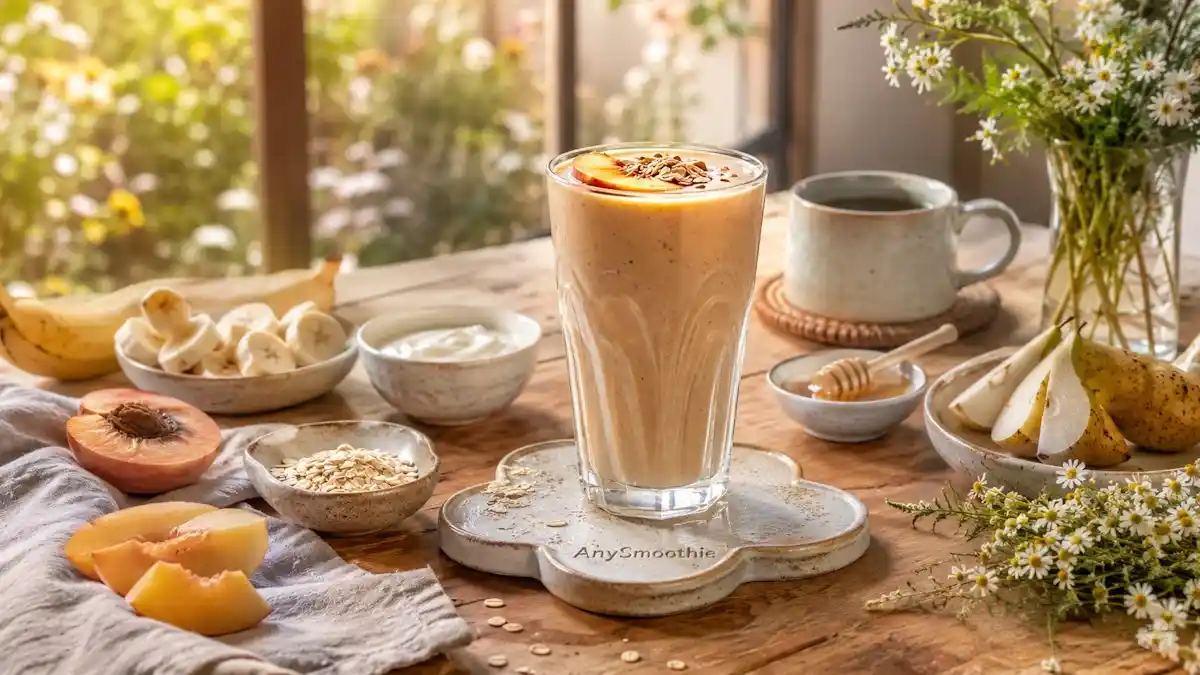
Some mornings, food feels like too much. Stress, nausea, an early workout, meds, or waking up too fast can all shrink appetite before the day starts.
Gentle breakfast smoothies for low appetite can fill that gap with something soft, sippable, and easier to face than a full plate. They can add fluids, calories, protein, and micronutrients without much effort.
The best ones taste mild, blend smoothly, and don’t crowd the stomach. Here’s how to build them, plus a few recipes that stay light without tasting flat.
What makes a smoothie feel gentle on an empty stomach?
A gentle smoothie starts with a soft texture and a calm flavor. Thick, icy blends can feel intense first thing in the morning, especially if your appetite is already low.
Ripe banana, oats, vanilla, yogurt, or a small spoon of nut butter can soften the flavor and smooth out the texture. Tart fruit can work too, but it helps to keep the sharpness in check.
A smoothie feels easier to finish when it tastes calm, not crowded.
The balance matters as well. Carbs bring quick energy, protein makes the drink more sustaining, and a little fat improves satiety while adding a creamier mouthfeel.
Hydration helps too. Milk, soy milk, oat milk, kefir, or coconut water can turn a dry breakfast into something easier to sip. For some people, room-temperature or lightly chilled smoothies feel gentler than very cold ones.
Start with a soft texture and mild flavor
The morning is not the best time for sharp acid or a lot of ice. A smoothie should glide, not demand work.
Banana, avocado, yogurt, vanilla, oats, and small amounts of nut butter all help create a smoother sip. Keep the flavor profile familiar, so the first swallow feels easy.
Use a balanced mix of carbs, protein, and fat
Carbs give the blend a quick-start feel. Protein makes it hold you longer. A modest amount of fat rounds out the texture and keeps the smoothie from tasting thin.
That balance is one reason simple smoothie formulas often work better than fruit piles. For more on balanced nutrition, see Eating a Balanced Diet.
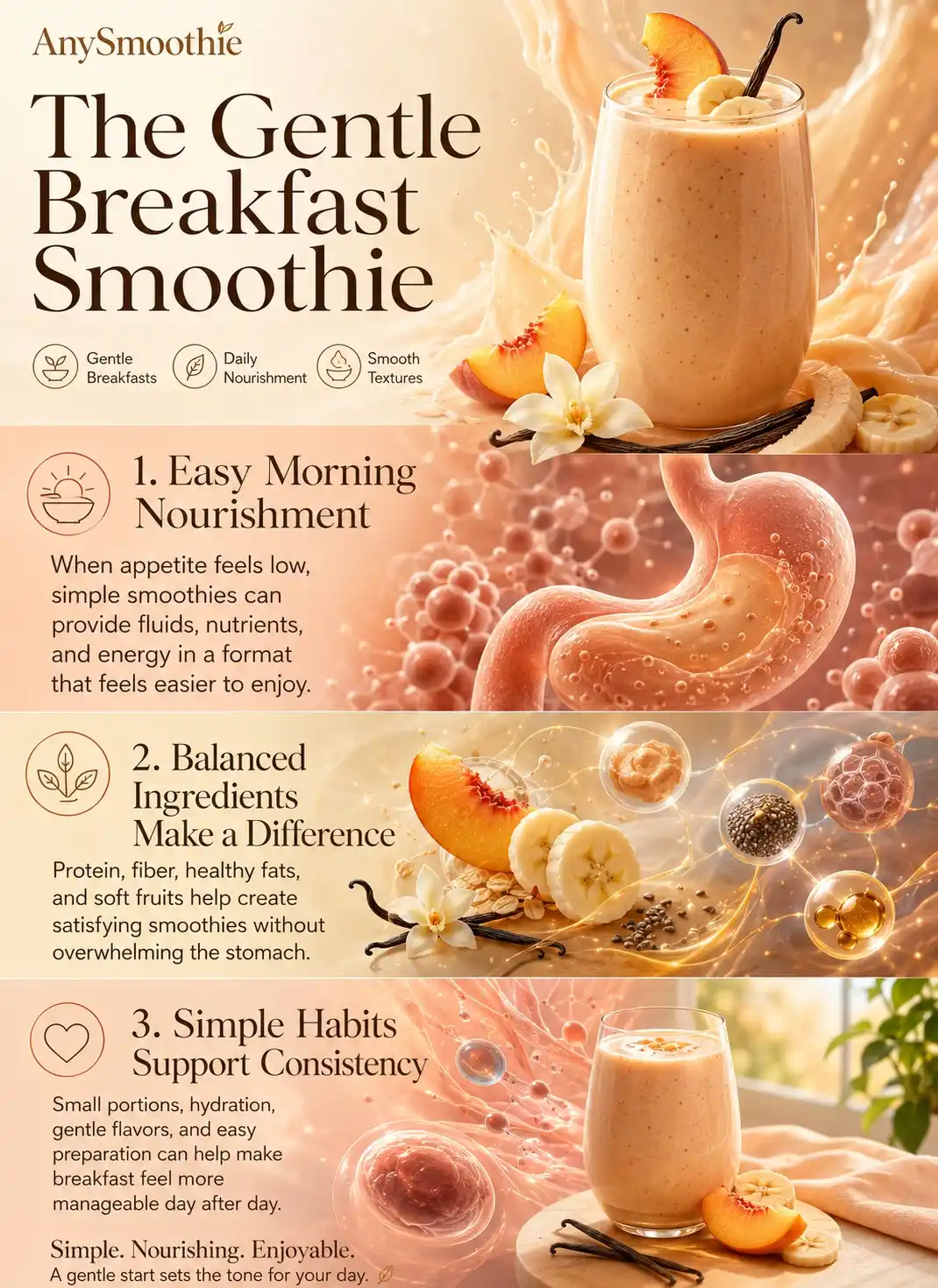
Choose ingredients that support hydration and easy sipping
A dry breakfast can feel like a chore. A smoothie gives you fluid and food together, which is useful when appetite is low.
Milk and soy milk bring more protein. Oat milk tastes softer. Kefir adds a drinkable tang. Coconut water works when you want something lighter, though it’s best paired with protein or yogurt so the smoothie still has body.
How to build gentle breakfast smoothies for low appetite
The easiest approach is to keep the formula small. Start with a liquid base, add one fruit, add one protein source, then finish with one gentle booster.
That keeps the blender from turning out a heavy mix with too many textures at once. It also makes the smoothie easier to repeat on busy mornings.
Pick a base that is light but not watery
Choose the liquid based on what you want that morning. Milk or soy milk gives more protein, oat milk gives a softer taste, and kefir brings a thin, creamy texture.
Use enough liquid to sip easily, but not so much that the smoothie turns thin and bland. A cup is often enough for a small breakfast glass.
Add one fruit, one protein, and one gentle booster
One fruit is usually enough. Banana, peach, mango, or berries all work well.
Then add protein, such as yogurt, kefir, milk, or soy milk. If you want more staying power, add one booster, like oats, chia, flax, avocado, nut butter, or cooked sweet potato. Too many add-ins can make the smoothie feel dense.
Keep sweetness and acidity in check
A little honey, a date, or a ripe banana can round out the flavor. Too much sweetness can feel heavy before you’ve eaten anything else.
Tart berries and citrus can be refreshing, but they also feel sharp for some people. If your stomach is touchy, soften them with yogurt, banana, or oats.
3 Gentle breakfast smoothie recipes for low appetite
A quick comparison helps when you want the right blend fast.
| Smoothie | Main ingredients | Texture | Best for | Why it feels gentle |
|---|---|---|---|---|
| Banana oatmeal | Banana, oats, milk or soy milk, nut butter | Creamy and thick | Low energy mornings | Mild flavor and easy sipping |
| Berry yogurt | Berries, yogurt or kefir, milk, honey | Cool and smooth | Light breakfast days | Bright taste with a soft finish |
| Peach ginger | Peach, yogurt or milk, small ginger piece | Light and silky | Off mornings | Fresh flavor without a heavy feel |
The table keeps the choices simple. Pick the one that matches how your body feels, not what sounds most impressive.
Small changes that make your smoothie easier to finish
Start with a smaller glass. Half a serving feels less intimidating than a full meal shake, and you can always drink more later.
Prep also matters. Freezer packs, pre-portioned fruit, and blender-ready bags cut down the morning effort. When the food is easy to make, it’s easier to drink.
When a smoothie is not enough, add a simple side
If the smoothie alone doesn’t feel filling, pair it with a small side instead of forcing a second big item. Toast, a boiled egg, crackers, or a piece of fruit can round out the meal.
That keeps the morning calm. It also supports a routine you can keep, even on low-appetite days.
Conclusion
Gentle smoothies work because they keep breakfast simple. Mild flavor, soft texture, and a short ingredient list make the first sip easier.
Start with one recipe, then adjust the thickness, sweetness, or chill level until it fits your morning. The best gentle breakfast smoothie for low appetite is the one you can finish without a fight.
Consistency matters more than perfection. One small, easy smoothie can make the whole morning feel more manageable.
🛡️ Safety Notes & Dietary Interactions
- Start Small if Appetite Is Very Low: When morning appetite is poor, a smaller smoothie is often easier to tolerate than a large meal-sized blend. Begin with a modest portion and increase gradually if it feels comfortable.
- Watch Ingredients That Trigger Sensitivity: Large amounts of fiber, strong spices, acidic fruits, or heavy nut butters may feel overwhelming on a sensitive stomach. Keep recipes simple until you know what works best for you.
- Protein Still Matters: Even gentle smoothies benefit from some protein. Yogurt, kefir, soy milk, dairy milk, silken tofu, or a simple protein powder can help the smoothie provide more lasting nourishment.
- Seek Medical Guidance for Ongoing Appetite Loss: Persistent low appetite, unintended weight loss, ongoing nausea, swallowing difficulties, or prolonged illness should be discussed with a healthcare professional rather than managed with smoothies alone.
FAQ
Why are smoothies often easier to tolerate when appetite is low?
Smoothies reduce the effort of chewing and can provide fluids, calories, and nutrients in a form that is easier to sip. Their texture and temperature can often feel gentler than a full breakfast, especially during periods of low appetite or morning nausea.
What is the best fruit for a gentle breakfast smoothie?
Bananas, peaches, ripe pears, and mild berries are popular choices because they blend smoothly and usually provide a softer flavor profile. Bananas are especially useful because they naturally create a creamy texture without needing many extra ingredients.
Should a low-appetite smoothie contain protein?
Yes. Protein helps the smoothie feel more balanced and satisfying. Greek yogurt, kefir, soy milk, dairy milk, silken tofu, or a simple protein powder can help support fullness and make the drink function more like a meal.
Is it better to drink a smoothie cold or at room temperature?
That depends on personal preference. Some people find lightly chilled smoothies refreshing, while others tolerate room-temperature or minimally cold drinks better when their stomach feels sensitive. Experiment to see which option feels easiest for you.
What if a smoothie still feels too filling?
Reduce the serving size and simplify the ingredient list. A smaller smoothie made with one fruit, one liquid, and one protein source is often easier to finish than a large blend with multiple add-ins. You can always have another small serving later if needed.

Medical Disclaimer: AnySmoothie content is for educational purposes only and is not a substitute for professional medical advice. Consult a healthcare provider for personalized guidance. See our full Disclaimer & Terms of Use. AI Transparency: AnySmoothie may use AI to support content development. All content undergoes human editorial review for accuracy, clarity, and editorial quality. See our full AI Transparency.