
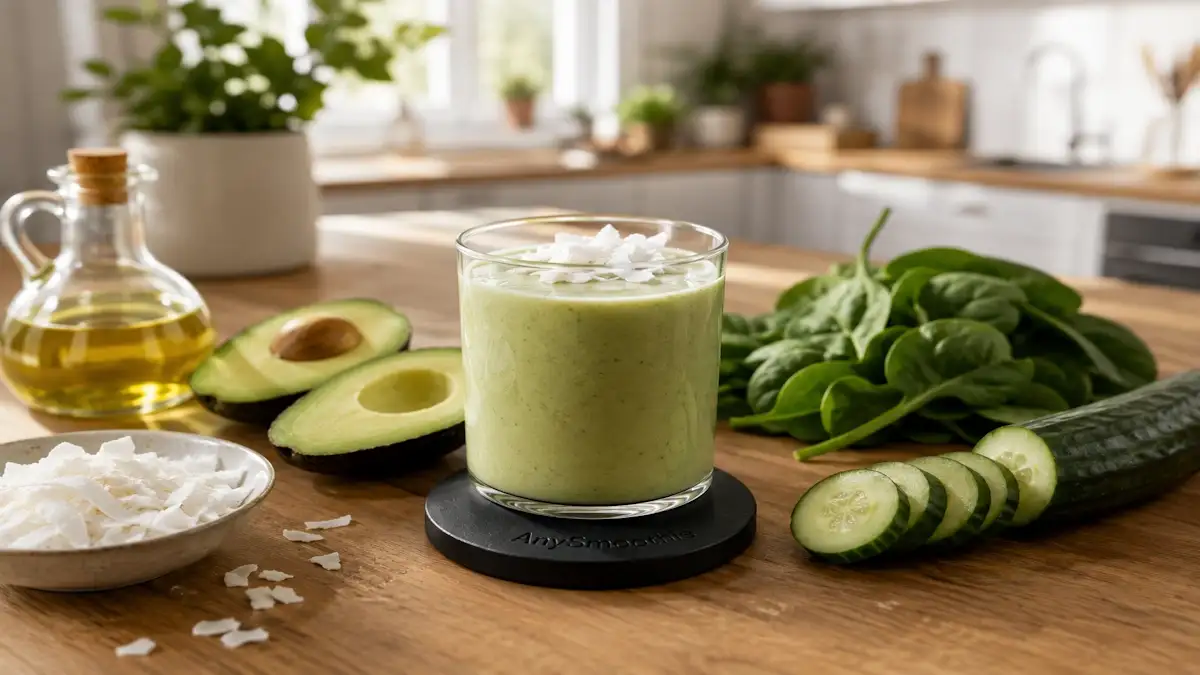
OEA is a small lipid messenger that helps the body notice fat and register fullness. When that signal is working well, meals feel more complete and less chaotic.
Smoothies are a practical way to support that pattern. They can hold fat, fiber, protein, and fruit in one glass, which makes them easy to repeat on busy mornings. This guide shows how oea smoothies for optimizing lipid signaling can fit into a normal routine without turning breakfast into a science project.
What OEA does in the body, and why food can help
Oleoylethanolamide, usually called OEA, is a naturally occurring compound the body makes in small amounts. A review on oleoylethanolamide supplementation on cardiometabolic health describes it as a lipid studied for metabolic health. In plain language, OEA helps the body pay attention to fat intake and send better satiety cues.
That matters because food can shape the message. Dietary fats, fiber, and meal timing all affect how a smoothie feels in practice. A fruit-heavy drink moves through the body differently than a blend with fat and protein.
How OEA helps the body read fat intake
After a meal, OEA helps the body notice that fat has arrived. A Nature report on OEA and satiety describes the lipid-derived messenger as a satiety signal tied to food intake.
It works more like a status update than a hard stop. That kind of signal fits normal appetite rhythms. It also helps explain why some meals feel satisfying while others leave you reaching for snacks an hour later.
A smoothie works best when it feels like a meal, not a sugar drink.
Why smoothies are a smart delivery format
Smoothies are easy to shape. You can add the parts that matter, then keep the texture light enough to drink quickly. That helps with consistency, which matters more than chasing a perfect recipe.
They also work well for people who want a lighter breakfast or a simple post-workout meal. When you mix fat, fiber, and protein together, the drink tends to sit better than juice alone.
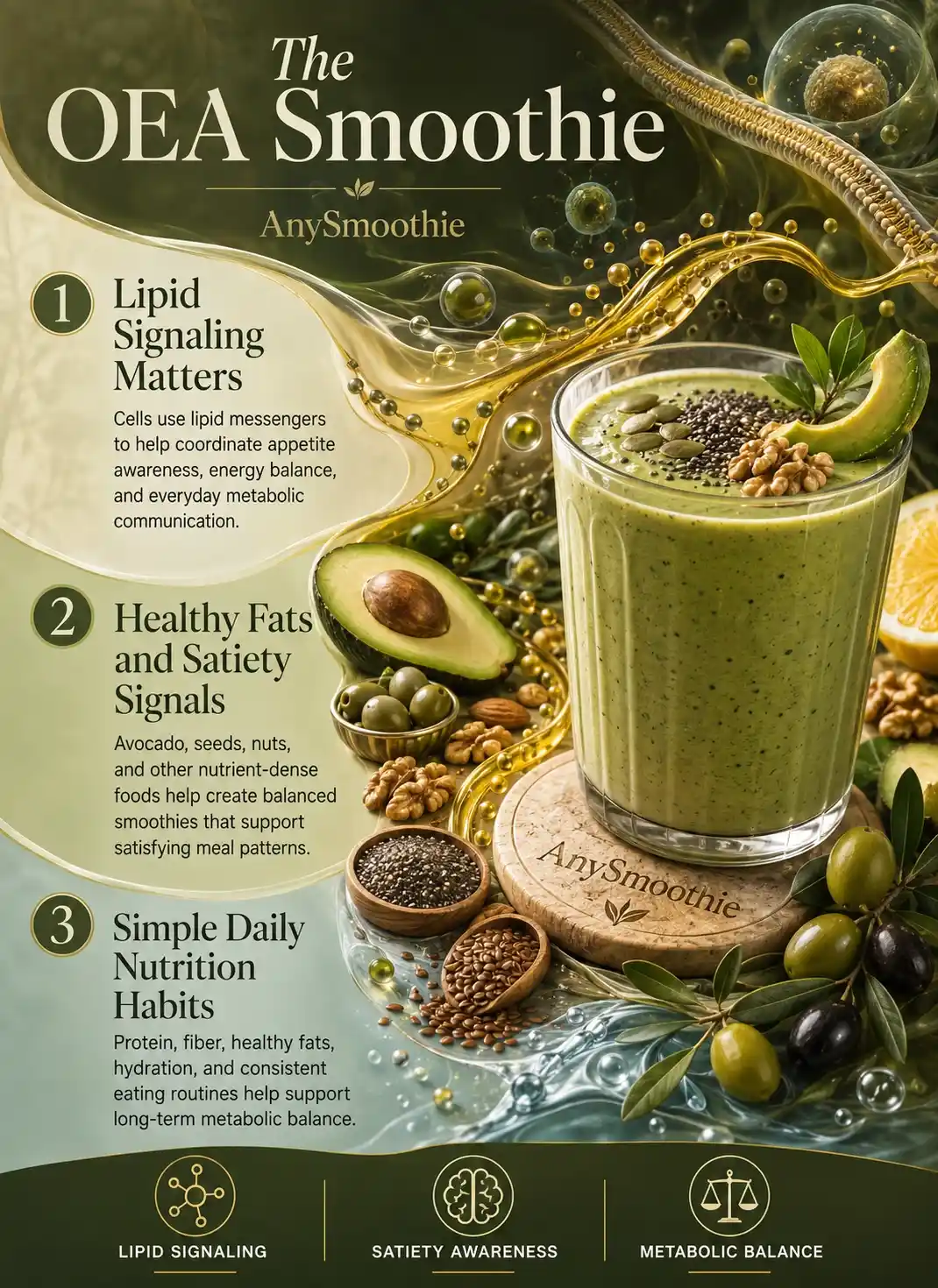
The best smoothie ingredients for supporting healthy lipid signaling
OEA begins with oleic acid chemistry, so fat quality matters. A oleic acid-derived OEA review explains that OEA is derived from monounsaturated fat. In smoothies, the goal is balance, not a huge pour of oil.
Healthy blends work best when they give the body a clear meal signal and steady texture. The right ingredients also make the drink more filling, which makes the routine easier to keep.
Healthy fats that pair well with OEA-focused blends
Avocado, chia seeds, hemp seeds, ground flax, and nut butters all bring useful fats into the mix. Small amounts of MCT oil can work too, but it’s easy to overdo.
Use enough fat to slow digestion a bit and improve satiety. Use too much, and the smoothie gets heavy without gaining much in return.
Fiber and protein that help slow the sugar spike
Berries, leafy greens, oats, Greek yogurt, kefir, and simple protein powders all help round out the drink. Fiber adds structure. Protein adds staying power.
That mix matters because it keeps fruit from taking over the whole glass. It also makes the smoothie feel more like a meal and less like dessert.
Plant compounds that make the smoothie more useful
Cocoa, cinnamon, turmeric, ginger, and dark berries add more than flavor. They bring plant compounds that support overall metabolic health and make the smoothie easier to stick with.
Bright taste matters. If a smoothie tastes good, you’ll drink it again, and repetition matters more than novelty.
| Ingredient | Main role | How it supports lipid signaling | Best time to use | Notes or cautions |
|---|---|---|---|---|
| Avocado | Creamy fat source | Adds monounsaturated fat and fullness | Morning or lunch | Start with a small portion |
| Chia or ground flax | Fiber plus fat | Slows digestion and balances fruit | Any time | Ground flax blends more smoothly |
| Greek yogurt or kefir | Protein and texture | Makes the meal feel more complete | Morning or post-workout | Choose plain if you can |
| Spinach or kale | Low-sugar volume | Adds nutrients without much sugar | Light snack or breakfast | Use less if raw greens bother you |
| Cocoa or cinnamon | Flavor support | Keeps blends satisfying without extra sugar | Afternoon or dessert-style smoothie | Use unsweetened cocoa |
The pattern is simple. Build around fat, add fiber and protein, then use fruit and spices for taste. That gives the smoothie a better nutritional shape without making it complicated.
3 OEA smoothies for optimizing lipid signaling
These three blends are built for different moments. One works well in the morning, one feels lighter, and one gives you a richer afternoon option.
Creamy avocado berry smoothie for a steady morning start
Ingredients
- 1/2 avocado
- 1 cup mixed berries
- 1 tablespoon chia seeds
- 1 scoop plain protein powder
- 1 cup unsweetened almond milk
- Ice, as needed
- Pinch of cinnamon
Blend until smooth.
The avocado and chia slow the pace of digestion. The berries keep the flavor bright without pushing the sugar too high.
Estimated Nutrition per Serving
Estimated with a standard plain protein powder and unsweetened almond milk.
- Calories: ~440 kcal
- Protein: ~31 g
- Carbohydrates: ~38 g
- Fat: ~23 g
- Fiber: ~18 g
- Sugars: ~14 g
Green tropical smoothie for a lighter lipid-friendly reset
Ingredients
- 1 cup spinach
- 1/2 cup pineapple or mango
- 1 tablespoon hemp seeds
- 1 scoop protein powder
- 1 cup water or unsweetened coconut water
- Lime juice, optional
Blend until smooth.
This one feels fresh and light. The greens and hemp seeds keep the drink from turning into a fruit shake.
Estimated Nutrition per Serving
Estimated with pineapple, unsweetened coconut water, and a standard protein powder.
- Calories: ~270 kcal
- Protein: ~29 g
- Carbohydrates: ~29 g
- Fat: ~7 g
- Fiber: ~5 g
- Sugars: ~18 g
I’d add the lime only after the first taste. Pineapple can already bring plenty of brightness, and a very juicy lime can easily push this lighter blend from fresh to overly sharp.
Cocoa almond smoothie for a more filling afternoon option
Ingredients
- 1 cup unsweetened almond milk
- 1 tablespoon almond butter
- 1 tablespoon unsweetened cocoa
- 1/4 cup rolled oats or 1 tablespoon chia seeds
- 1 scoop protein powder
- 1/2 teaspoon vanilla extract
- Ice, as needed
Blend until smooth.
This blend has a richer texture and a longer finish. It works well when you want something that holds you until dinner.
Estimated Nutrition per Serving
Estimated with rolled oats, a standard protein powder, and unsweetened almond milk.
- Calories: ~375 kcal
- Protein: ~33 g
- Carbohydrates: ~31 g
- Fat: ~17 g
- Fiber: ~8 g
- Sugars: ~5 g
If you choose chia instead of oats, the texture changes more than the ingredient swap might suggest. Chia keeps thickening after blending, while oats give a softer, more cereal-like body.
How to build your own OEA smoothie without overdoing sugar
A simple formula keeps this easy to repeat. Start with an unsweetened liquid, add greens or another low-sugar base, then layer in fat, protein, and a modest amount of fruit.
- 1 cup unsweetened liquid
- 1 handful of greens or another vegetable
- 1 piece of fruit or 1 cup berries
- 1 fat source, like avocado, chia, flax, or nut butter
- 1 protein source, like yogurt, kefir, or a plain powder
- 1 spice or flavor booster, like cinnamon, cocoa, or ginger
Too much juice can push the drink toward dessert. Oversized portions can do the same. A fruit-only smoothie can taste good and still leave you hungry soon after.
Portion size matters too. If the cup keeps getting bigger, the balance gets worse. Keep the recipe simple, then adjust one variable at a time.
Conclusion
OEA smoothies work best when they combine healthy fats, fiber, protein, and smart flavor choices. That mix helps support natural lipid signaling without making breakfast feel heavy or fussy.
The best routine is the one you’ll repeat. Start with one solid smoothie, keep it balanced, and build from there.
🛡️ Safety Notes & Dietary Interactions
- OEA Is Part of a Larger Nutrition Picture: Oleoylethanolamide works within broader appetite and metabolic signaling networks. Sleep quality, meal composition, physical activity, hydration, and overall dietary habits all influence how those pathways function.
- Avoid Turning Healthy Smoothies Into Sugar Loads: Excess fruit juice, sweetened yogurts, syrups, and oversized portions can overwhelm the balance of fat, fiber, and protein that helps support steadier satiety patterns.
- Introduce Higher-Fat Ingredients Gradually: Avocado, chia, flax, hemp seeds, nut butters, and oils can improve texture and fullness, but large amounts may feel heavy or cause digestive discomfort for some individuals.
- Seek Personalized Guidance When Appropriate: Individuals managing medical conditions, digestive disorders, weight-related concerns, or prescription medication use should discuss significant dietary changes with a qualified healthcare professional.
FAQ
What is OEA and why is it connected to fullness?
Oleoylethanolamide, commonly called OEA, is a naturally occurring lipid messenger produced by the body. It is studied because it helps communicate information about fat intake and satiety. Rather than acting as an appetite suppressant, OEA is considered part of the body’s normal meal-related signaling system.
Do OEA smoothies actually contain OEA?
Most smoothies do not contain meaningful amounts of OEA itself. Instead, they use foods that provide healthy fats, fiber, and protein, which support the nutritional environment associated with normal lipid signaling and satiety responses. The focus is on supporting natural physiology through balanced food choices.
Why are healthy fats important in OEA-focused smoothies?
OEA is derived from oleic acid-related lipid pathways, which is why foods rich in monounsaturated fats often appear in these recipes. Ingredients such as avocado, almonds, almond butter, hemp seeds, chia seeds, and flaxseed help create a more satisfying smoothie while contributing beneficial fats.
What is the biggest mistake people make with these smoothies?
The most common mistake is relying too heavily on fruit while neglecting protein, fiber, and fat. A fruit-dominant smoothie may taste great but can leave you hungry sooner. A more balanced formula tends to feel more complete and easier to fit into a long-term routine.
How often can OEA-inspired smoothies fit into a routine?
They can fit wherever they make sense within a balanced eating pattern. Many people use them for breakfast, post-workout nutrition, or as a structured snack. Consistency matters more than complexity, so a simple smoothie you enjoy regularly is usually more useful than constantly changing recipes.

Medical Disclaimer: AnySmoothie content is for educational purposes only and is not a substitute for professional medical advice. Consult a healthcare provider for personalized guidance. See our full Disclaimer & Terms of Use. AI Transparency: AnySmoothie may use AI to support content development. All content undergoes human editorial review for accuracy, clarity, and editorial quality. See our full AI Transparency.