
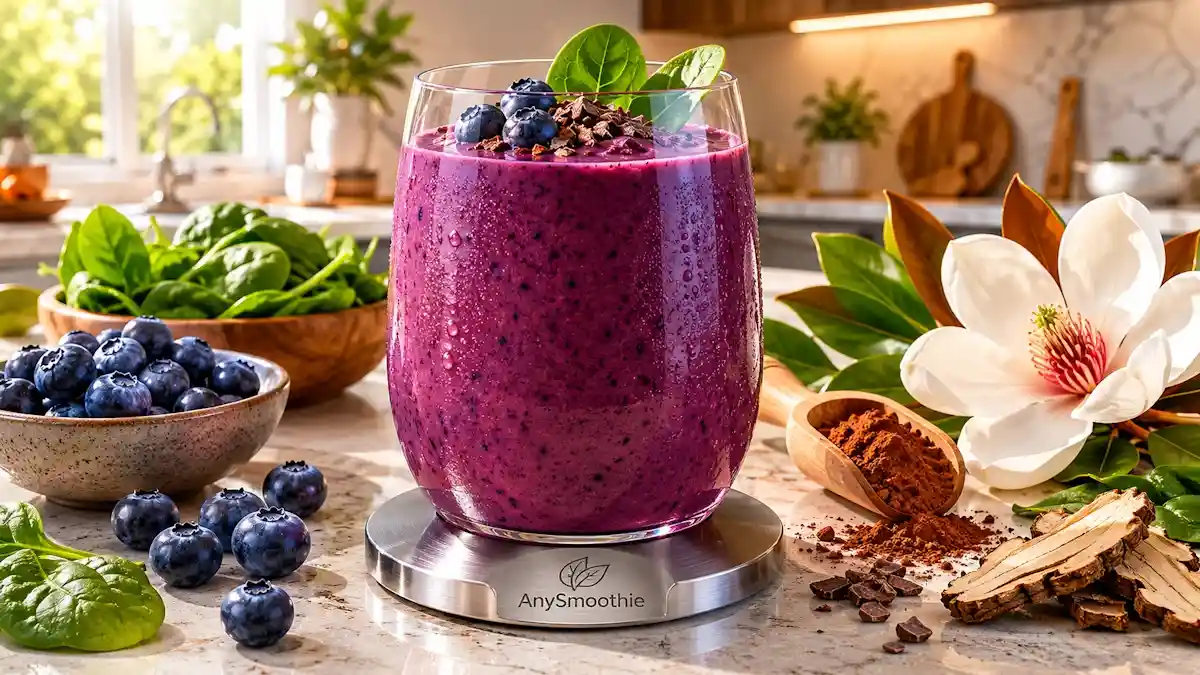
Some people are starting to look at honokiol as a smoothie add-in because they want a simple way to support cell energy. That interest comes from a basic idea, if a plant compound can reach the right place inside the cell, it may matter more than a generic antioxidant.
This article keeps that idea grounded. It covers what honokiol is, how it may relate to mitochondrial SIRT3 support, and how to think about it in everyday nutrition. The focus is on support and wellness, not a cure.
How Honokiol Compounds Influence Cellular Energy Signaling
Honokiol comes from magnolia bark. It has drawn attention because it sits at the intersection of plant chemistry and mitochondrial research, where small shifts in cell signaling can affect energy use.
That makes it interesting for people who want more than a standard wellness blend. When plant compounds interact with mitochondria, the discussion is not only about antioxidants. It is also about where the compound lands inside the cell and what signals it may touch. Learn more about honokiol
Mitochondrial Communication and Polyphenol Transport
Location matters here. Honokiol is fat-soluble, so it may move through cell membranes differently than many water-soluble plant compounds. That is part of why it gets attention in conversations about inner-cell energy support.
Once a compound can reach mitochondrial membranes, it can take part in a different level of signaling. For readers thinking about smoothies, the takeaway is simple, food pairing can shape absorption, and fat-containing ingredients often help plant compounds travel better.
Why honokiol stands out from other mitotropic polyphenols
| Compound | Physiological Mechanism | Cellular Target Site | Best Smoothie Pairing | Target Respiratory Complex Outcome |
|---|---|---|---|---|
| Honokiol from magnolia | Often discussed for supporting mitochondrial SIRT3-linked activity and steadier electron transport under stress | Mitochondria, with interest in the inner mitochondrial matrix | Berry, avocado, or cacao smoothies with healthy fat | Support for more stable respiratory chain function |
| Resveratrol | Commonly linked to AMPK and SIRT1 signaling, which can influence mitochondrial biogenesis | Nucleus and cytoplasm, with downstream mitochondrial effects | Grape, berry, or tart cherry smoothies | Broader support for respiratory efficiency |
| Quercetin | Studied for antioxidant buffering and support of cellular redox balance | Cytoplasm and mitochondria | Citrus, apple, or mixed berry smoothies | General support for smoother electron flow |
Honokiol draws special interest because it is often described as having a direct structural affinity for the inner mitochondrial matrix. That makes it different from polyphenols that act more indirectly.
The compound matters, but so does where it can go inside the cell.
SIRT3 Pathways and Oxidative Balance Mechanisms
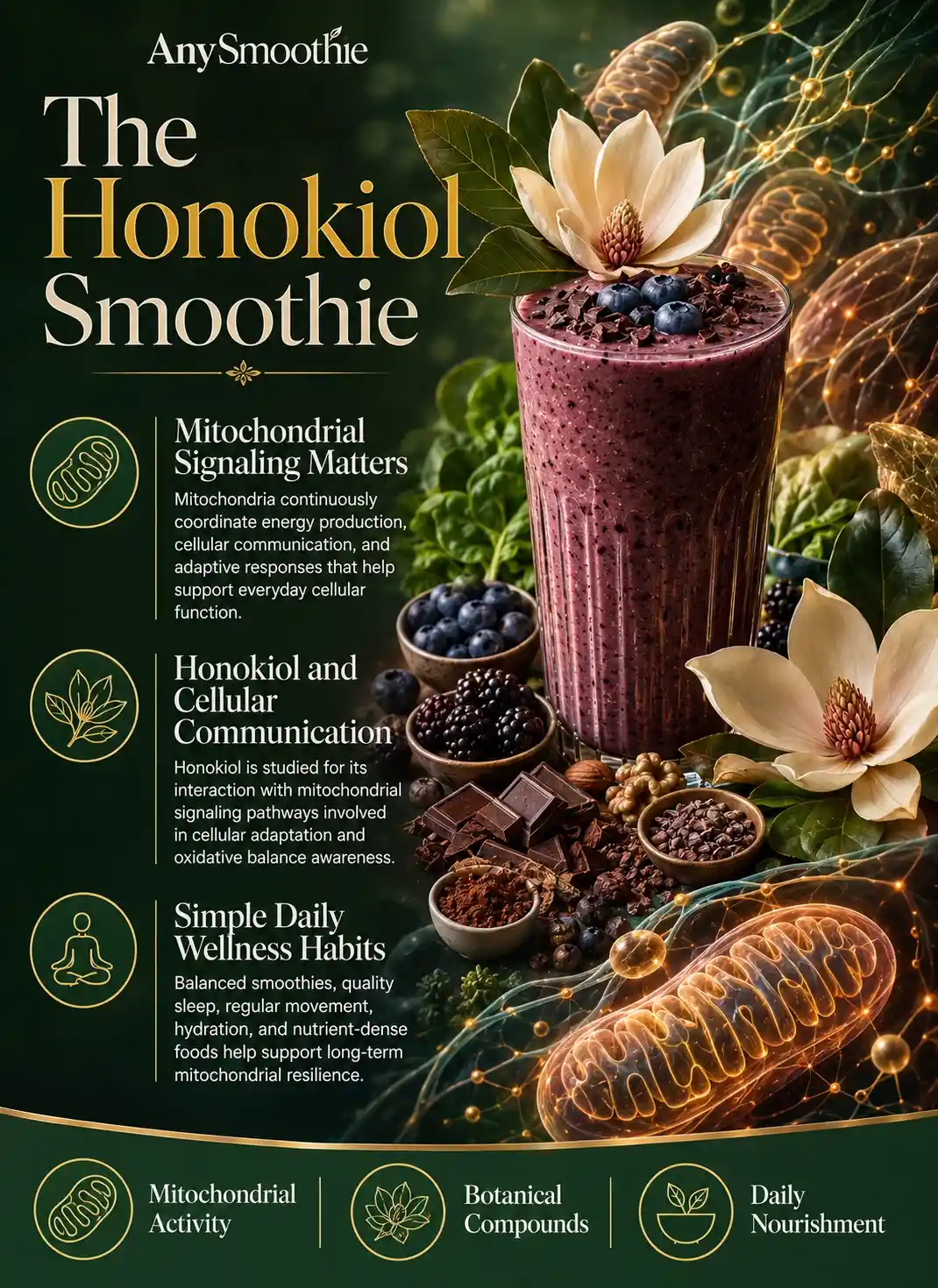
SIRT3 is a nutrient-responsive enzyme inside mitochondria. Its job is tied to efficiency, stress response, and the clean handling of energy production.
In plain terms, SIRT3 helps mitochondria stay organized when demands rise. It supports protein cleanup, helps manage oxidative balance, and keeps key energy steps running with less friction. That is why honokiol smoothies mitochondrial SIRT3 support gets mentioned together, even though the smoothie is only one piece of the picture. For a broader look, see SIRT3: A Central Regulator of Mitochondrial Adaptation.
Cellular Adaptation Through Nutrient Responsive Enzymes
SIRT3 does its best work when the body is in a good metabolic state. That includes enough sleep, regular movement, and balanced meals that do not keep energy swings too sharp.
During higher stress, mitochondria can produce more reactive byproducts. SIRT3 helps the cell handle that pressure so the energy system stays steady. It does not erase stress, but it gives the cell a better way to respond.
Nutrient signals shape that process over time. Exercise, fasting windows, meal timing, and food quality can all influence the messages mitochondria receive. Honokiol may fit into that pattern, but it is only one part of a larger routine.
3 Honokiol Smoothie Recipes for Functional Wellness
A smoothie works best when it tastes good enough to repeat. The recipes below are simple, flexible, and built around ingredients that pair well with fat-soluble plant compounds.
Berry green smoothie
Ingredients
- 1 cup frozen blueberries
- 1 cup spinach
- 3/4 cup plain Greek yogurt
- 1 tablespoon chia seeds
- 1/4 avocado
- 1/2 cup water, as needed
- Honokiol product, only if intended for food use and according to the product directions
Blend until smooth. The flavor stays mild, while the fat from avocado and yogurt helps the texture feel creamy. If you use a honokiol product made for food use, this is a good place for it.
Estimated Nutrition per Serving
Estimated with nonfat plain Greek yogurt and excluding honokiol, whose formulation and contribution vary by product.
- Calories: ~350 kcal
- Protein: ~22 g
- Carbohydrates: ~43 g
- Fat: ~13 g
- Fiber: ~15 g
- Sugars: ~22 g
Frozen blueberries and chia can make this much thicker after a few minutes. If I were making it ahead, I’d leave the initial blend slightly looser rather than thinning it later.
Cacao banana smoothie
Ingredients
- 1 ripe banana
- 1 tablespoon unsweetened cocoa powder
- 1 tablespoon almond butter
- 1/4 cup rolled oats
- 1 cup unsweetened almond milk
- Honokiol product, only if intended for food use and according to the product directions
Blend until smooth. This version feels more filling and works well in the morning or after a busy afternoon. The nut butter adds fat, which can help with plant compound absorption.
Estimated Nutrition per Serving
Estimated with unsweetened almond milk and excluding honokiol.
- Calories: ~350 kcal
- Protein: ~10 g
- Carbohydrates: ~55 g
- Fat: ~13 g
- Fiber: ~10 g
- Sugars: ~18 g
Citrus turmeric smoothie
Ingredients
- 1 medium orange, peeled
- 1/2 cup pineapple
- 1/4 teaspoon freshly grated ginger
- 1/4 teaspoon ground turmeric
- 3/4 cup plain coconut yogurt or kefir
- 1/2 cup water, as needed
- Honokiol product, only if intended for food use and according to the product directions
Blend until smooth. The flavor is bright and lighter than the cacao version. It fits well on days when you want something fresh without a heavy taste.
Estimated Nutrition per Serving
Estimated with plain low-fat kefir and excluding honokiol.
- Calories: ~245 kcal
- Protein: ~10 g
- Carbohydrates: ~48 g
- Fat: ~3 g
- Fiber: ~6 g
- Sugars: ~35 g
Fresh ginger and turmeric both become assertive quickly in a citrus-heavy blend. Starting with the smaller amounts above keeps the orange and pineapple in the foreground.
Each of these can be adjusted to your taste. Start with the base ingredients, then add honokiol only if the form you have is meant for that use.
Daily Nutrition Patterns Supporting Mitochondrial Resilience
Smoothies can fit into a solid wellness plan, but they do not carry the whole load. Mitochondria respond to the full pattern of your day.
Food matters, yet sleep, hydration, and movement matter too. A short walk after meals, steady sleep times, and meals built around protein, fiber, and healthy fats can all support better energy output. Ultra-processed foods can crowd out those habits, so keeping them in check helps the whole system.
Lifestyle Factors Influencing Healthy Energy Production
Regular exercise gives mitochondria a reason to stay active. Stress management helps keep energy demand from swinging too hard. Good sleep gives the cell time to repair and reset.
That is the real frame for honokiol smoothies and mitochondrial SIRT3 support. A smoothie can be one useful habit, but it works best inside a larger pattern of consistent choices.
Conclusion
Honokiol is getting attention because it may fit into the conversation around mitochondrial SIRT3 support in a more direct way than many plant compounds. Smoothies can be a practical place to include it, as long as the rest of the diet supports the same goal.
The simple lesson is steady habits first, then targeted ingredients. If you try a honokiol smoothie, keep it easy to repeat, pay attention to how you feel, and give the routine time to matter.

Medical Disclaimer: AnySmoothie content is for educational purposes only and is not a substitute for professional medical advice. Consult a healthcare provider for personalized guidance. See our full Disclaimer & Terms of Use. AI Transparency: AnySmoothie may use AI to support content development. All content undergoes human editorial review for accuracy, clarity, and editorial quality. See our full AI Transparency.