
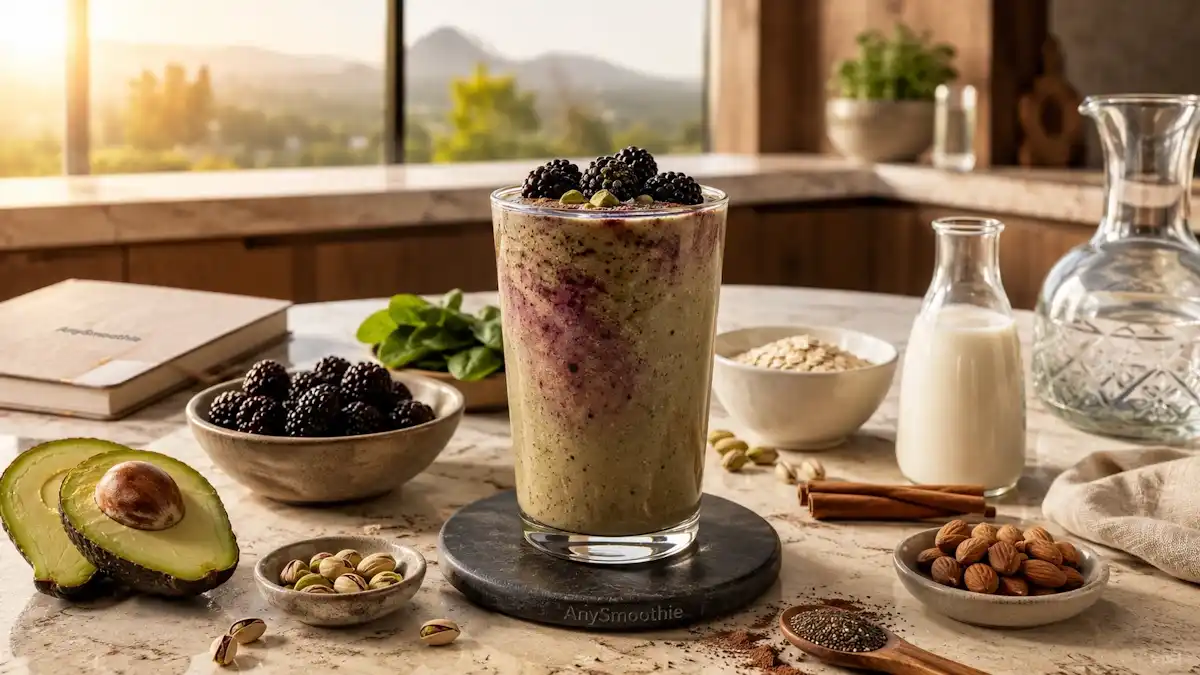
A smoothie can help your fasting schedule or undo it in minutes. The difference usually comes down to ingredients, portion size, and when you drink it.
If you want steadier energy, fewer hunger swings, and better fuel switching, your blend has to match the window you’re in. The best smoothies for metabolic flexibility during fasting are simple, timed with purpose, and built for your current goal, whether that’s a gentle fast break, post-workout recovery, or a meal replacement.
How metabolic flexibility changes what you drink during a fasting window
Metabolic flexibility means your body can move between carbs and stored fat without much drama. During a fast, insulin usually drops and the body leans more on stored fuel. When you eat, it shifts back toward incoming carbs.
That switching ability matters because a smoothie can either keep the handoff smooth or jolt it with a sugar rush.
What metabolic flexibility means in everyday terms
In daily life, metabolic flexibility looks like steady energy between meals and a calmer response after you eat. Your body is better at using the fuel that is available, which can make fasting feel less abrupt.
A smoothie with protein and fiber usually creates a smaller glucose swing than juice or fruit alone. That matters because the first thing you consume after a fast often sets the tone for the next few hours.
Why smoothie ingredients can help or hurt fasting goals
Protein, fiber, fat, and water change how fast a drink moves through digestion. Sugar does the opposite when it shows up in large amounts. A smoothie with berries, chia, and unsweetened protein powder is generally more filling than one built on juice, honey, sweetened yogurt, and several bananas, which may leave you feeling hungry again sooner.
For a broader overview of how meal composition influences postprandial glucose responses, see this systematic review on PubMed.
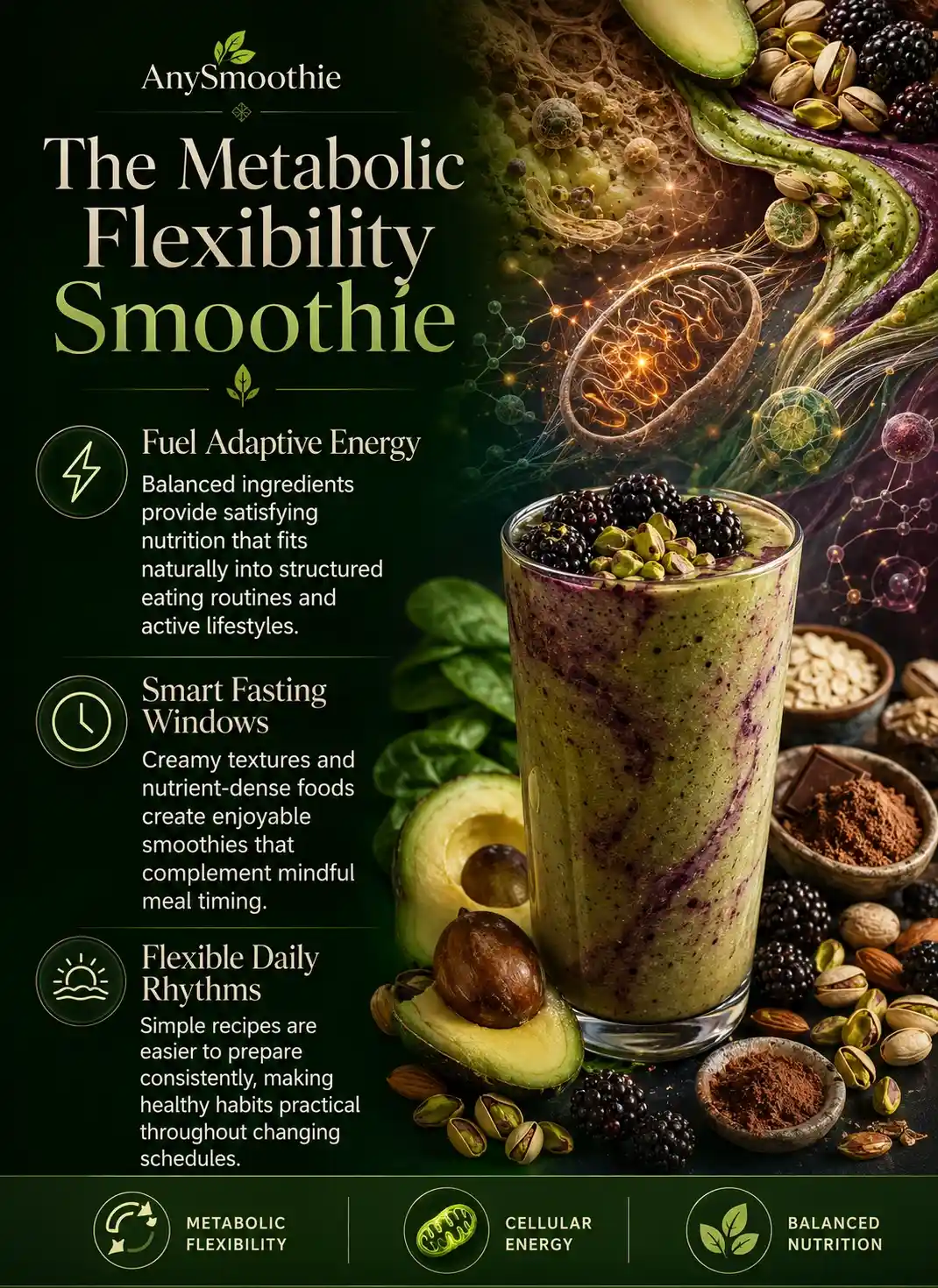
The best smoothie formula for staying aligned with your fasting window
The simplest rule is to build around protein first, then add fiber, gentle fats, and low-sugar plants. That keeps the smoothie useful without turning it into a dessert drink.
| Ingredient | What it does | When to use it | What to limit | Why it fits fasting windows |
|---|---|---|---|---|
| Unsweetened protein powder or Greek yogurt | Adds protein and satiety | Breaking a fast or post-workout | Sweetened yogurt and dessert flavors | Helps control appetite and keeps the drink anchored |
| Chia or flax seeds | Thickens texture and slows digestion | Light fast break or meal replacement | Very large amounts if your stomach is sensitive | Supports a steadier release of energy |
| Avocado or hemp hearts | Adds gentle fat and creaminess | Longer eating window or bigger hunger | Heavy nut butter portions in a light reset | Makes the smoothie feel more complete |
| Berries | Brings flavor with less sugar than juice | First meal, recovery, or snack | Juice, dates, and multiple bananas | Gives carbs without a big spike |
| Spinach, cucumber, zucchini | Adds volume with minimal sugar | Any fast-aware smoothie | Sweet syrups or fruit juice as the base | Keeps calories lower while still giving body |
That balance usually works better than a long ingredient list. If your goal is a very low-carb bridge, smoothies for deep ketosis fit a different lane.
Build the base with protein, fiber, and gentle fats
Greek yogurt works well when you want a thicker, more filling drink. Unsweetened protein powder is easier when you want to keep carbs lower.
Chia seeds, flax, hemp hearts, and avocado all help the smoothie feel more complete. Keep the list short, though. The more add-ins you stack, the easier it is to overshoot your target.
Choose carbs that support, not spike
Berries, spinach, cucumber, and zucchini give volume without much sugar. Banana can work in a small amount, especially after training, but a full banana plus juice changes the pace fast.
Skip fruit juice unless you want the smoothie to act more like a quick carb drink. That can be useful after hard exercise, but it is a different tool.
Time your smoothie around your fasting schedule
A smoothie that breaks a fast should usually be smaller and easier to digest. A post-workout smoothie can carry more carbs because the body is ready to use them.
A meal-replacement smoothie can go heavier on fat and fiber because the goal is satiety.
3 Smoothies for metabolic flexibility during fasting
Common mistakes that make fasting smoothies less effective
A fasting-friendly smoothie is usually defined by what you leave out as much as by what you include. A few common mistakes can turn a balanced blend into a high-sugar meal that no longer matches your fasting goals. Keeping the recipe simple makes it easier to stay aligned with your eating window.
Watch for sugar creep and oversized servings
A smoothie turns messy when fruit stacks, sweetened yogurt, honey, syrups, and large protein scoops all land in the same cup. Calories climb fast, and the drink stops matching a fasting goal.
Keep one fruit source, one protein source, and one fat source. Repeatable formulas work better than a custom build every time.
Don’t ignore digestion and the timing of the drink
A blender makes food easier to swallow, but your body still has to process it. Sip slowly if you are breaking a long fast, because speed changes how full you feel.
After exercise, your gut usually handles a little more. During a short eating window, choose simpler ingredients so the smoothie supports the schedule instead of crowding it.
Conclusion
The smartest fasting smoothies are the ones that match the moment. A gentle break-fast blend looks different from a recovery smoothie, and both look different from a meal replacement.
When you keep protein, fiber, fats, and low-sugar plants in the right balance, you support a smoother shift between fasting and feeding. Match the smoothie to the fasting goal, not the other way around.
🛡️ Safety Notes & Dietary Interactions
- Fasting Goals: Any smoothie containing calories technically ends a fast. Choose ingredients and timing that match your specific objective, whether that is breaking a fast gently, supporting recovery after exercise, or replacing a meal within your eating window.
- Digestive Comfort: After a prolonged fast, begin with a modest portion and drink it slowly. Simple combinations with moderate fiber are often easier to tolerate than large, ingredient-heavy smoothies consumed too quickly.
- Medical Considerations: If you have diabetes, use glucose-lowering medications, or follow fasting for medical reasons, discuss significant dietary changes with a qualified healthcare professional before modifying your fasting routine.
- Balanced Ingredients: Prioritize protein, fiber, healthy fats, and low-sugar whole foods over fruit juice, syrups, or heavily sweetened ingredients. A balanced smoothie generally supports steadier energy and is easier to fit into a sustainable fasting schedule.
FAQ
Can I drink a smoothie without breaking my fast?
In most cases, no. A smoothie that contains calories, including protein, fruit, fats, or fiber, breaks a fast. If your goal is intermittent fasting, think of a smoothie as your first meal rather than something consumed during the fasting period. Timing the smoothie appropriately is usually more important than trying to make it “fasting-friendly.”
What is the best smoothie to break a fast?
A balanced smoothie with protein, moderate fiber, healthy fats, and lower-sugar fruits is often the easiest place to start. Ingredients such as Greek yogurt or protein powder, berries, spinach, chia seeds, and unsweetened milk alternatives provide a gentler transition than large fruit-only smoothies or sugary blended drinks after a fasting window.
Should I add healthy fats to a fasting smoothie?
Healthy fats such as avocado, chia seeds, flaxseed, hemp hearts, or nut butter can improve satiety and create a steadier eating experience after fasting. The amount should match your goal, however. A light fast-breaking smoothie usually needs less fat than a meal-replacement smoothie designed to keep you full for several hours.
Which fruits work best for metabolic flexibility smoothies?
Berries are often the preferred option because they provide fiber, flavor, and beneficial plant compounds with less sugar than many tropical fruits. Small portions of banana or pineapple can also fit, particularly after exercise. Building the smoothie around whole fruit instead of juice generally supports a more balanced nutritional profile.
What mistakes make fasting smoothies less effective?
The most common mistakes are adding too many sweet ingredients, creating oversized portions, and skipping protein altogether. Combining juice, sweetened yogurt, syrups, several servings of fruit, and multiple calorie-dense add-ins can quickly turn a purposeful smoothie into a dessert-like drink. Simpler, balanced recipes are usually easier to repeat and better aligned with fasting goals.

Medical Disclaimer: AnySmoothie content is for educational purposes only and is not a substitute for professional medical advice. Consult a healthcare provider for personalized guidance. See our full Disclaimer & Terms of Use. AI Transparency: AnySmoothie may use AI to support content development. All content undergoes human editorial review for accuracy, clarity, and editorial quality. See our full AI Transparency.