
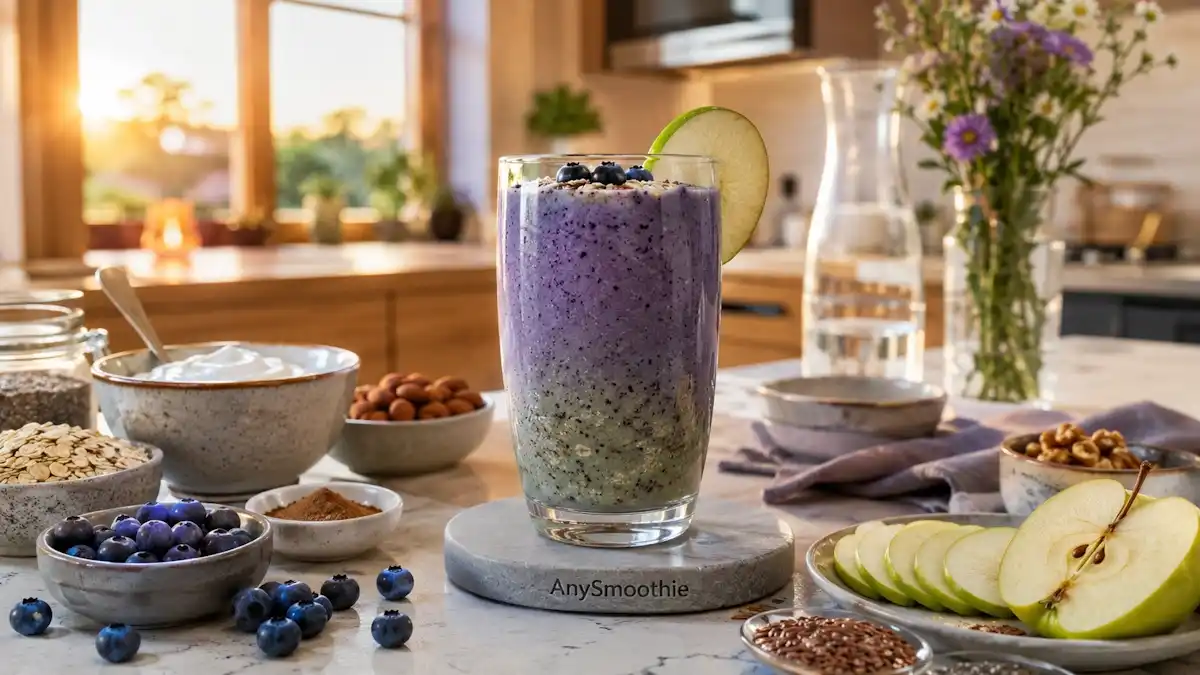
A breakfast smoothie can set the tone for the whole day. If it’s mostly fruit and liquid, you may feel hungry again fast. If it balances protein, fiber, and healthy fats, it can support steadier energy and a calmer morning appetite.
That balance matters more than chasing a superfood. The best morning smoothies to support insulin sensitivity are built like a full meal, not a sweet drink. That lines up with broader guidance from MD Anderson’s overview of the best diet for insulin resistance, which emphasizes whole foods over processed ones.
What makes a smoothie insulin-friendly in the morning?
A good smoothie slows the pace of digestion. Protein helps with that most, because it adds staying power and keeps the drink from feeling like juice in disguise. Fiber does something similar by slowing how quickly carbs move through the system.
Healthy fats matter too. They help you feel satisfied, and they soften the effect of fruit sugars. That’s why a smoothie with berries, spinach, yogurt, and chia feels different from one built on mango, juice, and honey.
Liquid calories can be tricky in the morning because they go down fast. Blending doesn’t automatically make a smoothie balanced. A blender can make anything drinkable, but it can’t fix a shaky ingredient list.
A smoothie becomes steadier when sweetness is supported by protein, fiber, and fat.
The three parts every balanced smoothie needs
The simplest formula is easy to remember:
- Protein: Greek yogurt, kefir, cottage cheese, whey, or a clean protein powder
- Fiber-rich plants: Spinach, chia seeds, flax, berries, or avocado
- Healthy fat: Nut butter, hemp hearts, avocado, or chia seeds
If you want a quick base to study, a healthy Greek yogurt smoothie base shows how protein can anchor a creamy breakfast. The point is balance, not perfection. One strong ingredient can’t carry the whole glass.
Ingredients that can work against insulin sensitivity
A few common choices push a smoothie toward fast-digesting carbs:
- Fruit juice
- Sweetened yogurt
- Large banana portions
- Added sugar
- Flavored protein powders with heavy sweeteners
- Honey, dates, and syrup in generous amounts
These ingredients aren’t forbidden. They just move the smoothie closer to dessert. If insulin sensitivity is the goal, portions matter as much as ingredient quality. A small amount of sweetness can help flavor, but too much can crowd out the more stabilizing parts of the recipe. If you’d like a broader overview of smoothie nutrition for insulin sensitivity beyond breakfast, explore our guide to smoothie strategies for insulin sensitivity.
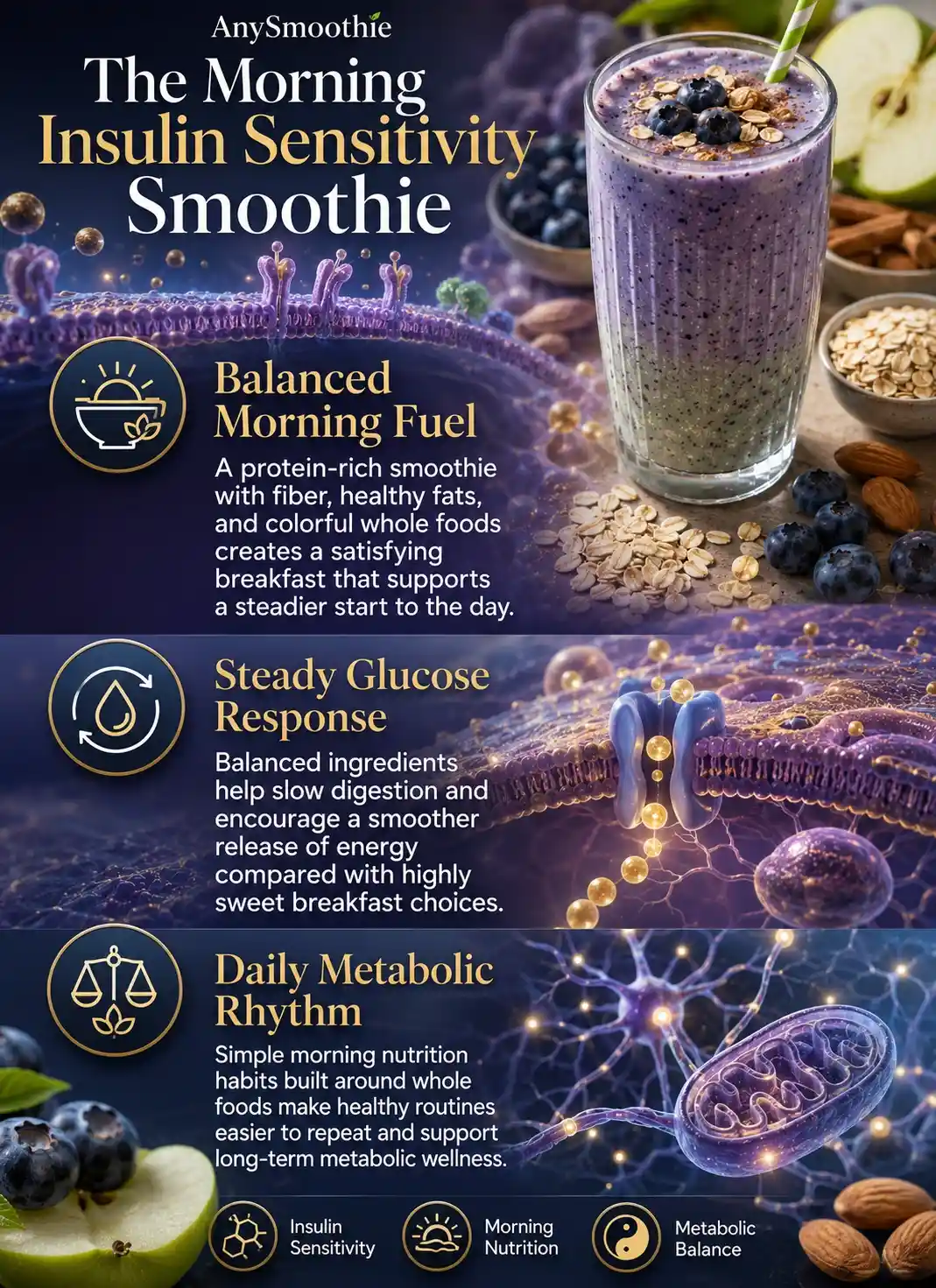
3 Morning smoothies to support insulin sensitivity
These three versions work because they each pair fruit with protein, fiber, and fat. You can rotate them through the week without getting bored.
How to build your own smoothie without spiking sugar
A reliable smoothie formula takes the guesswork out of breakfast. Start with protein, add fibrous plants, then bring in a measured fruit portion and a fat source. Finish with an unsweetened liquid.
A simple structure looks like this:
- 20 to 30 grams of protein
- 1 to 2 cups of non-starchy greens
- 1 measured fruit portion
- 1 source of fat
- Water, unsweetened almond milk, or plain kefir
If you want a fruit-forward blend without going overboard, keep the fruit modest and use frozen texture to your advantage. Frozen cauliflower rice can add thickness without much sweetness. Water works fine too, especially if the rest of the recipe already has flavor.
The goal is a stable morning meal, not a dessert in a glass.
When a smoothie should be a meal, not a snack
Make the smoothie bigger when breakfast needs to carry you for hours. That’s common after a workout, on a long commute, or on mornings when you know lunch will run late. In those cases, protein and fiber matter even more.
If you usually feel hungry an hour after a smoothie, the fix is often simple. Add protein, cut back on fruit, and include a fat source. That shift changes the whole rhythm of the morning.
How to compare smoothie ingredients before you blend
This quick comparison helps you spot the better choices faster.
| Ingredient | Sugar level | Fiber | Protein/Fat | Best use |
|---|---|---|---|---|
| Spinach | Very low | Moderate | Low | Volume and micronutrients |
| Chia seeds | Very low | High | Some fat | Thickening and satiety |
| Greek yogurt | Low | Low | High protein | Creamy protein base |
| Avocado | Very low | Moderate | High fat | Creaminess and fullness |
| Berries | Moderate | Moderate | Low | Fruit flavor with more fiber |
| Banana | Higher | Moderate | Low | Small amount for texture |
| Fruit juice | High | Low | Low | Best kept out of the base |
The pattern is clear. The most useful ingredients tend to be low in sugar and stronger in protein, fiber, or fat. That’s what makes them work so well in morning smoothies to support insulin sensitivity.
Best picks for protein, fiber, and healthy fats
Greek yogurt, unsweetened protein powder, chia, flax, hemp hearts, nut butters, and avocado are the easiest wins. They build texture and stay satisfying. If you like a tangy base, kefir is another solid option.
Ingredients to limit or use in small amounts
Keep an eye on juice, sweetened yogurt, dried fruit, flavored syrups, and large portions of tropical fruit. They can fit into a smoothie, but the portion needs to stay small if steadier glucose response is the goal. Think of them as accents, not the foundation.
Conclusion
The best smoothies for the morning are built for steady digestion, not for maximum sweetness. When protein, fiber, and fats show up together, fruit has a much easier job.
That’s the simple formula to remember. Use a measured fruit portion, keep liquid unsweetened, and let ingredients like Greek yogurt, chia, flax, and avocado do the heavy lifting. Small changes can make breakfast feel more stable, more satisfying, and a lot easier to repeat.
🛡️ Safety Notes & Dietary Interactions
- Blood Sugar Management: Pair your morning smoothie with adequate protein, fiber, and healthy fats instead of relying on fruit alone. A balanced recipe generally supports steadier energy and helps avoid large swings in hunger after breakfast.
- Medication Awareness: If you have diabetes or take medications that affect blood glucose, speak with your healthcare provider before making major dietary changes, especially if you plan to change your carbohydrate intake or meal timing.
- Portion Size: Even nutritious smoothies can become high in calories or carbohydrates when large amounts of fruit, juice, sweeteners, or nut butters are added. Keep portions appropriate for your overall nutrition goals.
- Ingredient Quality: Choose unsweetened dairy or plant-based products whenever possible, and prioritize whole fruits over fruit juice. Simple ingredient lists and minimally processed foods generally create a more balanced breakfast smoothie.
FAQ
Are morning smoothies actually good for insulin sensitivity?
Morning smoothies can support insulin sensitivity when they are built as balanced meals instead of sweet beverages. Including protein, fiber, and healthy fats helps slow digestion and creates a steadier rise in blood glucose after eating. Whole fruits, leafy greens, and unsweetened ingredients usually provide a better nutritional foundation than fruit juice, syrups, or heavily sweetened yogurt.
Which fruits are the best choice for insulin-friendly smoothies?
Berries are often one of the best options because they provide fiber, vitamins, and natural sweetness without contributing as much sugar as many tropical fruits. Small portions of apples, pears, or kiwi can also fit well. Bananas, mangoes, and grapes are not off-limits, but using moderate portions helps keep the smoothie balanced and better suited to long-lasting morning energy.
Should I add protein powder to my breakfast smoothie?
Protein powder can be a convenient way to increase the protein content when whole-food options are not practical. Plain Greek yogurt, kefir, cottage cheese, or unsweetened protein powders all work well. Aim for enough protein to make the smoothie feel like a complete breakfast rather than a light snack that leaves you hungry shortly afterward.
Can I drink these smoothies if I have diabetes or prediabetes?
Many people with diabetes or prediabetes can enjoy balanced smoothies, but recipes should be adapted to individual nutrition needs and treatment plans. Focusing on measured fruit portions, adequate protein, healthy fats, and fiber is generally a better approach than relying on fruit-heavy blends. Your healthcare provider or registered dietitian can help tailor ingredients and serving sizes appropriately.
How often should I have a smoothie for better insulin sensitivity?
A balanced smoothie can become part of your regular breakfast routine if it fits your overall eating pattern. Consistency matters more than finding a perfect recipe. Rotating ingredients such as berries, leafy greens, seeds, yogurt, and different protein sources helps provide nutritional variety while making breakfast enjoyable and sustainable over the long term.

Medical Disclaimer: AnySmoothie content is for educational purposes only and is not a substitute for professional medical advice. Consult a healthcare provider for personalized guidance. See our full Disclaimer & Terms of Use. AI Transparency: AnySmoothie may use AI to support content development. All content undergoes human editorial review for accuracy, clarity, and editorial quality. See our full AI Transparency.