
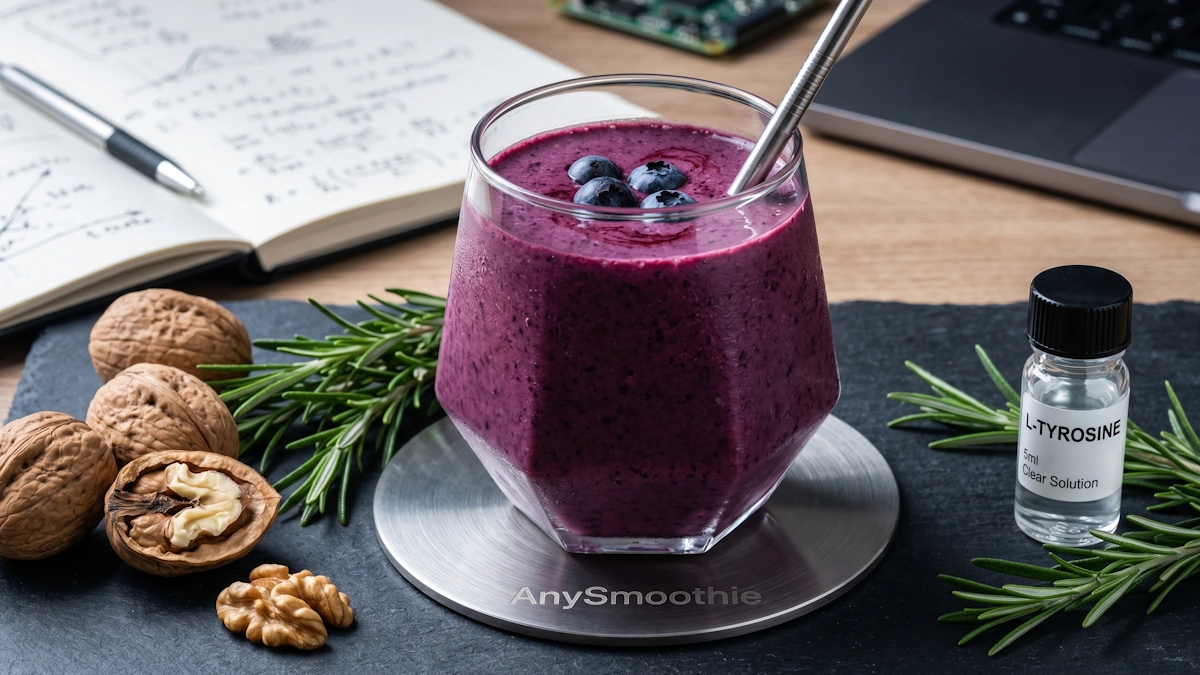
Breakfast Smoothie Protocols for Neurocognitive Priming
Your brain starts the morning on overnight fuel, not a full tank. A breakfast smoothie can change how that first hour feels when it is built for neurocognitive priming.
These breakfast smoothie protocols focus on nutrient transport, steady energy, and the raw material your brain uses to make neurotransmitters. The goal is simple, support natural pathways, not make medical claims.
The best formulas usually balance amino acid competition, membrane support, glucose stability, and a few smart recipe choices. That mix matters before the inbox, the commute, or the first hard task.
What neurocognitive priming means before breakfast
Neurocognitive priming is the process of getting the brain ready for mental work before the day gets loud. After sleep, the brain wants clean fuel, hydration, and the right building blocks.
Breakfast is a useful window because the overnight fast has already changed blood sugar and nutrient flow. If the first meal is sloppy, focus can feel flat. If it is built well, you may notice steadier attention and better task readiness. Still, for many people, a thoughtful morning meal helps set a better pace for the day, and basic nutrition guidance from the NIH supports that idea.
Why the first meal can change how your brain feels all morning
Morning food affects glucose, fluid balance, and how much of the day’s fuel reaches the brain. That can shape clarity, stamina, and how fast you get going.
The 3 levers that matter most: fuel, structure, and precursors
A good smoothie gives the brain fuel from carbs, structure from fats, and precursors from amino acids. When those pieces line up, the morning feels more stable.
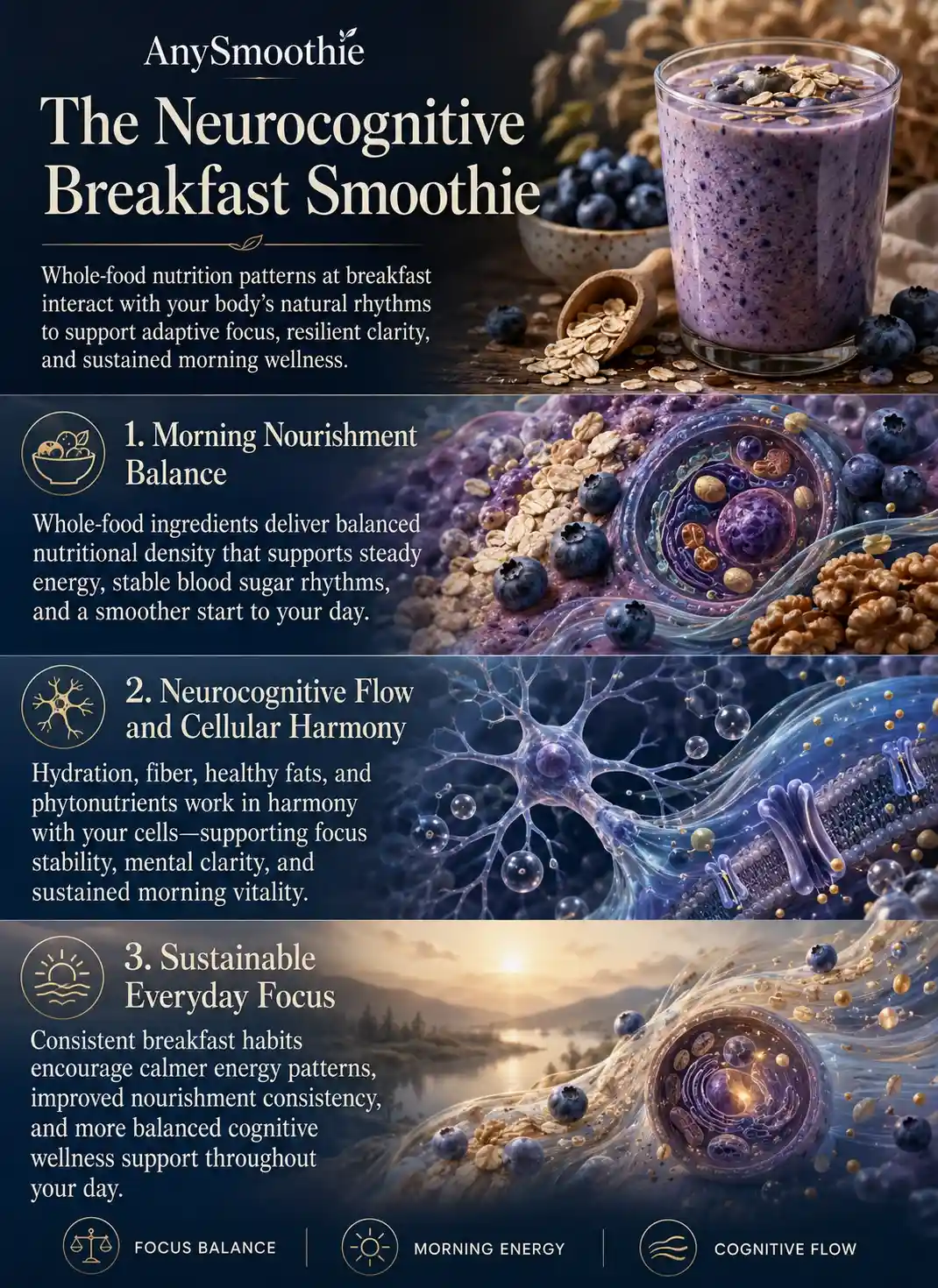
The Blood-Brain Barrier: Optimizing Nutrient Transport
The blood-brain barrier does not let everything through. It filters hard, so the mix in your smoothie matters as much as the calories.
Large neutral amino acids compete for transport, which is why timing and composition matter. A lower-protein, higher-carbohydrate base can give certain precursors a cleaner path.
| Neuro-primer | Physiological mechanism | Target cognitive function | Best smoothie pairing | Synergistic nutrient |
|---|---|---|---|---|
| L-Tyrosine | Precursor for dopamine and norepinephrine | Alertness, focus | Low-protein, higher-carb base with berries or oats | Carbohydrates, to reduce competition at the blood-brain barrier |
| DHA | Structural fat in neuronal membranes | Processing speed, long-term brain support | Creamy smoothie with avocado or algae oil | Phosphatidylserine |
| Anthocyanins | Polyphenols that support antioxidant defense and blood flow | Mental freshness, processing speed | Wild blueberries, blackberries, cocoa | Vitamin C |
For morning focus, transport matters as much as the ingredient list.
Amino Acid Competition: The Role of L-Tyrosine in Dopamine Synthesis
L-tyrosine helps support dopamine and norepinephrine production. It works best when fewer other amino acids are crowding the same transport system.
That is why a protein-heavy breakfast can dilute the effect. A smoothie with fruit, oats, and modest protein can make more sense when the goal is alertness.
Why a lighter protein load can help morning focus
This is about timing, not fear of protein. Protein still matters, but a very heavy morning dose can slow brain-directed amino acid delivery.
If you want sharper cognitive priming, keep the first smoothie lighter on protein. Save the larger protein hit for a later meal.
Membrane Fluidity: Phospholipids and Omega-3 Synergy
Brain cells work better when their membranes stay flexible. DHA supports that flexibility, and phospholipids help the membrane proteins do their job.
Phosphatidylserine: Supporting Signal Transduction and Cortisol Balance
Phosphatidylserine fits well in a morning stack because it supports signal transduction. It also pairs well with a calm, steady start when the day asks for control, not chaos.
Biohacking Cerebral Bioenergetics: Glucose Stability and Ketone Flux
Neurons burn a lot of energy. If breakfast swings hard, the brain notices fast.
A smoother carb base, plus fiber and fat, helps keep glucose more stable. On days when you train early or skip a heavier meal, ketone use may play a bigger role, so the point is fuel consistency, not a sugar spike.
Mitochondrial Priming: Fueling the High-Energy Demand of Neurons
Mitochondria need a steady supply line. Moderate carbs, hydration, and micronutrient-dense ingredients help keep that line orderly.
How to build a neuro-priming smoothie that actually works
Start with a base that gives steady energy. Fruit, oats, or banana work better than juice because they slow the rise a bit.
Next, add brain-friendly fats. Walnuts, chia, flax, avocado, or DHA help with satiety and membrane support.
Finish with color-rich plants. Blueberries, blackberries, and cocoa bring anthocyanins and related polyphenols that support circulation and antioxidant defense.
3 “Neuro-Prime” Cognitive Activation Smoothie Recipes
The “Focus-Flow” Wild Blueberry, Walnuts, and L-Tyrosine Blend
Ingredients
- 1 cup unsweetened almond milk
- 1 cup frozen wild blueberries
- ¼ cup rolled oats
- 2 tablespoons walnuts
- 1 tablespoon fresh lemon juice
- L-tyrosine according to the product’s labeled serving or clinician guidance
- ½ cup ice, optional
Pour the almond milk into the blender first. Add the oats, wild blueberries, walnuts, lemon juice, L-tyrosine if appropriate, and ice. Blend until completely smooth.
Wild blueberries provide anthocyanins, while walnuts contribute unsaturated fats and ALA omega-3 fatty acids. Oats add carbohydrates and fiber. L-tyrosine is an amino acid involved in catecholamine synthesis and has been studied in relation to cognitive performance under certain demanding conditions, but this smoothie should not be expected to guarantee greater alertness, focus, or productivity.
Estimated Nutrition per Serving
- Calories: ~330 kcal
- Protein: ~8 g
- Carbohydrates: ~43 g
- Fat: ~17 g
- Fiber: ~9 g
- Sugars: ~16 g
The Steady-Energy Avocado Berry Smoothie for Long Work Blocks
Ingredients
- 1 cup frozen mixed berries
- ½ avocado
- 1 tablespoon chia seeds
- 1 packed cup spinach
- 1 cup unsweetened soy milk
- ½ cup ice, optional
Pour the soy milk into the blender first. Add the spinach, avocado, frozen berries, chia seeds, and ice. Blend until thick and completely smooth.
Avocado and chia provide fiber and unsaturated fats, while berries and spinach contribute additional fiber and micronutrients. Soy milk adds high-quality plant protein. This combination can make the smoothie more substantial and satisfying, although it should not be expected to produce a predictable energy curve or prevent changes in concentration during long work periods.
Estimated Nutrition per Serving
- Calories: ~430 kcal
- Protein: ~16 g
- Carbohydrates: ~41 g
- Fat: ~27 g
- Fiber: ~19 g
- Sugars: ~16 g
The Recovery Support Smoothie for Lighter Mornings
Ingredients
- 1 cup coconut water
- 1 cup frozen strawberries
- ½ cup cucumber, chopped
- ¼ cup fresh mint leaves
- 1 tablespoon fresh lime juice
- ½ cup ice, optional
Pour the coconut water into the blender first. Add the cucumber, strawberries, mint, lime juice, and ice. Blend until light and completely smooth.
Coconut water contributes fluid, carbohydrates, and potassium, while strawberries provide vitamin C and polyphenols. Cucumber and mint keep the blend light and refreshing. This can contribute to fluid and carbohydrate intake after activity, but its low protein and energy content make it better suited to a lighter snack than a complete post-workout recovery meal.
Estimated Nutrition per Serving
- Calories: ~130 kcal
- Protein: ~3 g
- Carbohydrates: ~31 g
- Fat: ~1 g
- Fiber: ~4 g
- Sugars: ~22 g
If I were making this after a short night, I’d chill the coconut water and cucumber beforehand and use little or no ice. The flavor stays brighter, and the texture remains light rather than becoming watery.
When to use each ingredient for the best effect
L-tyrosine fits best on mornings that demand fast thinking, sharp focus, or rapid task switching. Keep the base low in protein so it has less competition at transport.
DHA and anthocyanins work more like daily maintenance. DHA supports membrane structure, while anthocyanins support antioxidant defense and blood flow, so they belong in regular rotation.
Conclusion
Breakfast smoothie protocols for neurocognitive priming work best when they respect transport, structure, and fuel. A lower-protein, higher-carb base can help L-tyrosine do its job, while DHA, phosphatidylserine, and berry pigments support broader brain function.
Keep the formula simple. Pick one recipe, use it for a week, and notice how your focus and morning energy change. That feedback is the most useful metric in the room.
🛡️ Safety Notes & Contraindications: Neurocognitive Priming Smoothies
L-Tyrosine Interactions: Supplemental L-Tyrosine can interact with thyroid medications (levothyroxine) and MAO inhibitors (certain antidepressants), potentially causing dangerous spikes in blood pressure or heart rate; consult your physician if you are on these medications.
Phosphatidylserine and Blood Thinners: Phosphatidylserine may have mild antiplatelet effects; use caution if you are taking anticoagulant or antiplatelet drugs (e.g., Warfarin or Aspirin).
Caffeine Overlap: If you pair these smoothies with morning coffee, be aware that L-Tyrosine can potentiate the stimulant effects of caffeine, leading to jitters, increased heart rate, or anxiety in sensitive individuals.
DHA Source Sensitivity: Algal or fish-based DHA oils can cause minor digestive upset or a “fishy” aftertaste; ensure high-quality, stabilized oils to avoid rancidity which can be pro-oxidant.
Acute Stress Response: While these ingredients support focus, they are not a substitute for clinical management of chronic stress or burnout; neuro-priming works best when integrated with proper sleep hygiene.
FAQ
How does “Amino Acid Competition” influence the efficacy of L-Tyrosine in a smoothie?
L-Tyrosine is a precursor for dopamine and norepinephrine. Biochemically, it shares the same transport carrier (the LAT1 transporter) across the blood-brain barrier as other large neutral amino acids (LNAAs) found in protein. Supporting this physiological system through a lower-protein, carbohydrate-inclusive smoothie reduces the “competition” for these transporters. This optimizes the natural pathways of “precursor delivery,” ensuring the biochemical mechanics of dopamine synthesis are supported for morning alertness.
Why is “Membrane Fluidity” essential for neuronal signal transduction?
Neuronal membranes must remain flexible to allow for efficient receptor signaling and neurotransmitter release. Biochemically, long-chain omega-3 fatty acids like DHA are integrated into the phospholipid bilayer, influencing its fluidity and the function of membrane-bound proteins. Supporting this physiological system through lipid-rich smoothie add-ins (like avocado or walnuts) optimizes the natural pathways of “membrane maintenance,” facilitating faster biochemical mechanics of information processing.
What is the role of “Anthocyanins” in supporting cerebral blood flow?
Anthocyanins, the pigments found in wild blueberries and blackberries, are potent polyphenols. Biochemically, they can influence nitric oxide signaling, which supports healthy vasodilation and blood flow to the brain (cerebral perfusion). Supporting this physiological system through color-rich smoothies optimizes the natural pathways of “oxygen and nutrient delivery,” providing the mitochondria in neurons with the steady supply line required for high-output mental tasks.
How do “Phospholipids” like Phosphatidylserine support the HPA-axis and focus?
Phosphatidylserine is a phospholipid found in high concentrations within brain cell membranes. Biochemically, it plays a role in signal transduction and has been shown to modulate the hypothalamic-pituitary-adrenal (HPA) axis response to stress. Supporting this physiological system through targeted smoothie formulation optimizes the natural pathways of “cortisol modulation,” ensuring the biochemical mechanics of the brain favor calm, focused attention rather than early-morning caffeine-induced jitters.
Why is “Glucose Stability” the foundation of mitochondrial priming in neurons?
Neurons have an exceptionally high metabolic rate and rely primarily on a steady influx of glucose. Biochemically, sharp glucose spikes and subsequent crashes (reactive hypoglycemia) can impair mitochondrial ATP production and lead to “brain fog.” Supporting this physiological system through fiber-rich bases (like oats or seeds) facilitates the biochemical mechanics of “steady-state bioenergetics,” ensuring that brain cells have a consistent fuel source for sustained cognitive stamina.

Medical Disclaimer: AnySmoothie content is for educational purposes only and is not a substitute for professional medical advice. Consult a healthcare provider for personalized guidance. See our full Disclaimer & Terms of Use. AI Transparency: AnySmoothie may use AI to support content development. All content undergoes human editorial review for accuracy, clarity, and editorial quality. See our full AI Transparency.