
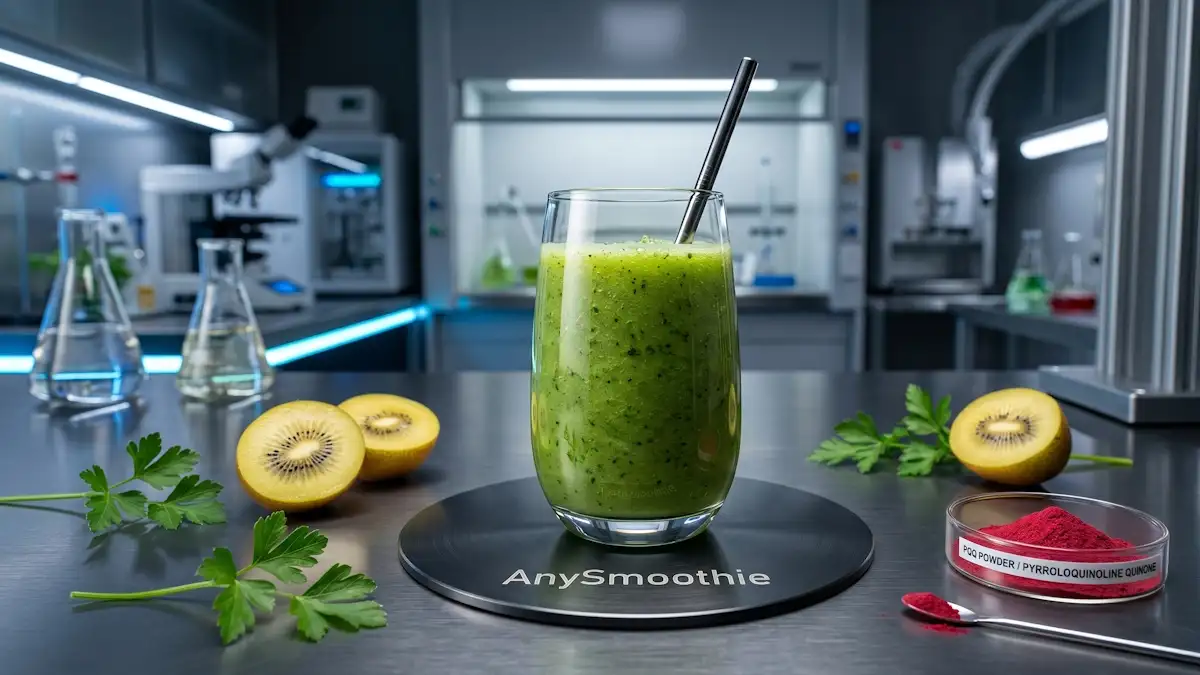
You wake up tired. You eat clean and sleep enough, but energy lags. Mitochondria power your cells. They act as tiny factories that make ATP, your body’s fuel. Age weakens them. Numbers drop, and fatigue sets in.
PQQ changes that. This nutrient, or pyrroloquinoline quinone, triggers mitochondrial biogenesis. It grows new mitochondria. Cells get fresh power plants. Energy rises. Brains sharpen. Muscles recover faster.
Blend PQQ into smoothies. It’s simple and tasty. Kiwi and parsley pack it naturally. You hit 20-40mcg daily without pills. Emerging research supports these pathways. PQQ activates PGC-1α signaling. It fires up CREB for gene switches that build mitos. Sirtuins join in for repair and growth.
Biohackers love it. Smoothies make biogenesis easy. You’ll see steady energy, better focus, and longevity perks. Next, we cover how PQQ works. Then, top foods, recipes, and stacks. Start blending today.
The Mitochondrial Architect: How PQQ Sparks New Cellular Energy
PQQ builds mitochondria. It does not patch old ones. Cells make brand-new factories. Output soars because more mitos mean more ATP.
Think of your body as a city. Mitochondria are power stations. Age dims them. PQQ upgrades the grid. It signals genes to construct extras. PGC-1α leads the charge. This master regulator turns on mito genes. CREB boosts it in the brain. Sirtuins protect during growth.
Hearts pump stronger. Muscles endure longer. Brains fire quicker. Studies show PQQ restores mito function in stressed cells. For example, it counters oxidative damage. Benefits stack for daily life.
PQQ stands out from other nutrients. It grows fresh mitos. Others support what’s there.
Beyond Repair: The Science of Spontaneous Mitochondrial Biogenesis
PQQ triggers new mitochondria. It skips fixes. Cells sense stress or signals. They replicate power plants via PGC-1α and CREB pathways.
Exercise sparks this too. Fasting helps. PQQ provides a targeted nutritional signal to these genes, potentially amplifying the effects of lifestyle interventions like exercise. Results show more mitos in weeks.
Compare PQQ to peers. This table breaks it down:
| Nutrient | Primary Biological Action | Target Organs | Natural Food Sources | Best Smoothie Role |
|---|---|---|---|---|
| PQQ | Biogenesis (Grows New Mitochondria) | Brain, Heart, Muscle | Kiwi, Parsley, Green Peppers | Core Biogenesis Booster |
| CoQ10 | ATP Protection | Heart, Muscles | Organ Meats, Spinach | Energy Cycle Support |
| Resveratrol | Sirtuin Activation | Brain, Vessels | Grapes, Berries | Longevity Signal Amplifier |
PQQ wins on growth. Others protect or activate. Stack them for max effect. Researchers detail PQQ’s biogenesis signals. Brain cells gain resilience. Fatigue drops.
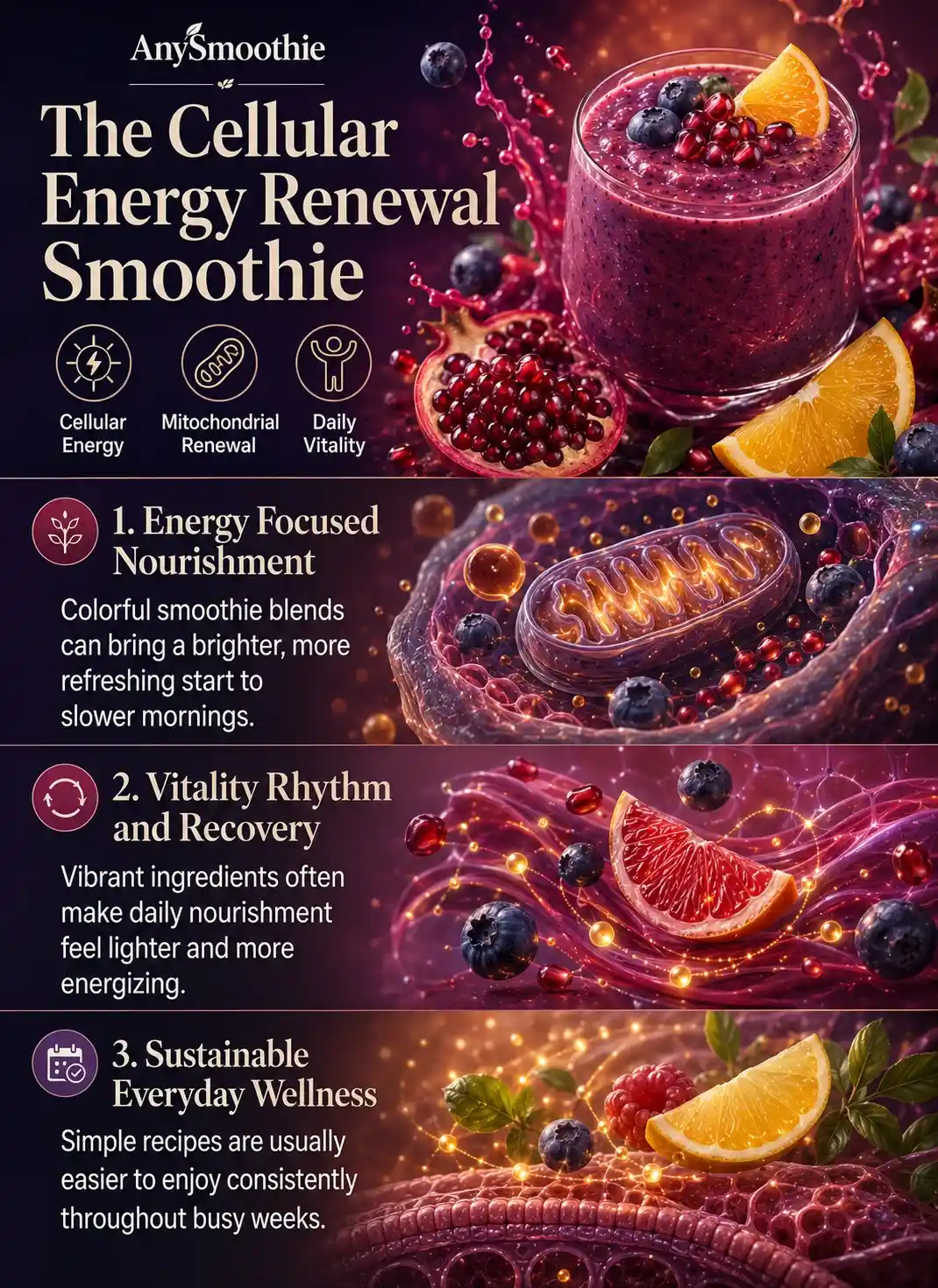
PQQ Food Sources: Blending the Highest Natural Concentrations
Nature packs PQQ in plants. Kiwi contains approximately 25-30mcg per fruit, depending on ripeness and soil quality. Parsley follows with antioxidants. Green peppers add 10-15mcg. Fermented soy like natto hits high. Cocoa brings trace amounts.
Smoothies release more. Blending breaks cells. Bioavailability jumps. Eat plain, and you absorb less. Blend for full dose.
Aim for 20-40mcg daily through whole foods. Two kiwis plus parsley gets you there. Track intake. Apps help biohackers log. Energy builds over time.
Synergies matter. Pair foods for steady signals.
The Kiwi and Parsley Synergy: Biohacking Your Daily PQQ Intake
Kiwi overflows with PQQ. Parsley adds flavonoids. Together, they fuel CREB and sirtuins.
Use one cup parsley and two kiwis. That’s 40-50mcg PQQ. Antioxidants shield it during digestion.
Blend daily. Biohackers report even energy. No crashes. PGC-1α stays active. Add to morning routine. Heart health improves too. Simple hack sustains biogenesis.
3 High-Energy PQQ Smoothie Recipes for Longevity
Recipes pack PQQ foods. Prep takes five minutes. Each serves one or two. They target brain, energy, recovery. Estimates base on food data. Blend for max absorption.
Variety keeps it fun. Rotate them. Biogenesis thrives.
The ‘Brain-Fuel’ PQQ and Cacao Cognitive Powerhouse
Ingredients
- 2 kiwis
- 1 handful fresh parsley
- 1 tbsp raw cacao powder
- 1 medium banana
- 1 cup unsweetened almond milk
- 1 cup spinach, optional
Peel the kiwis and chop the parsley. Add all ingredients to the blender and puree until smooth.
Kiwi and parsley contain small amounts of naturally occurring PQQ, although food concentrations vary and should not be presented as delivering precise microgram doses. Cacao contributes flavanols and theobromine. These ingredients can complement a nutrient-dense diet but should not be expected to directly sharpen focus through CREB signaling.
Estimated Nutrition per Serving
- Calories: ~280 kcal
- Protein: ~7 g
- Carbohydrates: ~55 g
- Fat: ~6 g
- Fiber: ~11 g
- Sugars: ~31 g
Kiwi-Parsley Mito-Energy Igniter
Ingredients
- 3 kiwis
- 1 cup fresh parsley
- 1 medium green apple
- 2 celery stalks
- 1 cup unsweetened coconut water
- Pinch of ground ginger
Core the apple and chop the remaining produce. Blend on high speed until smooth. Strain only if you prefer a thinner texture.
Kiwi, parsley, apple, and celery provide vitamin C, fiber, and diverse plant compounds. PQQ occurs naturally in some foods, but dietary amounts are variable. Research has explored PQQ in relation to mitochondrial biology, but this smoothie should not be described as directly activating PGC-1α or producing explosive stamina. PQQ has been studied in cellular mitochondrial pathways.
Estimated Nutrition per Serving
- Calories: ~300 kcal
- Protein: ~7 g
- Carbohydrates: ~69 g
- Fat: ~2 g
- Fiber: ~14 g
- Sugars: ~45 g
PQQ Berry Longevity Recharger
Ingredients
- 1 kiwi
- 1 small sprig fresh parsley
- 1 cup blueberries
- ½ cup plain unsweetened kefir
- 1 tbsp chia seeds
Add all ingredients to the blender and blend until creamy.
Berries provide anthocyanins and other polyphenols, while kefir contributes protein and live cultures when present in the product. Chia adds fiber and ALA omega-3 fatty acids. These foods can contribute nutrients relevant to general health, but they should not be described as directly activating sirtuins, generating new mitochondria, or producing glowing skin.
Estimated Nutrition per Serving
- Calories: ~260 kcal
- Protein: ~10 g
- Carbohydrates: ~42 g
- Fat: ~7 g
- Fiber: ~11 g
- Sugars: ~25 g
I’d let the chia sit in the kefir for about five minutes before blending. It softens the seeds slightly and produces a noticeably more cohesive, creamy texture without needing additional fruit or liquid.
Bioavailability Maximization: Pairing PQQ with CoQ10 and Fats
PQQ absorbs best with fats. It’s somewhat fat-soluble. Low-fat smoothies waste it.
Add avocado or nuts. Absorption doubles. CoQ10 synergizes. Together, they amp PGC-1α.
Food pairs work. Avoid water-only bases. Fats carry PQQ deep into cells.
Synergistic Stacking: Why PQQ and Ubiquinol Are Better Together
Ubiquinol is active CoQ10. Stack with PQQ for biogenesis boost. Signals multiply.
Add avocado half. Or nuts handful. Supp if needed, 100mg daily. Biohackers often observe more consistent results through this synergy.
Safety first. Start low. No issues at food doses. Protocol: Morning PQQ smoothie plus ubiquinol. Energy surges.
Conclusion
PQQ smoothies grow new mitochondria. Energy rises. Brains thrive. Longevity follows.
Kiwi, parsley, and recipes deliver 20-60mcg easy. Stack fats and CoQ10. PGC-1α, CREB, sirtuins fire up.
Try one tomorrow. Track your energy for a week. Pair with cold showers for extra biogenesis.
Your cells rebuild. Fatigue fades. Future you thanks the blend. The data on PGC-1α signaling points toward a new era of cellular energy management.
⚠️ Specific Safety Notes for PQQ & Mitochondrial Stacking:
- Synergy with Fats: PQQ is lipophilic. To move the PQQ from your smoothie into your bloodstream, you must include a fat source. Without the avocado, nut butter, or seeds mentioned in your recipes, much of the PQQ will simply pass through your system unabsorbed.
- Sleep Sensitivity: Because PQQ enhances ATP production and brain focus (CREB activation), some users report “over-stimulation” if consumed late in the evening. For best results, drink your PQQ smoothie before 2:00 PM.
- Warfarin and Parsley: Your recipes use significant amounts of parsley. Parsley is extremely high in Vitamin K, which can interfere with blood-thinning medications like Warfarin. If you are on anticoagulants, consult your doctor before making parsley a daily habit.
- Pregnancy and Nursing: While PQQ is found naturally in human breast milk, the safety of concentrated PQQ supplementation (or therapeutic-level food loading) during pregnancy has not been extensively studied. Stick to moderate food portions.
- CoQ10 Balance: PQQ and CoQ10 (Ubiquinol) work in a cycle. If you boost biogenesis (new mitos) with PQQ without providing enough CoQ10 to protect them, you may increase oxidative stress. Always pair the two for a balanced “Mito-Stack.”
FAQ
What makes PQQ different from CoQ10 in a smoothie?
Think of CoQ10 as the fuel additive that helps your existing engines run better. PQQ is the architect: it’s the only nutrient known to trigger mitochondrial biogenesis, which means it actually builds new engines inside your cells.
What are the best natural food sources of PQQ?
Nature’s top sources are kiwifruit, parsley, green peppers, and papaya. Fermented foods like Natto are also extremely high. For a daily boost, blending two organic kiwis (with the skin if possible) and a handful of parsley is the ultimate biohack.
Should I add fats to my PQQ smoothie?
Yes. While PQQ is water-soluble, pairing it with healthy fats (like avocado, walnuts, or MCT oil) enhances the overall absorption and helps the nutrient reach the mitochondrial membranes where it is needed most.
How soon will I feel the effects of a PQQ-rich diet?
PQQ has some immediate nootropic effects on focus, but the real magic of growing new mitochondria takes time. Most people report a significant shift in baseline energy levels and mental clarity after 4 to 8 weeks of consistent intake.
Is it safe to stack PQQ with other longevity supplements?
Absolutely. PQQ is highly synergistic with CoQ10 (specifically Ubiquinol) and Resveratrol. Together, they create a “triple threat” for cellular energy: PQQ grows the mitochondria, CoQ10 fuels them, and Resveratrol protects them from aging.

Medical Disclaimer: AnySmoothie content is for educational purposes only and is not a substitute for professional medical advice. Consult a healthcare provider for personalized guidance. See our full Disclaimer & Terms of Use. AI Transparency: AnySmoothie may use AI to support content development. All content undergoes human editorial review for accuracy, clarity, and editorial quality. See our full AI Transparency.