
A smoothie can calm your morning, or it can set off bloating in under an hour. With smoothies for small intestinal bacterial overgrowth, the difference is usually the ingredient list and the portion size.
The best blends are simple. They use low-FODMAP, low-residue ingredients that are easier to absorb in the upper small intestine, so less fuel stays in the lumen for microbes.
That means less fermentation, less gas, and steadier energy. The goal is a drink that supports digestion, not one that gives bacteria a buffet.
Why most smoothies can backfire when you have SIBO
Many popular smoothies stack the exact things a sensitive gut struggles with. Fruit concentrates, big scoops of fiber, dairy, and sweet add-ins can raise luminal fermentation fast. For a plain look at lowering the fermentable load, a guide to personalizing a SIBO diet plan makes the same point with everyday food choices.
The ingredients that are most likely to trigger gas and bloating
- Mango, apple, and pear often bring more fermentable sugar than people expect.
- Honey and inulin can feed microbial activity quickly.
- Regular yogurt can be rough if lactose is part of the problem.
- Protein powders with gums, sugar alcohols, or filler fiber can linger and bloat.
These ingredients can pull in water, slow emptying, and give bacteria more to work with. If a smoothie tastes like dessert, it may act like one in the gut too.
Why liquid does not always mean easy to digest
A smoothie can still feel heavy if it is huge, ice-cold, overly sweet, or packed with fiber powders. Fast upper GI absorption matters more than the fact that it came from a blender.
The target is quick movement through the duodenum and jejunum, not a long stay in the lumen. If the drink sits around, it becomes more likely to ferment.
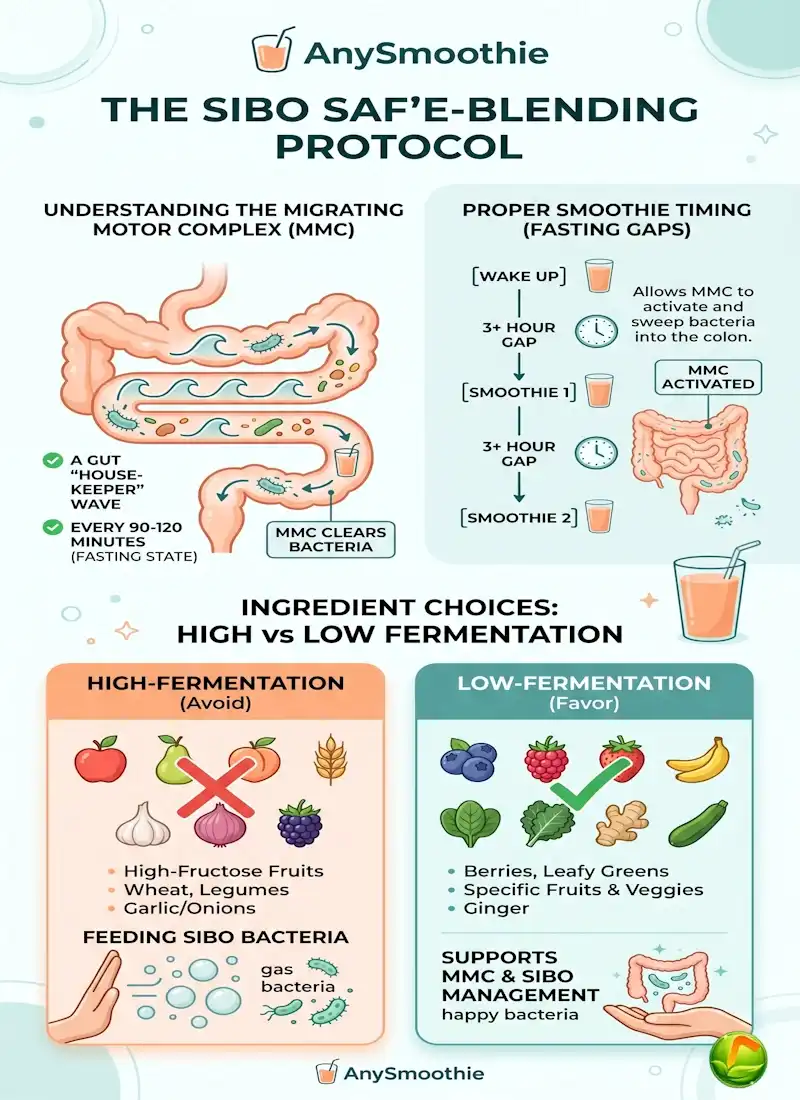
Duodenal and Jejunal Kinetics: The SIBO Fluid Blueprint
Bypassing Fermentation: Rapid Upper GI Absorption Strategies
A lighter smoothie keeps the work high in the duodenum and jejunum, where absorption is faster and residue is lower. That favors enterocyte direct influx and leaves less behind for bacterial metabolism.
Here is a fast comparison of substrates that tend to work best.
| Substrate | Physiological Mechanism | Gas Production Potential (Hydrogen/Methane index) | Best Smoothie Pairing | Target GI Segment |
|---|---|---|---|---|
| C8 MCT oil | Direct passive absorption into portal flow, rapid cellular energy, bypasses bacterial fermentation entirely | Very low | Spinach, collagen, cucumber | Upper enterocytes |
| Hydrolyzed collagen peptides | Structural amino acids with little luminal residue, useful protein without much feed for microbes | Very low | C8 MCT, ginger, mild greens | Upper enterocytes |
| Low-FODMAP polyphenols, from wild blueberries | Antioxidant support with modest carbs, less likely to drive fermentation than high-FODMAP fruit | Low | Collagen, lemon, spinach | Upper small bowel, limited colonic spillover |
The best blend is the one the small intestine can move through fast.
The FODMAP Exclusion Axis: Starving Dislocated Microbes
Once the fermentable load drops, the next issue is pressure. Too much powder, too much sweetener, or too much fiber can draw water into the gut and stretch the bowel wall. That stretch is what makes a smoothie feel like a balloon instead of a meal.
Intestinal Osmolality: Managing Luminal Water Influx and Distension
Keep recipes simple. Use one protein source, one fat source, and one or two low-FODMAP produce items. That keeps the mix easier to absorb and less likely to create distension.
Small servings of wild blueberries, cucumber, spinach, ginger, cinnamon, or lemon can add flavor and color without feeding much fermentation. In other words, you get taste without turning the blender into a gas factory.
3 “Zero-Ferment” Clean Gastrointestinal Smoothie Recipes
Some readers want formulas, not theory. A more layered version like this gut-loving SIBO smoothie bowl can work for people who tolerate more volume, but these blends stay tighter and lighter.
The “Eubiotic-Flux” Pure C8 MCT, Baby Spinach, and Hydrolyzed Collagen Blend
Blend water, a handful of baby spinach, 1 scoop hydrolyzed collagen, and 1 to 2 teaspoons C8 MCT. Add ice only if you tolerate cold.
This is the stripped-down option. It gives you quick energy, a clean protein base, and a small micronutrient hit without much residue.
The Wild Blueberry and Collagen Recovery Smoothie
Use a small handful of wild blueberries, collagen, water or unsweetened almond milk, and a pinch of cinnamon. Keep the fruit modest.
This version brings flavor and polyphenols without a sugar load that invites much fermentation. It works best when you want something a little brighter, but still calm.
The Cucumber, Ginger, and MCT Green Blend
Blend cucumber, a few spinach leaves, fresh ginger, water, and C8 MCT. A squeeze of lemon is fine if you tolerate it.
This version is light, fresh, and less sweet. It fits well on days when you want energy without the feeling of a heavy breakfast.
Biohacking the Migrating Motor Complex (MMC): Timing and Prokinetics
Timing matters as much as ingredients. If you sip smoothies all day, the gut never gets a real break, and the migrating motor complex cannot do its cleanup work between meals.
Leave space between meals. Keep smoothies away from late-night snacking, and use them strategically rather than constantly. A smoothie is easier on the gut when it acts like a meal, not a grazing habit.
Mitochondrial Priming: Fueling Enterocyte ATP for Mucosal Barrier Defense
When the calories arrive in a simple form, the cells lining the small bowel get usable fuel without much residue. That supports enterocyte ATP needs and keeps the barrier work steady.
A smoothie should leave you nourished, not crowded. A small, clean blend can do that far better than a large one loaded with extras.
Conclusion
The best smoothies for small intestinal bacterial overgrowth are simple, low-FODMAP, and easy to absorb. They work because they stay light in the upper small intestine, not because they cram in every trendy ingredient.
Keep the formula tight, watch the portion size, and favor ingredients that support energy without feeding gas. When the blend is simple, your gut has less to argue with.
🛡️ Safety Notes & Dietary Interactions
🛡️ Luminal Osmolality Dynamics: Introducing a high concentration of fermentable substrates or dense fiber molecules can alter osmotic pressure, drawing water directly into the intestinal lumen. To support clean, comfortable absorption without stretching the bowel wall, ensure your formulations utilize strict low-FODMAP ingredients and keep the overall liquid volume modest during a single serving.
🛡️ Enterocyte Absorption Kinetics: Highly processed protein powders or blends packed with thickeners, gums, and sugar alcohols can delay upper gastrointestinal transit and linger in the duodenum. Opting for rapidly absorbable nutrients like hydrolyzed collagen and clean C8 MCT oil ensures that the fuel passes efficiently through the enterocytes, leaving minimal residue behind.
🛡️ Migrating Motor Complex (MMC) Timing: The sweeping waves of the migrating motor complex clear the small intestine of debris and residual microbes between meals. To protect this natural clearance pathway and allow the system to complete its cleanup cycles uninterrupted, space your functional smoothies at least four to five hours apart from other meals, avoiding a continuous grazing habit throughout the day.
🛡️ Gastrointestinal Barrier Evaluation: While adjusting your nutritional intake with low-residue ingredients is an excellent way to support daily comfort, long-term digestive balance requires a comprehensive approach. If you are managing persistent structural sensitivities or significant alterations in gut transit, keeping a consistent, detailed food journal helps ensure your lifestyle strategy remains perfectly aligned.
FAQ
Why do popular healthy smoothies often cause immediate bloating when someone has SIBO?
The problem isn’t that the ingredients are inherently unhealthy; it’s where they end up being processed. Most mainstream smoothies are loaded with high-FODMAP fruits, inulin, and complex plant fibers that require extensive transit time to break down. When there is a microbial dislocation in the small intestine, these dense sugars serve as an immediate, easily accessible feast for resident bacteria. This rapid fermentation creates a sudden surge of hydrogen or methane gas right in the upper GI tract, causing the tight, balloon-like distension before the meal can even be fully absorbed.
How do low-residue ingredients like C8 MCT oil bypass bacterial fermentation?
C8 MCT oil is a unique fatty acid that behaves very differently from standard dietary fats. Because of its specific medium-chain molecular structure, it does not require pancreatic enzymes or bile acids to be broken down. Instead, it undergoes rapid, passive absorption directly across the enterocytes of the upper small intestine and enters the portal circulation for immediate cellular energy. Because it is absorbed almost instantly upon entering the duodenum, it leaves zero physical residue in the intestinal track, effectively starving resident microbes of fuel while still giving your body a clean energy source.
Why is hydrolyzed collagen peptides considered the ideal protein base for a sensitive gut?
Hydrolyzed collagen is a pre-digested form of protein, meaning its long amino acid chains have already been broken down into tiny, easily manageable peptides. When it enters the duodenum and jejunum, it demands very little digestive work from your pancreas and is absorbed rapidly through direct enterocyte influx. Unlike heavy whey concentrates or plant proteins that contain residual plant fibers and gums, hydrolyzed collagen slides through the upper digestive tract with minimal luminal friction, ensuring you get structural amino acid support without feeding a microbial bloom.
What is the Migrating Motor Complex (MMC), and why does smoothie sipping ruin its function?
The Migrating Motor Complex (MMC) is your gut’s internal, automated broom. It is a distinct wave of electrical and muscular activity that sweeps through the stomach and small intestine to push out undigested food and keep bacterial populations from climbing upward. However, the MMC only activates during fasting states—specifically when the upper GI tract is completely empty. If you sip a smoothie continuously over several hours, you keep the digestive system in a constant “fed state,” turning off the MMC completely and allowing stagnant food particles to ferment.
Why does the temperature and serving size of a green smoothie affect small intestinal kinetics?
Your small intestine relies on smooth, coordinated muscular contractions to move food along the digestive assembly line. Flooding a sensitive digestive tract with a massive, ice-cold drink can stun the local enteric nervous system, causing sudden cramping, delayed gastric emptying, or localized fluid pooling. Keeping your functional smoothies on the smaller side and serving them close to room temperature allows your upper intestine to maintain normal kinetic flow, ensuring nutrients are absorbed smoothly before bacteria can begin the fermentation process.

Medical Disclaimer: The information on AnySmoothie is for educational and informational purposes only. It is not intended as medical advice or a substitute for professional consultation with a healthcare provider. Always consult your physician before starting any new nutritional protocol, especially if you have underlying health conditions or are taking medication. By using this site, you agree to our full Disclaimer & Terms of Use.