
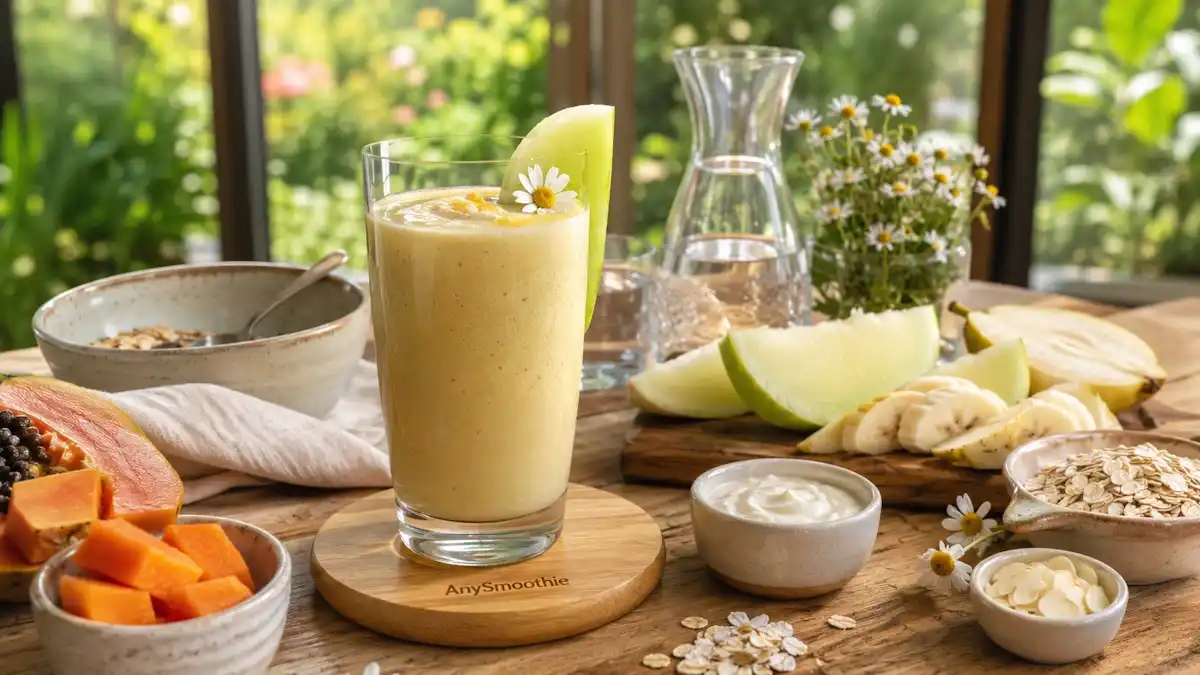
Some smoothies calm the stomach, others feel like a heavy meal in a glass. The difference usually comes down to acidity, fat, fiber, and serving size.
If you’re looking for smoothies for acid reflux without citrus fruits, the goal is simple, build blends that are gentle, low in common triggers, and easy to digest. This guide covers what to avoid, which ingredients are usually better tolerated, and three smoothie ideas you can try at home.
What makes a smoothie better for acid reflux without citrus fruits?
A reflux-friendly smoothie usually keeps the acid load low and the texture light. That matters because a dense drink can raise stomach pressure and slow digestion.
A smaller glass often works better than a big one. Even a good ingredient list can feel rough if the portion is too large.
Here’s a quick way to compare common choices.
| Ingredient group | Why it may feel gentler | What to watch | Best role | Easy swap |
|---|---|---|---|---|
| Banana, pear, melon | Low acid and soft texture | Too much fruit can feel heavy | Creamy base | Small amounts of mango |
| Mild greens | Light flavor, less bite | Large handfuls can taste grassy | Fresh balance | Cucumber |
| Oats, chia, yogurt | Smooth texture and steadier digestion | Too much can thicken the blend | Body and staying power | Less chia, more liquid |
| Water, oat milk, almond milk | Helps dilute sharpness | Sweetened versions can add sugar | Blend liquid | Plain milk if tolerated |
If you want a broader framework, how to customize smoothies for acid reflux breaks down the same idea in a simple way.
Ingredients that are usually easier on the stomach
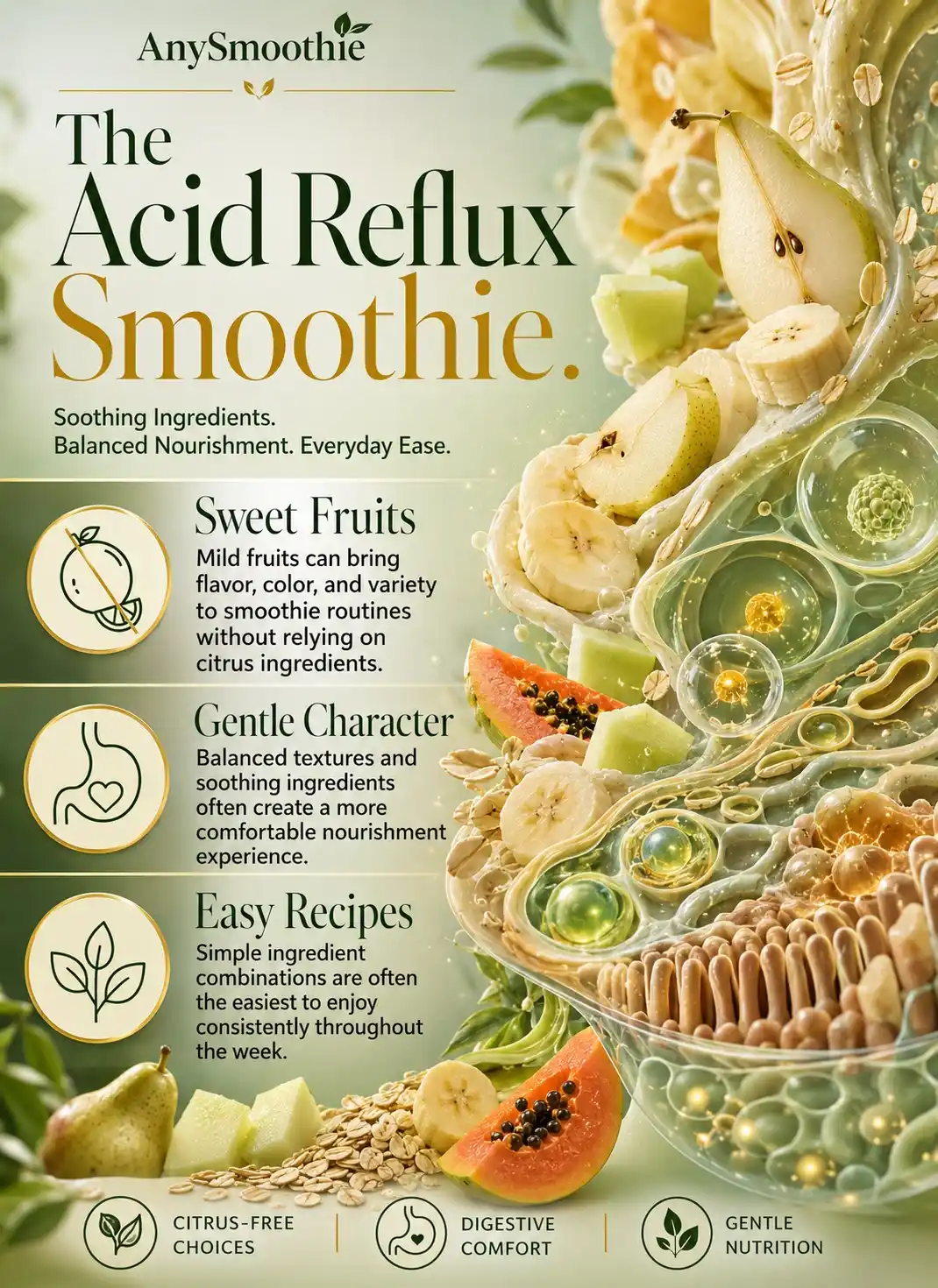
Low-acid fruits are the easiest place to start. Banana, pear, melon, and small amounts of mango usually bring sweetness without a sharp edge.
Mild greens can work well too. Spinach is popular because it blends smoothly and doesn’t take over the flavor. Oats help add a soft, steady texture. In small amounts, chia can thicken a smoothie without making it feel greasy.
Plain yogurt, or a tolerated yogurt alternative, can also fit. Choose unsweetened options with a short ingredient list. For liquid, water, milk, almond milk, or oat milk are all common choices. The main goal is a smooth blend that doesn’t hit the stomach like a brick.
Common smoothie ingredients that can backfire
Some ingredients can push a smoothie in the wrong direction. Harvard Health’s GERD diet list points to chocolate, caffeine, onions, peppermint, and carbonated drinks as common troublemakers.
Citrus fruits and pineapple are also rough for many people because they bring a higher acid load. Very fatty add-ins can slow digestion and make the smoothie sit longer. Think heavy nut butters, coconut cream, or large amounts of oil.
Easy swaps that keep flavor without the acidity
You can replace citrus flavor without losing interest. Banana adds creaminess. Pear gives a soft sweetness. Melon keeps the blend light. Mango works best in small amounts, because too much can make the smoothie feel richer.
Vanilla, cinnamon, and a light touch of ginger can add warmth without turning the drink sharp. Unsweetened oat milk is another easy swap when you want a mellow base. A little flavor goes a long way here.
3 Smoothies for acid reflux without citrus fruits
Each recipe below stays mild on purpose. The ingredient lists are simple, the flavors are soft, and the balance is better for many sensitive stomachs.
Start with a smaller glass, around 8 to 10 ounces, if you’re testing a new blend. Serving size matters almost as much as ingredient choice.
If you want the simplest possible starting point, this easy banana smoothie base keeps the variables low.
How to make reflux-friendly smoothies work in real life
The ingredient list matters, but your habits matter too. A smoothie that works at lunch may not feel great late at night.
Take small sips instead of chugging the whole glass. Wait and notice how your body responds. If one ingredient seems fine in the morning but not after dinner, timing may be part of the problem.
Build a simple test plan for your body
Try one smoothie at a time and keep notes for a few days. Track the fruit, liquid, thickness, sweetness, and the time you drank it.
That makes it easier to spot patterns. Maybe pear feels fine, but mango feels too sweet. Maybe oat milk works better than dairy. Maybe a smoothie before bed is the real issue, not the recipe.
A simple record is better than guessing. You learn faster when you change one variable at a time.
Make the texture light, not heavy
Longer blending helps create a smoother drink, especially with oats or greens. Use enough liquid so the smoothie stays easy to sip.
Very thick blends can sit longer in the stomach, and that can feel uncomfortable for some people. Dense add-ins like lots of nut butter, protein powder, or extra chia can push the texture too far.
Keep the blend light first, then build up only if your body handles it well.
Conclusion
Smoothies for acid reflux without citrus fruits can still taste good. You don’t need orange, lemon, or pineapple to make a drink feel fresh.
The best results usually come from gentle ingredients, moderate portions, and careful attention to your own response. Low-acid fruit, mild greens, simple liquids, and light fat are a strong place to start.
Pick one of the three recipes, keep the first glass small, and adjust from there. Your best smoothie is the one your body handles well.

Medical Disclaimer: AnySmoothie content is for educational purposes only and is not a substitute for professional medical advice. Consult a healthcare provider for personalized guidance. See our full Disclaimer & Terms of Use. AI Transparency: AnySmoothie may use AI to support content development. All content undergoes human editorial review for accuracy, clarity, and editorial quality. See our full AI Transparency.