

Evening nutrition can nudge your body toward rest, or keep it stuck in daytime mode. A well-built circadian smoothie uses food timing and ingredient balance to support the natural sleep-wake rhythm without making big claims.
The goal is simple. Give your body the right signals, at the right time, with ingredients that help melatonin signaling, nervous system calm, and overnight recovery. That means less sugar chaos, better nutrient fit, and a smoother handoff into sleep.
The Circadian Rhythm: Aligning Nutrition with the Biological Clock
Your biological clock does not clock out when the sun sets. It shifts jobs. During the day, it favors alertness, glucose use, and output. At night, it leans toward repair, lower arousal, and slower digestion.
That matters because late eating can pull the body in two directions at once. A smoothie full of fast sugar may feel easy to digest, but it can still push blood sugar up when the body wants to wind down. A smarter evening blend respects that shift.
A useful way to think about evening food is this: support the body’s nightly reset instead of fighting it. A review in PMC on evening eating and sleep quality found that later eating patterns were linked with poorer sleep outcomes. That does not mean food at night is off-limits. It means timing and composition matter.
The serotonin to melatonin bridge and why it matters for sleep architecture
Tryptophan is the starting point here. The body can use it to make serotonin, and serotonin helps form melatonin later in the evening. Melatonin then acts as a circadian signal that says, “night mode is here.”
That bridge is one reason certain smoothie ingredients work well together. Tart cherry can support a bio-identical melatonin signal, while seeds, dairy, or yogurt can add tryptophan. When you pair those with a small amount of carbohydrate, the body can move that amino acid through the pathway more efficiently.
This is not about forcing sleep. It is about supporting the body’s own sleep architecture, so the transition feels cleaner.
Why evening carbs, protein, and fat need the right balance
A bedtime smoothie should feel light, not empty. A little carbohydrate can help tryptophan get where it needs to go. Protein adds building blocks. Fat slows digestion, which can help if the smoothie would otherwise spike too fast.
The sweet spot is balance. Too much sugar can make the drink act like dessert. Too much fat can make it sit heavy. For sleep support, the best blend is usually moderate, calm, and easy to digest.
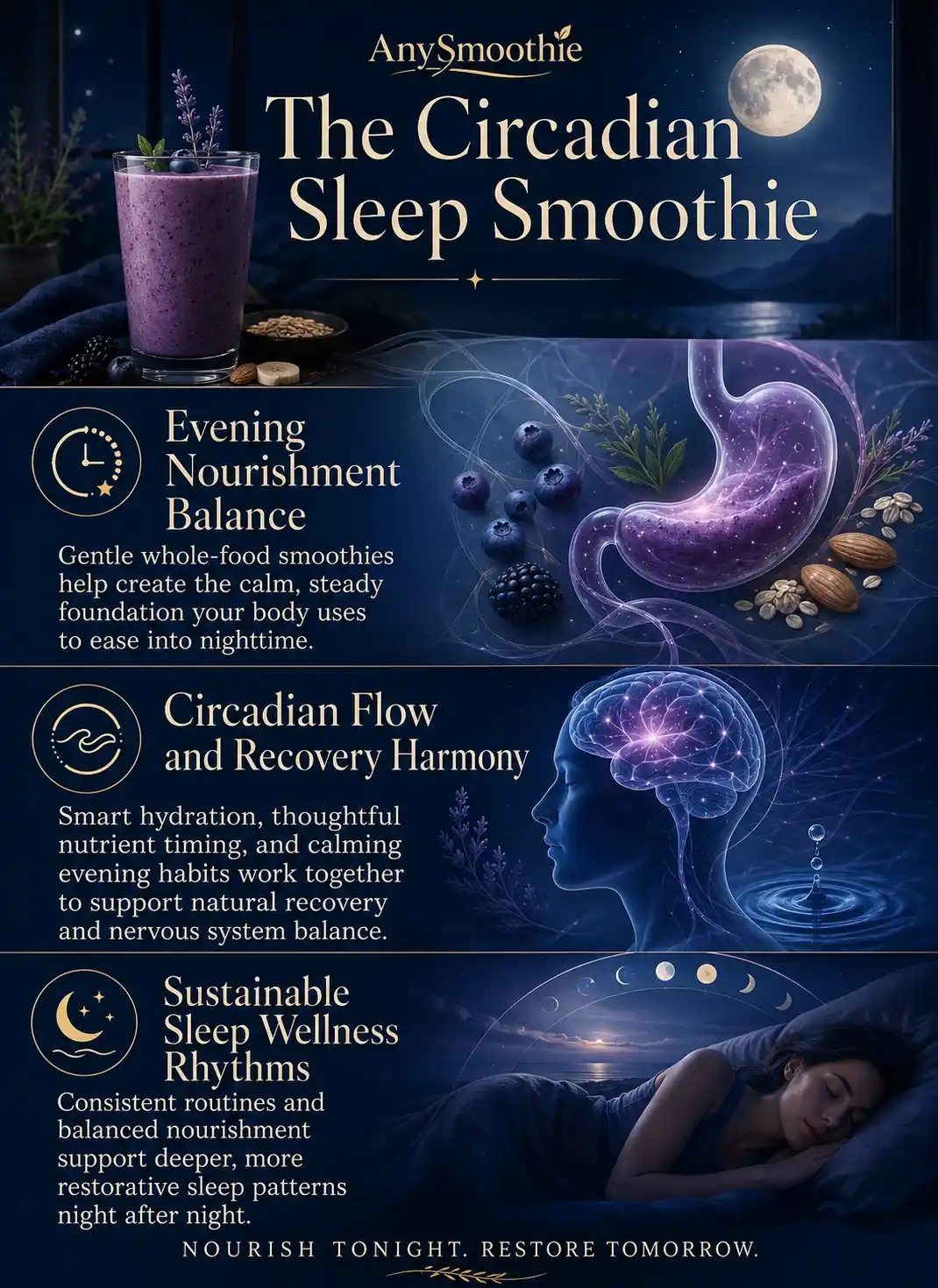
Nutritional Anchors: Using Tryptophan and Magnesium for Neural Calm
The strongest sleep-support smoothies usually center on a few simple compounds. Tryptophan supports the serotonin-melatonin pathway. Magnesium helps muscle and nerve function stay settled. Apigenin adds another layer of evening calm.
Here is a quick comparison of the main compounds:
| Compound | Physiological Role | Impact on Sleep Stages | Best Evening Smoothie Pairing | Synergistic Co-factor |
|---|---|---|---|---|
| Melatonin from tart cherry | Circadian signal | Supports sleep onset and sleep timing | Berries, yogurt, or coconut milk | Small carbohydrate dose |
| Tryptophan from pumpkin seeds or dairy | Neurotransmitter precursor | Supports serotonin-linked sleep architecture | Banana, yogurt, or milk | Carbohydrate for transport |
| Apigenin from chamomile or parsley | GABA-A receptor modulation | Supports a relaxed pre-sleep state | Chamomile tea, berries, or mild cream base | Magnesium |
The takeaway is clear. The circadian smoothie works best when it combines signal, substrate, and calm in one glass.
GABA modulation: how specific nutrients support synaptic relaxation
Apigenin gets attention because it shows up in chamomile, parsley, and other plants. A 2026 paper in Food & Function on magnesium and apigenin looked at how these compounds may work together in sleep support models. The important point for a smoothie is simple, apigenin helps support a more relaxed evening state.
Magnesium adds to that effect by supporting normal nerve and muscle function. Pumpkin seeds are a strong source. Cacao brings a deeper flavor and some mineral support. Chamomile and parsley bring apigenin, even if parsley is used in small amounts.
When these ingredients work together, the evening drink feels more like a signal than a snack.
3 Circadian-Flow Sleep Quality Smoothie Recipes
These recipes are built for different evening needs. One is balanced and restorative. One is rich and filling. One is light and soft.
For tart cherry, Sleep Foundation’s tart cherry guide gives a useful context on why it is often used in nighttime blends.
The Restorative-Night Tart Cherry, Banana, and Pumpkin Seed Blend
Ingredients
- 1 cup unsweetened tart cherry juice
- 1 medium banana
- 2 tablespoons pumpkin seeds
- ½ cup plain kefir
- ½ cup ice
- ¼ teaspoon cinnamon, optional
Pour the tart cherry juice and kefir into the blender first. Add the banana, pumpkin seeds, ice, and cinnamon if using. Blend until smooth and creamy.
Tart cherries naturally contain small amounts of melatonin and have been studied in relation to sleep, while pumpkin seeds provide magnesium, protein, and tryptophan. Banana contributes carbohydrates and potassium, and kefir adds protein and may contain live cultures. These ingredients can fit a pre-bed nutrition routine, but the smoothie should not be presented as directly activating melatonin signaling or guaranteeing improved sleep.
Estimated Nutrition per Serving
- Calories: ~430 kcal
- Protein: ~15 g
- Carbohydrates: ~73 g
- Fat: ~12 g
- Fiber: ~6 g
- Sugars: ~51 g
Creamy Magnesium Smoothie With Yogurt, Cacao, and Chia
Ingredients
- 1 cup plain Greek yogurt
- 1 tablespoon unsweetened cacao powder
- 1 tablespoon chia seeds
- ½ medium banana
- ½ cup unsweetened almond milk
- 1 teaspoon honey, optional
Pour the almond milk and Greek yogurt into the blender first. Add the banana, cacao, chia, and honey if using. Blend until thick and creamy.
Greek yogurt provides high-quality protein and tryptophan, while cacao and chia contribute magnesium and other minerals. Chia also provides fiber and ALA omega-3 fatty acids. The combination of protein, fiber, and fat makes this a substantial evening smoothie, although it should not be expected to directly induce sleep or guarantee a particular blood-glucose response.
Estimated Nutrition per Serving
- Calories: ~330 kcal
- Protein: ~26 g
- Carbohydrates: ~37 g
- Fat: ~10 g
- Fiber: ~9 g
- Sugars: ~23 g
Chamomile Berry Blend for a Lighter Wind-Down
Ingredients
- ¾ cup cooled chamomile tea
- ½ cup mixed berries, fresh or frozen
- ½ cup plain kefir
- 1 teaspoon chia seeds
- A few fresh parsley leaves, optional
- ½ cup ice, optional
Pour the cooled chamomile tea and kefir into the blender first. Add the berries, chia, parsley if using, and ice. Blend until smooth.
Chamomile contains apigenin, a flavonoid studied in relation to its interaction with certain brain receptors involved in sleep and relaxation. Berries contribute fiber and polyphenols, while kefir provides protein and may contain live cultures. Parsley also contains apigenin, but a few culinary leaves should not be expected to produce a meaningful sedative or sleep-enhancing effect.
Estimated Nutrition per Serving
- Calories: ~145 kcal
- Protein: ~6 g
- Carbohydrates: ~20 g
- Fat: ~5 g
- Fiber: ~5 g
- Sugars: ~13 g
I’d brew the chamomile a little stronger than you would for drinking it as tea, then cool it completely before blending. The berries and kefir soften its floral character, so a slightly stronger infusion keeps the chamomile noticeable without making the smoothie heavy.
Timing and Glycemic Precision in the Evening Window
The clock matters as much as the ingredients. A smoothie at the wrong time can work against the sleep window, even if the ingredient list looks perfect.
The best time to drink the circadian smoothie for sleep
A good target is 60 to 90 minutes before bed. That gives your body time to start digestion before sleep pressure rises.
Some people do better a bit earlier. Others want it closer to bedtime. The right timing is the one that supports calm without leaving you too full.
How to keep sugar low without losing flavor or sleep support
Use berries instead of juice when you can. They give flavor with less glucose load. Add yogurt, seeds, or nut butter for structure. Skip heavy sweeteners unless the drink tastes too sharp.
This helps keep blood sugar steadier, which supports a more stable nighttime state. Less swing means less disruption.
Cortisol down-regulation and the move from alertness to recovery
Evening routines matter because the body likes clear cues. Dimmer light, lower stress, and a balanced smoothie all point in the same direction.
When the drink is light, mineral-rich, and not overly sweet, it supports the natural move from alertness to recovery. That is the whole point. Help the body settle into its night shift instead of asking it to keep working.
Conclusion
A good circadian smoothie is not magic. It is timing, ingredient quality, and metabolic fit. When you match tart cherry, tryptophan, magnesium, and apigenin to the evening window, you give the body clearer sleep signals. Keep it balanced. Keep it easy to digest. Keep it repeatable. Small habits matter most when they happen night after night.
⚠️ Safety Notes for Circadian & Sleep Smoothies
Tart Cherry and Acid Reflux: Due to its acidity, tart cherry juice can trigger GERD or heartburn in sensitive individuals if consumed too close to lying down. Drink your smoothie at least 90 minutes before sleep to allow for gastric emptying.
Magnesium and Digestive Sensitivity: While magnesium supports sleep, certain forms (like magnesium citrate or high doses from seeds) can have an osmotic laxative effect. If you have a sensitive gut, keep the seed portions moderate to avoid nocturnal bathroom trips.
Chamomile and Allergy Risk: Chamomile belongs to the Asteraceae (daisy) family. If you have allergies to ragweed, marigolds, or daisies, avoid chamomile-based smoothies as they may cause allergic reactions ranging from skin rashes to respiratory distress.
Sugar Spikes and Night Sweats: Avoid adding honey, maple syrup, or high-glycemic fruits (like dates) to an evening smoothie. High blood sugar followed by a “crash” during the night can trigger cortisol spikes and night sweats, causing you to wake up abruptly.
Diuretic Effect of Liquids: Drinking a large smoothie right before bed can lead to nocturia (waking up to urinate). Keep the portion size to approximately 250-300ml to balance hydration with uninterrupted sleep.
FAQ
How can a smoothie improve sleep quality without being a sedative
A circadian smoothie works by providing the body with the raw materials needed for its own internal “sleep manufacturing” process. Instead of forcing the body into a shut-down state, it supports the natural pathways of melatonin production. By delivering amino acids like triptophan and minerals like magnesium in a bioavailable form, you optimize the physiological systems that manage the transition from alertness to restorative rest.
What is the role of Tart Cherry in circadian biohacking
Tart cherries are one of the few natural food sources of bio-identical melatonin. Furthermore, they contain procyanidins that support the bioavailability of triptophan by inhibiting its degradation. This biochemical mechanic ensures that more of the “sleep precursor” reaches the brain, supporting the body’s natural circadian signaling and helping to regulate the timing and quality of your sleep cycles.
Why is Magnesium considered a “relaxation mineral” for the brain
Magnesium acts as a natural gatekeeper for NMDA receptors, which are involved in excitatory neural signaling. By ensuring optimal magnesium levels in your evening smoothie, you support the body’s natural ability to down-regulate neural “noise.” This facilitates synaptic relaxation and supports the activity of GABA, the primary inhibitory neurotransmitter that primes the brain for deep, uninterrupted sleep.
How do carbohydrates in a nighttime smoothie affect sleep
Consuming a small amount of low-glycemic carbohydrates (like those in a banana or oats) triggers a mild insulin response. This biochemical shift helps clear other competing amino acids from the blood, allowing triptophan to more easily cross the blood-brain barrier. This strategic nutrient partitioning optimizes the natural synthesis of serotonin, the direct precursor to melatonin, supporting a smoother transition into sleep.
When is the ideal time to drink a sleep quality smoothie
To maximize the circadian benefit, consume your blend approximately 60 to 90 minutes before your intended sleep time. This allows the physiological systems enough time to digest, transport, and convert the nutrients into the neurochemicals required for sleep. Avoid adding high-protein or high-fat loads at this time, as they can divert energy toward complex digestion rather than systemic recovery.

Medical Disclaimer: AnySmoothie content is for educational purposes only and is not a substitute for professional medical advice. Consult a healthcare provider for personalized guidance. See our full Disclaimer & Terms of Use. AI Transparency: AnySmoothie may use AI to support content development. All content undergoes human editorial review for accuracy, clarity, and editorial quality. See our full AI Transparency.