

Some smoothies leave you steady. Others make you feel wired, then flat. The difference usually comes down to blood sugar stability, minerals, fats, and nervous system nutrients, not just fruit and ice.
A well-built smoothie for nervous system support can help with daytime focus, a smoother stress response, and fewer energy crashes. It won’t do the work of sleep, movement, or a decent meal, but it can make your day feel more even.
The Neural Equilibrium: Balancing Glutamate and GABA for Focused Calm
Your nervous system runs on balance. Glutamate helps drive alertness and learning, while GABA helps slow the pace when needed. When that balance gets shaky, caffeine can feel too sharp, meals can feel too light, and stress can hit harder than it should.
A smoothie can help because it supports the basics first. Hydration matters. So does steady glucose delivery. Minerals like magnesium and potassium help nerve signaling stay efficient, while protein and fiber keep energy from spiking and dropping.
Beyond caffeine: building sustained vigilance without neural exhaustion
Caffeine can sharpen focus fast. It can also push the system too hard, especially on an empty stomach. That often shows up as jitters, a tight jaw, or a crash later in the day.
A better option is a smoothie that supports nutrient partitioning and steadier absorption. That means the body gets amino acids, fats, and carbs in a more balanced package. The result is usually a calmer kind of alertness, not a sprint that burns out early.
The brain-friendly ingredients that help your body stay steady
The best smoothie base is simple. Start with protein, then add fiber, then add fat. After that, choose flavor helpers that also carry useful compounds.
- Protein supports fullness and smoother focus.
- Fiber slows digestion and softens blood sugar swings.
- Omega-3 rich add-ins like chia or ground flax support a more balanced fat profile.
- Magnesium-rich foods like spinach, pumpkin seeds, and cacao support normal nerve and muscle function.
- Polyphenol-rich fruits like berries bring color, taste, and a cleaner flavor profile.
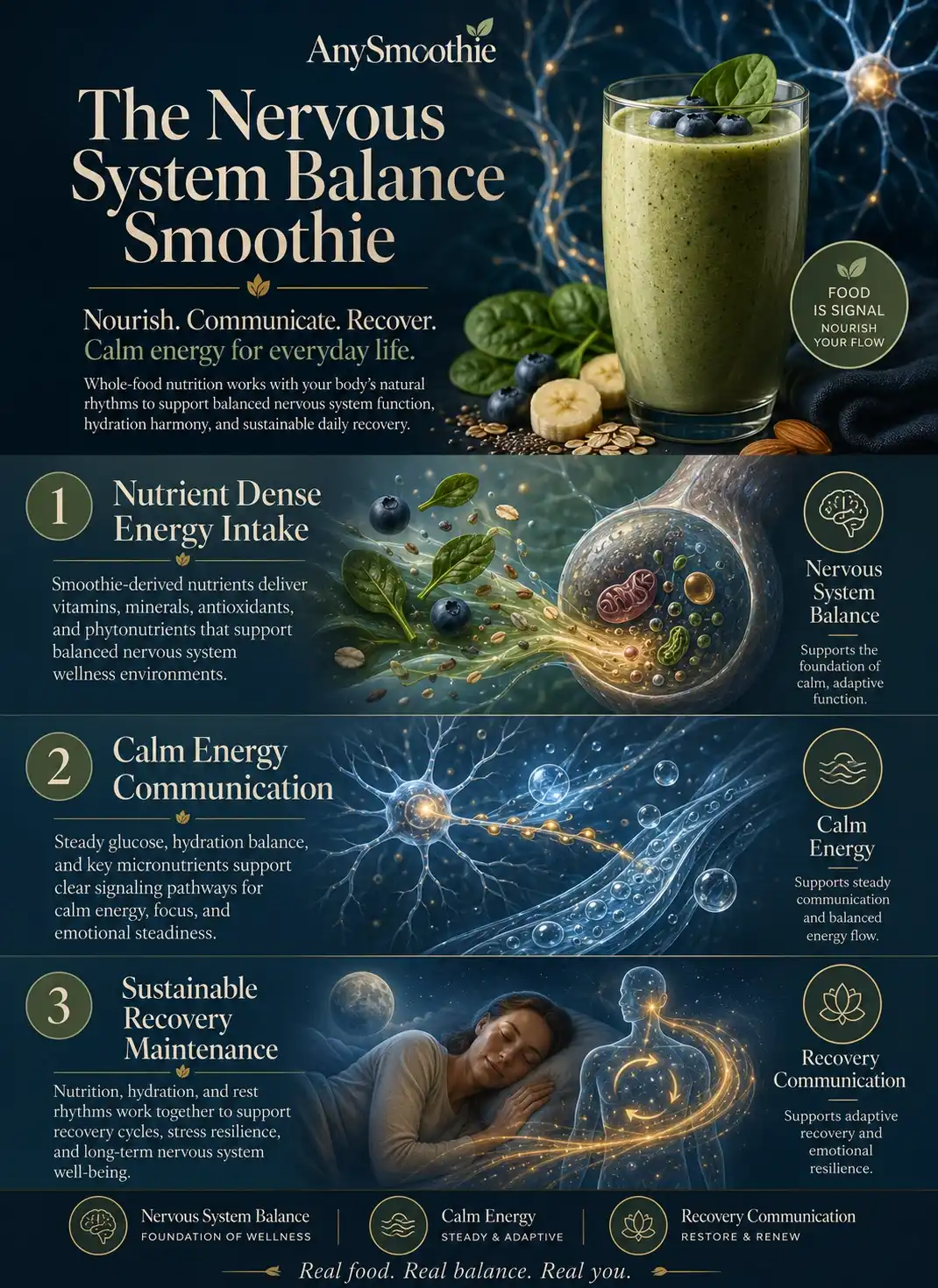
The key nutrients that help smooth out stress and sharpen focus
A few compounds show up again and again in calm-energy formulas. They work best when the smoothie already has protein, fat, and fiber in place. For a practical reference point, see this magnesium L-threonate overview, which explains why this form is used for brain-focused support.
| Compound | Physiological Pathway | Impact on Mental State | Best Food-Based Smoothie Pairing | Synergistic Co-factor |
|---|---|---|---|---|
| L-theanine | Supports alpha-wave activity and a steadier excitatory to inhibitory rhythm | Alert relaxation, less mental friction | Matcha, cacao, or tart berries | Magnesium and protein |
| Magnesium threonate | The only form optimized for brain tissue saturation, with a brain-focused magnesium delivery profile | Memory support, calmer processing | Cacao, oat milk, banana, or almond butter | B-vitamins and healthy fat |
| Phosphatidylserine | Supports cell membrane structure and cortisol balance | Stress resilience and mental smoothness | Nut butter, dairy, or lecithin-based blends | Omega-3 fats and choline |
These nutrients are not magic. They work best when the blend supports digestion and absorption. In practice, that means a smoothie built for calm usually feels better than a fruit-heavy drink with no structure.
L-theanine, magnesium threonate, and phosphatidylserine, what each one does best
L-theanine is popular because it tends to pair well with busy mornings. It fits clean flavors like matcha, berry, or citrus, without overpowering them. Magnesium threonate has a neutral profile, making it the ‘invisible’ brain-support star of any blend; it’s the form people often choose when the goal is brain-centered magnesium saturation, not just general mineral intake.
Phosphatidylserine fits best in richer smoothies. Almond butter, sunflower lecithin, and dairy or fortified milks all make sense here.
How protein, healthy fat, and fiber help your smoothie work better
Protein gives the smoothie staying power. It slows the pace of digestion and supports a more even energy curve. Healthy fat helps with lipophilic transport, so fat-soluble compounds move through the meal more smoothly.
Fiber matters just as much. It keeps the drink from acting like a sugar shot. That small detail changes how the afternoon feels.
Myelin Support: The Role of Phospholipids and B-Vitamins in Signal Speed
Myelin is the insulation around nerve pathways. When it works well, messages move efficiently. That matters for focus, timing, and mental endurance.
Phospholipids help build cell membranes, which is why ingredients like sunflower lecithin, dairy, fortified milks, and some nutrient-rich powders can matter in a smoothie. B-vitamins help the body turn food into energy, so they support mitochondrial priming and metabolic efficiency. Nutritional yeast, fortified plant milks, and green powders can add that layer without changing the texture too much.
Vagal afferents: how gut-based nutrients signal parasympathetic safety
Your gut does more than digest. It also sends signals that help the brain judge whether the body is safe and fed. A balanced smoothie can support that message when it’s easy to digest and not overloaded with sugar.
Texture matters here. So does temperature and sweetness. A smooth, balanced blend often feels more settling than a thin, overly sweet one because the gut gets a cleaner signal.
3 Calm-Energy Smoothie Recipes That Support a Steadier Day
You don’t need a complex formula. You need a drink that fits the moment.
How to build a smoothie that keeps working after the first sip
Use a simple 1 to 1 to 1 base: one protein source, one fiber source, one fat source. Then add flavor, minerals, and any targeted support you like. That keeps the drink balanced and easier to digest.
Blend liquids first, then greens, then powders, then frozen fruit. If you batch prep, freeze portions of fruit and greens separately. That saves time and keeps the texture consistent.
Electrolyte precision for nerve impulse clarity and hydration
Sodium, potassium, and magnesium help with hydration and nerve impulse clarity. A pinch of salt, mineral water, coconut water, leafy greens, or a mineral-rich powder can cover that base. Keep the sweeteners modest so the electrolyte support stays useful.
Simple swaps to match your goals, taste, and tolerance
Use dairy-free yogurt if you want a lighter feel. Choose berries instead of mango or pineapple if you want less sugar. Skip caffeine if you’re already stressed. The best version is the one you’ll keep making.
Conclusion
A calm-energy smoothie works because it supports the systems behind steady focus, not just the taste buds. When you combine protein, fiber, fat, minerals, and the right support nutrients, the drink can help your day feel less jagged.
Start with one recipe. Notice how your energy, hunger, and mood change over a few days. Small tweaks often matter more than a long ingredient list.
⚠️ Safety Notes for Nervous System Support Smoothies
Magnesium and Kidney Function: While Magnesium Threonate is targeted for the brain, individuals with Chronic Kidney Disease must monitor their total magnesium intake, as the kidneys are responsible for excreting excess minerals.
L-Theanine and Blood Pressure: L-Theanine can have a mild blood pressure-lowering effect. If you naturally have low blood pressure (hypotension) or are taking antihypertensive medications, monitor for dizziness or lightheadedness.
Ashwagandha and Thyroid Activity: Ashwagandha (present in some recipes) can stimulate the production of thyroid hormones. If you have Hyperthyroidism or Graves’ Disease, consult your endocrinologist before regular use.
Drug Interactions with Phosphatidylserine: Phosphatidylserine can interact with anticholinergic medications (often used for allergies, asthma, or depression) and acetylcholinesterase inhibitors (used for Alzheimer’s). Discuss with your physician if you are on these treatments.
Oxalate Rotation: Using large amounts of spinach daily for magnesium can lead to high oxalate intake. Rotate with other magnesium sources like pumpkin seeds, hemp hearts, or cacao to prevent potential kidney stone formation.
FAQ
What exactly is “Calm-Energy” in terms of neurobiology
Calm-energy refers to a physiological state where the brain is in an Alpha-wave dominant state—alert and focused, yet free from the jagged edge of sympathetic “fight-or-flight” activation. By providing specific amino acids like L-Theanine and magnesium, you support the body’s natural inhibitory pathways, allowing for mental clarity without the cortisol-driven anxiety typically associated with traditional stimulants.
How does Magnesium Threonate support the nervous system differently
Unlike other forms of magnesium, the threonate form is uniquely capable of crossing the blood-brain barrier. Once in the brain, it supports synaptic density and plasticity. This biochemical mechanic helps the nervous system maintain its structural integrity and signaling efficiency, leading to a more resilient response to the cognitive demands of a high-stress environment.
Why are phospholipids like Phosphatidylserine included in this blend
Phosphatidylserine is a major component of the myelin sheath, the protective coating of your nerves that ensures fast and accurate signal transmission. By including phospholipids in your smoothie—found in ingredients like sunflower lecithin, you provide the raw materials for nerve cell maintenance and help modulate the hypothalamus-pituitary-adrenal (HPA) axis, supporting a more balanced physiological response to external stimuli.
Can raw cacao contribute to both energy and relaxation
Yes, cacao is a biohacker’s favorite because it contains theobromine, a compound that supports blood flow and mild alertness without the aggressive neural stimulation of caffeine. Additionally, cacao is one of the highest food sources of magnesium, which supports muscle relaxation and nerve function, making it a perfect base for a “Calm-Energy” protocol.
Does the gut-brain axis play a role in nervous system support
The gut is often called the “second brain” because it produces many of the same signaling molecules. A calm-energy smoothie that includes prebiotic fibers supports the production of postbiotics like butyrate. These metabolites communicate with the brain via the vagus nerve, signaling a state of physiological safety that helps down-regulate the sympathetic nervous system and promotes systemic calm.

Medical Disclaimer: AnySmoothie content is for educational purposes only and is not a substitute for professional medical advice. Consult a healthcare provider for personalized guidance. See our full Disclaimer & Terms of Use. AI Transparency: AnySmoothie may use AI to support content development. All content undergoes human editorial review for accuracy, clarity, and editorial quality. See our full AI Transparency.