
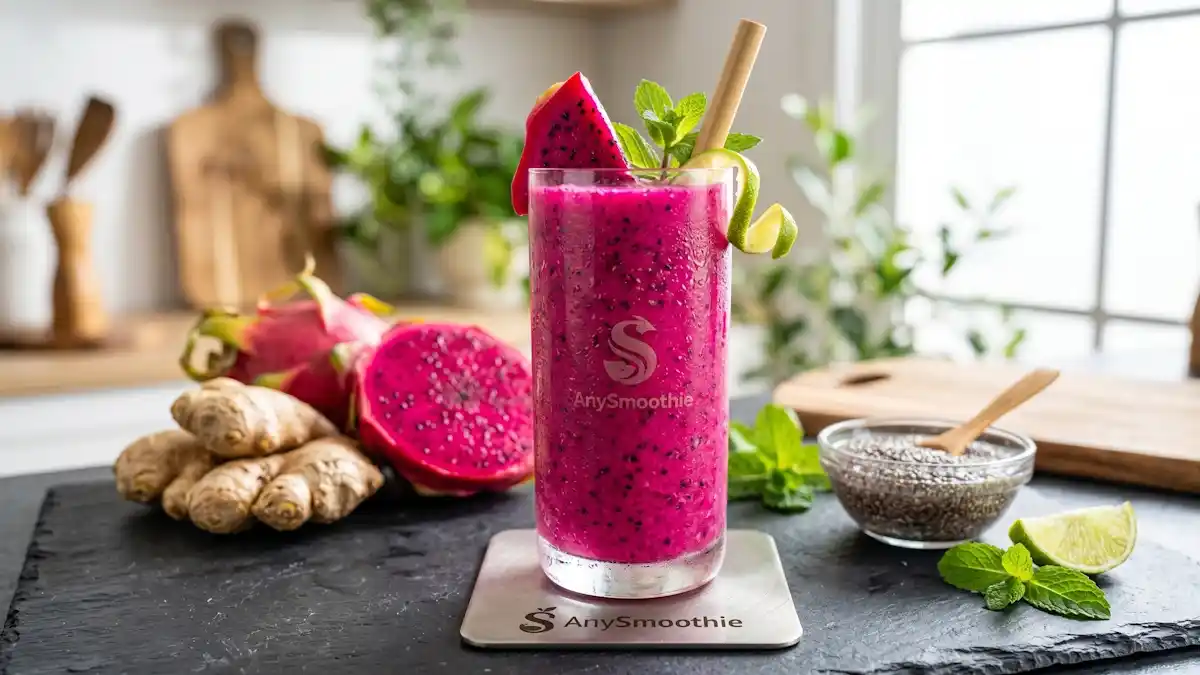
Slow motility can leave you feeling heavy, bloated, or backed up by mid-morning. A smart smoothie pattern can support smoother flow without piling on more load.
The best smoothie protocols for gastrointestinal motility use light texture, the right timing, and ingredients that fit the gut’s own rhythm. This article keeps it practical. You’ll see how the enteric nervous system works, which ingredients matter most, and how to build blends that move well.
The Enteric Nervous System and Peristaltic Flow
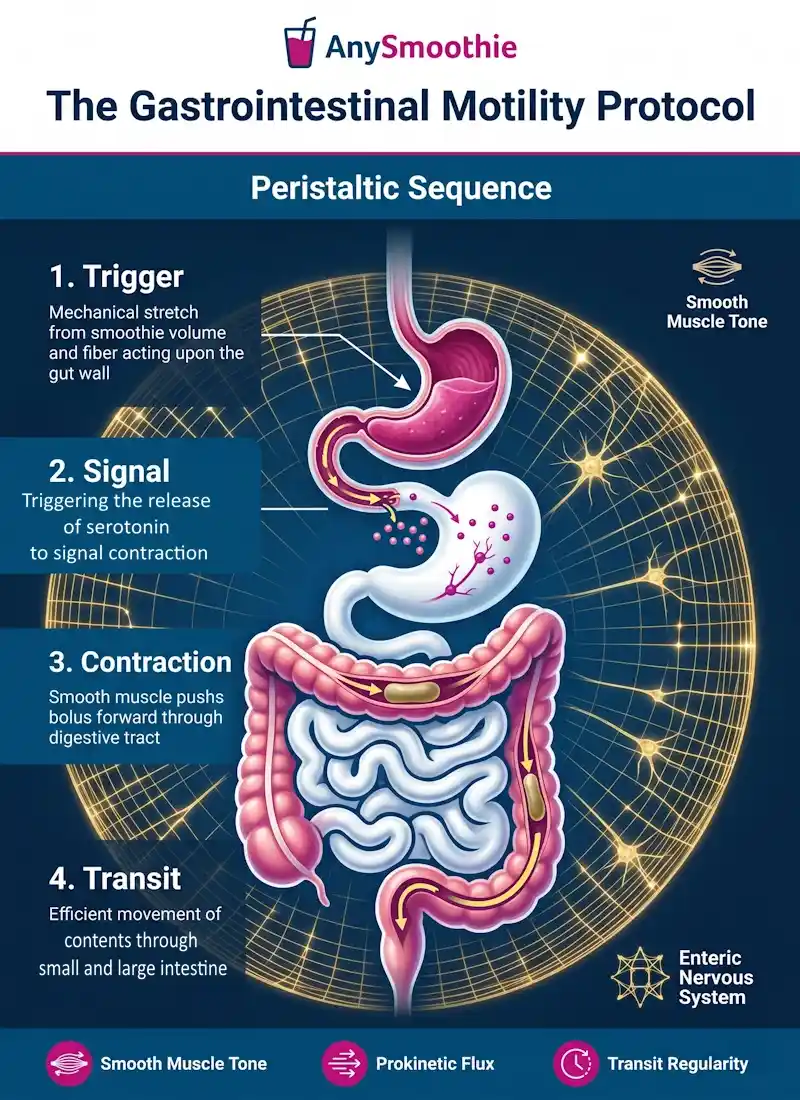
The enteric nervous system is the gut’s local control network. It reads stretch, fluid, and chemical signals, then coordinates the wave-like contractions that move food forward. When that system gets the right input, transit feels more organized.
Smoothies can help when they stay easy to process. A thin blend with simple ingredients asks less of the stomach, so the gut can focus on motion instead of breaking down a heavy mix.
Serotonin signaling as the gut’s internal pace-maker
Gut serotonin, or 5-HT, helps trigger reflexes that move contents along. It doesn’t work like a mood story here. It works like a timing signal.
That’s why ginger shows up so often in motility-focused blends. It supports natural signaling and is the main prokinetic ingredient in this article, especially for gastric emptying efficiency. If the upper GI tract feels sluggish, ginger deserves the first look.
Why smooth muscle tone matters for flow
Motility is about rhythm, not speed alone. Smooth muscle needs the right tone to contract, relax, and pass the bolus forward in order. Too much tension can slow things down. Too little tone can leave movement weak.
That is why texture matters as much as ingredient choice. A smoothie that is thick, icy, or packed with dry fiber can make the job harder. A smoother blend gives the gut a cleaner mechanical signal.
Osmotic and Mechanical Triggers for Luminal Transit
The most useful ingredients do one of three things. They nudge stomach movement, they add gentle osmotic pull, or they help stool hold enough water to pass cleanly. That balance is the heart of practical smoothie protocols for gastrointestinal motility. For a plain-language overview of how constipation and gut motility are discussed in clinical care, see the NIDDK.
Ginger for upper GI support and faster emptying
Ginger is the lead ingredient when the goal is upper GI support. It pairs well with citrus, pineapple, or pear, and it works best in a fruit-based blend that does not feel heavy. Small amounts are enough.
Dragon fruit, chia, and other low-friction fiber options
Dragon fruit brings water, fiber, and a soft texture that blends well. It gives the smoothie some body without turning it into paste. Soaked chia can add a gentle gel, but dry chia can thicken the mix too much. Use it after soaking, not before.
Magnesium and soluble fiber for lower GI flow
Magnesium supports normal smooth muscle function and neuromuscular signaling. Soluble fiber helps stool hold water and can make transit easier when the dose stays modest. Spinach, cacao, pumpkin seed, and small amounts of oats fit here. Too much fiber too fast can backfire, so build up slowly.
How to Build a Smoothie Protocol That Supports Gastrointestinal Motility
A good protocol is simple. Use one primary motility driver, one hydration base, and one support ingredient. Keep the serving moderate, usually 12 to 16 ounces, so the stomach doesn’t have to manage a meal-sized load. That also keeps nutrient partitioning cleaner, because the gut has less to process at once.
Here is a quick comparison of the three main agents.
| Agent | Physiological mechanism | Onset of action | Best smoothie pairing | Target zone |
|---|---|---|---|---|
| Ginger | Stimulates antral contractions and supports gastric emptying efficiency | Often felt in the same meal window | Lemon, pineapple, pear, and other light fruit blends | Upper GI |
| Dragon fruit | Adds prebiotic fiber and an osmotic pull with a soft texture | Slower, builds over hours | Coconut water, chia, and berries | Lower GI, with some whole-gut support |
| Magnesium | Supports smooth muscle tone and neuromuscular function | Varies by form and dose, often same day | Spinach, cacao, pumpkin seed, or banana | Lower GI |
Texture, temperature, and timing all change the result
Thin blends tend to move better than thick ones. Room temperature or slightly cool drinks often feel easier than very cold smoothies, especially for sensitive digestion. Timing matters too. Use a smoothie between meals, after a short walk, or in a steady morning window when the gut is already ready to work.
3 Motility-Active Prokinetic Smoothie Recipes
These are simple, not gourmet. Each one keeps the ingredient load low and the texture smooth.
Timing for Optimal Clearance
Eating or drinking can trigger the gastrocolic reflex, which is one reason a morning smoothie can work better than a heavy breakfast for some people. A light blend gives the colon a clear signal without overloading the stomach.
Using the gastrocolic reflex without overloading the gut
Keep the portion steady and the ingredients simple. Consistency matters more than chasing a perfect recipe. If a smoothie feels heavy, it usually means the mix is too thick, too cold, or too large.
Mitochondrial priming and smooth muscle energy
Smooth muscle needs energy to contract and relax on time. That is where hydration, minerals, and regular meal patterns matter. A well-timed smoothie can fit that rhythm by giving the gut fluid, fuel, and fewer obstacles.
Conclusion
The best smoothie protocols for gastrointestinal motility are light, balanced, and built for movement. Ginger is the main choice for gastric emptying, while dragon fruit and magnesium help more with stool hydration and lower GI flow.
Keep the texture thin, the portion moderate, and the timing steady. Start with one small change, then watch how your gut responds over the next day.
🛡️ Safety Notes & Contraindications: Motility Support Smoothies
Biliary Obstruction: Prokinetic ingredients like ginger can stimulate gallbladder contraction. If you have active gallstones or a history of bile duct obstruction, avoid high-dose ginger smoothies as they may trigger biliary colic.
Irritable Bowel Syndrome (IBS-D): If you suffer from diarrhea-predominant IBS, these prokinetic protocols may be too stimulatory and lead to urgency or cramping. Focus instead on “buffer” ingredients like oats or plain banana.
Chia Seed Hydration: CRITICAL: Never add dry chia seeds to a motility smoothie. They can absorb up to 12 times their weight in water inside the esophagus or gut, potentially causing a blockage. Always soak them for at least 20 minutes before blending.
Temperature Shock: Icy drinks can cause “gastric shock,” leading to temporary spasms or a shutdown of motility in sensitive individuals. Use room-temperature or lukewarm liquids if your digestion is touchy.
Medication Interaction: Accelerated motility can decrease the “resident time” of certain oral medications in the small intestine, potentially lowering their absorption. Consult your pharmacist if you are on critical medications.
FAQ
How does “Ginger Signaling” optimize the biochemical mechanics of gastric emptying?
Ginger contains gingerols and shogaols, which interact with serotonergic and cholinergic receptors in the gastric wall. Biochemically, this interaction stimulates antral contractions and reduces the resistance of the pyloric sphincter. Supporting this physiological system through ginger-forward smoothies facilitates the biochemical mechanics of “upper-GI clearance,” ensuring that the stomach empties its contents efficiently into the small intestine.
Why is “Viscosity Engineering” critical for supporting the enteric nervous system?
The enteric nervous system coordinates peristalsis based on the “stretch” and “drag” of luminal contents. Biochemically, a smoothie that is too thick or high in insoluble fiber can induce excessive mechanical strain, potentially slowing transit in a sensitive gut. Supporting this physiological system by maintaining a thin, “sip-able” texture (12–16 oz) optimizes the natural pathways of “low-friction transit,” ensuring the biochemical mechanics of the wave-like contractions remain organized and fluid.
What is the role of “Dragon Fruit” in providing osmotic and mechanical triggers?
Dragon fruit provides a unique combination of high water content and soft, prebiotic fiber. Biochemically, it exerts a gentle osmotic pull, drawing water into the intestinal lumen to hydrate the stool. Supporting this physiological system through dragon-fruit-based smoothies facilitates the biochemical mechanics of “stool softening,” providing a soft mechanical signal that supports steady movement through the lower gastrointestinal tract.
How does “Magnesium” support the neuromuscular tone of smooth muscle?
Magnesium acts as a physiological calcium antagonist, which is essential for the relaxation phase of muscle contraction. Biochemically, smooth muscle requires a precise balance of minerals to maintain its rhythmic “pace-maker” activity. Supporting this physiological system with magnesium-rich add-ins (like spinach or pumpkin seeds) optimizes the natural pathways of “smooth muscle tone,” ensuring the biochemical mechanics of the gut remain responsive and capable of coordinated movement.
Why is “Thermal Modulation” important for triggering the gastrocolic reflex?
The gastrocolic reflex is a physiological increase in motility that occurs in response to stretching of the stomach. Biochemically, extremely cold temperatures can cause temporary “thermal shock” or smooth muscle constriction, which may interfere with this reflex. Supporting this physiological system by using room-temperature or slightly cool liquids facilitates the biochemical mechanics of “reflex activation,” allowing the body to signal for clearance without the systemic stress associated with icy drinks.

Medical Disclaimer: AnySmoothie content is for educational purposes only and is not a substitute for professional medical advice. Consult a healthcare provider for personalized guidance. See our full Disclaimer & Terms of Use. AI Transparency: AnySmoothie may use AI to support content development. All content undergoes human editorial review for accuracy, clarity, and editorial quality. See our full AI Transparency.