
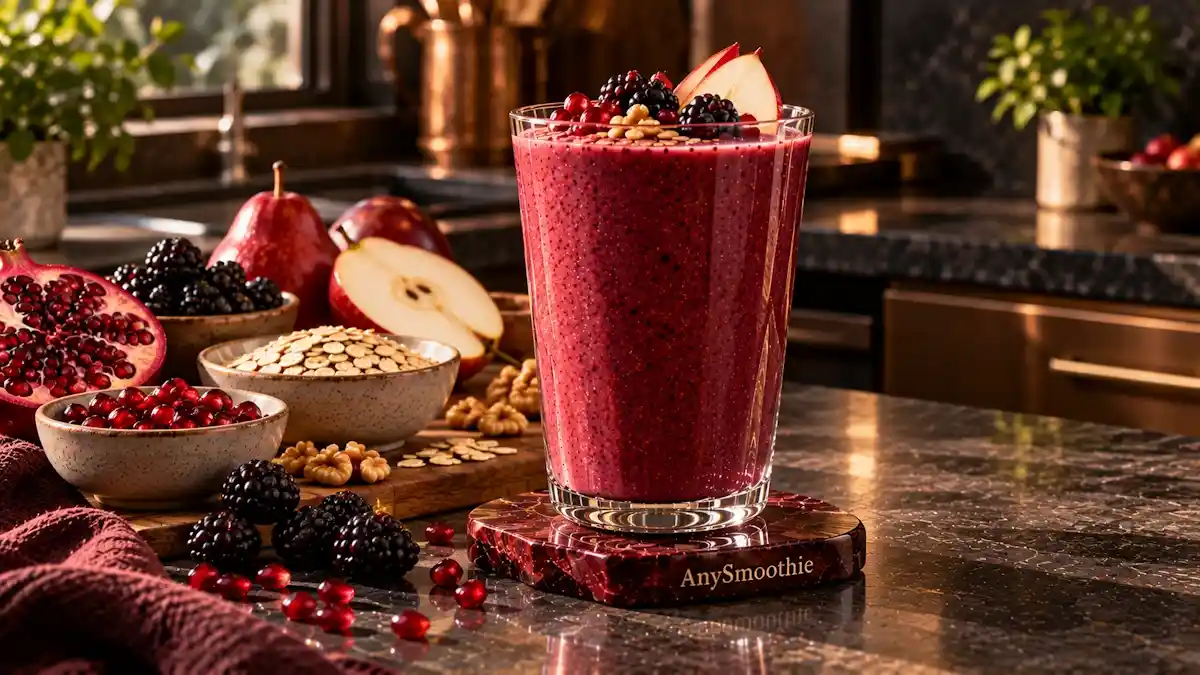
Specialized pro-resolving mediators (SPMs) are compounds your body makes from certain fatty acids. Smoothies can provide nutrients used in these natural pathways, but no recipe is proven to increase SPM levels or produce a specific health result.
If you’re looking for smoothies for specialized pro-resolving mediators, focus on nutrient intake, not promised changes in cell signaling. Start with the differences between omega-3 sources, then choose ingredients that suit your tastes and dietary needs.
What specialized pro-resolving mediators do, and where food fits
SPMs are small, fat-derived signaling molecules involved in the body’s process of resolving inflammation. That process includes communication between immune cells and the clearance of cellular debris.
How fatty acids become signaling molecules
Some SPMs, including members of the resolvin, protectin, and maresin families, come from omega-3 fats called EPA and DHA. Enzymes transform these fatty acids through several biochemical steps. A review of DHA-derived mediators describes these pathways and their roles in physiological regulation.
Cellular lipid biology includes other processes beyond SPM biosynthesis. For a related but distinct topic involving membrane building blocks, see uridine smoothies for phospholipid synthesis.
However, eating a precursor doesn’t guarantee its conversion into a particular signaling molecule. A smoothie also can’t tell you how much SPM activity occurs in your tissues.
Why omega-3 sources are only part of the picture
Chia, flax, and walnuts supply alpha-linolenic acid, or ALA. This plant-based omega-3 differs from EPA and DHA, and the body converts only limited amounts into those fats.
Enzyme activity and overall nutritional context affect how the body uses fatty-acid precursors. Therefore, these recipes offer foods that support nutrient intake, without promising a measured increase in SPMs.
For another distinct topic involving lipid particles and vascular biology, see smoothies for lipid particle and vascular integrity. That topic concerns circulating lipid particles rather than SPM levels.
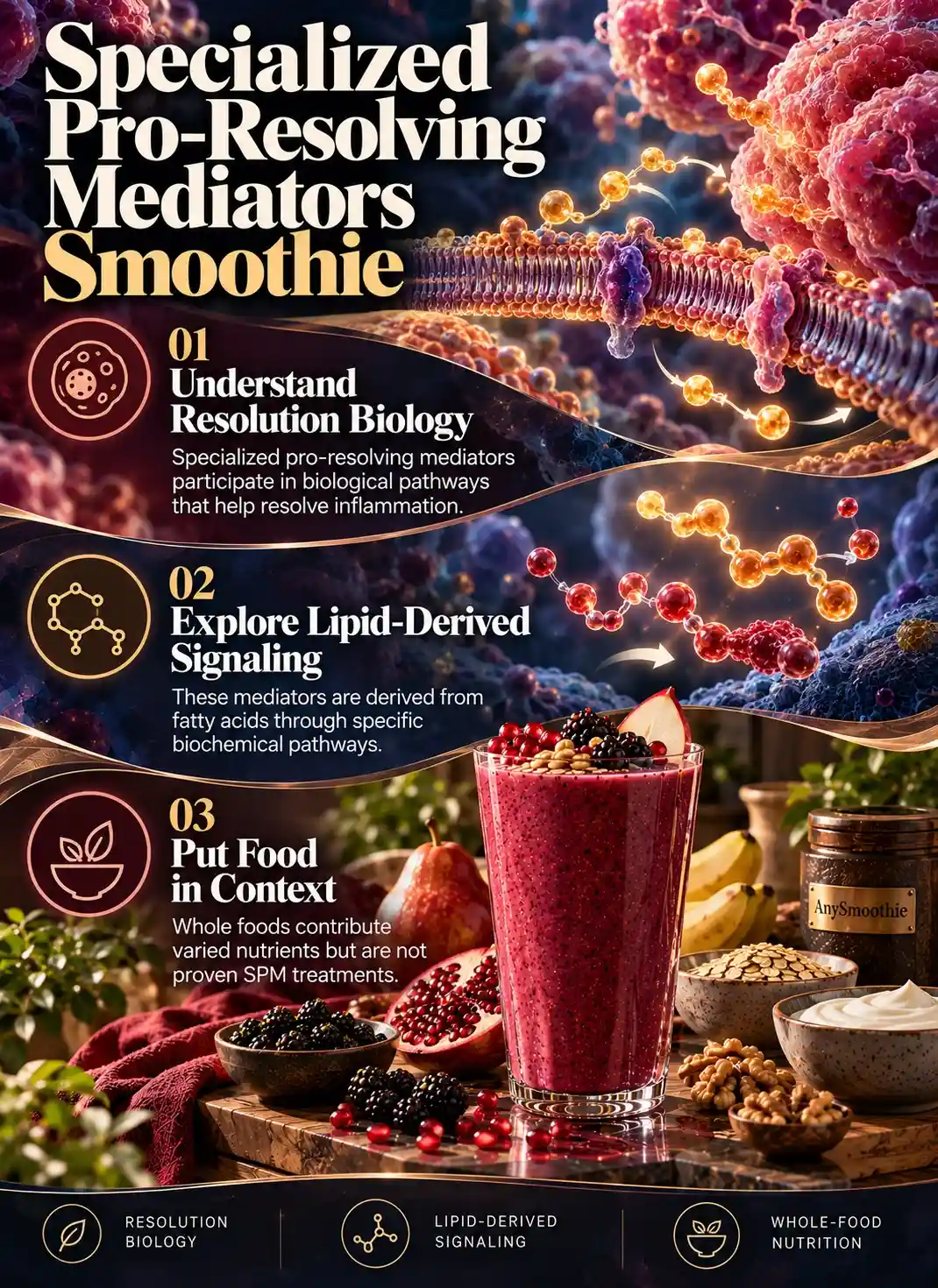
3 Smoothies for Specialized Pro-Resolving Mediators
Each recipe makes one smoothie. Use unsweetened liquids and whole fruit, with enough liquid for your preferred texture.
The estimates below are approximate and use unsweetened soy milk. The third recipe’s estimate covers the smoothie base before adding the product-specific algae oil; its serving size can change the final calories and fat.
Berry, chia, and flax smoothie
Ingredients
- 1 cup frozen mixed berries
- 1 tablespoon ground flaxseed
- 1 tablespoon chia seeds
- 1 cup unsweetened soy milk
Steps
First, blend the milk and berries. Add the seeds, blend again, then let the smoothie stand for about five minutes. If it thickens more than you like, blend in a little water.
Grinding flax breaks its outer seed coat and makes its nutrients easier to access. Meanwhile, chia absorbs liquid and adds thickness. Both supply ALA, which Harvard’s overview of omega-3 fats distinguishes from EPA and DHA. Neither ingredient guarantees SPM production.
A practical final check: chia continues absorbing liquid after blending, so check the texture again before sealing the bottle and add a splash of water if needed.
Estimated Nutrition per Serving
- Calories: ~245 kcal
- Protein: ~11 g
- Carbohydrates: ~28 g
- Fat: ~15 g
- Fiber: ~15 g
- Sugars: ~11 g
If making this smoothie ahead, give it a quick shake before drinking. The chia thickens as it sits, so add a splash of water if needed.
Mango, spinach, and walnut smoothie
Ingredients
- 3/4 cup frozen mango
- 1 cup loosely packed spinach
- 2 tablespoons chopped walnuts
- 1 cup unsweetened soy milk
- Optional: 1/4 cup ice
Steps
Blend the milk and spinach first so fewer leafy pieces remain. Then add the mango and walnuts and blend until smooth. Add the ice last.
Mango provides sweetness without syrup or juice. Walnuts add fat and a mild nutty flavor, but their omega-3 is ALA, not EPA or DHA. For a smoother texture, blend longer before adding more liquid.
Estimated Nutrition per Serving
- Calories: ~255 kcal
- Protein: ~11 g
- Carbohydrates: ~26 g
- Fat: ~14 g
- Fiber: ~6 g
- Sugars: ~18 g
Creamy avocado and algae-oil smoothie
Ingredients
- 1/4 medium avocado
- 1/2 banana
- 3/4 cup unsweetened soy milk
- 1 teaspoon lime juice
- A product-labeled serving of food-grade algae oil listing DHA or EPA and suitable for mixing into cold foods
Steps
Combine the avocado, banana, soy milk, and lime juice. Blend until creamy.
Next, add the food-grade algae oil according to the product’s serving directions rather than substituting a spoonful or copying another oil’s dose. Blend briefly to combine.
Avocado supplies thickness, while banana softens the flavor. Keep this smoothie cold, and don’t assume every algae oil is suitable for blending or heating. Products differ in concentration, formulation, and intended use.
Estimated Nutrition per Serving
The following estimate covers the smoothie base before adding the algae oil. The oil’s serving may add calories and fat, so check its product label.
- Calories: ~195 kcal
- Protein: ~7 g
- Carbohydrates: ~21 g
- Fat: ~11 g
- Fiber: ~6 g
- Sugars: ~8 g
The comparison below shows how their omega-3 sources differ.
| Smoothie | Omega-3 source | Other ingredients | Liquid base | Prep note |
|---|---|---|---|---|
| Berry, chia, and flax | Chia and ground flax, providing ALA | Mixed berries | Unsweetened soy milk | Let chia hydrate |
| Mango, spinach, and walnut | Walnuts, providing ALA | Mango and spinach | Unsweetened soy milk | Blend until smooth |
| Creamy avocado and algae oil | Labeled DHA or EPA in algae oil | Avocado, banana, and lime | Unsweetened soy milk | Follow oil serving directions |
The first two use plant-based ALA sources; the third includes a direct source of DHA or EPA.
How to choose ingredients and keep expectations realistic
Start with the liquid base. Look for “unsweetened” on the package, then read the added-sugars line on the Nutrition Facts label. Plain water also works, although it changes the smoothie’s flavor and protein content.
For packaged omega-3 products, distinguish total oil from omega-3 content. The amount of oil in a serving isn’t necessarily the amount of DHA or EPA. The NIH omega-3 consumer fact sheet explains the differences among ALA, EPA, and DHA, including the body’s limited conversion of ALA.
Taste and texture matter, too. Chia thickens as it sits, walnuts can leave small particles, and algae oil may have a noticeable flavor.
Choose around allergies and preferences. Soy milk and walnuts aren’t appropriate for everyone, so substitutions may change both texture and nutrients.
Finally, a smoothie is one food choice within your overall eating pattern. Ask a qualified health professional about supplements or substantial dietary changes, especially if you take medication or have a medical condition.
Conclusion: Choose a smoothie for its nutrients and taste
These recipes add omega-3-containing foods, fruit, and other nutrients to meals. However, the body’s SPM pathways depend on complex biochemical processes that a recipe can’t predict or control.
Choose the combination that fits your needs, allergies, and preferences. A smoothie you enjoy can contribute to consistent nutrient intake, without a promise about SPM levels or a particular health outcome.
🛡️ Safety Notes & Dietary Interactions
- Omega-3 expectations: ALA from chia, flax, and walnuts differs from EPA and DHA, while algae oil can provide labeled DHA or EPA. None of these ingredients guarantees increased SPM production or a specific biological effect.
- Fiber and texture: The berry recipe supplies about 15 g of fiber, with both chia and flax contributing substantially. Increase fiber gradually if needed, and add liquid because chia continues absorbing fluid after blending.
- Allergen awareness: Soy milk and walnuts may be unsuitable for people with corresponding allergies. Check labels carefully when substituting ingredients, and remember that changing the liquid or omega-3 source can alter the nutrient profile.
- Algae-oil products: Use only a food-grade algae oil intended for the stated use and follow its product-specific serving directions. Different products vary in DHA/EPA concentration, formulation, calories, and flavor.
FAQs
Does eating these smoothies increase specialized pro-resolving mediators?
Not predictably. The recipes provide omega-3-containing foods, including ALA from chia, flax, and walnuts and labeled DHA or EPA from algae oil. However, the article explains that consuming a precursor does not guarantee its conversion into a particular SPM or establish a measurable increase in SPM activity.
Which smoothie provides EPA or DHA rather than ALA?
The creamy avocado and algae-oil smoothie is the only recipe specifically incorporating a direct DHA or EPA source. The berry, chia, and flax smoothie and the mango, spinach, and walnut smoothie rely on ALA. Check the algae-oil label because products differ in whether they provide DHA, EPA, or both.
Why should I let the chia smoothie stand before drinking?
Chia absorbs liquid and continues thickening after blending. The article recommends letting the berry smoothie stand for about five minutes, then checking its consistency before sealing the bottle. Add a splash of water if necessary to make it easier to drink and prevent an unexpectedly spoon-thick texture.
Can I use another oil instead of the algae oil?
The article specifically recommends a food-grade algae oil listing DHA or EPA and says to follow that product’s serving directions. It does not establish an equivalent dose for another oil. Replacing it may therefore change the smoothie substantially, particularly its omega-3 content.
Are these smoothies suitable if I need to avoid soy or nuts?
The recipes can be adapted, but the article does not prescribe specific substitutions for every allergy. Soy milk appears in all three recipes, while walnuts are used in one. Choose alternatives that meet your dietary requirements and compare labels because substitutions can change protein, fat, and omega-3 content.

Medical Disclaimer: AnySmoothie content is for educational purposes only and is not a substitute for professional medical advice. Consult a healthcare provider for personalized guidance. See our full Disclaimer & Terms of Use. AI Transparency: AnySmoothie may use AI to support content development. All content undergoes human editorial review for accuracy, clarity, and editorial quality. See our full AI Transparency.