
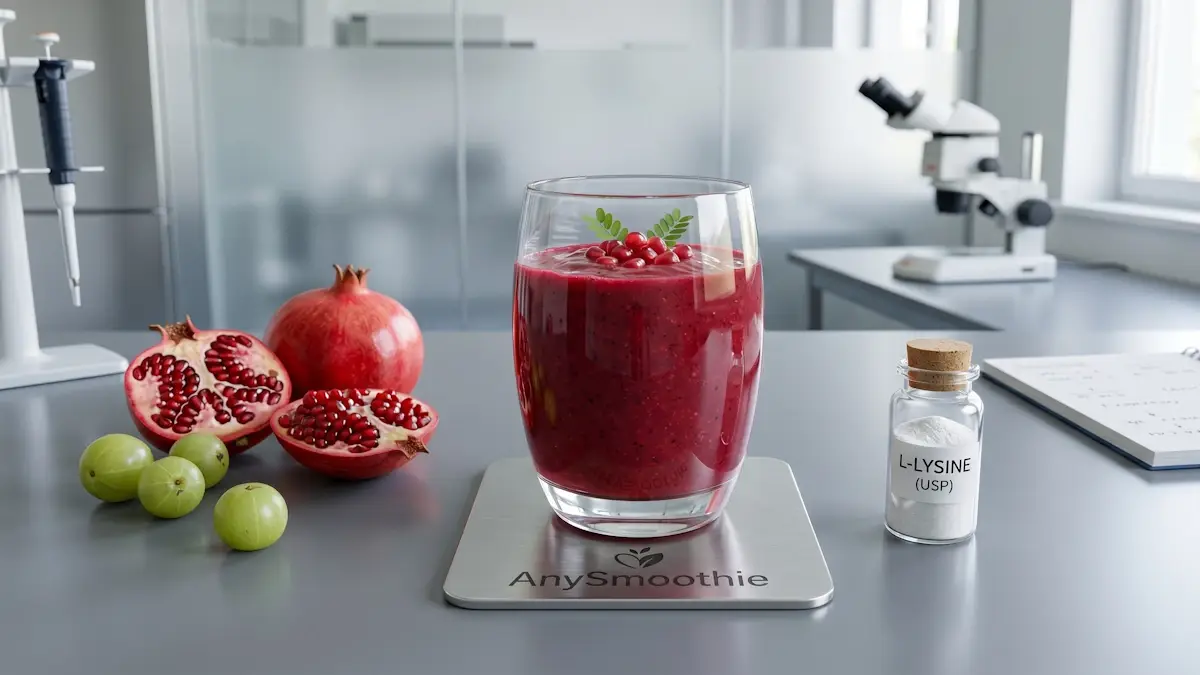
High Lp(a) changes the conversation because it isn’t standard LDL with a different label. It’s a largely genetic risk marker, and if your number is high, food alone usually won’t move it much.
Still, that doesn’t make nutrition irrelevant. If you’re considering smoothies for high Lipoprotein(a), the smart goal is support, not cure. A well-built smoothie can pack in vitamin C-rich produce, polyphenols, fiber, and protein that may help endothelial health, lower oxidative stress, and make a heart-protective routine easier to keep.
That matters because the real job is bigger than one lab value. You still need testing, medical guidance, and a plan for total cardiovascular risk. The blender fits into that plan, and that’s where it earns its place.
The Genetic Wildcard: Understanding Why Lp(a) Is Different From LDL
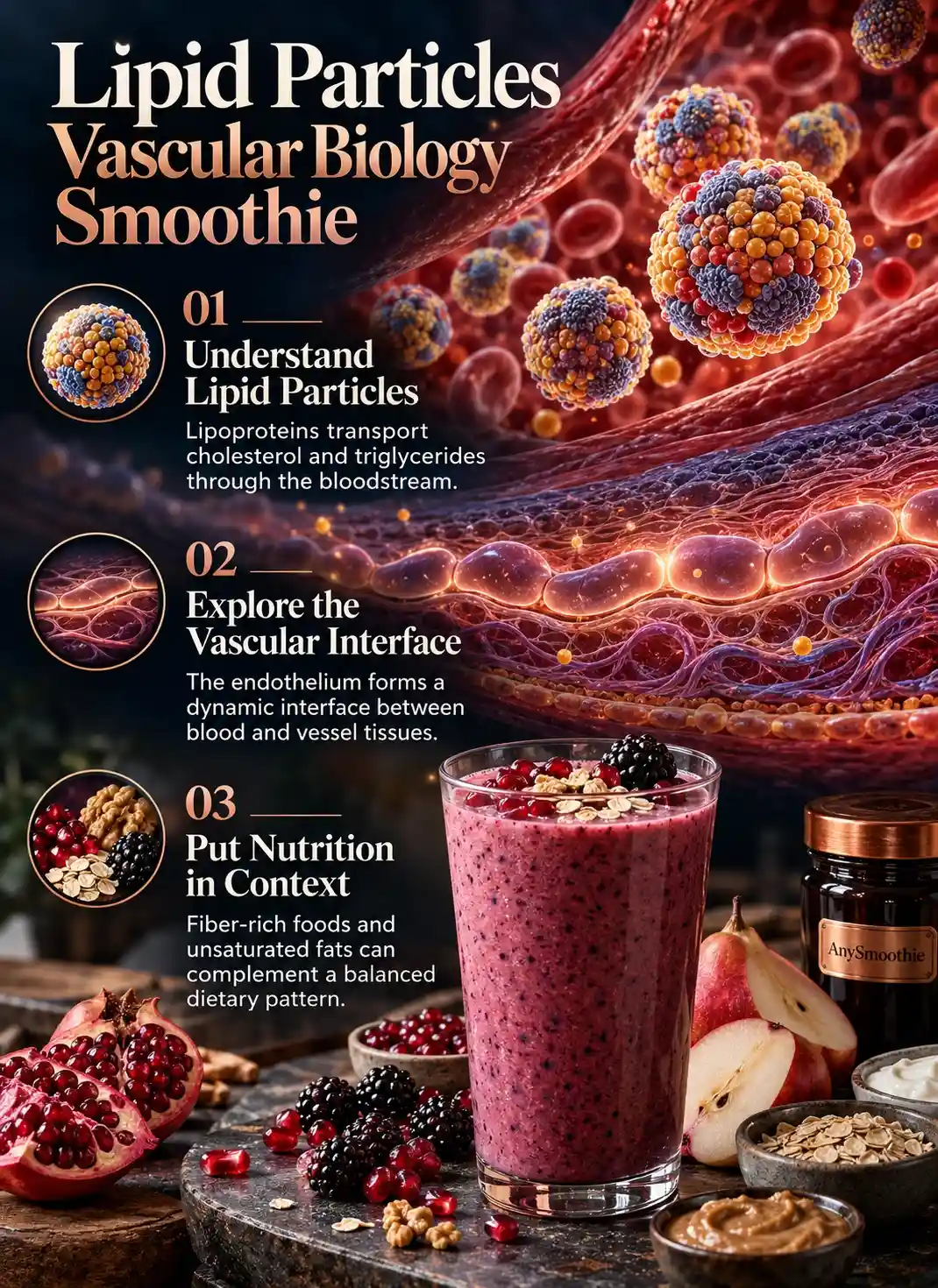
Lipoprotein(a), usually written as Lp(a), looks a lot like an LDL particle. The key difference is an added apolipoprotein(a) tail, often shortened to apo(a). That tail changes the particle’s behavior, and it changes your risk.
Unlike LDL, Lp(a) is mostly set by genes. That’s why two people can eat the same diet and get very different results. You can tighten up your food choices, lose weight, and improve ApoB or LDL, yet your Lp(a) may barely budge.
In 2026, this matters more than ever because US dyslipidemia guidance now pushes for at least one adult Lp(a) test, and many clinicians are acting on that. At the same time, drug development is moving fast. Food still matters, but mostly because it helps protect blood vessels and lowers the rest of your risk burden. For a broader nutrition view, see Eating to Lower Lp(a).
Pro-thrombotic and Pro-atherogenic: The dual threat of the apolipoprotein(a) tail
The apo(a) tail gives Lp(a) a double threat. It is pro-atherogenic, which means it can help plaque build up in artery walls. It is also pro-thrombotic, which means it may increase clot-related risk.
Part of the problem is its cargo. Lp(a) carries oxidized phospholipids, which are damaged fat-like compounds that can irritate tissue. Those compounds matter most where artery walls are already stressed. When the lining of the artery is inflamed, roughened, or injured, Lp(a) may be more likely to stick, settle, and add to plaque activity.
That is why endothelial integrity matters. In plain English, you want the artery lining to stay strong, calm, and less irritated. Smoothies can’t neutralize every Lp(a) particle, but they can help you build a diet that is friendlier to the vessel wall.
What Smoothies for High Lipoprotein(a) Can and Cannot Do
Current evidence does not show that smoothies, powders, or trendy add-ins can reliably lower Lp(a) the way targeted drugs aim to. As of April 2026, there are no direct studies showing that smoothies reduce Lp(a) on their own.
There is, however, a useful middle ground. Smoothies make it easier to get foods that support vascular health, such as berries, kiwi, citrus, spinach, cocoa, flax, and soy or pea protein. They also help some people replace ultra-processed breakfasts, sugar-heavy coffee drinks, or late-night snack habits that raise total cardiometabolic risk.
Smoothies can improve your daily inputs, but they do not replace Lp(a) testing, medication review, or risk-based treatment.
That’s why a smoothie routine works best when it supports consistency. For heart-focused recipe structure, this heart-healthy smoothie guide shows the same building blocks that make sense here, fiber, plants, and unsweetened bases.
Think support, not a stand-alone fix
The main target is support for endothelial integrity, oxidative stress control, and day-to-day adherence. If a smoothie helps you eat berries instead of pastries and add protein instead of skipping breakfast, that is a real win.
For actual Lp(a) management, you need a clinician. PCSK9 inhibitors can lower Lp(a) a bit in some patients, while newer drugs in development may cut it far more. The 2025 NEJM lepodisiran trial showed large reductions, and more outcome trials are underway. That is the lane for true Lp(a)-targeted treatment. Nutrition still matters, but it plays defense around the edges.
Endothelial Protection: Strengthening the Arterial Wall Against Lp(a) Deposition
When people talk about nutrition support for Lp(a), they usually focus on the artery wall, not just the lab number. The logic is straightforward. If Lp(a) is more dangerous where tissue is irritated or damaged, then foods that support collagen formation and lower oxidative stress may help create a less sticky environment.
That is why vitamin C-rich produce, lysine, proline, berries, cocoa, leafy greens, and other antioxidant-rich foods come up so often. The evidence is mixed, and some of the claims go far beyond what human trials prove. Even so, the basic nutrition pattern is sensible, because it overlaps with standard heart-protective eating.
A useful overview of this theory appears in Vitamin C and Lipoprotein(a): The Evidence for Benefit. Read it as a discussion of possible mechanisms, not settled therapy.
Oxidative Stress Management: Why Vitamin C and Lysine Are the Closest Thing to “Teflon” for Your Arteries
Vitamin C helps your body build collagen. That matters because collagen helps maintain the structure of blood vessels. When people use the “Teflon” analogy, they mean a smoother, less vulnerable artery lining, not a literal coating.
Lysine enters the conversation for a different reason. In some supplement protocols, it is described as a decoy that may help keep Lp(a) from sticking to binding sites in the artery wall. That proposed mechanism is interesting, but it is not proven standard therapy. So the practical takeaway is modest: if you tolerate lysine and your clinician agrees, it may fit into a broader support plan.
Before trying supplements, especially niacin, check with a clinician because side effects and drug interactions are real.
| Nutrient | Mechanism of Action | Impact on Endothelium | Recommended Daily Dose | Best Smoothie Pairing |
|---|---|---|---|---|
| Vitamin C (Ascorbate) | Supports collagen synthesis and antioxidant recycling | May help keep the artery lining stronger and less irritated | Food first; common supplement range is 250 to 1,000 mg/day, higher doses only with guidance | Kiwi, strawberries, citrus, amla |
| L-Lysine | Often described as a decoy that may help prevent Lp(a) from sticking to artery walls | May support structural repair by helping collagen-related pathways | Common supplemental range is 500 to 2,000 mg/day; some protocols use more under supervision | Berry smoothie with soy or pea protein |
| Niacin (Vitamin B3) | Can lower Lp(a) in some studies and reduce hepatic lipoprotein output | Indirect support through lipids, but outcome benefit is unclear | Often 500 to 2,000 mg/day, only with medical oversight | Take with a substantial smoothie or meal, not as a casual add-in |
Niacin deserves extra caution. It can lower Lp(a) by about 15 to 25 percent on average in studies, but it hasn’t clearly lowered heart events, and newer concerns about side effects make self-treatment a poor idea.
3 Heart-Shielding Smoothie Recipes (Lp(a) Support Focus)
These smoothie ideas are built for support. They favor polyphenols, vitamin C, fiber, protein, and repeatable habits over hype.
Strategic Stacking: Combining Niacin, Proline, and CoQ10
Some people discuss stacking niacin, proline, lysine, vitamin C, and CoQ10 around an Lp(a) support routine. The theory is that each piece covers a different angle, less oxidative stress, better endothelial support, and less particle sticking.
That idea is interesting, but it also gets messy fast. Niacin has the strongest track record for lowering Lp(a) on paper, yet the clinical payoff is weak, and side effects are common. While Niacin remains the only readily available supplement that significantly lowers the Lp(a) mass in labs, its ‘flush’ side effect and lack of clear cardiovascular outcome data mean it should be viewed as a clinical tool, not a casual smoothie add-in. Proline is often paired with lysine in collagen-focused protocols, but direct evidence for Lp(a) reduction is thin. CoQ10 may support energy metabolism and help some statin users, though it is not an Lp(a)-lowering treatment.
So if you want to stack, do it with supervision and a clear reason. A smoothie can be the delivery system for food-based support. It should not become a catch-all container for untested supplement combinations.
Beyond the Blender: Managing Lp(a) Through Systemic Inflammation Control
Even if Lp(a) is genetic, the rest of your risk picture still matters. Lowering ApoB or LDL, controlling blood pressure, sleeping well, staying active, and avoiding smoking all lower the odds that a high Lp(a) level turns into a real event.
Inflammation matters too. So does blood sugar control. If you have a strong family history of early heart attack, stroke, or valve disease, you may need earlier and more detailed conversations with a clinician. That can include coronary calcium scoring, earlier lipid treatment, or referral to a lipid specialist.
A smoothie helps most when it makes those bigger habits easier. It gives you one repeatable place to improve food quality without asking for perfection.
Conclusion
High Lp(a) is a genetic risk marker with a different playbook than standard LDL. That is why smoothies for high Lipoprotein(a) work best as a support habit, not a fix.
A good smoothie can help protect endothelial health, add antioxidants, improve fiber intake, and replace lower-quality meals. Those changes matter because they improve the part of heart risk you can still influence, even when the Lp(a) number barely moves.
Know your number. Review your full cardiovascular risk with a clinician. Then use simple, repeatable smoothie habits to support the artery wall, your routine, and the parts of heart health that still respond to daily choices.
⚠️ Safety Notes for Lp(a) & Cardiovascular Support
Niacin Warning: While Niacin (Vitamin B3) can lower Lp(a) numbers, it is notorious for the “Niacin Flush” (intense skin redness and itching) and can potentially increase blood sugar or liver enzymes. Do not use therapeutic doses of Niacin without direct medical supervision and regular blood monitoring.
NOT a Standalone Treatment: Lp(a) is a high-risk genetic marker. Nutrition is supportive, but high levels often require advanced medical therapies (like PCSK9 inhibitors or apheresis). Do not replace prescribed cardiovascular medications with smoothies.
Lysine and Arginine Balance: High supplemental doses of L-Lysine can occasionally compete with Arginine absorption. If you are prone to Cold Sores (HSV-1), this balance is beneficial; however, consult your doctor if you have chronic low blood pressure.
Oxalate Sensitivity: Recipes containing spinach or large amounts of berries are high in oxalates. If you have a history of calcium-oxalate kidney stones, rotate your greens (use arugula or romaine) and ensure adequate hydration.
CoQ10 and Blood Thinners: If you are taking Warfarin (Coumadin) or other anticoagulants, be aware that CoQ10 has a structure similar to Vitamin K and could theoretically interfere with the drug’s effectiveness. Always coordinate with your cardiologist.
FAQ
Why doesn’t my regular cholesterol diet lower my Lp(a)?
Lipoprotein(a) levels are determined almost 100% by your genetics (your LPA gene). Unlike LDL, it does not respond significantly to low-fat diets or standard statins. The goal with smoothies is not to “lower” the number drastically, but to stop the particles from becoming oxidized and sticking to your arteries.
How do Lysine and Proline help in an Lp(a) smoothie?
Lp(a) has “sticky” sites called kringles that love to bind to the lysine found in your artery walls. By adding L-Lysine and L-Proline to your smoothie, you provide “decoy” binding sites in the blood. The Lp(a) sticks to the free-floating lysine instead of your arteries.
What is the “Pauling Therapy” and can I do it with smoothies?
Named after Nobel laureate Linus Pauling, this approach uses high doses of Vitamin C and Lysine to strengthen the collagen in the arteries and prevent Lp(a) buildup. Smoothies are the perfect vehicle for this, as they can carry high doses of Vitamin C (from Amla or Camu Camu) and amino acid powders.
Is Pomegranate juice effective for high Lp(a)?
Yes. Pomegranate is rich in punicalagins, which improve endothelial function and reduce the oxidation of phospholipids carried by Lp(a). This “tames” the particle, making it less likely to cause inflammation and plaque.
Does Niacin (Vitamin B3) work for Lp(a)?
Niacin is one of the few substances that can actually lower the production of Lp(a) particles in the liver (by about 20-30%). However, it can cause a “flush” sensation. Adding Niacin to a smoothie with healthy fats can sometimes help modulate this effect, but always start with low doses.

Medical Disclaimer: AnySmoothie content is for educational purposes only and is not a substitute for professional medical advice. Consult a healthcare provider for personalized guidance. See our full Disclaimer & Terms of Use. AI Transparency: AnySmoothie may use AI to support content development. All content undergoes human editorial review for accuracy, clarity, and editorial quality. See our full AI Transparency.