
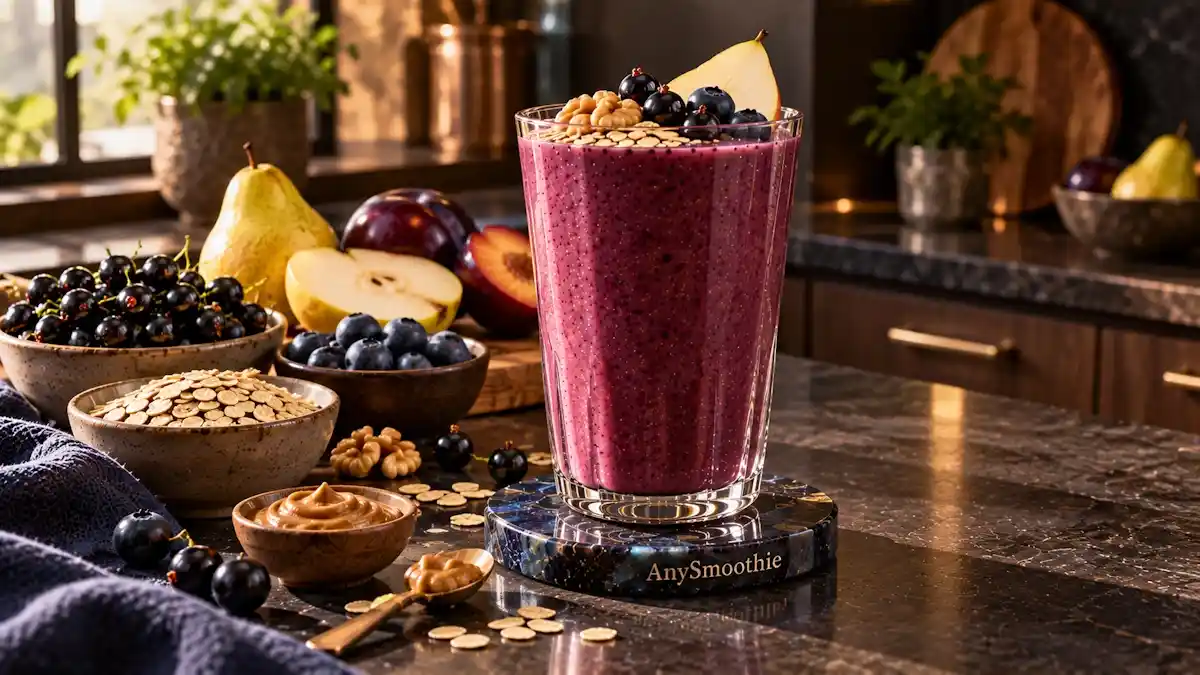
A smoothie can supply leucine-containing protein, but no recipe has been shown to target or control Sestrin2. This protein helps cells sense leucine, an amino acid found in everyday foods.
If you’re exploring smoothies for Sestrin2 amino acid sensing, the practical takeaway is nutrient supply, not precise control over cellular signals. Yogurt, whey, and soy offer ways to include protein, but drinking them doesn’t guarantee a particular molecular response.
Start with the science, then choose among three recipes based on your taste and dietary needs.
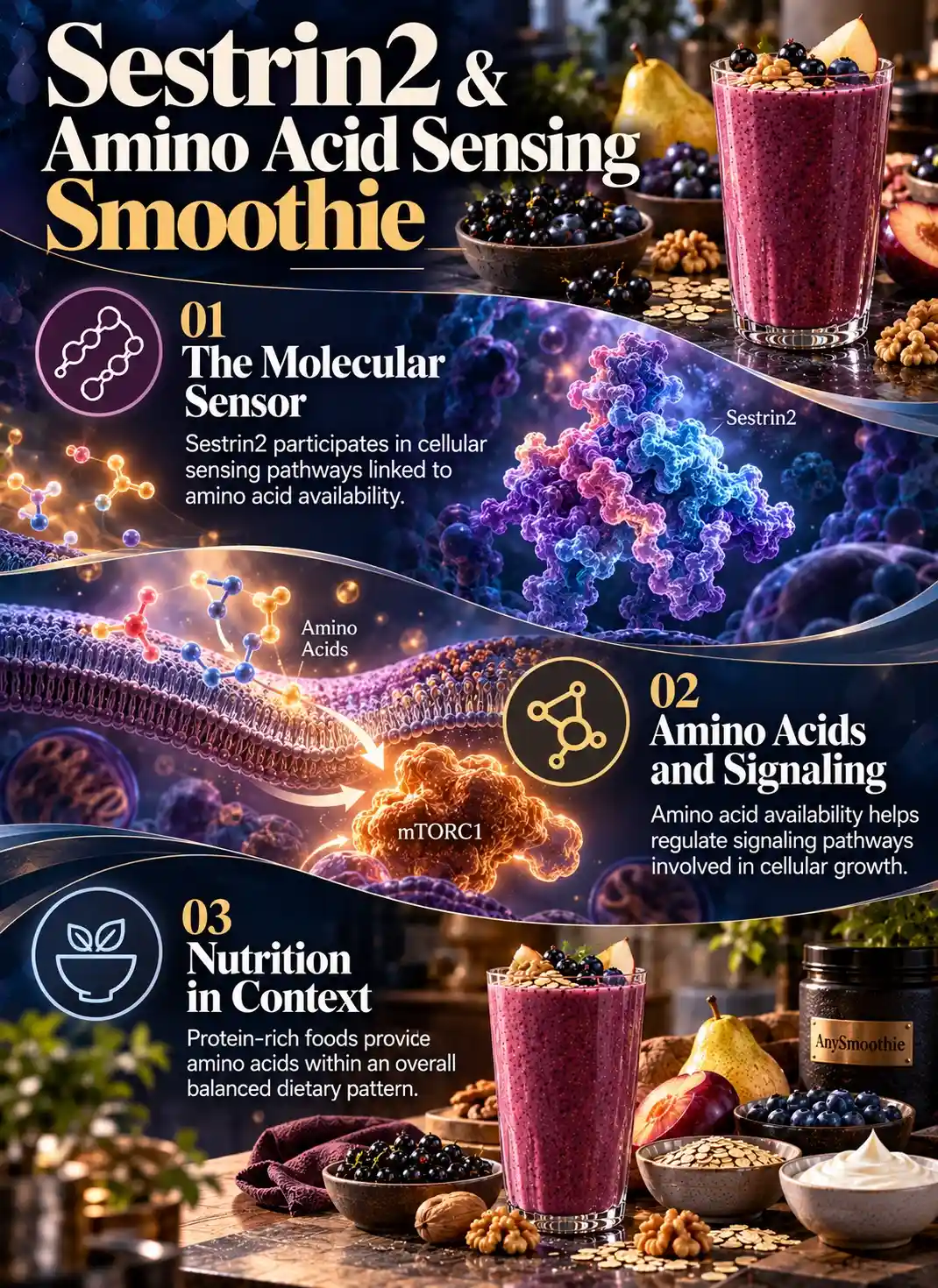
How Sestrin2 senses leucine in the body
Sestrin2 is a protein inside cells that helps detect leucine availability. Leucine is an essential amino acid, meaning your body needs to obtain it through food.
What happens when leucine binds
Research identifying Sestrin2 as a leucine sensor established its connection with GATOR2, a group of interacting proteins.
When leucine is scarce, Sestrin2 can bind GATOR2 and restrain signaling toward mTORC1. When leucine binds Sestrin2, that interaction changes. This helps permit mTORC1 activity when other cellular conditions support it.
The mTORC1 pathway helps regulate cell growth and protein building. For a related cellular process involving protein production, see polyamine smoothies for cellular translation. However, it also responds to other inputs, including energy availability and growth signals. A smoothie can’t precisely control this normal physiological process.
For another topic involving cellular protein responses, see smoothies supporting heat shock proteins.
Why leucine-rich ingredients matter, and what they cannot do
Dairy, whey, and soy contain leucine alongside other amino acids. During digestion, their proteins break down into smaller components that the body can absorb. For a more food-focused discussion of protein-containing smoothies in the context of muscle maintenance, see smoothies for age-related muscle loss support.
Still, consuming protein and sensing amino acids are different processes. A drink’s protein content describes what you consume; Sestrin2 participates in how cells interpret available nutrients.
Neither one ingredient nor a particular drinking schedule guarantees a change in Sestrin2 activity. More protein also doesn’t translate into proportionally greater signaling.
3 Smoothies for Sestrin2 Amino Acid Sensing
These are balanced, protein-containing recipe examples, not proven Sestrin2 interventions. Each makes one generous serving. Add liquid gradually if your blender needs help, and adjust thickness with water or ice.
The nutrition estimates below use plain nonfat Greek yogurt and 2% dairy milk in the first recipe, a 30-gram whey serving providing 24 grams of protein and 2% dairy milk in the second, and unsweetened soy milk with plain silken tofu in the third. Product labels and exact portions can change the values.
Creamy Greek yogurt, banana, and oat smoothie
Ingredients
- 3/4 cup plain Greek yogurt (about 170 grams)
- One small banana
- 1/4 cup rolled oats
- 1 cup milk
Steps
Combine the Greek yogurt, banana, rolled oats, and milk. Blend until smooth, then add ice if you prefer a colder drink.
Plain Greek yogurt and milk supply protein containing leucine. Meanwhile, oats and banana add carbohydrates and give the smoothie a thicker texture.
For a softer oat texture, soak the oats in the milk briefly before blending. An unsweetened milk alternative also works, although almond and oat beverages generally supply less protein than dairy or soy milk.
Estimated Nutrition per Serving
- Calories: ~380 kcal
- Protein: ~29 g
- Carbohydrates: ~54 g
- Fat: ~6 g
- Fiber: ~5 g
- Sugars: ~30 g
Berry and whey smoothie with milk
Ingredients
- 1 cup fresh or frozen berries
- 1 cup milk
- One measured serving of whey powder, about 30 grams, providing roughly 20 to 25 grams of protein according to its label
Steps
Blend the berries, milk, and whey powder until smooth. Choose a serving that provides roughly 20 to 25 grams of protein according to its label.
For extra thickness and energy, add 1 tablespoon of nut butter or 2 tablespoons of rolled oats. These additions aren’t included in the protein estimate below.
Whey is a concentrated milk protein that contains leucine and other essential amino acids. However, it isn’t required for normal amino acid sensing, and this recipe has no demonstrated Sestrin2-specific effect. Frozen berries usually make ice unnecessary.
When comparing whey products, use the serving size and protein amount on the label rather than estimating by scoop size alone.
Estimated Nutrition per Serving
- Calories: ~310 kcal
- Protein: ~33 g
- Carbohydrates: ~31 g
- Fat: ~7 g
- Fiber: ~6 g
- Sugars: ~23 g
For a little extra flavor, mix your favorite berries or use frozen ones for a thicker, creamier texture. Adjust the consistency with a splash of milk until it’s just right for you.
Soy, mango, and spinach smoothie
Ingredients
- 1 cup unsweetened soy milk
- 1/2 cup silken tofu
- 3/4 cup frozen mango
- A small handful of spinach, about 1/2 loosely packed cup
Steps
Blend the soy milk, tofu, and spinach first. Then add the mango and blend again until creamy. A squeeze of lime can balance the sweetness without adding sugar.
Soy milk and tofu supply protein, including leucine and the other essential amino acids. Mango contributes carbohydrates and sweetness, while spinach adds vegetables without dominating the flavor. This dairy-free option provides protein without requiring protein powder.
Estimated Nutrition per Serving
- Calories: ~250 kcal
- Protein: ~14 g
- Carbohydrates: ~27 g
- Fat: ~10 g
- Fiber: ~3 g
- Sugars: ~19 g
Compare the recipes using these approximate protein ranges. Estimates vary by product and portion and exclude optional additions.
| Smoothie | Key ingredients | Approximate protein per serving | Main amino acid sources | Practical note |
|---|---|---|---|---|
| Greek yogurt and banana | Yogurt, banana, oats, milk | 26 to 30 grams | Yogurt and milk | Milk alternatives change the estimate |
| Berry and whey | Berries, milk, whey | 28 to 35 grams | Whey and milk | Measure powder by its label |
| Soy and mango | Soy milk, tofu, mango, spinach | 13 to 18 grams | Soy milk and tofu | Dairy-free; contains soy |
Choose the version that fits your appetite and preferences rather than ranking them by an assumed cellular effect.
How to choose ingredients without overpromising results
Your overall eating pattern, portion size, and individual needs matter more than a special smoothie formula. Ingredient choices should make everyday eating practical and enjoyable.
Match the portion to your day
A smoothie alongside breakfast may need a smaller portion than one intended as the main meal. Oats or nut butter add energy, so include them according to your appetite.
Although researchers have described how leucine binds Sestrin2, that finding doesn’t establish a smoothie dose or drinking schedule. There’s no validated reason to time these recipes around a supposed Sestrin2 window.
Check protein, allergies, and added sugar
Read nutrition labels because protein varies across yogurts, milk alternatives, tofu, and powders. Labels usually don’t list individual amino acids.
Whey comes from milk, so it isn’t suitable for someone with a milk allergy. Lactose intolerance is different, and tolerance varies by product. Soy-based recipes also require attention if you have a soy allergy.
Whole fruit can provide enough sweetness without added sugar. For specific nutrition needs or dietary restrictions, consult a registered dietitian or another qualified health professional.
Conclusion: Keep the focus on food
Sestrin2 participates in the body’s complex leucine-sensing system. Smoothies offer a convenient way to include protein-containing foods, but they don’t provide precise control over that system.
Choose the recipe you enjoy and adjust it to your dietary needs. The useful goal is consistent nourishment, without treating breakfast as a targeted cellular intervention. A satisfying smoothie earns its place through its ingredients and convenience, not an unproven molecular promise.
🛡️ Safety Notes & Dietary Interactions
- Protein and portion size: The Greek yogurt and whey recipes are relatively protein-rich. More protein does not guarantee greater Sestrin2 signaling, so choose portions according to your usual dietary needs rather than a molecular target.
- Milk and whey: Whey and dairy milk are unsuitable for people with a milk allergy. Lactose intolerance is different and depends on individual tolerance, while plant-based alternatives can substantially change the smoothie’s protein content.
- Soy and allergy awareness: The soy-mango recipe contains both soy milk and tofu. Avoid it with a soy allergy, and check labels carefully when substituting yogurt, milk, tofu, or protein powders for hidden allergens.
- Digestive comfort: Oats, fruit, yogurt, tofu, and protein powder can produce different levels of fullness or digestive discomfort. Test larger servings and optional nut butter during ordinary days rather than around an important activity.
FAQs
Does a high-protein smoothie directly activate Sestrin2?
No. The article explains that Sestrin2 participates in cellular leucine sensing, but these recipes have not been demonstrated to control or specifically activate Sestrin2. Their practical role is supplying protein and other nutrients, not producing a predictable molecular response.
Which recipe provides the most protein?
The berry and whey smoothie provides the highest estimated protein, at about 33 g per serving, followed by the Greek yogurt and banana blend at about 29 g. The soy-mango recipe provides about 14 g. Exact amounts depend on product labels and portions.
Is whey necessary for leucine or amino acid sensing?
No. Whey is simply a concentrated source of milk protein containing leucine and other essential amino acids. Dairy foods, soy, tofu, yogurt, and other protein-containing foods also provide amino acids. The article does not establish any need for whey to support normal Sestrin2 sensing.
Should I time these smoothies around a specific Sestrin2 window?
There is no validated drinking schedule presented in the article. Although research describes leucine binding to Sestrin2, that does not establish a smoothie dose or a particular timing window. Choose when to drink the smoothie based on your appetite, routine, and overall dietary pattern.
Can I use an almond or oat drink instead of dairy milk?
Yes, but the nutritional profile can change substantially. The article notes that almond and oat beverages generally provide less protein than dairy or soy milk. Check the label for protein and added sugar, especially when replacing the milk in a higher-protein recipe.

Medical Disclaimer: AnySmoothie content is for educational purposes only and is not a substitute for professional medical advice. Consult a healthcare provider for personalized guidance. See our full Disclaimer & Terms of Use. AI Transparency: AnySmoothie may use AI to support content development. All content undergoes human editorial review for accuracy, clarity, and editorial quality. See our full AI Transparency.