
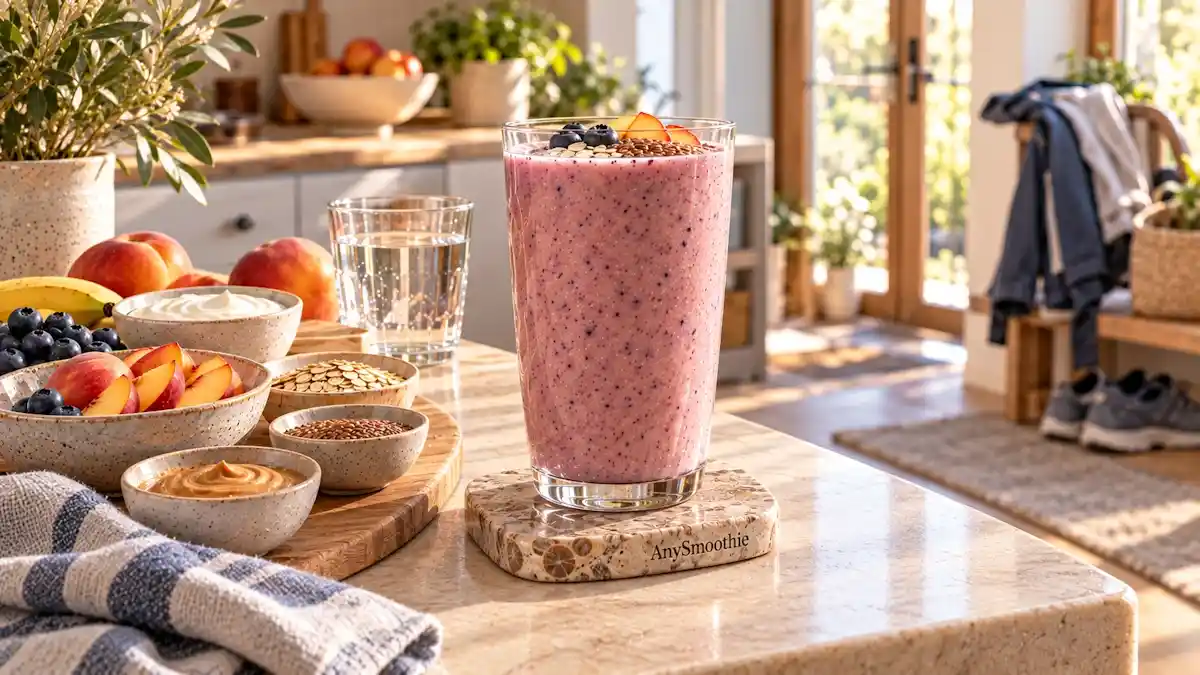
Getting enough protein can become harder when your appetite shrinks, meals get smaller, or familiar foods lose their appeal. Smoothies for age-related muscle loss support offer a convenient way to combine protein with other nourishing ingredients.
They’re one part of a broader eating and activity plan, not a treatment for muscle loss. The useful starting point is a protein-rich base, followed by ingredients you enjoy and tolerate. A few simple choices can help you build a drink that fits your day.
Digestion breaks dietary protein into amino acids, which your body uses to maintain and build muscle proteins. With age, muscles can respond less strongly to protein intake, a change discussed in research on amino acids and aging muscles.
Because of this, total food intake, protein-containing meals, and strength-building activity all matter. No smoothie recipe guarantees that you’ll prevent or reverse muscle loss.
Choose protein sources that provide essential amino acids
Greek yogurt, milk, soy milk, cottage cheese, and protein powder can supply protein without requiring a large meal. Dairy, soy, eggs, and some protein powders provide all nine essential amino acids, which your body can’t make.
Leucine is one essential amino acid involved in signaling muscle protein synthesis, the process of making muscle proteins. However, that signal still needs other amino acids and adequate energy. One ingredient doesn’t work alone.
A review of protein sources discusses how protein quality and amino acid composition relate to muscle health in older adults.
Add fruit, fiber, and healthy fats for a more balanced blend
Berries and bananas add flavor and carbohydrates. Meanwhile, oats, leafy greens, chia, and ground flax can contribute fiber. Nut butter adds fat and makes a smoothie richer.
These additions broaden the drink’s nutritional value; they don’t directly build muscle. Adjust them for your preferences, allergies, and dietary needs. For example, finely ground flax produces a different texture than whole chia seeds.
Soy milk and tofu also work in protein and calcium smoothies for bone health, adding useful sources of protein and calcium.
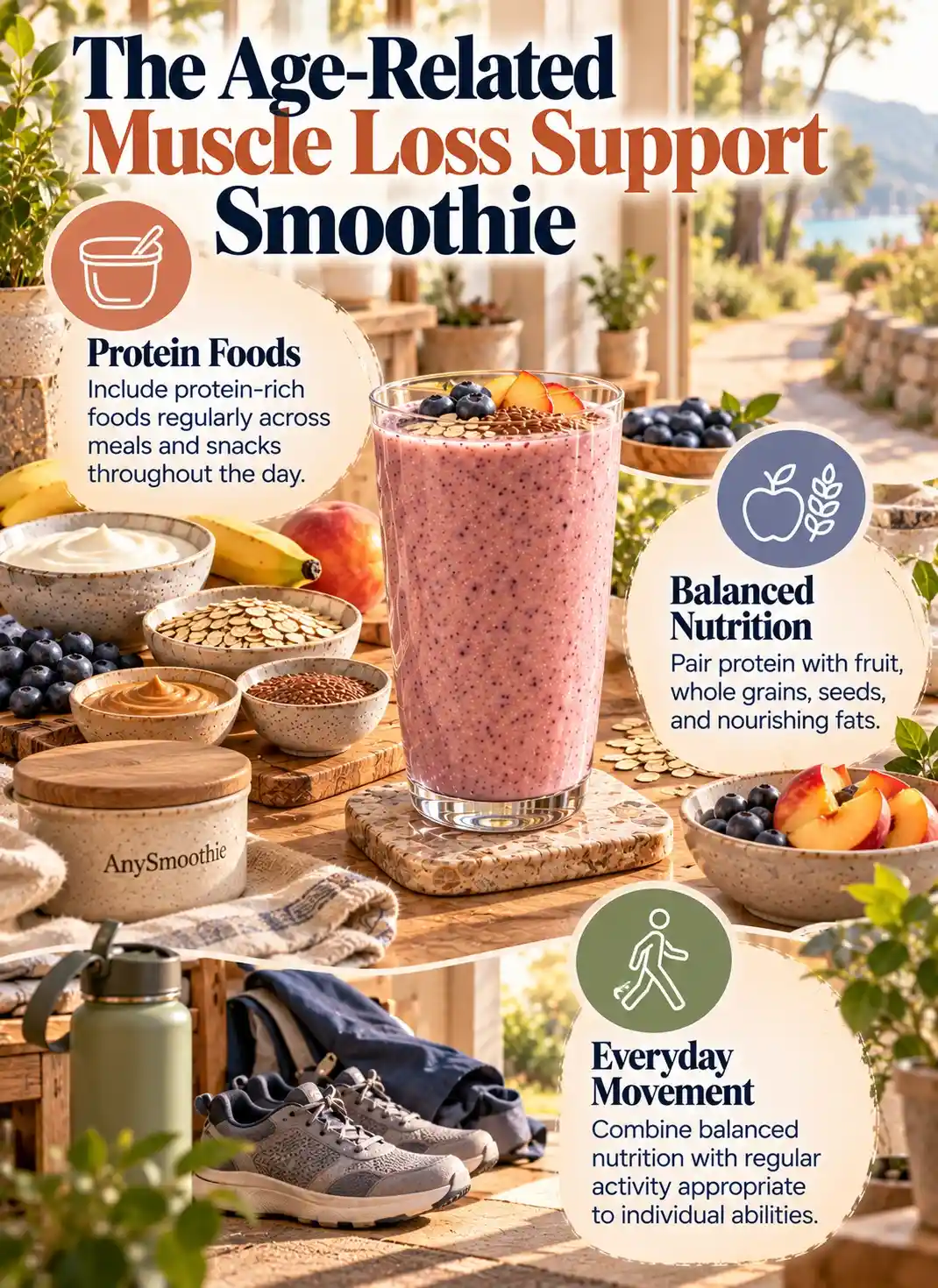
3 Protein-Rich Smoothies for Age-Related Muscle Loss Support
Each recipe makes one serving. Protein estimates use typical USDA food-composition values and vary by brand, ingredient type, and serving size.
Berry yogurt smoothie
Ingredients
- 3/4 cup (170 grams) plain nonfat Greek yogurt
- 1 cup 2% milk
- 1/2 cup mixed berries
- 2 tablespoons rolled oats
Steps
Combine the Greek yogurt, milk, mixed berries, and rolled oats. Blend until smooth, adding a small amount of water if needed.
This provides approximately 27 grams of protein. Frozen berries make it thicker. For a richer texture, optionally add 1 teaspoon ground flax or 1 tablespoon almond butter; these additions change the nutrition totals.
Estimated Nutrition per Serving
- Calories: ~295
- Protein: ~27 g
- Carbohydrates: ~33 g
- Fat: ~6 g
- Fiber: ~4 g
- Sugars: ~24 g
Banana peanut butter smoothie
Ingredients
- 1 cup 2% milk
- 1/2 cup (115 grams) plain nonfat Greek yogurt
- 1 small banana
- 1 tablespoon peanut butter
Steps
Blend the milk, Greek yogurt, banana, and peanut butter until creamy.
Expect approximately 24 grams of protein. Use frozen banana for thickness or extra liquid for a thinner drink. Ripe banana supplies sweetness without added sugar. You can replace yogurt with a suitable protein powder, but recalculate using its label.
Estimated Nutrition per Serving
- Calories: ~375
- Protein: ~24 g
- Carbohydrates: ~43 g
- Fat: ~14 g
- Fiber: ~4 g
- Sugars: ~29 g
If I were making this as a regular breakfast, I’d keep the banana frozen because it gives the smoothie a thicker texture without needing extra ingredients.
Chocolate tofu smoothie
Ingredients
- 6 ounces (170 grams) plain silken tofu
- 1 cup unsweetened fortified soy milk
- 1 small banana
- 1 tablespoon unsweetened cocoa
Steps
Blend the silken tofu, soy milk, banana, and unsweetened cocoa until smooth.
This dairy-free blend provides approximately 18 grams of protein. An optional tablespoon of peanut butter adds richness and more protein. Check tofu and soy milk labels because protein amounts differ, and review ingredients for soy or nut allergens.
Estimated Nutrition per Serving
- Calories: ~270
- Protein: ~19 g
- Carbohydrates: ~33 g
- Fat: ~10 g
- Fiber: ~6 g
- Sugars: ~14 g
Compare the blends by their protein base and flavor.
| Smoothie | Main protein source | Approximate protein | Other key ingredients | Practical fit or flavor note |
|---|---|---|---|---|
| Berry yogurt | Greek yogurt, milk | 27 grams | Berries, oats | Tangy and thick |
| Banana peanut butter | Milk, Greek yogurt | 24 grams | Banana, peanut butter | Creamy and nutty |
| Chocolate tofu | Tofu, soy milk | 18 grams | Cocoa, banana | Dairy-free chocolate option |
The tofu version offers a dairy-free choice, while the yogurt blends provide more protein at the listed amounts.
Make smoothies fit your meals, routine, and health needs
Smoothies for age-related muscle loss support should fit your appetite and usual meals. Start with a comfortable portion rather than forcing yourself to finish a large glass. If a full serving feels too filling, split it into two smaller portions and refrigerate the second promptly.
A smoothie can accompany breakfast or fill a snack gap. However, don’t let it routinely crowd out the rest of your food.
Spread protein across meals instead of relying on one drink
Include a protein source at meals and snacks as your appetite allows. Eggs at breakfast, beans at lunch, or fish at dinner provide opportunities beyond the blender.
There isn’t one protein target that suits everyone. Your needs depend on body size, health, activity, and medical advice. Also, a high-protein drink doesn’t make up for consistently eating too little overall.
Appropriate resistance exercise, such as adapted chair stands or resistance-band movements, provides a muscle-loading signal. Pairing that activity with adequate food intake supports the body’s muscle-maintenance pathways. Choose movements that match your abilities and any professional guidance.
Check with a clinician when muscle loss or diet changes concern you
Discuss noticeable strength changes, unintended weight loss, or swallowing problems with a doctor or registered dietitian. Smoothies don’t diagnose or treat a condition, and swallowing difficulties may require individualized texture guidance.
Ask for tailored advice if you have kidney disease, diabetes, food allergies, or questions about supplements. Ingredient amounts and drink size may need adjustment.
Protein powder is optional. Ordinary foods can provide protein, and powder labels vary in serving size, ingredients, and allergens. Bring the label to your appointment if you’re unsure whether a product fits your needs.
Conclusion: Choose a Blend That Fits Your Day
A protein-rich smoothie can make nourishing ingredients easier to enjoy when appetite or food preferences change. Its role depends on your overall eating pattern, appropriate activity, and personal health needs.
Try one recipe and adjust its flavor or thickness to suit your tastes. Keep it alongside varied meals rather than expecting one drink to do everything.
🛡️ Safety Notes & Dietary Interactions
- Protein and kidney health: Higher-protein smoothies are not automatically appropriate for everyone. Kidney disease or other medical conditions may require individualized protein amounts, so discuss regular high-protein use with a clinician.
- Swallowing safety: Smoothies may seem easy to consume, but swallowing difficulties can require specific textures or thicknesses. Anyone with dysphagia should follow individualized guidance rather than relying on a standard recipe.
- Allergen awareness: The recipes include dairy, peanut, soy, almond, and potentially protein-powder ingredients. Check labels carefully and avoid optional additions that conflict with known allergies or dietary restrictions.
- Appetite and portion size: A large protein-rich smoothie can become filling when appetite is already reduced. Start with a comfortable portion, and refrigerate any remaining serving promptly rather than forcing the full amount.
FAQs
How much protein does each smoothie provide?
The recipes provide approximately 27 grams of protein for the berry-yogurt smoothie, 24 grams for the banana peanut butter version, and 18–19 grams for the chocolate tofu smoothie. These figures are estimates and can vary with brands, ingredient types, and serving sizes.
Is a protein powder necessary for these smoothies?
No. The three recipes use ordinary foods such as Greek yogurt, milk, tofu, soy milk, peanut butter, and oats to provide protein. Protein powder is presented as optional, and its nutrition and ingredients vary considerably. If you use one, check its label and recalculate the smoothie according to the actual product.
Which smoothie is most suitable if I avoid dairy?
The chocolate tofu smoothie is the article’s dairy-free option, using silken tofu and fortified soy milk as its protein base. Check both labels for allergens and ingredient differences. The berry and banana recipes can also be modified, but their standard versions contain dairy.
Can I split a smoothie into two smaller servings?
Yes. The article specifically suggests splitting a serving when a full glass feels too filling, particularly when appetite is reduced. Refrigerate the second portion promptly rather than leaving it at room temperature. This approach can make a protein-rich smoothie easier to incorporate without routinely crowding out other foods.
Can these smoothies prevent or reverse age-related muscle loss?
No smoothie recipe is presented as a treatment or guarantee against muscle loss. The article emphasizes a broader pattern involving adequate overall food intake, protein-containing meals, and appropriate resistance activity. Noticeable strength changes, unintended weight loss, or swallowing problems warrant discussion with a doctor or registered dietitian.

Medical Disclaimer: AnySmoothie content is for educational purposes only and is not a substitute for professional medical advice. Consult a healthcare provider for personalized guidance. See our full Disclaimer & Terms of Use. AI Transparency: AnySmoothie may use AI to support content development. All content undergoes human editorial review for accuracy, clarity, and editorial quality. See our full AI Transparency.