

Heat shock proteins are part of your body’s natural stress-response system. When cells face challenges such as exercise or heat, these proteins help protect and maintain normal cellular structures. Smoothies supporting heat shock proteins cannot directly create or guarantee higher protein levels, but nutrient-dense ingredients may support the pathways involved in stress adaptation, antioxidant defense, and recovery.
The recipes below combine berries, greens, tart cherries, protein-rich dairy, seeds, and healthy fats. Use them as part of a balanced diet, not as a shortcut around sleep, hydration, safe training, or gradual heat exposure.
How Heat Shock Proteins Respond to Food, Exercise, and Heat
Heat shock proteins, often called HSPs, are protective proteins that cells produce when they encounter physiological stress. Their job includes helping other proteins maintain proper shape and function during challenging conditions.
Exercise and heat exposure can act as direct triggers. During training, muscle temperature, energy demand, and metabolic activity rise. Sauna use can also create heat stress, although the response depends on temperature, duration, hydration, and individual tolerance. A Review of heat shock proteins and exercise describes how physical activity influences HSP families and their expression.
Nutrition plays a different role. A smoothie doesn’t switch heat shock proteins on in the same way as exercise or heat. Instead, its ingredients supply the raw materials and cofactors needed for normal cellular work. Protein provides Amino acids, while fruits and vegetables provide polyphenols, vitamin C, potassium, folate, and fiber. Seeds and avocado add unsaturated fats and minerals.
These nutrients Support antioxidant systems, energy metabolism, muscle repair, and fluid balance. Those systems interact with the body’s broader response to physiological stress, but no single food guarantees a measurable increase in HSP levels.
Exercise and heat provide the stress signal. Food supports the cellular environment that helps your body respond to that signal.
When searching for smoothies supporting heat shock proteins, focus on balanced nutrition rather than one “active” ingredient. A recipe with protein, fiber, and unsweetened liquids is more useful than a fruit-heavy drink with added sugar.
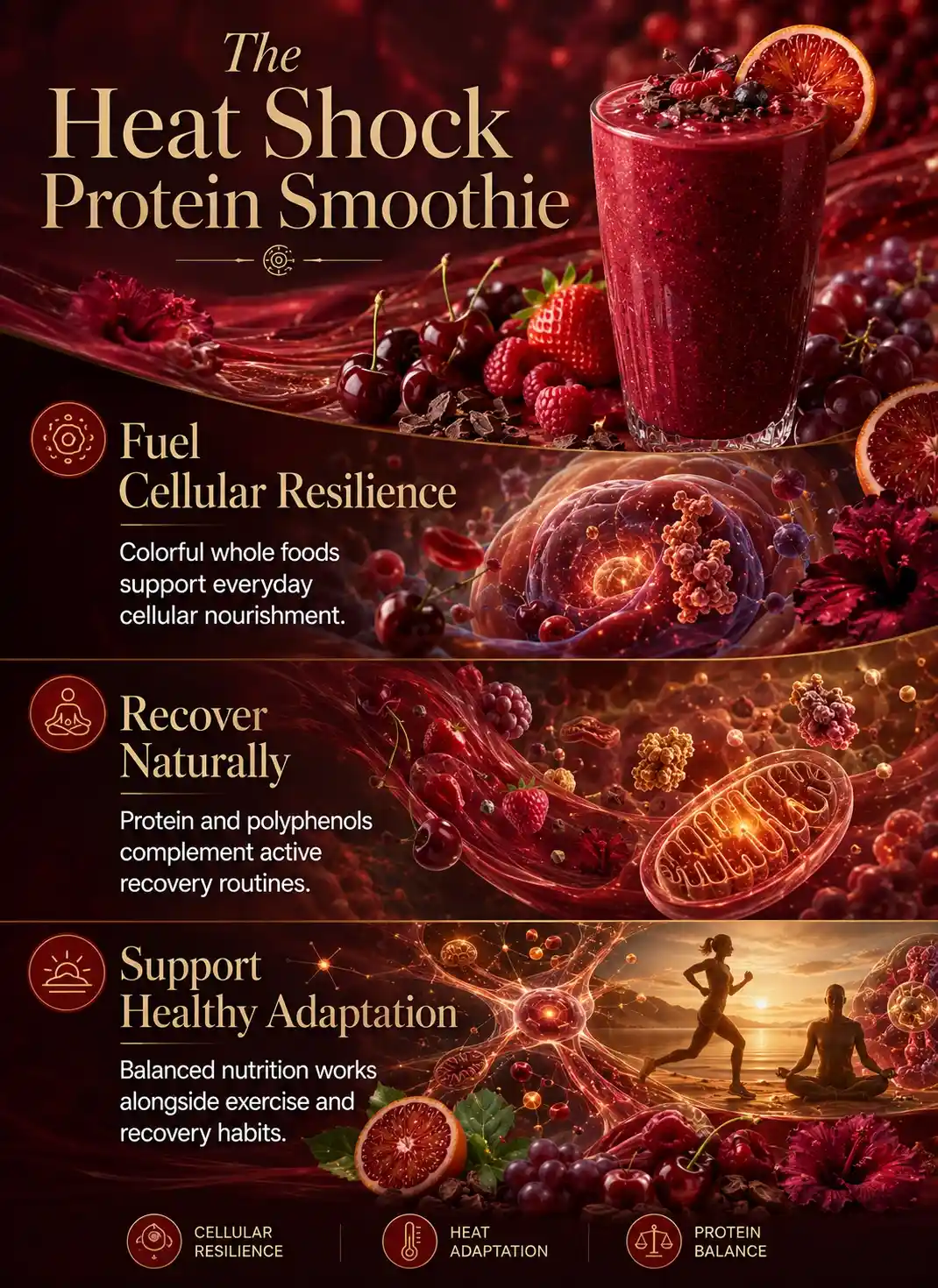
3 Smoothies Supporting Heat Shock Proteins
Each recipe makes one substantial serving. Blend until smooth, then adjust the liquid for your preferred texture. These drinks support general cellular nutrition and natural pathways. They don’t directly boost heat shock proteins on demand.
| Smoothie | Key ingredients | Main nutrients | Best time to drink | Flavor profile |
|---|---|---|---|---|
| Berry-Cocoa Protein | Blueberries, cherries, yogurt, chia, cocoa | Protein, polyphenols, fiber | Breakfast or after strength training | Tart, creamy, chocolatey |
| Green Citrus Seed | Spinach, kiwi, kefir, avocado, pumpkin seeds | Vitamin C, protein, potassium, healthy fats | Morning or with lunch | Fresh, tangy, mildly tropical |
| Tart Cherry Oat Recovery | Tart cherry juice, cottage cheese, oats, flax | Protein, carbohydrates, fiber, omega-3 fat | After training or as a light meal | Fruity, creamy, gently spiced |
How to Use These Smoothies Safely and Effectively
Start with whole or frozen fruit instead of juice-heavy blends. Whole fruit keeps more fiber in the drink and usually creates a slower eating experience. Choose unsweetened milk, kefir, or yogurt, and skip syrups, sweetened powders, and large amounts of honey.
Add a protein source when the Smoothie replaces part of a meal. Greek yogurt, kefir, cottage cheese, soy milk, or a tested protein powder can help make the drink more satisfying. Portion size should match your energy needs. Someone drinking a smoothie with a full breakfast needs less volume than someone using it after a long training session.
Smoothies should complement a varied diet by default. Whole meals still provide different textures, chewing demands, and combinations of vegetables, legumes, grains, seafood, eggs, or meat. The functional smoothie guide offers more ways to balance produce, protein, liquid, and fiber.
Human research on foods directly increasing heat shock proteins is still developing. Current evidence more clearly supports exercise and heat as direct stimuli, while nutrition helps maintain the systems involved in adaptation. A review of Heat shock proteins and exercise adaptations discusses this relationship without establishing a smoothie-based protocol.
Supplements aren’t required for these recipes. If you have diabetes, food allergies, kidney disease, caffeine sensitivity, or concerns about medication interactions, review ingredients with a qualified health professional. Cocoa can contain small amounts of caffeine, and dairy, seeds, and fruit can cause problems for people with specific intolerances.
Hydrate before, during, and after exercise or heat exposure. If you use a sauna, begin with gradual exposure, avoid sessions when dehydrated or ill, and leave immediately if you feel faint, confused, nauseated, or unusually weak. Sauna and exercise are training practices, not medical treatments.
Conclusion
Smoothies supporting heat shock proteins are best understood as nutrient-dense drinks that support normal cellular stress responses. They don’t guarantee higher HSP levels. Berries, greens, tart cherries, cocoa, protein-rich dairy, seeds, and healthy fats can create balanced recipes with useful nutrients. Choose one smoothie, pair it with safe exercise and recovery habits, then adjust the ingredients to fit your digestion, energy needs, and health guidance.

Medical Disclaimer: AnySmoothie content is for educational purposes only and is not a substitute for professional medical advice. Consult a healthcare provider for personalized guidance. See our full Disclaimer & Terms of Use. AI Transparency: AnySmoothie may use AI to support content development. All content undergoes human editorial review for accuracy, clarity, and editorial quality. See our full AI Transparency.