
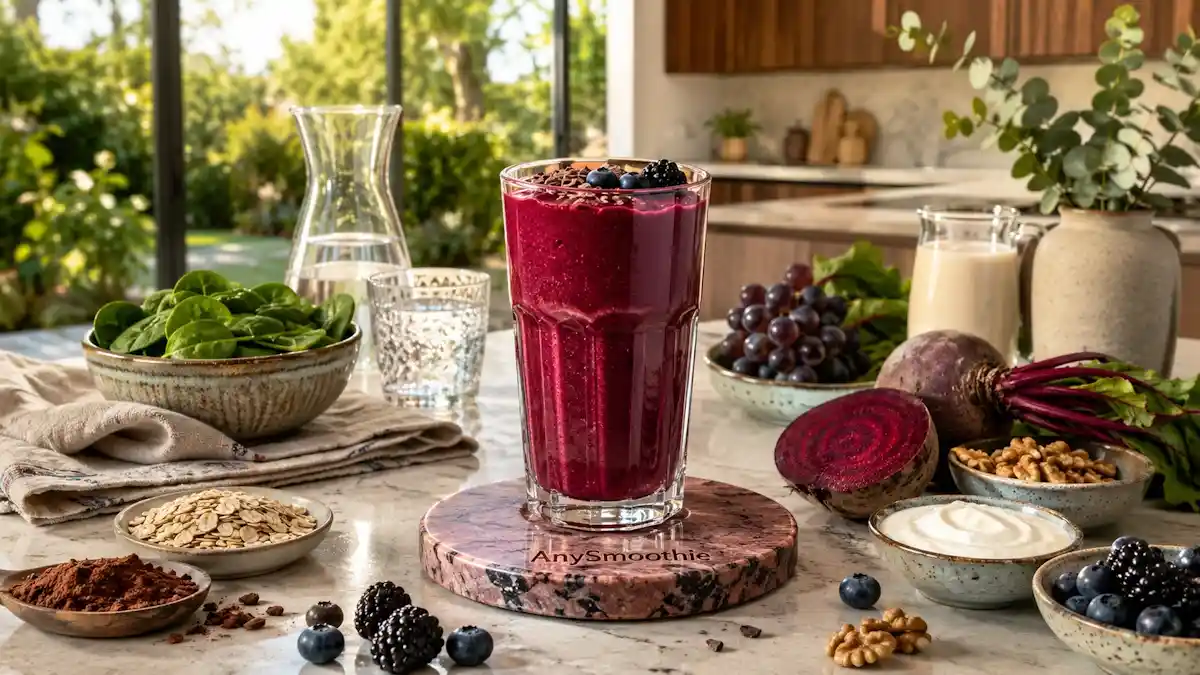
Long workdays and early workouts can expose gaps in an otherwise decent diet. A TMG smoothie for daily performance adds trimethylglycine, also called TMG or betaine, to a convenient blend of fluids, carbohydrates, protein, and micronutrients.
TMG may support methylation, fluid balance, and normal energy pathways, but it isn’t a guaranteed performance booster. The smoothie works best as part of regular meals, sufficient sleep, and consistent hydration. These three recipes offer different options for breakfast, active days, and afternoon nutrition. Follow the serving size listed on your TMG product.
How TMG May Support Daily Performance
Trimethylglycine is a naturally occurring form of betaine. Foods such as beets, spinach, quinoa, wheat bran, and other whole grains provide small amounts. TMG also acts as a methyl donor, which means it can transfer a methyl group during certain biochemical reactions.
One important pathway involves homocysteine metabolism. Betaine can donate a methyl group that helps convert homocysteine back into methionine through the betaine-homocysteine methyltransferase pathway. Methionine Supports the body’s broader methylation cycle, which helps regulate several normal cellular processes. These details explain why some people include TMG in a daily nutrition routine, but they don’t prove that a supplement will improve how you feel or perform.
Research on betaine and exercise performance is still developing. A 2009 study examined 15 days of betaine supplementation in relation to muscle endurance, power, and fatigue, while newer reviews describe mixed findings across performance and metabolic outcomes. You can read the Original betaine performance study and a Recent critical review of betaine research for more detail.
A smoothie provides a practical nutritional context for TMG.. Carbohydrates provide fuel, protein supports satiety and muscle maintenance, and liquid supports hydration. Choose a plain, third-party-tested powder, check that the label lists betaine anhydrous, and start with the lowest listed serving. More TMG doesn’t automatically produce better results.
What to Look for in a Performance-Focused Smoothie
A balanced blend usually includes:
- 20 to 30 grams of protein, when that amount fits your meal or snack needs.
- Fruit, oats, or both for carbohydrates and fiber.
- Leafy greens or berries for plant compounds and micronutrients.
- A small amount of healthy fat, such as avocado, seeds, or nut butter, when desired.
- Enough liquid to create a smooth texture without making the drink overly thin.
For more ideas on balancing produce, liquid, and filling ingredients, see these Fruit and vegetable smoothie formulations. TMG should complement the smoothie rather than replace a balanced eating pattern.
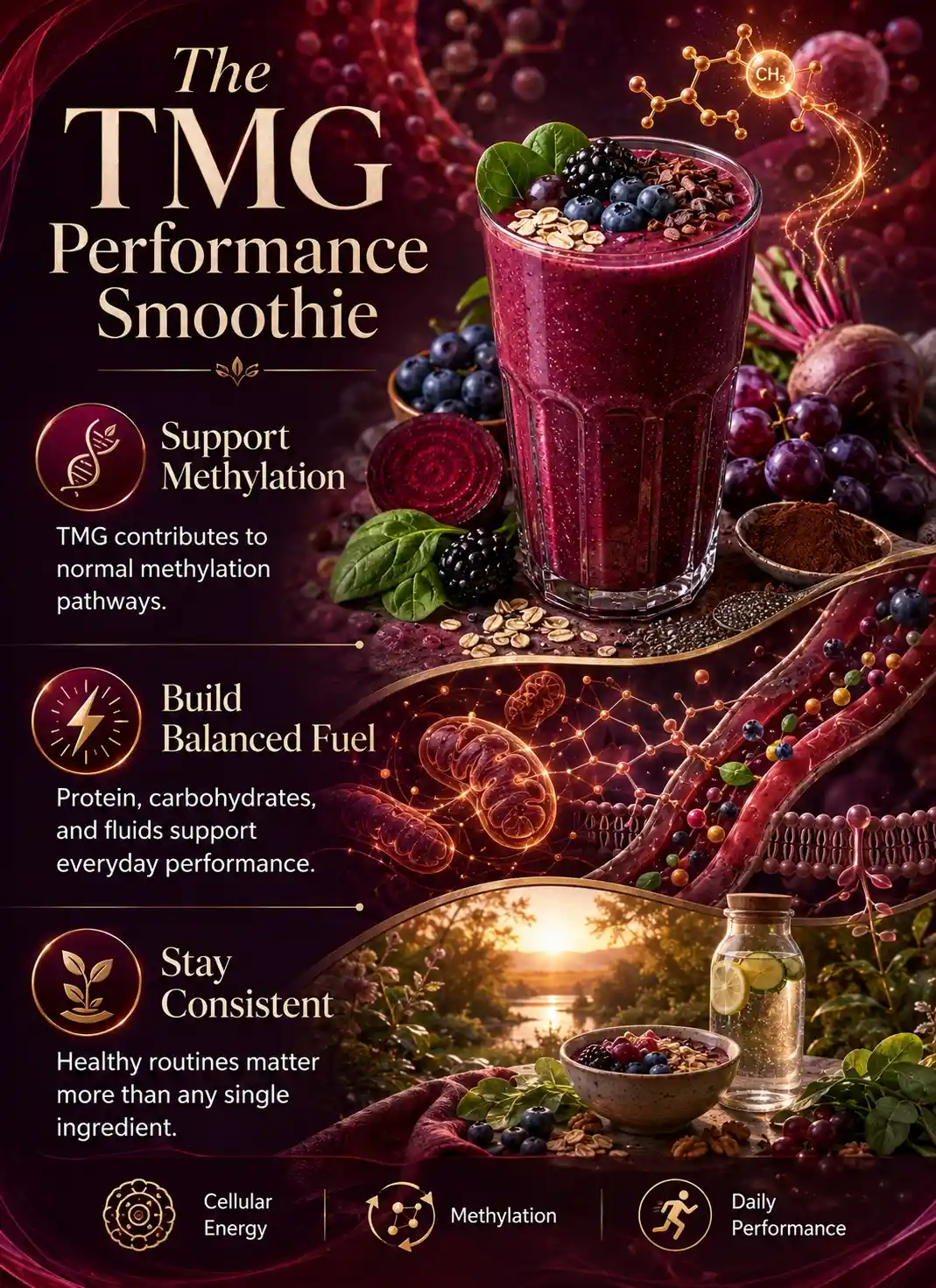
3 TMG Smoothie for Daily Performance Recipes
Use the table as a quick guide, then adjust the recipes for taste, texture, and your usual serving size.
| Smoothie | Key ingredients | TMG approach | Best use | Nutrition focus |
|---|---|---|---|---|
| Berry oat | Milk, Greek yogurt, berries, oats | Add label serving | Breakfast | Protein, fiber, carbohydrates |
| Beet citrus | Beet, orange, banana, yogurt | Add label serving | Before activity | Carbohydrates, fluids, plant compounds |
| Green afternoon | Spinach, kiwi, avocado, protein | Add label serving | Afternoon snack | Protein, produce, healthy fat |
Berry Oat TMG Smoothie for Steady Morning Fuel
Ingredients
- 1 cup unsweetened milk or unsweetened dairy-free milk
- 3/4 cup plain Greek yogurt
- 1 cup frozen mixed berries
- 1/3 cup rolled oats
- 1 serving TMG (follow your product label)
- Ice or extra milk, if needed
Blend all ingredients until smooth. Add ice or extra milk to adjust the consistency.
The berries add flavor, carbohydrates, and fiber. Oats provide slower-digesting carbohydrates that can make breakfast feel more substantial, while Greek yogurt adds protein and a creamy texture. A protein powder can replace the yogurt if you prefer a dairy-free formula.
This option fits breakfast or a demanding morning when you want one drink to carry more nutritional weight. If fiber tends to bother your stomach, reduce the oats to 2 tablespoons and increase them gradually.
Beet Citrus TMG Smoothie Before an Active Day
Ingredients
- 1/2 cup cooked beet or the label-recommended amount of beet powder
- 1 peeled orange
- 1/2 medium banana
- 3/4 cup plain yogurt or 1 serving protein powder
- 1/2 cup water
- 1 serving TMG (follow your product label)
- Lemon juice, optional
Blend until smooth.
Beet and citrus create a bright, earthy blend, while banana supplies easy-to-use carbohydrates. Yogurt or protein powder makes the drink more satisfying than a fruit-only smoothie. This is a convenient pre-activity option, not a promise of improved athletic output.
Try the recipe during normal training before using it on an important event day. Beet and citrus flavors can be strong, and individual tolerance varies.
Green TMG Smoothie for an Afternoon Reset
Ingredients
- 1 cup baby spinach
- 1 peeled kiwi or 3/4 cup pineapple
- 1/4 avocado
- 1 serving protein powder or 1/2 cup silken tofu
- 3/4 cup water
- 1 serving TMG (follow your product label)
- Ice, optional
Blend until smooth.
Spinach and fruit provide a nutrient-dense base, while protein helps the smoothie hold you over until your next meal. Avocado adds healthy fat and a thicker texture without making the drink overly sweet.
Keep the avocado at 1/4 for a lighter afternoon snack. Add more water if the smoothie feels too dense, or use less liquid if you prefer a spoon-thick blend. The Functional smoothie guide offers more ways to balance texture and satiety.
How to Use TMG Smoothies Safely and Consistently
Take TMG at a time that fits your routine. Morning works well for the berry oat blend, while the beet citrus recipe may fit before an active session. Timing isn’t a substitute for adequate food, and you don’t need to take TMG immediately before exercise to use it consistently.
Follow the product label for portion size. Taking it with food may feel easier on your stomach, especially when you’re new to concentrated powder. Drink the smoothie soon after blending, and avoid combining several supplements that contain overlapping amounts of betaine.
Some people may notice an unusual taste, digestive discomfort, or poor tolerance. If that happens, reduce the serving or stop using the product. Pregnant people, anyone managing a health condition, and those taking prescription medication should discuss regular concentrated TMG use with a qualified healthcare professional. People monitoring cholesterol should also ask a clinician whether TMG fits their nutrition plan.
A smoothie can improve convenience, but sleep, hydration, total calories, and regular meals have a larger effect on daily performance than one ingredient.
A Simple Way to Find Your Best TMG Timing
Test one recipe at a time for several days. Keep the TMG serving steady, then note digestion, energy, hunger, and workout comfort. This approach helps separate the effect of the complete smoothie from the effect of TMG itself.
Stop or reduce use if you notice unwanted effects. Chasing a stronger sensation usually adds uncertainty rather than useful information.
Conclusion
A TMG smoothie can pair betaine with protein, carbohydrates, fluids, and whole-food ingredients in one convenient drink. Choose the berry oat version for breakfast, beet citrus for an active day, or the green blend for an afternoon snack.
TMG supports a broader nutrition plan, but it isn’t a shortcut to daily performance. Start with one recipe, follow your product label, and track how it fits your digestion, energy, and routine.
🛡️ Safety Notes & Dietary Interactions
- Support Daily Nutrition, Not Guaranteed Performance: These smoothies combine TMG with protein, carbohydrates, fluids, and whole-food ingredients to support normal nutrition. They are not proven to improve athletic performance, energy, focus, or methylation outcomes in every individual.
- Follow Product Directions Carefully: Use only the serving size recommended on your TMG (betaine anhydrous) supplement label. Avoid combining multiple supplements that contain betaine unless advised by a qualified healthcare professional, as more is not necessarily better.
- Consider Individual Health Conditions: If you have kidney disease, liver disease, diabetes, elevated cholesterol, are pregnant or breastfeeding, or take prescription medications, discuss regular TMG supplementation with your healthcare provider before adding it to your routine.
- Monitor Tolerance and Digestive Comfort: Some people may experience digestive discomfort or dislike the taste of concentrated TMG. Start with the lowest suggested serving, take it with food when appropriate, and discontinue use if persistent side effects occur or if you have concerns about your response.
FAQs
What is TMG?
TMG, also called trimethylglycine or betaine, is a naturally occurring compound found in foods such as beets, spinach, quinoa, and whole grains. It functions as a methyl donor in normal metabolism and participates in biochemical pathways involved in homocysteine metabolism and cellular function.
Can a TMG smoothie improve daily performance?
Current research suggests that TMG supplementation may support certain physiological processes, but evidence for consistent improvements in exercise performance, energy, or daily productivity remains mixed. A balanced diet, adequate sleep, hydration, and regular physical activity have a much greater influence on overall performance.
When should I drink a TMG smoothie?
Many people choose a TMG smoothie with breakfast, before planned physical activity, or as an afternoon snack. The most important factor is using it consistently as part of your routine rather than focusing on a precise time of day.
Which ingredients pair well with TMG?
Protein-rich foods such as Greek yogurt, kefir, soy milk, or protein powder combine well with fruits, oats, leafy greens, berries, avocado, and beets. Together they provide carbohydrates, protein, fiber, healthy fats, vitamins, and minerals for a balanced smoothie.
Do I need a TMG supplement if I eat a balanced diet?
Not necessarily. Foods such as beets, spinach, wheat bran, quinoa, and other whole grains naturally contain betaine. Whether supplementation is appropriate depends on your individual dietary intake, health status, and goals, and should be discussed with a qualified healthcare professional when needed.

Medical Disclaimer: The information on AnySmoothie is for educational and informational purposes only. It is not intended as medical advice or a substitute for professional consultation with a healthcare provider. Always consult your physician before starting any new nutritional protocol, especially if you have underlying health conditions or are taking medication. By using this site, you agree to our full Disclaimer & Terms of Use.