
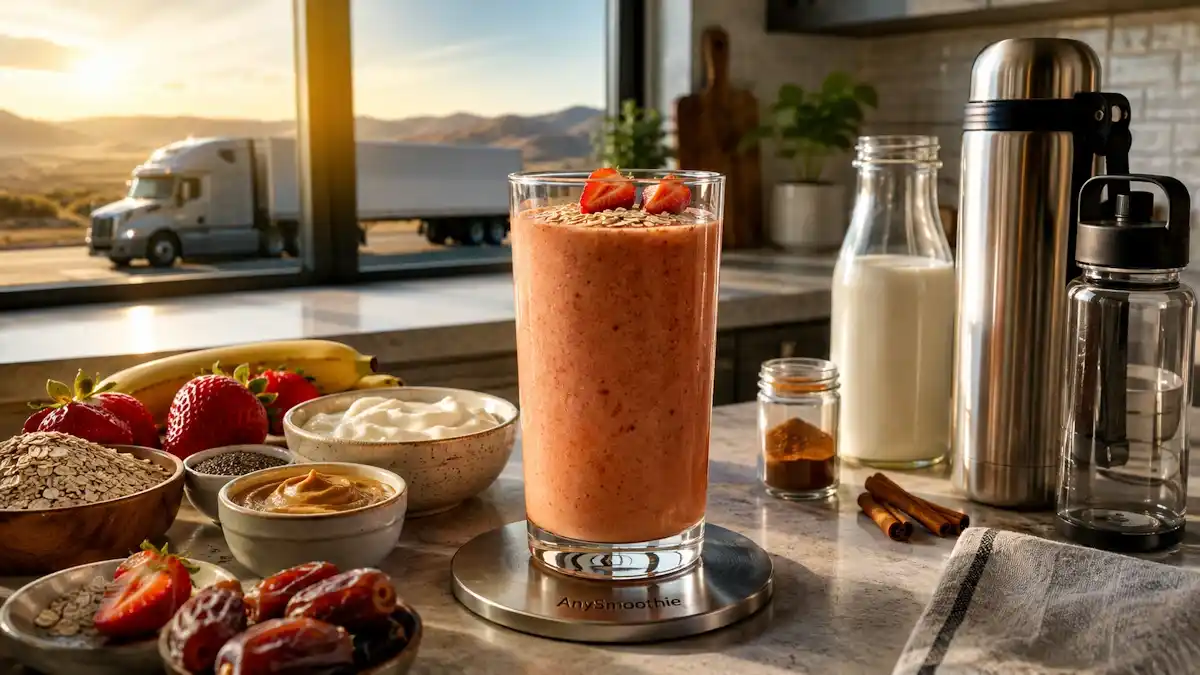
Long shifts can leave truck drivers with limited food choices, wide gaps between meals, and few places to make a balanced stop. Smoothies for Truck Drivers offer a practical answer when they include protein, produce, fiber, fluids, and a source of healthy fat.
A well-built smoothie can fit in a cab, travel in a cold bottle, and work as a snack or light meal. These three recipes and storage habits help you prepare road-friendly fuel without relying on sugary drinks or convenience-store pastries.
How Smoothies for Truck Drivers Support Steady Energy on the Road
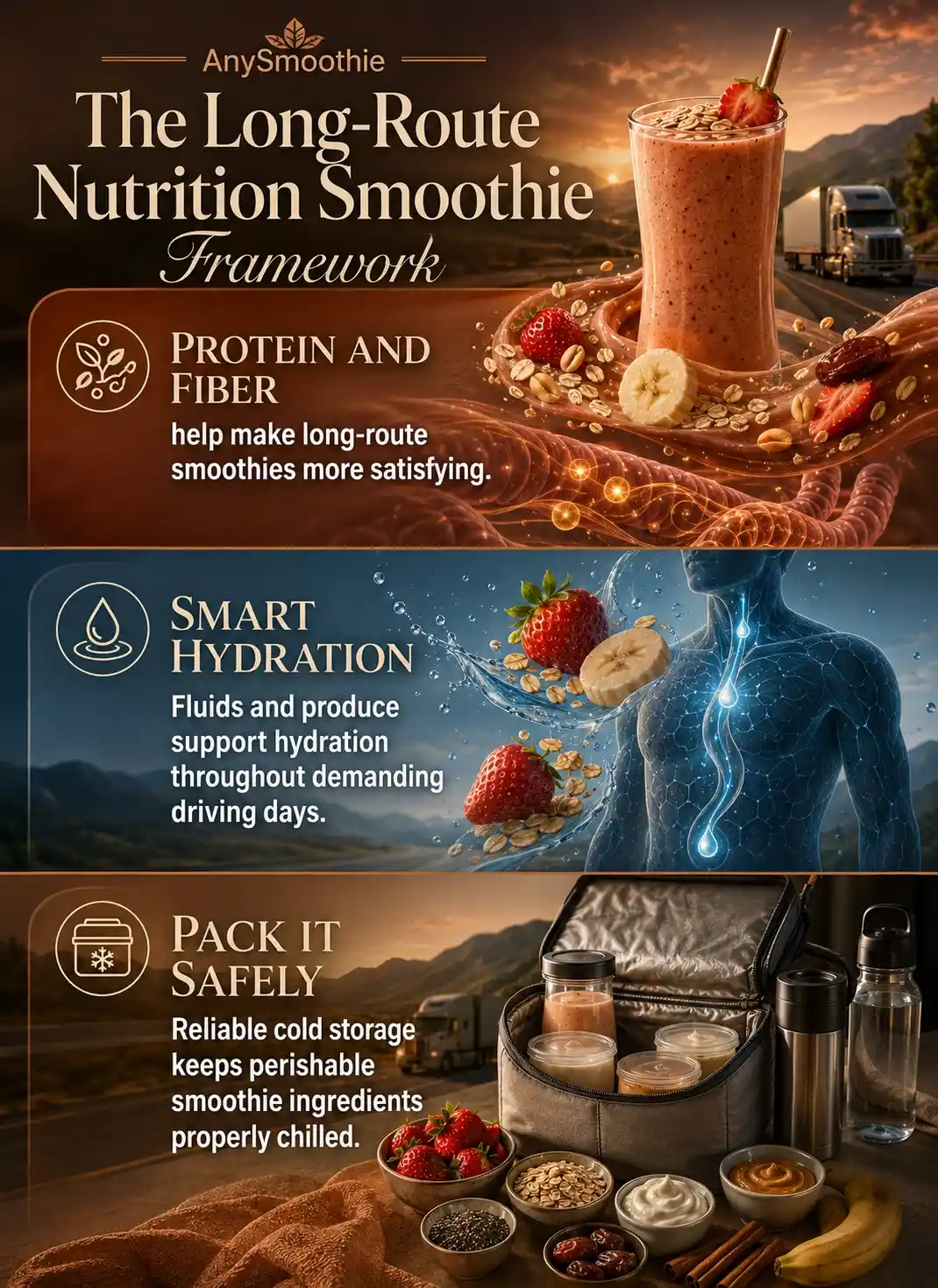
Fruit and juice alone blend quickly, but they can leave you hungry again soon. Build your smoothie around protein, fiber, unsaturated fat, complex carbohydrates, and enough fluid for a drinkable texture.
Greek yogurt, cottage cheese, unsweetened soy milk, oats, chia, nut butter, leafy greens, berries, and bananas all work well. Protein supplies amino acids, while oats and seeds add fiber that slows digestion. Nut butter and chia contain unsaturated fats, which also help the smoothie feel more satisfying.
Use a simple formula: one protein source, one or two produce choices, one fiber or healthy-fat source, and liquid to blend. If a Smoothie replaces a meal, use a larger portion and skip added sugar. For more ways to build a filling blend around whole-food protein sources, explore our Naturally high-protein smoothies guide.
What to Pack Before Leaving the Yard
Pre-portion frozen fruit, spinach, and oats into reusable bags. Add chia or ground flax, nut butter packets, and shelf-stable protein powder if you use it. Bring single-serve yogurt, a leakproof bottle, and a compact blender if your truck’s power setup permits it.
Unopened shelf-stable products still need the right handling, so check USDA guidance on shelf-stable foods before treating any ingredient as cab-safe. Prepped bags cut down on roadside decisions and make a planned break more useful.
A Five-Column Comparison of Smoothie Bases
Choose the base according to your protein target and cold-storage options.
| Base | Protein | Fiber | Best Use | Road-Ready Note |
|---|---|---|---|---|
| Greek yogurt | High | None | Filling breakfast | Keep refrigerated |
| Unsweetened soy milk | Moderate | Low | Dairy-free protein | Check added sugar |
| Dairy milk | Moderate | None | Creamy everyday blends | Keep refrigerated |
| Unsweetened almond milk | Low | Low | Light flavor and texture | Protein varies by brand |
| Water | None | None | Thinner smoothies | Pair with protein foods |
Plant milks vary widely in protein and added sugar, so read the nutrition label before stocking up. For more combinations built around protein and fiber, try these protein smoothie recipes.
3 Smoothies for Truck Drivers on Long Routes
These smoothies for truck drivers are flexible templates. Adjust the liquid for your blender, your appetite, and the weather.
How to Store, Blend, and Drink Smoothies Safely in a Truck Cab
Dairy, yogurt, and blended produce need dependable cold storage. Keep your truck refrigerator at 40 F or below. If you use a cooler, pack it with plenty of ice packs and keep the bottle closed until break time.
A smoothie becomes perishable as soon as yogurt, milk, or cut produce goes into the bottle.
Drink refrigerated smoothies promptly instead of carrying one through a full shift. Virginia Cooperative Extension recommends storing dairy at 34 F to 38 F for quality and safety in its consumer food-storage guidance.
Wash the blender cup, blade, lid, and drinking bottle after every use. Carry a second bottle for water if cleanup must wait. Blend only while parked, and avoid oversized portions that feel heavy during long periods of sitting.
Common mistakes include:
- Using too much juice and too little whole fruit.
- Skipping protein and fiber.
- Trusting weak refrigeration.
- Forgetting allergen and added-sugar checks.
Conclusion: A Better Road Routine Starts Before the Engine Does
Smoothies work best as part of a broader road-food plan that also includes whole foods you enjoy. Pick one balanced recipe, portion the ingredients before departure, and keep cold items properly chilled.
A few minutes of preparation can support hydration, nutrient intake, and steadier energy during long hours behind the wheel. For more ideas on balancing nutrition across a demanding day, explore The ultimate guide to mastering smoothies
🛡️ Safety Notes & Dietary Interactions
- Maintain Reliable Cold Storage: Smoothies containing yogurt, milk, or cut produce are perishable and require dependable refrigeration. Keep them properly chilled throughout the route, and discard drinks left unrefrigerated for extended periods rather than risking foodborne illness.
- Match Portions to Long Driving Hours: Large, calorie-dense smoothies may feel uncomfortable during prolonged sitting. Adjust oats, nut butter, seeds, fruit, and serving size according to hunger, activity, and meal timing instead of automatically using oversized portions.
- Check Allergens and Packaged Ingredients: Dairy, soy, peanuts, tree nuts, seeds, and protein powders can create allergy or intolerance concerns. Check labels carefully for allergens, cross-contact warnings, added sugars, caffeine, and unfamiliar supplemental ingredients before packing them.
- Keep Hydration Separate From Smoothies: A smoothie contributes fluid but should not become your primary hydration strategy during long routes. Keep water readily available throughout the shift, particularly during warm weather, and take appropriate breaks for drinking and movement.
FAQs
What makes a good smoothie for long truck-driving routes?
A practical truck-driving smoothie combines a protein source with whole fruit or vegetables, fiber, healthy fat, and an unsweetened liquid. Greek yogurt, soy milk, oats, berries, bananas, chia, and nut butter are useful options. This structure generally creates a more satisfying drink than blending fruit juice and sweeteners alone.
Can a smoothie replace a meal while driving?
A sufficiently balanced smoothie can occasionally function as a light meal when it contains meaningful protein, carbohydrates, fiber, healthy fat, and enough calories for your needs. However, smoothies should not replace every regular meal. Whole foods provide additional textures, nutrients, and dietary variety that are difficult to obtain entirely from blended drinks.
How should truck drivers store smoothies during long routes?
Prepared smoothies containing dairy, plant milk, or cut produce should remain properly refrigerated. A reliable truck refrigerator or well-insulated cooler with adequate ice packs can help maintain safe temperatures. Prepare only the amount you expect to use, keep containers tightly closed, and discard smoothies that have remained inadequately chilled for extended periods.
Which smoothie ingredients help provide more lasting fullness?
Protein-rich yogurt or soy milk, oats, chia seeds, ground flaxseed, and modest portions of nut or seed butter can make smoothies more substantial. Combining protein with fiber and healthy fats generally produces greater satiety than fruit and juice alone. Portions should still reflect your appetite, activity level, and overall daily food intake.
How can truck drivers prepare smoothies without wasting time?
Pre-portion frozen fruit, greens, oats, and seeds before leaving home, then store individual servings appropriately for the trip. Keep measured dry ingredients and shelf-stable products separately when possible. During a parked break, combine one prepared portion with your chosen liquid and protein source, blend it, and clean the equipment before continuing the route.

Medical Disclaimer: AnySmoothie content is for educational purposes only and is not a substitute for professional medical advice. Consult a healthcare provider for personalized guidance. See our full Disclaimer & Terms of Use. AI Transparency: AnySmoothie may use AI to support content development. All content undergoes human editorial review for accuracy, clarity, and editorial quality. See our full AI Transparency.