
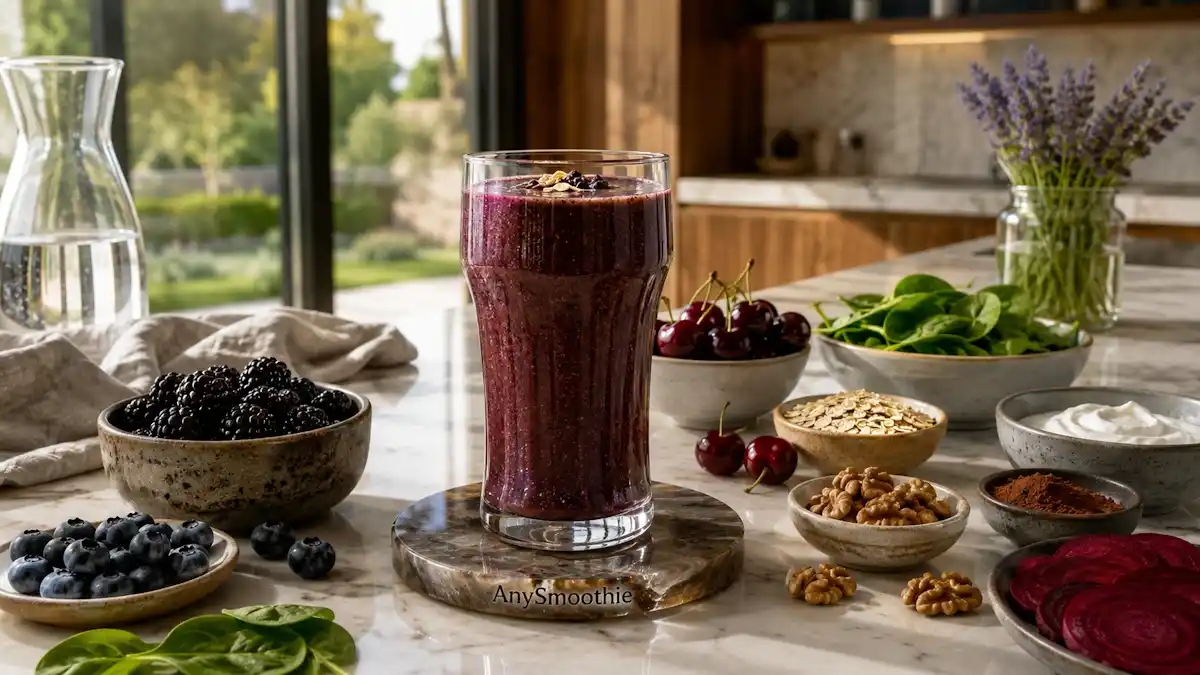
Food shouldn’t be presented as a treatment for tinnitus. Still, a balanced smoothie can support everyday nutrition, hydration, and steady energy without relying on heavily processed ingredients. Tinnitus-friendly smoothies are built around produce, unsalted seeds, protein, fiber, and unsweetened liquids.
Tinnitus triggers differ from person to person, so one ingredient may feel fine for you and unhelpful for someone else. The recipes below follow a lower-sodium, nutrient-dense pattern while leaving room for personal adjustments. You’ll find three blends, practical ingredient swaps, and safety guidance for fitting smoothies into a varied routine.
What Each Smoothie Supports in the Body
Magnesium participates in normal muscle, nerve, and cellular processes. Potassium helps maintain fluid balance and supports normal nerve signaling. Vitamin C supports collagen formation and antioxidant defenses, while folate helps normal cell division and red blood cell production.
Fiber slows digestion and supports regularity. Protein helps maintain body tissues and can make a liquid meal more satisfying. Unsaturated fats from avocado, flaxseed, pumpkin seeds, and hemp hearts support normal Cell membrane structure while helping create a satisfying, creamy texture without added sugar.
These nutrients support normal physiological systems, but they aren’t a guaranteed tinnitus solution. Overall eating patterns matter more than one recipe. Research on dietary factors and tinnitus remains limited, as described in this Review of diet, tinnitus, and hearing difficulties.
How to Keep Smoothies Lower in Sodium and Added Sugar
Fresh or frozen produce is usually a better starting point than canned fruit packed in syrup. If you use canned ingredients, drain and rinse them when appropriate, then check the label for sodium and added sugar.
Choose unsalted seeds, plain nut butter, and plain yogurt instead of flavored versions. Water or unsweetened milk keeps the recipe less sweet than fruit juice. When a Smoothie contains fiber, protein, and fat, it can taste balanced with less fruit.
Packaged protein powders, plant milks, yogurt, and nut butters vary widely. Check serving sizes, sodium, added sugar, and ingredient lists before adding them regularly.
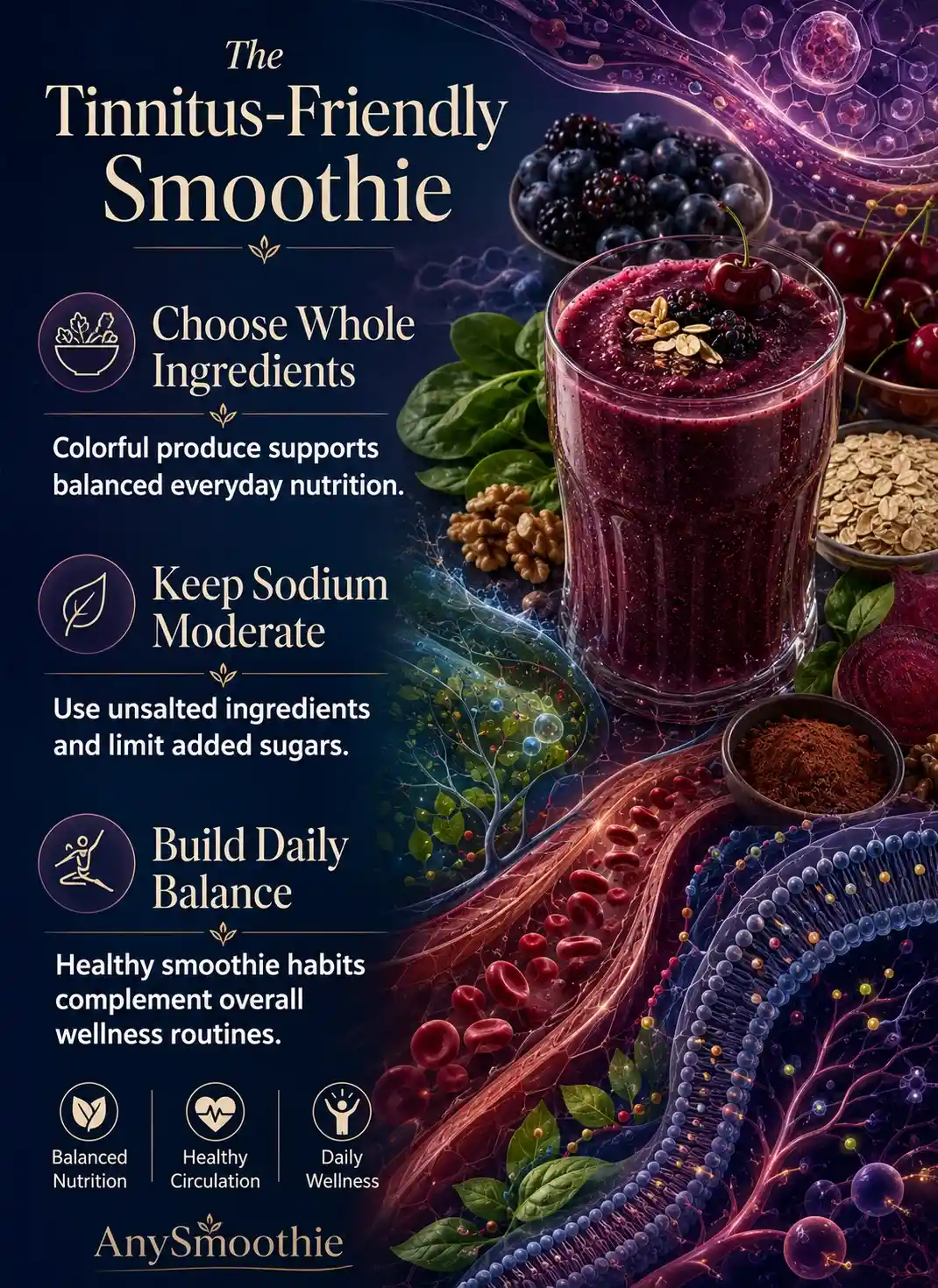
3 Tinnitus-Friendly Smoothies for Everyday Nutrition
These recipes make one generous serving, about 14 to 16 ounces. Blend each recipe until smooth, then add a small amount of liquid if the texture is too thick. For a thinner drink, use water or unsweetened milk. Plain dairy yogurt, unsweetened soy milk, and unsweetened almond milk can all work, depending on your tolerance.
Here is a quick comparison of the three options.
| Smoothie | Key ingredients | Nutrition focus | Best time to enjoy | Simple substitutions |
|---|---|---|---|---|
| Berry-spinach citrus | Blueberries, spinach, orange, yogurt | Vitamin C, folate, fiber, protein | Breakfast or afternoon snack | Non-dairy yogurt, banana for sweetness |
| Banana-pumpkin seed | Banana, pumpkin seeds, oats, soy milk | Magnesium, potassium, protein, fiber | Morning or after activity | Silken tofu, oat milk |
| Cucumber-avocado lime | Cucumber, avocado, lime, hemp hearts | Hydration, healthy fats, fiber | With lunch or on a warm day | Pear for lime, non-dairy yogurt |
For more ideas on balancing fruit, vegetables, liquid, and filling ingredients, see these Fruit and vegetable smoothie formulations.
Build a Tinnitus-Friendly Smoothie Routine That Fits Your Day
A smoothie works best as part of a varied eating pattern, not as a Replacement for every meal. A 14- to 16-ounce serving may fit breakfast, while a smaller 8- to 10-ounce portion can work as a snack. If you’re hungry soon afterward, pair it with a solid food such as whole-grain toast, an egg, or a handful of unsalted nuts.
Prepare frozen fruit and chopped produce in single-serving containers. Keep liquids separate until blending, especially if you make the ingredients the night before. Drinking water consistently throughout the day remains more important than relying on a single smoothie for hydration.
Some people notice changes after caffeine, alcohol, or very salty foods. However, personal patterns vary, and a symptom change after one meal doesn’t prove that food caused it. The American Tinnitus Association discusses salt and other lifestyle factors while recommending that dietary changes be considered with a doctor, particularly when Ménière’s disease is involved. Read its guidance on Tinnitus lifestyle choices.
Choose Ingredients Based on Your Own Tolerance
Change one ingredient at a time and keep a brief journal of food, fluids, sleep, and symptoms. This approach can reveal repeat patterns without turning one experience into a restrictive diet. A short record is more useful than removing many foods at once.
Dairy, nuts, seeds, citrus, and high-fiber ingredients can cause digestive issues or allergic reactions for some people. Try oats, silken tofu, non-dairy yogurt, cucumber, pear, or melon when a recipe doesn’t suit you. You can also adjust sweetness and thickness without changing the entire nutrition profile.
When to Ask a Healthcare Professional for Guidance
Seek prompt medical attention for sudden tinnitus, one-sided symptoms, pulsating sounds, hearing loss, dizziness, severe headache, or symptoms that begin after an injury. These signs need professional assessment rather than dietary experimentation.
Speak with a doctor or registered dietitian before making major dietary changes if you have diabetes, kidney disease, food allergies, are pregnant, or take medication that affects nutrition or fluid balance. Dietary research on tinnitus is still developing, and a Clinical review of dietary factors found that evidence remains weak.
Conclusion
The most practical tinnitus-friendly smoothies are balanced, lower in added sugar and sodium, and easy to personalize. Use produce, protein, fiber, unsalted seeds, and an unsweetened liquid as your foundation.
A single drink won’t determine your symptoms. Focus on your overall eating pattern, hydration, sleep, and appropriate professional care. Start with one recipe, track how it fits your routine, and adjust ingredients according to taste and tolerance.
🛡️ Safety Notes & Dietary Interactions
- Support Balanced Nutrition, Not Tinnitus Treatment: These smoothies provide protein, fiber, healthy fats, vitamins, and minerals that support overall nutrition and hydration. They are not treatments for tinnitus, hearing loss, or Ménière’s disease, and they should not replace appropriate medical evaluation.
- Personalize Ingredients to Your Needs: If you have diabetes, kidney disease, food allergies, digestive disorders, pregnancy, or follow a medically prescribed diet, adjust ingredients such as dairy, soy, seeds, citrus, avocado, and fruit with guidance from a qualified healthcare professional.
- Monitor Personal Food Tolerance: Individual responses to foods vary. If you suspect certain ingredients, caffeine, alcohol, or highly salted foods influence your symptoms, introduce dietary changes gradually and keep a simple food and symptom journal rather than eliminating multiple foods at once.
- Seek Medical Assessment for Concerning Symptoms: Sudden tinnitus, hearing loss, one-sided tinnitus, pulsating sounds, dizziness, severe headache, or symptoms following head or ear injury require prompt medical evaluation. Dietary changes should never delay appropriate diagnosis or treatment.
FAQs
Can smoothies reduce tinnitus?
Current scientific evidence does not show that smoothies can reduce or treat tinnitus. However, balanced smoothies may contribute to overall nutrition, hydration, and steady energy as part of a healthy lifestyle that supports general well-being.
Which ingredients are suitable for tinnitus-friendly smoothies?
Whole berries, leafy greens, bananas, cucumber, avocado, pumpkin seeds, hemp hearts, flaxseed, plain yogurt, kefir, unsweetened soy milk, and other minimally processed ingredients provide fiber, protein, healthy fats, vitamins, and minerals without relying on excess sodium or added sugars.
Should I avoid salt if I have tinnitus?
Not necessarily. Some people notice symptom changes after consuming very salty foods, particularly in specific medical conditions such as Ménière’s disease, but responses vary considerably. It’s best to discuss significant sodium restriction with your healthcare professional rather than making broad assumptions.
Can hydration influence tinnitus?
Maintaining normal hydration supports overall health, although current evidence does not show that drinking extra water or smoothies directly improves tinnitus. Consistent fluid intake, balanced meals, and healthy daily habits remain sensible components of general wellness.
Is it helpful to keep a food and symptom journal?
Yes. Recording meals, hydration, sleep, caffeine intake, and tinnitus symptoms over time may help identify personal patterns without unnecessarily restricting your diet. Because tinnitus has many possible influences, any observations should be discussed with a qualified healthcare professional before making major dietary

Medical Disclaimer: AnySmoothie content is for educational purposes only and is not a substitute for professional medical advice. Consult a healthcare provider for personalized guidance. See our full Disclaimer & Terms of Use. AI Transparency: AnySmoothie may use AI to support content development. All content undergoes human editorial review for accuracy, clarity, and editorial quality. See our full AI Transparency.