
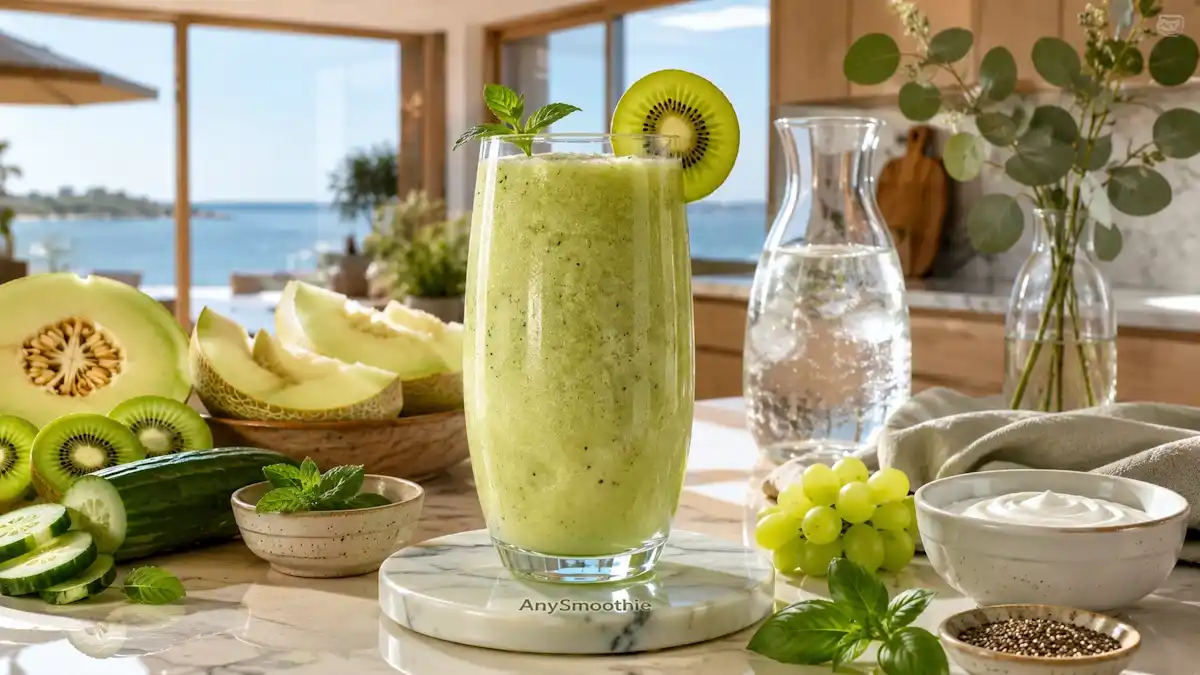
Can smoothies supporting aquaporin channel hydration help your body manage water more effectively? They can support the ingredients your normal hydration systems need, but they don’t directly activate, repair, or increase aquaporin channels.
Aquaporins are water channel proteins in cell membranes. Smoothies provide fluid, electrolytes, carbohydrates, and plant nutrients that fit into ordinary hydration processes. Your total fluid intake, kidney function, diet, activity, and health status still matter most. These three recipes offer practical ways to combine those factors, starting with the biology behind the idea.
How Aquaporin Channels Help Move Water Through the Body
Aquaporins are tiny protein channels that let water cross Cell membranes. Different aquaporin types appear in tissues and organs throughout the body. In the kidneys, they help regulate how water moves during urine formation. Research on Aquaporin water-channel biology describes their role in fluid transport at the cellular level.
Water movement depends on concentration gradients and the surrounding fluid. Aquaporins help create a route through the membrane, but they don’t decide hydration on their own. The brain, kidneys, hormones, blood vessels, and cells work together to maintain fluid balance.
That distinction matters. Drinking a smoothie doesn’t prove that aquaporin activity will change. Instead, a well-built blend can supply water along with potassium, magnesium, sodium, carbohydrates, and plant compounds. These nutrients support normal physiological systems involved in fluid balance.
Hydration also means more than putting water into your stomach. Your body must absorb, distribute, and regulate that fluid. For everyday needs, plain water and meals often provide enough. After sweating, a drink containing carbohydrates and electrolytes may fit your needs better than water alone.
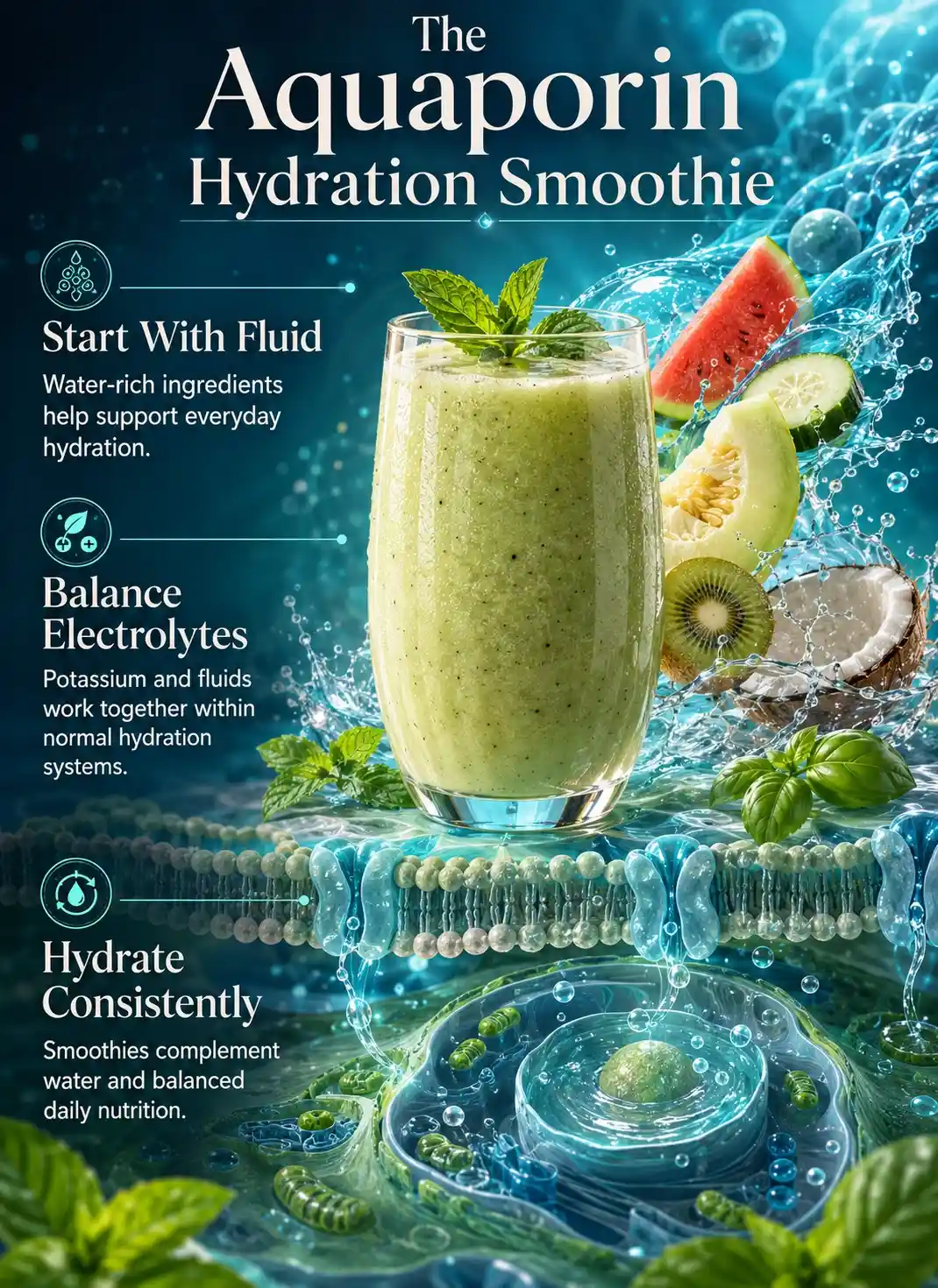
Aquaporins help water cross cell membranes, while a smoothie supplies the fluid and nutrients that support the body’s wider hydration systems.
How to Choose Ingredients for Better Everyday Hydration
Build your smoothie around a fluid base first. Water keeps sugar and calories low. Coconut water adds potassium and a small amount of carbohydrate, while unsweetened milk brings protein and, depending on the product, calcium and vitamin D.
Next, add water-rich produce such as berries, citrus, cucumber, or melon. Yogurt, kefir, seeds, or nut butter can add protein and fat when the smoothie needs to function as a snack. However, more fiber and fat usually mean you need more liquid.
This quick comparison helps match the base to your situation:
| Smoothie base | Main hydration contribution | Key nutrients | Best use | Watch-outs |
|---|---|---|---|---|
| Plain water | Fluid without added sugar | No meaningful calories | Everyday hydration | Adds no electrolytes |
| Coconut water | Fluid and some potassium | Potassium, carbohydrate | Light sweating or flavor | Usually low in sodium |
| Unsweetened milk | Fluid with protein | Calcium, protein, vitamin D if fortified | More filling snack | Dairy or plant allergies |
| Plain yogurt or kefir | Fluid plus protein | Calcium, protein, cultures | Thicker, satisfying blend | Check added sugar and tolerance |
| Fruit juice | Fluid and quick carbohydrate | Potassium, natural sugars | Small amount after activity | Sugar and portions can climb |
Plain water is often enough for routine daily hydration. Longer exercise or heavy sweating can increase the need for sodium and carbohydrate, so coconut water may not cover every electrolyte need.
3 smoothies supporting aquaporin channel hydration
These recipes support overall fluid and electrolyte intake rather than directly changing aquaporin activity. Each makes about one 12- to 16-ounce serving. Add more liquid for a thinner texture, or use ice for a colder blend.
Common Mistakes That Can Undercut a Hydrating Smoothie
A smoothie shouldn’t become your only source of fluids. Keep drinking water and eating regular meals across the day. Also, large amounts of juice, honey, syrup, or sweetened yogurt can turn a refreshing drink into a high-sugar snack.
High-fiber ingredients need enough liquid. Chia seeds, oats, and thick nut butter can make a blend difficult to drink when the base is too small. Large smoothies can also add more calories than intended, especially when they include juice, multiple bananas, and generous spoonfuls of nut butter.
Coconut water has potassium, but it doesn’t replace all electrolytes. During prolonged, heavy sweating, sodium can matter more than potassium. Check packaged ingredient labels, and drink according to thirst, activity, heat, and normal body cues instead of forcing excessive fluids.
When a Smoothie Is Not Enough for Dehydration
Severe fluid loss from vomiting, diarrhea, heat exposure, or intense exercise may require a properly formulated oral rehydration solution or professional advice. A homemade smoothie does not provide the standardized balance of water, sodium, and glucose found in oral rehydration solutions.
During significant fluid loss from heat, illness, or prolonged exercise, properly formulated oral rehydration solutions may be more appropriate than homemade beverages. The World health organization (WHO) provides guidance on oral rehydration and preventing dehydration.
Seek prompt medical care for confusion, fainting, inability to keep fluids down, very little urination, or worsening weakness. If you have kidney, heart, or other fluid-balance conditions, ask a qualified clinician how much fluid and electrolyte intake suits you.
Conclusion
Aquaporins help cells move water across their membranes, but smoothies work indirectly. They supply fluid and nutrients that fit into the body’s normal hydration systems. The cucumber and watermelon blend is light, the berry and yogurt recipe is more filling, and the banana-citrus option provides carbohydrates for an active day. Choose based on activity, hunger, dietary needs, and sugar tolerance. A smoothie works best alongside water and balanced meals, not as a special aquaporin solution.
🛡️ Safety Notes & Dietary Interactions
- Support Normal Hydration, Not Aquaporin Function: These smoothies provide fluids, electrolytes, carbohydrates, and nutrient-rich whole foods that support normal hydration. They are not proven to activate, increase, or repair aquaporin channels or modify cellular water transport directly.
- Adjust Ingredients for Individual Health Needs: If you have kidney disease, heart disease, diabetes, food allergies, digestive disorders, pregnancy, or follow a medically prescribed diet, personalize ingredients such as coconut water, dairy, fruit, potassium-rich foods, and seeds with guidance from a qualified healthcare professional.
- Hydrate According to Your Activity Level: Plain water is often sufficient for everyday hydration, while prolonged exercise or heavy sweating may increase the need for sodium and other electrolytes. Smoothies should complement, not replace, regular water intake and balanced meals.
- Recognize Signs of Significant Dehydration: Seek prompt medical care if you develop confusion, fainting, inability to keep fluids down, very little urination, persistent vomiting or diarrhea, or worsening weakness. Severe dehydration requires appropriate medical evaluation and may require oral rehydration solutions or other treatment.
FAQs
What are aquaporin channels?
Aquaporins are specialized proteins that form water channels in cell membranes, allowing water to move efficiently between cells and tissues. They play important roles in organs such as the kidneys, where they contribute to maintaining normal fluid balance throughout the body.
Can smoothies increase aquaporin activity?
Current scientific evidence does not show that smoothies or specific foods can directly increase aquaporin expression or activity in humans. Smoothies instead provide fluids and nutrients that support the body’s normal hydration systems alongside healthy kidney function and overall physiology.
Which ingredients are best for hydration-focused smoothies?
Watermelon, cucumber, berries, citrus fruits, bananas, leafy greens, coconut water, plain yogurt, kefir, and unsweetened milk or fortified plant-based alternatives provide combinations of fluids, electrolytes, protein, vitamins, minerals, and carbohydrates that fit into balanced hydration strategies.
Is coconut water better than plain water?
Not necessarily. Plain water is an excellent choice for routine hydration, while coconut water provides additional potassium and a modest amount of carbohydrate. After prolonged or heavy sweating, however, coconut water alone may not supply enough sodium to fully replace electrolyte losses.
Can these smoothies treat dehydration?
No. These smoothies can contribute to everyday hydration and recovery after light activity, but they are not treatments for significant dehydration. Severe fluid loss from illness, prolonged heat exposure, or intense exercise may require an oral rehydration solution and prompt medical evaluation.

Medical Disclaimer: AnySmoothie content is for educational purposes only and is not a substitute for professional medical advice. Consult a healthcare provider for personalized guidance. See our full Disclaimer & Terms of Use. AI Transparency: AnySmoothie may use AI to support content development. All content undergoes human editorial review for accuracy, clarity, and editorial quality. See our full AI Transparency.