
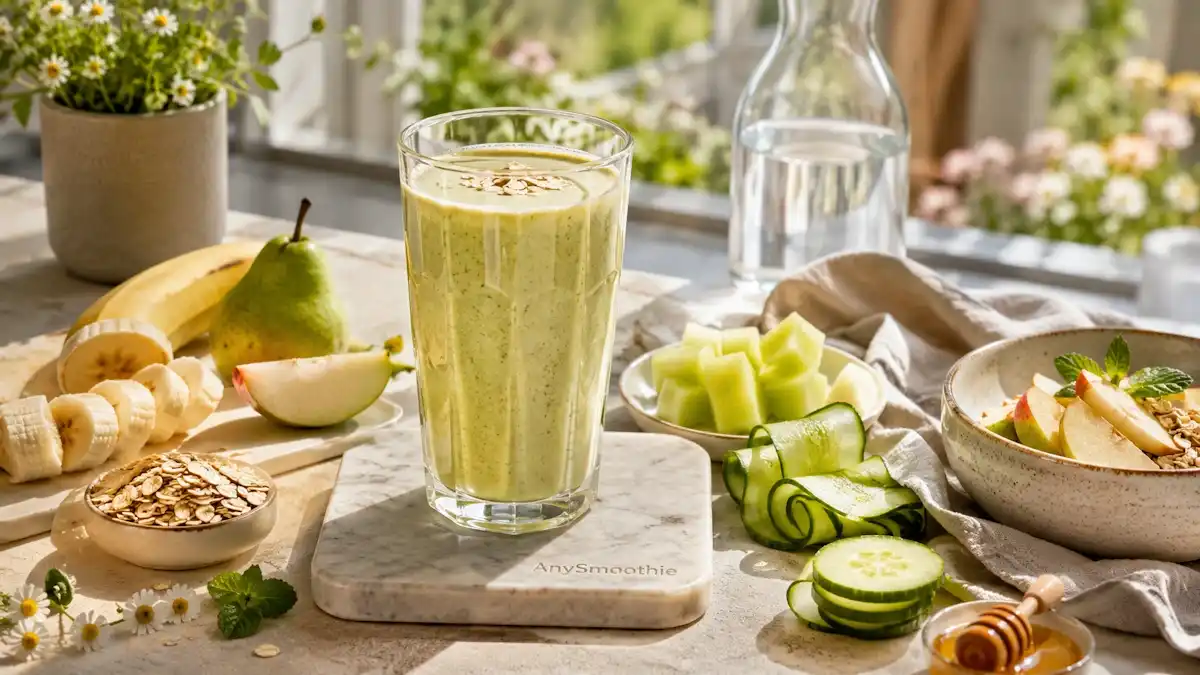
Late-afternoon heat can leave you dragging, even after a normal day. Sweat, skipped water breaks, and a few hours outside can make your energy feel flat.
Hydration smoothies for summer fatigue give you fluid, minerals, and quick carbs in one glass. They also feel easier to sip than a heavy snack when the sun has worn you out. The goal is simple, help your body replace what hot weather pulls away without making the drink so thick that it feels like dessert. That starts with knowing what makes a blend work.
What makes hydration smoothies useful when summer fatigue hits
Hot weather changes the way you feel because your body loses fluid through sweat, and sometimes you do not replace it fast enough. That can leave you thirsty, sluggish, and low on the minerals that help with normal muscle and nerve function. A good smoothie helps by putting water-rich produce, a little natural sugar, and mineral support in the same cup.
That mix is useful after outdoor workouts, long errands, travel days, or any stretch when plain water starts to feel boring. It is a practical way to get back on track without forcing a big meal.
The hydration formula: water, electrolytes, and easy-to-digest carbs
A balanced smoothie usually has three parts. First, liquid volume from water, coconut water, or ice. Second, electrolytes such as sodium, potassium, and a little magnesium from ingredients like coconut water, yogurt, or a pinch of sea salt. Third, easy-to-digest carbs from fruit, which give quick fuel and help the drink feel useful after heat.
A hydration smoothie works best when it feels like a drink first and a meal second.
That balance helps the body use the fluid more smoothly than a fruit-heavy blend alone. If the smoothie turns thick and sticky, it stops feeling like a quick reset.
Best ingredients for a cooler, steadier energy boost
Some ingredients do more than add flavor. Coconut water brings a light mineral base. Cucumber adds volume with almost no heaviness. Watermelon is high in water and keeps the taste clean. Berries bring bright flavor and natural color, while citrus wakes up a flat blend.
For texture, Greek yogurt adds protein and creaminess, chia gives a little body, and leafy greens add minerals without much sweetness. Together, these ingredients keep the smoothie cool, fresh, and easier to drink when summer heat has knocked your appetite down.
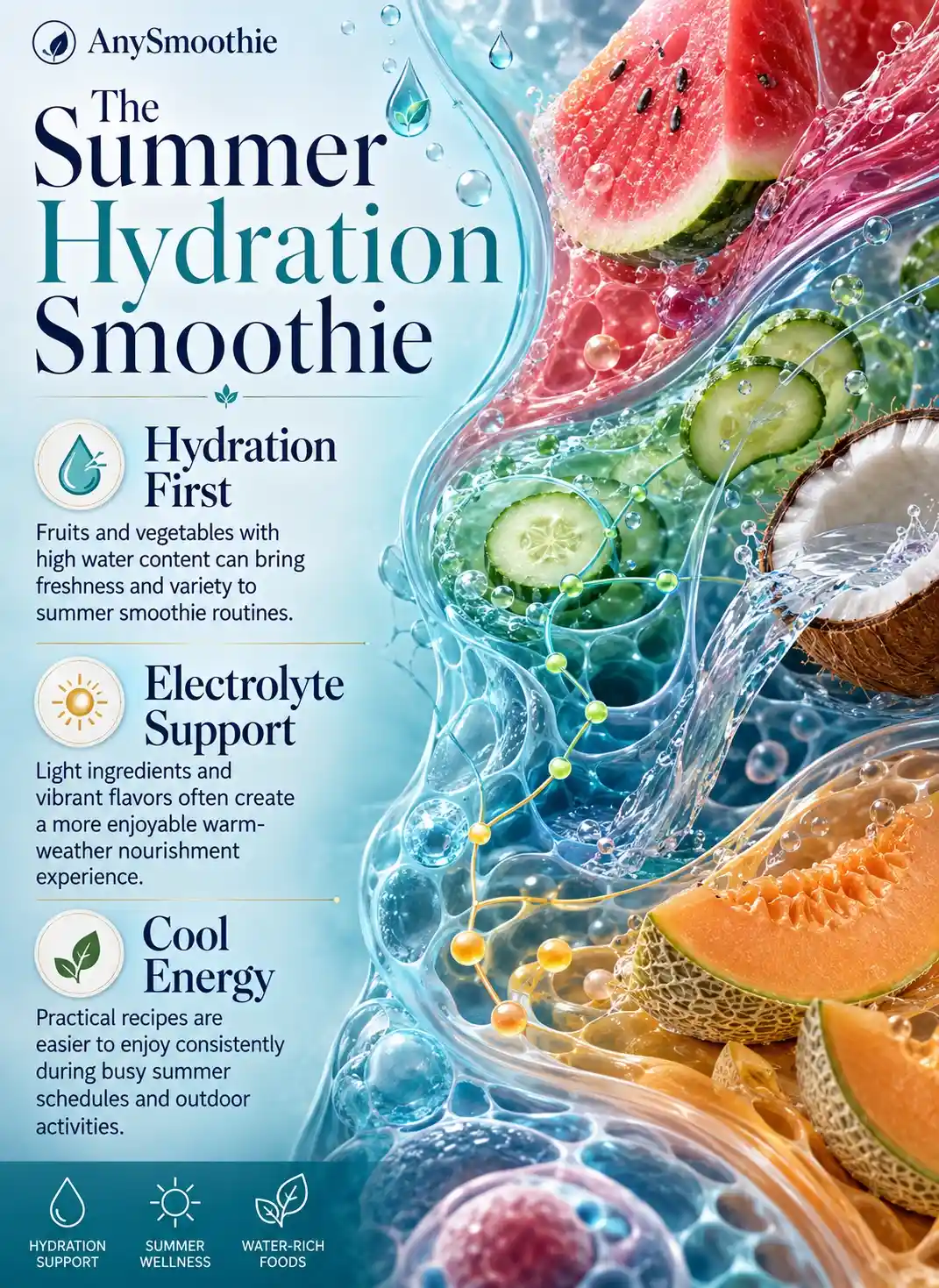
3 Hydration smoothies for summer fatigue
These three blends are simple, hydrating, and easy to change based on what you have. If you like this style, hydrating smoothies for active recovery use the same light, mineral-friendly base.
| Smoothie | Ingredients and flavor | Hydration support | Best time | Best for |
|---|---|---|---|---|
| Cucumber mint coconut refresher | Cucumber, coconut water, mint, lime, optional Greek yogurt or chia, crisp and cool | Fluid plus light minerals | Hot afternoons | When you want the lightest feel |
| Watermelon berry recovery smoothie | Watermelon, berries, ice, chia or yogurt, sweet and bright | High-water fruit with a little body | After walks or workouts | Post-activity refresh |
| Pineapple banana electrolyte blend | Pineapple, banana, coconut water, pinch of sea salt, tropical and smooth | Quick carbs plus potassium and sodium | After heat or long errands | When fatigue feels tied to low fuel |
The lightest blend is the cucumber version. The fruitier ones work better when you want more quick energy.
How to build a better hydration smoothie without making it too heavy
Start with a liquid base, then add fruit until the texture feels right. For faster sipping, keep liquid ahead of fruit, and skip heavy add-ins like nut butter or ice-cream style yogurt. If you want more staying power, add a small amount of protein or fat after the first glass, not before it.
Heavy blends can taste good, but they stop feeling refreshing fast.
Summer heat also changes fluid balance, so electrolytes during summer deserve a place in the glass. Use whole-food ingredients first, keep sweeteners minimal, and let ice, citrus, and coconut water do most of the work.
Simple swaps for different needs and tastes
Need a dairy-free version? Use more coconut water and chia. Want more protein? Add plain Greek yogurt or a half scoop of unflavored protein. Need lower sugar? Lean on cucumber, greens, lime, and ice. Want the coldest, cleanest sip? Use frozen fruit and a few mint leaves.
Common mistakes that make a smoothie less hydrating
Too much fruit makes the drink feel like dessert, not hydration. Too little liquid leaves you with a thick shake. Oversized portions can slow you down, especially when you only want something cold and easy. Heavy nut butters, large amounts of protein powder, or rich yogurt can also make the smoothie feel more like a meal than a quick reset.
Conclusion
Summer fatigue often starts with plain things, like sweat, skipped water, and a little too much time in the heat. Hydration smoothies are not magic, but they can support fluid intake, mineral replacement, and steadier energy when the day runs hot.
Keep one of these blends ready after workouts, long days outside, or any time you feel dragged out. A good summer smoothie should feel cool, light, and easy to finish.
🛡️ Safety Notes & Dietary Interactions
- Electrolyte Balance: Hydration smoothies can support fluid intake, but they should complement regular water consumption rather than replace it entirely during hot weather.
- Sugar Awareness: Water-rich fruits naturally contain sugars. Keeping portions balanced helps maintain a refreshing smoothie without turning it into a high-sugar beverage.
- Digestive Comfort: Large servings consumed quickly may feel uncomfortable during extreme heat. Smaller portions and slower sipping are often easier to tolerate.
- Medical Considerations: Individuals with kidney conditions, fluid restrictions, or electrolyte-related health concerns should consult a healthcare professional before making significant dietary changes.
FAQ
What makes a smoothie hydrating during hot weather?
A hydrating smoothie usually combines water-rich fruits or vegetables, a fluid base such as water or coconut water, and modest amounts of carbohydrates. This combination helps replace fluids while providing light energy that may feel easier to consume during warm weather.
Is coconut water necessary for hydration smoothies?
No. Coconut water can provide a light source of electrolytes, but plain water works well too. Many hydration smoothies rely primarily on water-rich produce such as cucumber, watermelon, and melon to support fluid intake.
Which fruits are best for hydration smoothies?
Watermelon, cantaloupe, honeydew, berries, pineapple, and citrus fruits are commonly used because they contain significant amounts of water. Cucumber also blends well and adds volume without making the smoothie feel heavy.
Can hydration smoothies replace a meal?
Most hydration smoothies work best as a snack, recovery drink, or fluid-support option rather than a full meal. Their primary purpose is hydration and light nourishment. Adding substantial protein and fat can make them more meal-like but less refreshing.
How can I make a hydration smoothie lighter and more refreshing?
Use more liquid than fruit, avoid heavy nut butters and large amounts of protein powder, and focus on water-rich ingredients. Frozen fruit, cucumber, citrus, and coconut water often create a cleaner, lighter texture that feels easier to drink in hot weather.

Medical Disclaimer: AnySmoothie content is for educational purposes only and is not a substitute for professional medical advice. Consult a healthcare provider for personalized guidance. See our full Disclaimer & Terms of Use. AI Transparency: AnySmoothie may use AI to support content development. All content undergoes human editorial review for accuracy, clarity, and editorial quality. See our full AI Transparency.