
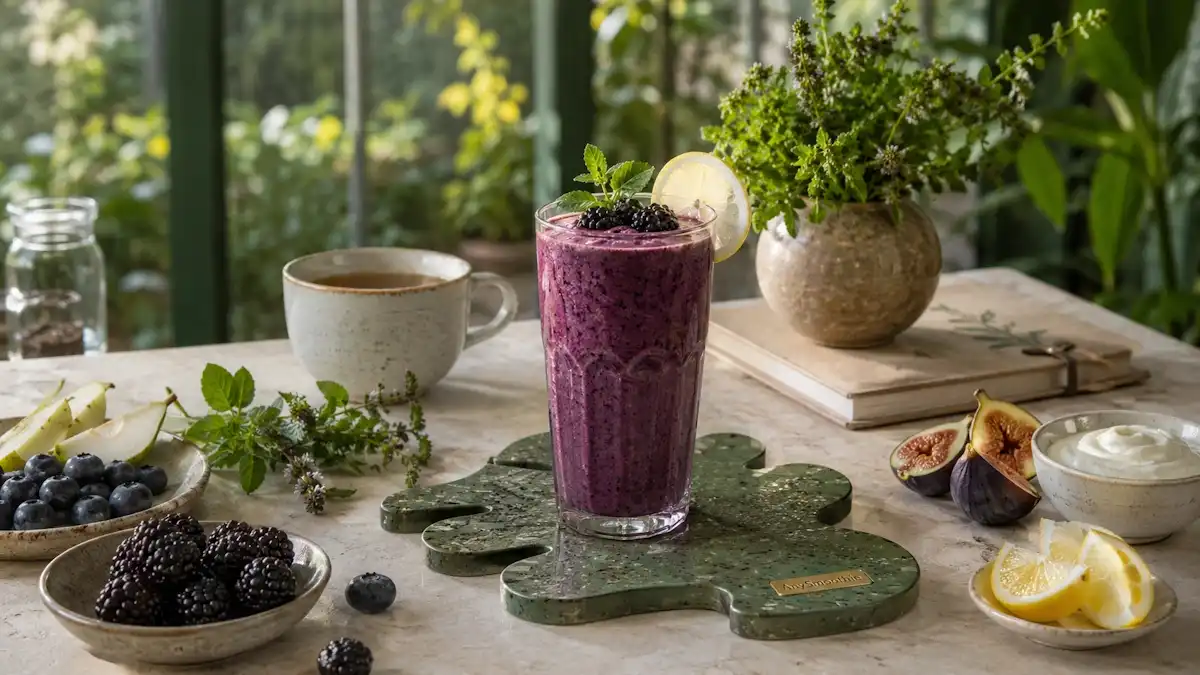
When stress stays high, your body treats it like a real load. The HPA axis, a loop between the hypothalamus, pituitary, and adrenal glands, helps shape that response.
If your energy feels erratic, your focus slips, or you crash by midafternoon, a gentler routine can help. Holy basil, also called tulsi, is one herb many people use in smoothies for support, not for quick fixes.
These holy basil smoothies for HPA-axis balance keep the formula simple: steady ingredients, clean flavor, and a blend you can stick with.
How holy basil may support a calmer stress response
The HPA axis is your body’s stress-response pathway. It helps you react to pressure, sleep loss, hard workouts, and busy days.
When that system gets pushed often, energy can feel uneven. Mood can dip. Focus can scatter. That is one reason people look for food-based habits that support normal stress handling, steady blood sugar, and hydration.
Holy basil has a long place in traditional wellness use, and modern research keeps exploring it. A review of Ocimum tenuiflorum extract discusses its possible role in stress support and antioxidant activity. That matters because oxidative stress and chronic strain often travel together.
Holy basil is not a cure, and it is not meant to replace medical care. Still, it can fit well in a routine that gives your body enough protein, fiber, and fluid to work with.
What the HPA axis does in everyday stress
The HPA axis acts like a command line for stress. Your brain senses pressure, then signals the adrenals to help you respond.
That system is normal and useful. Problems show up when the signals stay on too long, often from poor sleep, packed schedules, or mental overload.
Why holy basil is often used in adaptogen blends
Adaptogens are herbs people use when they want support for stress tolerance. Holy basil shows up often in teas, powders, and smoothies because it blends well with foods that support stable energy.
It pairs best with meals and drinks that keep you full longer, not with sweet, empty blends.
What to put in holy basil smoothies for better balance
A good smoothie starts with a few steadying parts. Holy basil brings the herbal note, but the rest of the blend does the heavy lifting.
Use a liquid base, then add protein, fat, fiber, and low-sugar fruit. That mix supports satiety and helps keep the drink from turning into a sugar spike.
| Ingredient | Main role | Flavor | Best format | Easy swaps |
|---|---|---|---|---|
| Holy basil | Herbal support | Peppery, clove-like | Fresh leaves or powder | Tulsi powder if fresh leaves are hard to find |
| Protein | Helps steady energy | Neutral or creamy | Greek yogurt, kefir, or protein powder | Dairy-free protein or silken tofu |
| Healthy fat | Adds fullness | Rich and smooth | Avocado, nut butter, or seeds | Tahini or hemp hearts |
| Fiber | Slows digestion | Mild | Chia, flax, spinach, berries | Oats or extra greens |
| Liquid base | Sets texture | Depends on choice | Water, almond milk, coconut water, kefir | Oat milk or plain milk |
A smoother smoothie starts with protein, fiber, and enough liquid to blend well.
The best base ingredients for a smooth, balanced blend
Water keeps the flavor light. Unsweetened almond milk makes the drink creamier without much sugar. Coconut water adds a softer, fresh taste, while kefir gives a tangier, more filling base.
The base changes the whole feel of the drink, so pick one that matches the time of day.
Ingredients that help keep blood sugar steadier
Protein is the anchor. Nut butter, chia seeds, flax, oats, and berries help round out the blend and slow down how fast it hits your system.
That mix matters when you want fewer energy swings. It also helps the smoothie feel like food, not dessert.
What to avoid if you want a more calming smoothie
Too much sweet fruit can crowd out the herbal flavor and push the sugar load up. Sugary yogurt does the same.
Skipping protein is another common mistake.
3 Holy basil smoothies for HPA-Axis balance
Green Holy Basil Smoothie for a Fresh Morning Start
Ingredients
- 1 cup unsweetened almond milk
- 1 handful spinach
- 1/2 cucumber, peeled
- 1/4 avocado
- 1 small green apple
- 1 tablespoon holy basil leaves or 1 teaspoon powder
- 1 scoop plain protein powder
Blend until smooth. This one feels light, cool, and clean. It works well before a busy morning.
Estimated Nutrition per Serving
Estimated with unsweetened almond milk, spinach, cucumber, avocado, green apple, and one typical scoop protein powder. Holy basil contribution varies by product and is not included.
- Calories: ~365 kcal
- Protein: ~30 g
- Carbohydrates: ~39 g
- Fat: ~13 g
- Fiber: ~10 g
- Sugars: ~20 g
Cucumber and apple release plenty of liquid once blended, so start without adding extra water. Blending the spinach and cucumber with the almond milk first also helps keep the green texture smooth and light.
Creamy Holy Basil Smoothie With Protein and Healthy Fat
Ingredients
- 1 cup plain Greek yogurt or dairy-free protein yogurt
- 1 tablespoon almond butter
- 1/2 cup frozen blueberries
- 1 teaspoon cinnamon
- 1 tablespoon ground flaxseed
- 1 teaspoon holy basil powder
- Splash of milk or water
Blend until thick. This version is more grounding and filling, so it fits a post-workout window or a late-morning meal.
Estimated Nutrition per Serving
Estimated with plain nonfat Greek yogurt, almond butter, frozen blueberries, cinnamon, ground flaxseed, and a small splash of 2% milk. Holy basil contribution varies by product and is not included.
- Calories: ~365 kcal
- Protein: ~29 g
- Carbohydrates: ~34 g
- Fat: ~15 g
- Fiber: ~9 g
- Sugars: ~20 g
Tropical Holy Basil Smoothie for an Afternoon Reset
Ingredients
- 1 cup coconut water
- 1/2 cup pineapple
- 1/4 cup mango
- 1 tablespoon chia seeds
- 1 tablespoon hemp hearts
- 1 teaspoon holy basil powder
- Squeeze of lime
Blend well and let it sit for a minute. The chia thickens it slightly, and the fruit stays bright without going overboard. This one works well when your afternoon feels flat.
Estimated Nutrition per Serving
Estimated with unsweetened coconut water, pineapple, mango, chia seeds, hemp hearts, and lime. Holy basil contribution varies by product and is not included.
- Calories: ~275 kcal
- Protein: ~8 g
- Carbohydrates: ~41 g
- Fat: ~11 g
- Fiber: ~9 g
- Sugars: ~25 g
Holy basil’s herbal character is more noticeable in this lighter tropical base than in the creamy versions. Taste immediately after blending, before the chia thickens; a little extra lime can sharpen the fruit without adding more mango or pineapple.
How to make these smoothies part of a real daily routine
Use them when they fit your day, not when they feel like a rule. Morning works well for steady fuel, midafternoon can help with a slump, and post-exercise is a solid option after training.
Best times to enjoy a holy basil smoothie
Your schedule matters more than the clock. If you wake up hungry, use one as breakfast. If your energy drops after lunch, make it a midafternoon reset. If you train hard, keep one ready after exercise.
Easy prep tips for busy weeks
Freeze fruit and greens in bags so you can blend fast. Keep dry add-ins, like chia, flax, and protein powder, in jars. Taste the first batch before you add more sweet fruit.
Conclusion
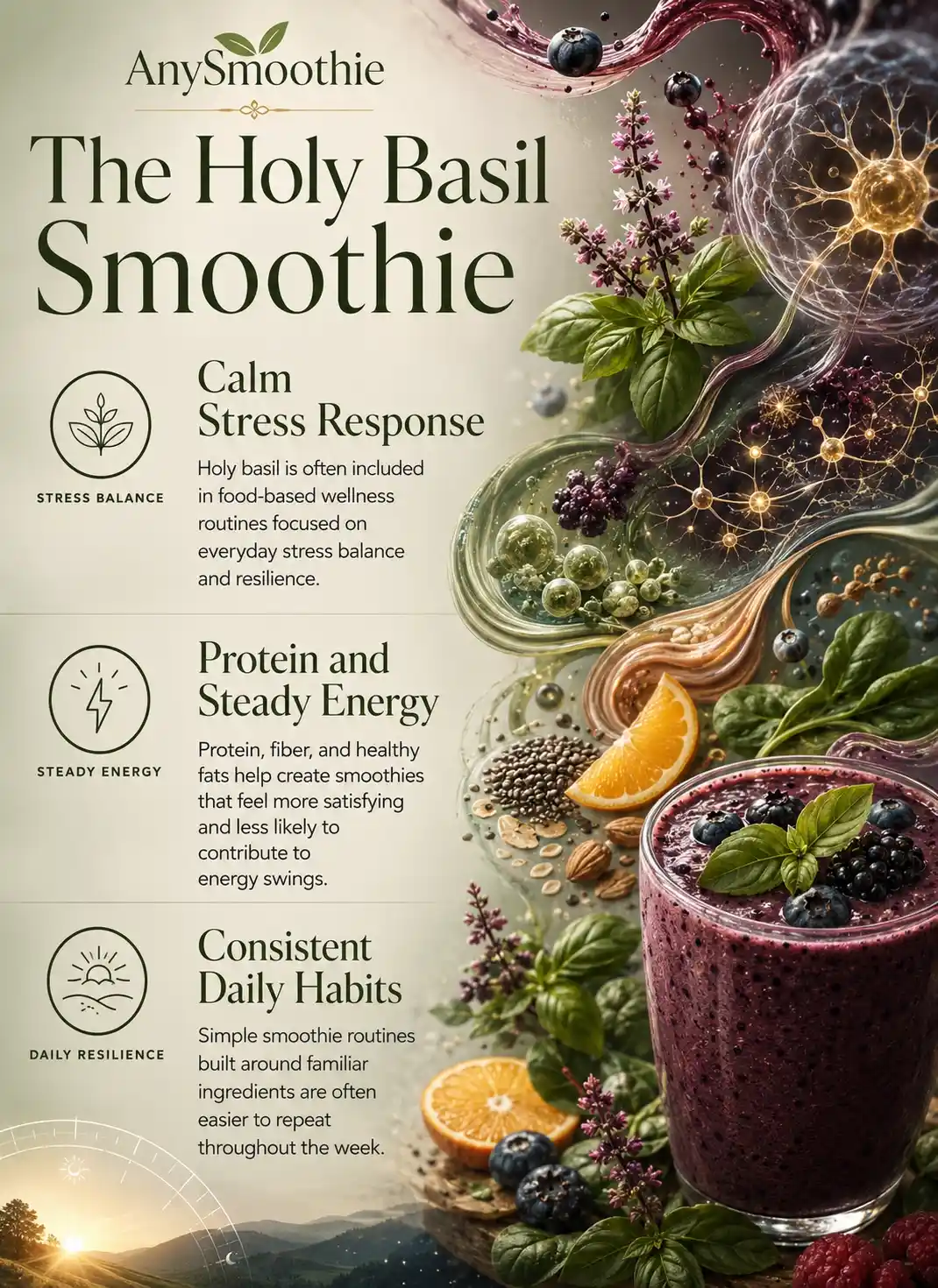
Holy basil smoothies can be a simple way to pair a functional herb with steadying ingredients. They work best when they support the basics, like protein, fiber, hydration, and enough flavor to keep you consistent.
That makes them a habit, not a quick fix. Start with one recipe, then adjust the sweetness, texture, and herbs until it feels right for your day.
🛡️ Safety Notes & Dietary Interactions
- Adaptogens Support, Not Override: Holy basil is commonly used within stress-support routines, but it works best alongside consistent sleep, balanced nutrition, hydration, and realistic recovery habits.
- Protein Helps Create Stability: Including protein, fiber, and healthy fats may support steadier meal satisfaction and energy patterns compared with fruit-heavy smoothies that digest more rapidly.
- Flavor Balance Improves Consistency: Holy basil has a naturally herbal, slightly peppery profile. Pairing it with berries, cucumber, citrus, or mild fruits often improves long-term enjoyment and routine adherence.
- Keep Sweetness Moderate: Large amounts of fruit juice, sweetened yogurt, or added sugars can quickly dominate the smoothie. Simpler recipes often provide a more balanced nutritional structure.
FAQ
What is holy basil and why is it associated with HPA-axis balance?
Holy basil, also known as tulsi, is an herb traditionally used in wellness practices and commonly included in modern adaptogen blends. The article discusses it because researchers continue exploring its relationship with stress-response pathways and antioxidant activity. It is presented as a supportive ingredient that may complement healthy lifestyle habits rather than acting as a direct solution for stress.
What does the HPA axis actually do in the body?
The HPA axis refers to communication between the hypothalamus, pituitary gland, and adrenal glands. This network helps coordinate the body’s response to physical and psychological stressors. According to the article, the system is designed to help people adapt to challenges, but ongoing stress, poor sleep, and recovery deficits may contribute to a feeling of imbalance over time.
Why do these smoothies emphasize protein, fiber, and healthy fats?
The article repeatedly highlights nutritional stability. Protein contributes satiety, fiber slows digestion, and healthy fats help create a more sustained meal experience. Together, these nutrients help transform a smoothie into a more balanced option that supports steady energy patterns rather than creating a rapid rise and fall in hunger or energy.
Which ingredients pair best with holy basil in a smoothie?
Holy basil blends well with spinach, cucumber, berries, blueberries, avocado, chia seeds, flaxseed, hemp hearts, Greek yogurt, kefir, and unsweetened protein powders. These ingredients soften its herbal flavor while contributing protein, fiber, hydration, and healthy fats. The article emphasizes that these supporting ingredients often do more of the nutritional heavy lifting than the herb itself.
What is the biggest takeaway from the article?
The central message is that consistency matters more than complexity. Holy basil smoothies work best when they fit into a broader routine that includes adequate sleep, hydration, balanced meals, and stress-management habits. A simple smoothie that you enjoy regularly is likely to be more useful than an elaborate formula that is difficult to maintain over time.

Medical Disclaimer: AnySmoothie content is for educational purposes only and is not a substitute for professional medical advice. Consult a healthcare provider for personalized guidance. See our full Disclaimer & Terms of Use. AI Transparency: AnySmoothie may use AI to support content development. All content undergoes human editorial review for accuracy, clarity, and editorial quality. See our full AI Transparency.