
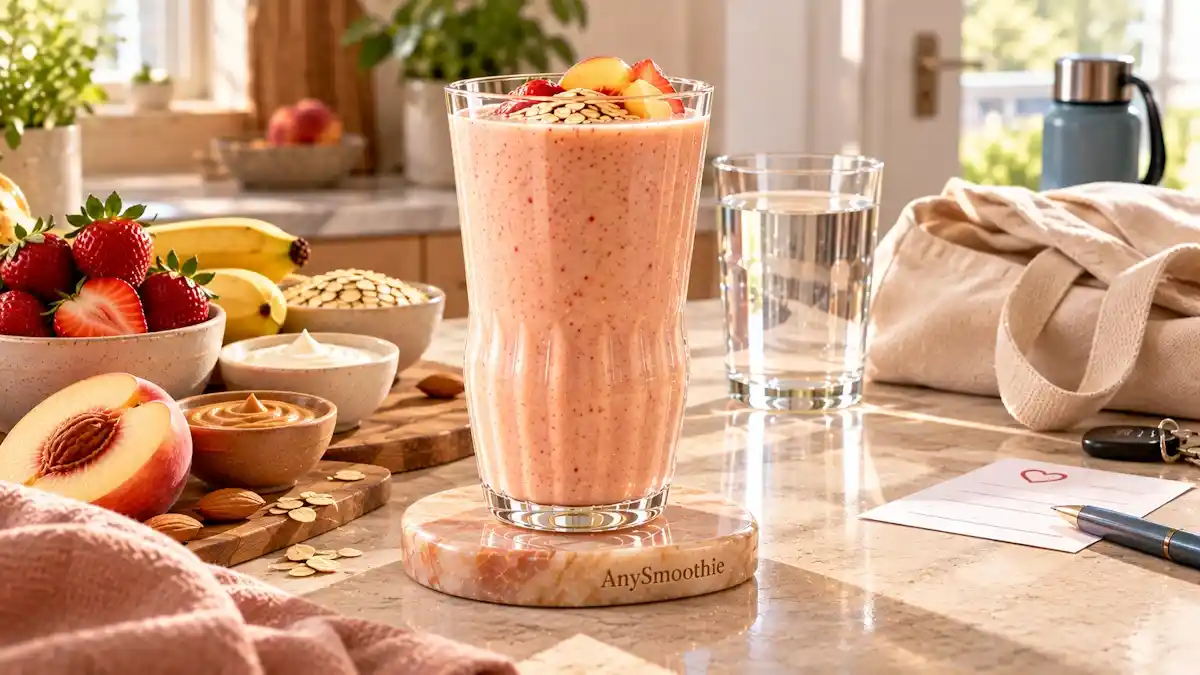
A smoothie can fit into a pre-donation meal, but it doesn’t guarantee eligibility or replace your donor center’s instructions. If you’re considering smoothies before blood donation, add ingredients that make the drink more substantial than fruit and water alone.
Yogurt, oats, or a modest spoonful of nut butter can add protein or fiber while keeping preparation simple. Start with a balanced meal and water, then decide where a smoothie fits into your usual eating routine and the center’s guidance.
Can a smoothie work before blood donation?
Smoothies are convenient when you’re short on time or prefer something easy to drink. However, a drink alone may not provide the balanced meal you need before donating. Eat beforehand as your center advises, and drink water even if your smoothie contains plenty of liquid.
Build a smoothie that is more than fruit
Combine fruit with plain yogurt, oats, or nut butter rather than relying on juice alone. Carbohydrates supply glucose for normal energy use, while dietary protein supplies amino acids for routine tissue maintenance. Oats also contribute fiber.
Citrus and berries contribute vitamin C. According to the NIH Office of Dietary Supplements, vitamin C supports plant-iron absorption. It helps keep nonheme iron in a form the body can absorb. That supports normal nutrient absorption, not an immediate change in donation eligibility.
Keep iron and screening expectations realistic
Spinach contributes plant-based iron, but a small handful doesn’t make a smoothie an iron treatment. Your body needs time to absorb nutrients and use iron in red blood cell production.
A last-minute recipe won’t quickly raise iron stores or guarantee a qualifying hemoglobin result. If you’ve previously been deferred for low hemoglobin, follow the advice you received rather than trying to correct it with a single drink. For a separate discussion of smoothie nutrition when managing anemia, see smoothies for people managing anemia. This is a broader nutrition topic, not a substitute for clinical advice or donor screening.
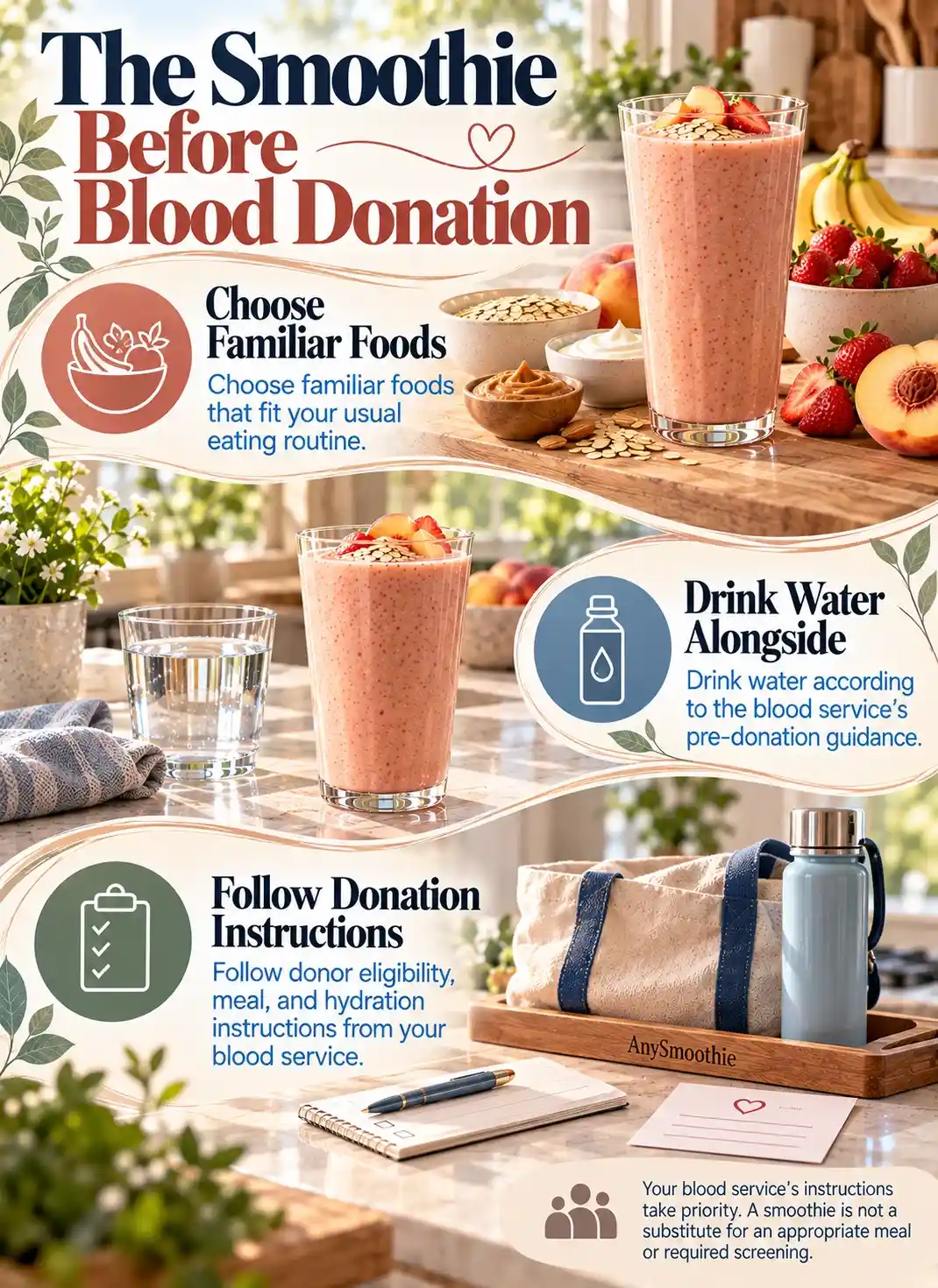
3 Smoothies Before Blood Donation
Each recipe makes one serving. These combinations offer different ingredients and textures.
The nutrition estimates below are approximate. They assume water in the berry-citrus recipe, 1% low-fat dairy milk and peanut butter in the banana-oat recipe, and plain low-fat dairy yogurt in the mango recipe. Different milk alternatives and brands will change the values.
Berry-citrus and spinach smoothie
Ingredients
- 1/2 cup berries
- One small peeled orange
- A small handful of spinach
- 1/2 cup water or preferred milk
Steps
Remove any citrus seeds first. Blend the berries, orange, spinach, and water or preferred milk until smooth.
The fruit supplies vitamin C, while spinach contributes some nonheme iron. Pair it with toast and an egg if that suits your regular meal. For a milder flavor, start with less spinach.
Estimated Nutrition per Serving
- Calories: ~85 kcal
- Protein: ~2 g
- Carbohydrates: ~20 g
- Fat: ~0.5 g
- Fiber: ~5 g
- Sugars: ~14 g
For a brighter morning flavor, use a juicy, sweet orange and add the spinach a little at a time until the citrus and berry notes remain balanced.
Oat, banana, and nut butter smoothie
Ingredients
- One small banana
- 2 tablespoons oats
- 1 tablespoon peanut or almond butter
- 3/4 cup low-fat milk or a milk alternative
Steps
Combine the banana, oats, nut butter, and milk or milk alternative. Blend until smooth.
Oats provide carbohydrates and fiber; nut butter adds some protein and fat. It’s a more filling option, but it isn’t a complete meal for every donor. Keep the nut butter portion modest.
Estimated Nutrition per Serving
- Calories: ~300 kcal
- Protein: ~12 g
- Carbohydrates: ~42 g
- Fat: ~11 g
- Fiber: ~5 g
- Sugars: ~23 g
For a naturally sweeter smoothie, use a ripe banana with brown speckles and blend the oats with the milk first for a smoother, less grainy texture.
Mango-yogurt smoothie with oats
Ingredients
- 3/4 cup mango
- 1/2 cup plain low-fat yogurt
- 2 tablespoons oats
- Water, as needed
Steps
Blend the mango, yogurt, and oats until smooth. Add water a tablespoon at a time if it’s too thick.
Yogurt contributes protein, while mango and oats supply carbohydrates. Frozen mango works without extra ice. Serve alongside whole-grain toast or your usual breakfast. No recipe is the best choice for everyone.
Estimated Nutrition per Serving
- Calories: ~190 kcal
- Protein: ~8 g
- Carbohydrates: ~35 g
- Fat: ~3 g
- Fiber: ~3 g
- Sugars: ~26 g
The table below summarizes each smoothie’s main ingredients, nutrient focus, suggested pairings, and a simple preparation tip.
| Smoothie | Key ingredients | Nutrient focus | Best paired with | Prep note |
|---|---|---|---|---|
| Berry-citrus and spinach | Berries, orange, spinach | Vitamin C, plant-based iron | Egg and toast | Remove citrus seeds |
| Oat, banana, and nut butter | Banana, oats, nut butter, milk | Carbohydrates, fiber, some protein | Regular meal or snack | Blend oats thoroughly |
| Mango-yogurt with oats | Mango, yogurt, oats | Protein and carbohydrates | Whole-grain toast | Add water gradually |
Choose according to your preferences and what else you’re eating. A useful practical step is to select a recipe you’ve already tolerated and prepare the ingredients before appointment day, rather than testing an unfamiliar combination at the last minute.
How to time your smoothie and prepare for donation
Plan your food and water around the appointment, rather than treating the smoothie as the whole preparation. Follow your blood center’s current instructions if they differ from general food suggestions. For another perspective on planning food and drinks before a scheduled appointment, see smoothies before a long medical appointment.
Eat beforehand and keep water in your plan
Eat before you arrive instead of donating on an empty stomach. Have the smoothie with your meal or snack, allowing enough time to eat comfortably. Avoid rushing through a large drink immediately before your appointment.
Also, keep water in your plan. The U.S. Department of Health and Human Services recommends drinking at least 16 ounces of water before donation. A smoothie contains fluid, but it shouldn’t replace the water your donation center recommends.
Donor staff assess eligibility, including a hemoglobin check. The American Red Cross states that final eligibility is determined at donation. Food choices cannot override that assessment.
Check ingredients and follow the donation center’s advice
Choose ingredients you tolerate well, rather than experimenting on donation day. Peanut or almond butter isn’t appropriate for someone with the corresponding allergy. For dairy-free recipes, use a familiar substitute; plant-based milks vary in protein content.
Dairy doesn’t make a smoothie automatically unsuitable before donation. However, calcium can affect iron absorption within a meal, so don’t treat a yogurt smoothie as a targeted iron strategy.
Keep portions comfortable, and avoid turning the drink into a rich dessert with heavy cream or large amounts of nut butter. If you have dietary restrictions, diabetes, or concerns about prior low hemoglobin, ask donation staff or your clinician for individual guidance.
Pre-donation preparation is different from recovery afterward. For that separate stage, see smoothies for recovery after blood donation.
Conclusion: Keep Food and Water in Balance
A smoothie can be a convenient part of preparation when you pair it with sensible food and water. Fruit, oats, and a suitable protein source offer more substance than fruit juice alone.
Keep the donor center’s instructions at the center of your plan. No recipe replaces those instructions, quickly corrects low iron, or determines whether you’re eligible to donate.
🛡️ Safety Notes & Dietary Interactions
- Donation eligibility: A smoothie cannot guarantee eligibility or correct a low hemoglobin result before donation. Follow the donor center’s screening requirements and previous medical guidance rather than relying on last-minute nutrition.
- Hydration planning: A smoothie contributes fluid but should not replace the water recommended before donation. The article specifically advises keeping water in the plan and avoiding a large drink consumed hurriedly.
- Iron strategy: Spinach supplies some nonheme iron, while vitamin C from berries and orange can support its absorption. However, one smoothie cannot rapidly replenish iron stores or treat iron deficiency.
- Ingredient tolerance: Peanut butter, almond butter, dairy, oats, and fruit can cause problems for people with allergies or sensitivities. Use familiar ingredients and appropriate substitutions rather than experimenting on donation day.
FAQs
Is a smoothie enough to eat before donating blood?
Not necessarily. The article recommends eating beforehand rather than donating on an empty stomach, with the smoothie fitting alongside a meal or snack when appropriate. The oat-banana-nut-butter version is more substantial, but even that may not provide everything an individual donor needs.
Which smoothie is best if I’m thinking about iron?
The berry-citrus and spinach smoothie specifically combines spinach, which contributes nonheme iron, with berries and orange, which provide vitamin C that supports plant-iron absorption. However, it should not be considered an iron treatment or a way to quickly raise hemoglobin before donation.
Should I drink water if my smoothie already contains liquid?
Yes. The article specifically recommends keeping water in your pre-donation plan because a smoothie should not replace the water advised by the donation center. It cites guidance recommending at least 16 ounces of water before donation, while emphasizing that individual center instructions take priority.
Is a yogurt smoothie a problem before blood donation?
Not automatically. Yogurt can contribute protein and other nutrients, but calcium can affect iron absorption within a meal. Therefore, a yogurt smoothie shouldn’t be treated as a targeted iron strategy. If iron status is a concern, follow the advice provided by your clinician or donor center.
Can a smoothie make me eligible to donate?
No. Food cannot override the donor screening process or guarantee a qualifying hemoglobin result. The article emphasizes that eligibility is determined at donation. If you’ve previously been deferred for low hemoglobin or another reason, follow the specific guidance you were given rather than relying on a particular recipe.

Medical Disclaimer: AnySmoothie content is for educational purposes only and is not a substitute for professional medical advice. Consult a healthcare provider for personalized guidance. See our full Disclaimer & Terms of Use. AI Transparency: AnySmoothie may use AI to support content development. All content undergoes human editorial review for accuracy, clarity, and editorial quality. See our full AI Transparency.