
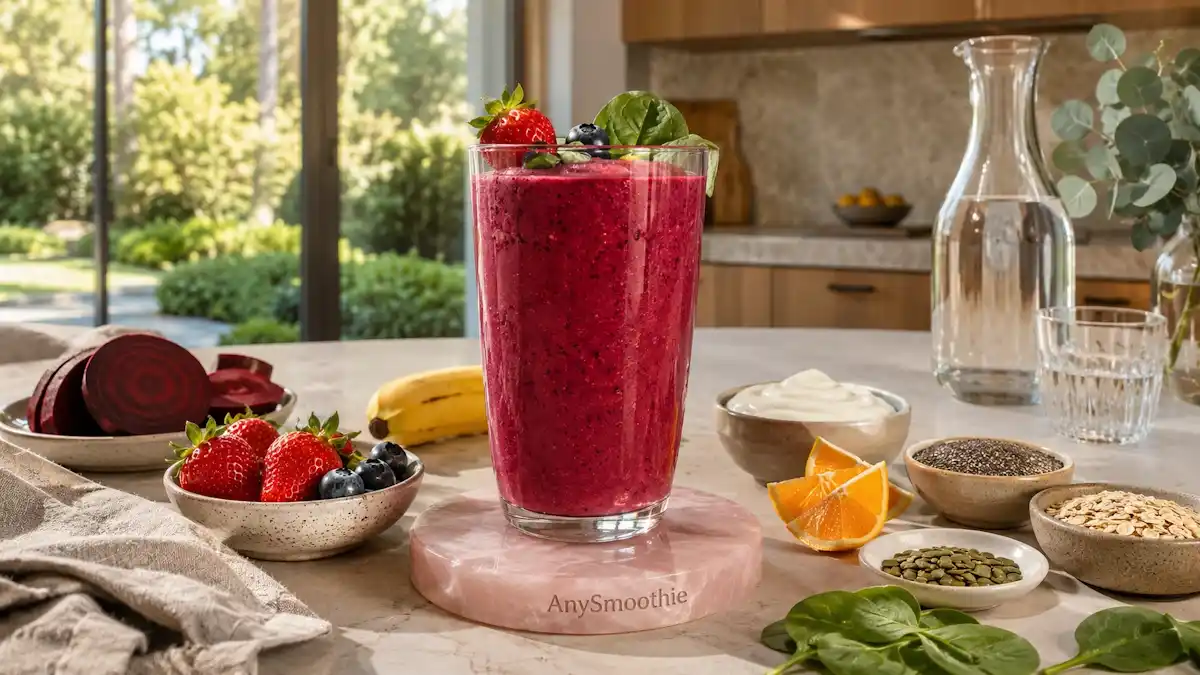
After donating blood, an easy drink can help you replace fluids, settle your stomach, and get useful nutrients into your system. Smoothies for recovery after blood donation can complement the aftercare instructions provided by your donation center, but they don’t replace rest, water, a balanced meal, or medical care.
A well-built smoothie combines water-rich fruit, carbohydrates, protein, vitamin C, and iron-containing ingredients. The three recipes below offer different combinations, so you can choose one that fits your appetite and diet after donating.
What Your Body Needs After Donating Blood
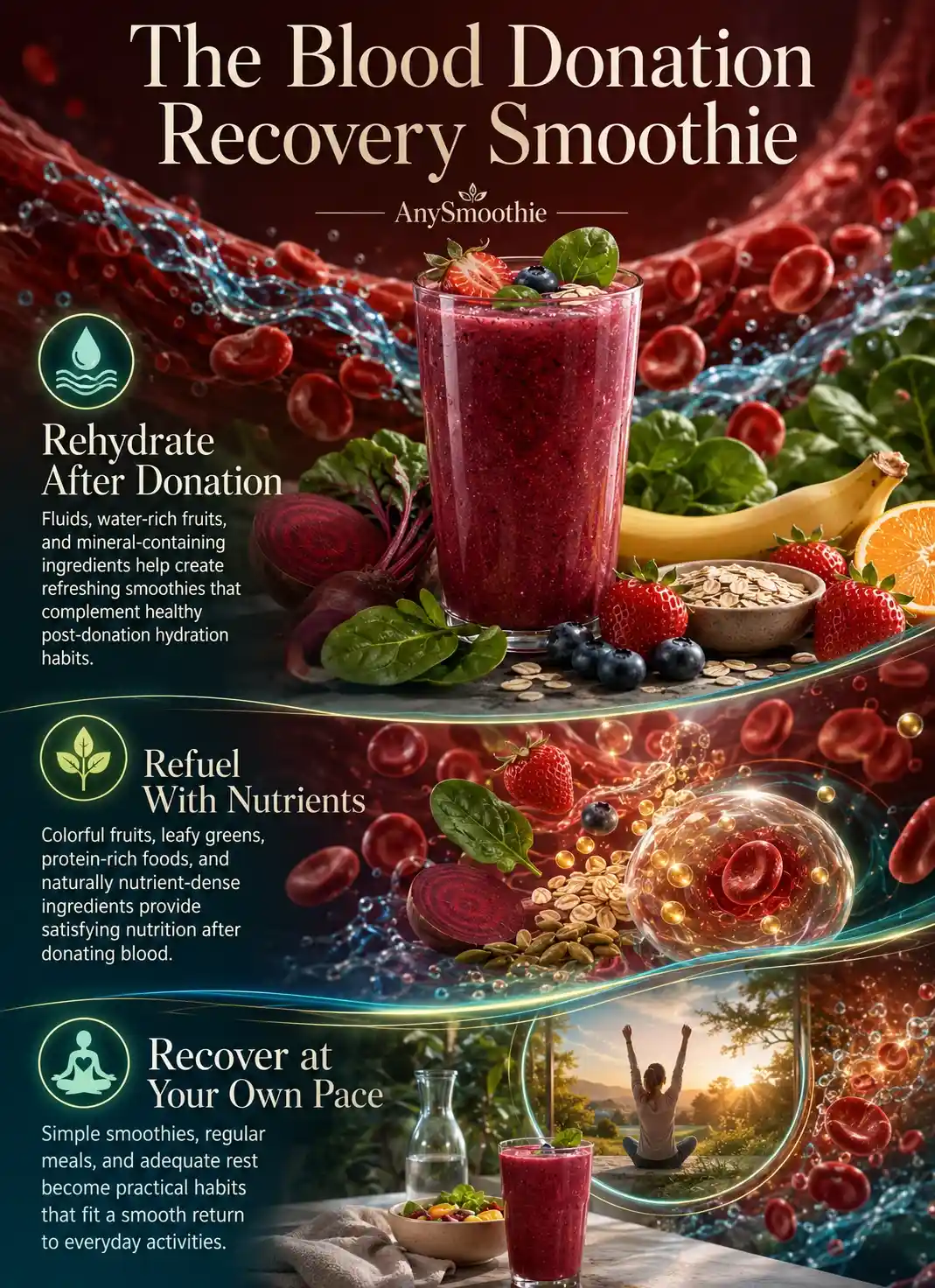
Your first recovery priority is fluid replacement. Blood donation reduces circulating fluid temporarily, so drink water and follow the hydration instructions from your donation center. Some meals and drinks also provide electrolytes, including potassium and sodium, which support normal fluid balance.
Carbohydrates provide a readily available source of energy after donating. Fruit, oats, and milk can supply carbohydrates without requiring a large meal immediately after donation. Protein supports normal tissue maintenance and can make a small smoothie more filling.
Iron matters over time because your body uses it to produce hemoglobin and new red blood cells. A smoothie can include spinach, pumpkin seeds, oats, or other iron-containing foods, but one drink won’t replace donated blood or correct iron deficiency quickly. Recovery needs vary based on your health, diet, donation type, and the center’s guidance.
Blood donation centers may also provide guidance about hydration, meals, and activity after donating. Review the American Red Cross blood donation recovery recommendations for practical after-donation advice.
A smoothie is a convenient snack after donating, not a rapid replacement for lost blood.
Why Pair Iron With Vitamin C?
Plant-based iron, also called non-heme iron, is absorbed more efficiently when you eat it with a vitamin C source. Vitamin C helps make that iron easier for your digestive system to absorb. Combining vitamin C-rich foods with plant-based iron sources is a well-recognized nutrition strategy. Learn more from the NIH Office of Dietary Supplements Iron Fact Sheet about iron and dietary absorption.
For example, blend spinach with strawberries, pumpkin seeds with kiwi, or oats with strawberries. These combinations support nutrient absorption without promising an instant change in iron status.
People with known anemia, frequent donation schedules, heavy menstrual bleeding, or other health concerns should ask a qualified health professional about testing and diet. Avoid taking iron supplements or consuming unusually large amounts of iron-rich foods without appropriate guidance.
The Best Smoothie Building Blocks
Use a simple formula you can adjust:
- Start with 3/4 to 1 cup of liquid, such as water, milk, or unsweetened fortified milk.
- Add one or two servings of fruit, such as a banana, berries, orange, mango, or cherries.
- Include a protein source, such as plain Greek yogurt, soy yogurt, milk, or fortified soy milk.
- Add an optional iron-containing ingredient, such as spinach, oats, or pumpkin seeds.
- Finish with a small amount of healthy fat or fiber, such as seeds or seed butter.
A modest serving may feel better than a large, thick blend soon after donation. Excess added sugar, unfamiliar ingredients, or too much fiber can cause stomach discomfort. If you haven’t eaten much, sip slowly and stop if the drink doesn’t agree with you.
3 Smoothies for Recovery After Blood Donation
These recipes make one serving. Blend each mixture until smooth, adding a little more liquid if needed. For more general smoothie ideas, this Smoothie with greens and fruit offers another flexible starting point.
Berry Spinach Recovery Smoothie
Ingredients
- 1 cup fresh spinach
- 1/2 cup strawberries or blueberries
- 1 small banana
- 1/2 cup plain Greek yogurt or unsweetened soy yogurt
- 1/2 to 3/4 cup water or milk
Blend everything until smooth. Berries provide vitamin C, while spinach contributes plant-based iron. The banana adds carbohydrates and potassium, an Electrolyte involved in normal fluid balance. Yogurt adds protein, which can make the drink more satisfying.
Blending spinach with fruit makes it easier to include leafy greens in a small snack. If you prefer a thinner texture, use water. Milk or fortified soy milk adds more protein and a creamier consistency.
Estimated Nutrition per Serving
Estimated with strawberries, one small banana, plain nonfat Greek yogurt, spinach, and 3/4 cup 2% milk.
- Calories: ~300 kcal
- Protein: ~19 g
- Carbohydrates: ~48 g
- Fat: ~6 g
- Fiber: ~6 g
- Sugars: ~30 g
Spinach blends more completely when it goes in with the liquid before the fruit and yogurt. Giving those two ingredients a short first blend helps avoid leafy pieces while keeping this recovery smoothie smooth without needing extra liquid.
Citrus Oat and Pumpkin Seed Smoothie
Ingredients
- 1/2 cup orange segments or mango
- 1/4 cup quick oats
- 1 tablespoon pumpkin seeds or pumpkin seed butter
- 1/2 cup plain Greek yogurt or fortified soy milk
- 1/2 cup water
- Ice, if desired
Blend the fruit, oats, pumpkin seeds, yogurt or soy milk, and water until smooth. Orange and mango supply vitamin C and carbohydrates, while oats and pumpkin seeds add fiber and plant-based nutrients, including iron.
Start with a small amount of seeds or seed butter if you’re not used to higher-fiber smoothies. Pumpkin seed butter can create a smoother texture, while whole seeds add a little more texture and require a strong blender.
Estimated Nutrition per Serving
Estimated with orange segments, quick oats, pumpkin seeds, plain nonfat Greek yogurt, water, and without optional ice.
- Calories: ~275 kcal
- Protein: ~18 g
- Carbohydrates: ~38 g
- Fat: ~7 g
- Fiber: ~6 g
- Sugars: ~15 g
Cherry Banana Protein Smoothie
Ingredients
- 3/4 cup frozen cherries
- 1 small banana
- 3/4 cup milk or fortified soy milk
- 1/2 cup plain yogurt, or another simple protein source
- 1 teaspoon unsweetened cocoa powder, optional
Blend until creamy. This combination has a mild, filling flavor when you want something familiar after donating. Milk or fortified soy milk can provide protein, while fruit supplies carbohydrates and fluid.
Choose yogurt and milk with little or no added sugar. Skip cocoa, dairy, or any other ingredient that doesn’t agree with you. You can also use fresh cherries when they’re available, although frozen fruit gives the smoothie a thicker texture.
Estimated Nutrition per Serving
Estimated with frozen cherries, one small banana, 2% milk, plain nonfat Greek yogurt, and without optional cocoa.
- Calories: ~350 kcal
- Protein: ~21 g
- Carbohydrates: ~62 g
- Fat: ~6 g
- Fiber: ~6 g
- Sugars: ~43 g
Frozen cherries and banana can make this noticeably thicker than the fresh-fruit version. If you’re having it after donating and prefer something easier to sip, let the cherries soften briefly before blending rather than automatically increasing the milk and overall serving volume.
Here is a quick look at how each smoothie compares.
| Smoothie | Key ingredients | Main nutrition focus | Best time to drink | Simple swap |
|---|---|---|---|---|
| Berry Spinach | Spinach, berries, banana, yogurt | Vitamin C, plant iron, protein | With a light snack | Soy yogurt |
| Citrus Oat | Orange or mango, oats, pumpkin seeds | Carbohydrates, fiber, vitamin C | When you want more fullness | Fortified soy milk |
| Cherry Banana | Cherries, banana, milk, yogurt | Fluid, carbohydrates, protein | When you prefer a mild flavor | Unsweetened soy milk |
Each recipe supports a different mix of nutrients, but none has to be perfect. Choose the flavor and texture you can tolerate.
How to Use a Smoothie Safely After Blood Donation
Drink fluids before and after donation, then sit and rest at the donation center for the time they recommend. Have your smoothie after donating or alongside a regular snack or meal if your stomach feels ready. A smoothie can be useful when solid food seems unappealing, but food still matters because a balanced meal provides a wider range of nutrients.
Avoid alcohol soon after donating, since it can affect hydration and may make lightheadedness more likely. Follow the center’s instructions about bandage care, lifting, exercise, and when to contact staff.
If you feel dizzy, remain seated or lie down and tell donation staff. Contact the donation center or seek urgent medical help for fainting, unusual weakness, ongoing bleeding, chest pain, trouble breathing, or symptoms that worsen. A smoothie shouldn’t be used to manage serious or persistent symptoms.
Choose Ingredients That Match Your Diet
For a dairy-free or vegan blend, use fortified soy milk or soy yogurt. Fortified soy milk is a useful plant-based protein option. Sunflower seed butter can replace peanut butter in nut-free recipes, while whole fruit works better than juice when you want more fiber and less concentrated sugar.
Check labels for added sugar and allergens, especially in protein powders, plant milks, yogurts, and seed butters. If you manage kidney disease, Blood sugar, or an iron-related condition, or take prescribed medicines, confirm suitable ingredients with a qualified clinician.
When a Smoothie Is Not Enough
A smoothie is only one part of recovery, especially after a whole blood donation. Adequate fluids, a balanced meal, and rest give your body the basic resources it needs while normal blood production continues.
Persistent fatigue, repeated dizziness, or concerns about iron status deserve a conversation with a health professional. Testing can provide better direction than taking supplements or eating large amounts of iron-rich ingredients on your own.
A Simple Recovery Routine That Works
Leafy greens with berries, citrus with oats and pumpkin seeds, and cherries with banana and a protein base all offer practical combinations after blood donation. The best smoothie is the one you enjoy, tolerate, and can prepare without stress.
Donation center guidance, fluids, food, and rest remain the foundation of recovery. Prepare your ingredients ahead of time, then choose a modest serving after donating and sip it at a comfortable pace.

Medical Disclaimer: AnySmoothie content is for educational purposes only and is not a substitute for professional medical advice. Consult a healthcare provider for personalized guidance. See our full Disclaimer & Terms of Use. AI Transparency: AnySmoothie may use AI to support content development. All content undergoes human editorial review for accuracy, clarity, and editorial quality. See our full AI Transparency.