
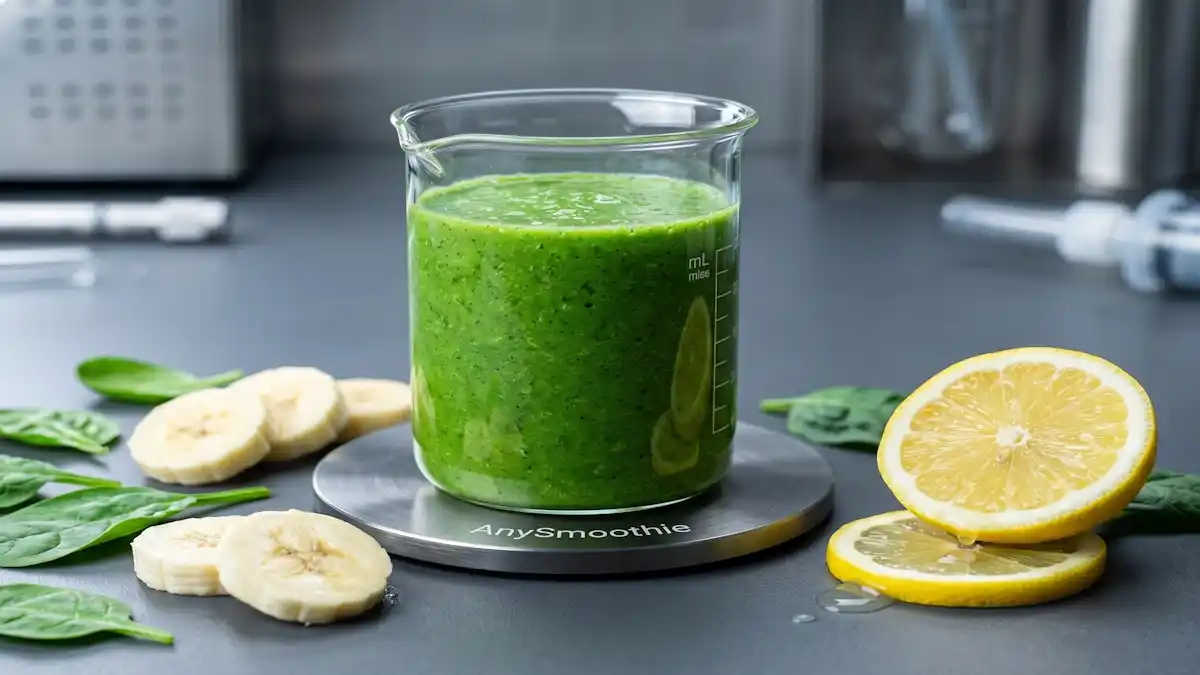
Protein smoothies make sense when you want to keep nitrogen balance moving the right way. Nitrogen balance is the basic question of whether your body is holding onto enough protein building material to repair tissue and maintain lean mass. Smoothies help because they are quick, easy to digest, and easy to adjust to the moment.
The best ones do more than deliver protein. They also bring carbs, fluid, and a few targeted plant compounds that support recovery. That is why the nitrate-rich spinach and banana smoothie is such a useful starting point. It fits real life and gives you a clean base to build on.
What nitrogen balance means and why it matters for recovery
Positive nitrogen balance means protein intake is outpacing loss. Neutral balance means you are holding steady. Negative balance means the body is giving up more nitrogen than it takes in, which can happen when meals are light, training is hard, or appetite drops.
That matters because tissue repair depends on amino acids. After training, your body wants raw material for muscle protein turnover. During busy days, a smoothie can deliver that material without a heavy meal sitting in your stomach.
Why protein intake changes the body’s nitrogen status
Dietary protein supplies amino acids, and amino acids carry nitrogen. When you eat enough protein, you help shift the body toward a more favorable state for repair and lean tissue retention. Total daily intake matters most, but timing and digestibility matter too.
When a smoothie is better than a heavy meal
A smoothie works well after training, early in the morning, on travel days, or any time your appetite is low. It is also easier to drink when you need something fast that still counts as a real feeding.
How to build a protein smoothie that supports muscle protein retention
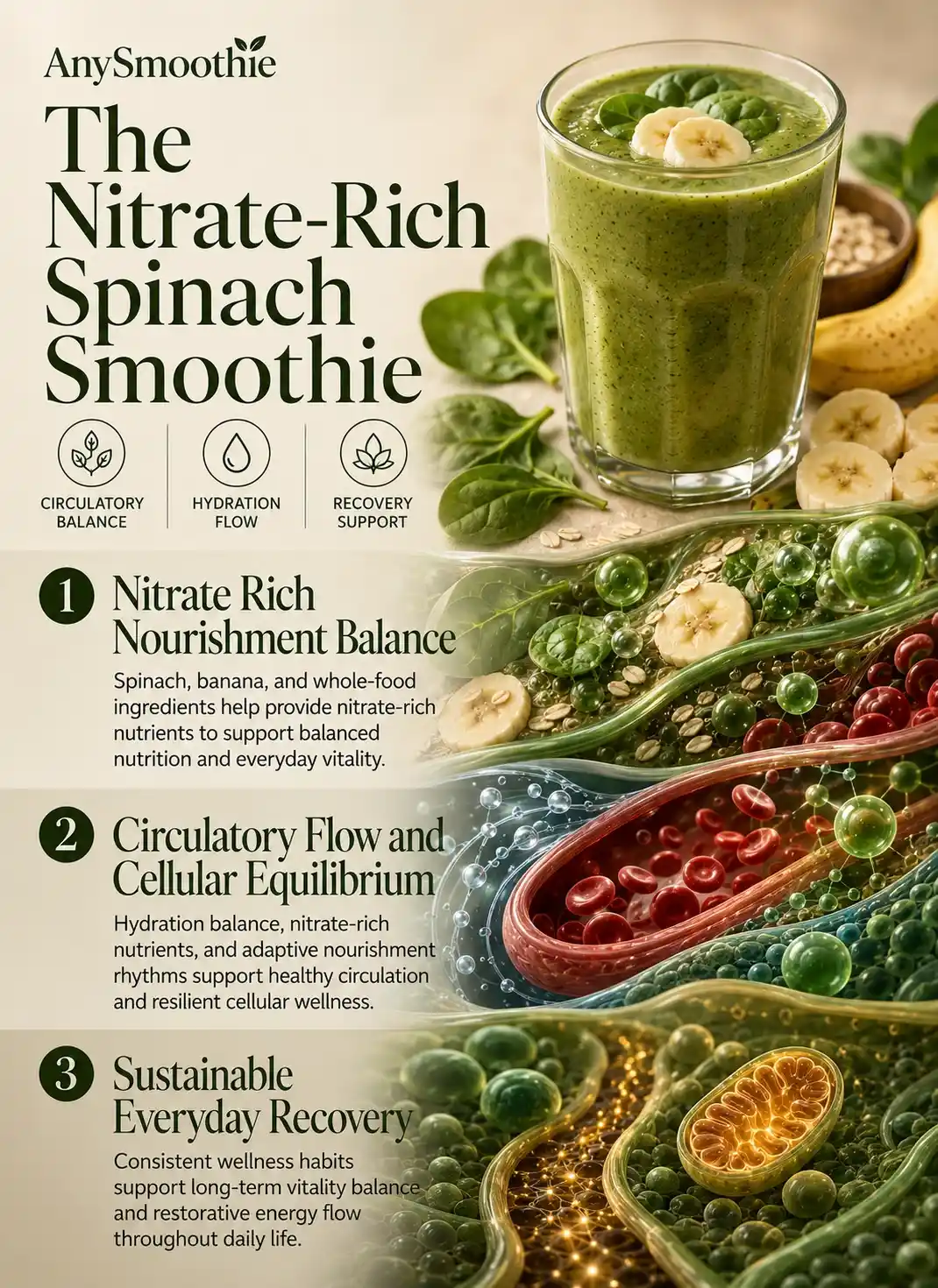
A recovery smoothie should start with a meaningful protein dose, then add carbs, fluid, and a small micronutrient layer. The goal is simple, give muscles amino acids without making the drink hard to tolerate. The nitrate-rich spinach and banana smoothie is a strong template because it covers protein, potassium, and a mild nitrate load in one glass.
Choose a protein source that gives enough leucine and total amino acids
Whey is fast and rich in leucine. Greek yogurt adds thickness and easy-to-digest protein. Soy and pea protein work well for dairy-free blends, and mixed sources often improve the amino acid spread.
Use carbs and fruit to support uptake and training recovery
Banana, berries, oats, and dates add carbs that help refill glycogen after exercise. They also improve flavor, which matters when you are tired and want the smoothie to go down easily.
Add greens and minerals without ruining the texture
A handful of spinach adds folate, magnesium, and nitrates without making the drink harsh. Keep the green layer modest so the texture stays smooth and the taste stays clean.
The nitrate-nitrite-NO pathway and why it matters in a smoothie
This is where spinach and beetroot matter. Dietary nitrate moves through the mouth, where bacteria reduce part of it to nitrite. After that, the body can turn nitrite into nitric oxide, especially when oxygen is lower. Inorganic nitrate is the only substrate here that can generate functional nitric oxide without depending on eNOS coupling efficiency. A clear review of this pathway appears in Nature Reviews Drug Discovery, and it explains why leafy greens and beetroot get so much attention.
How spinach, beetroot, and the mouth work together
The enterosalivary cycle is the key step. You eat nitrate, it moves into saliva, and oral bacteria help with the first reduction. A strong antiseptic mouth rinse right before a nitrate-heavy smoothie can blunt that step.
How nitric oxide support may help blood flow and mitochondrial efficiency
Better nitric oxide bioavailability can support vessel relaxation, oxygen delivery, and metabolic efficiency. That matters when working muscle needs fuel with less drag and less wasted effort.
Where L-citrulline and cocoa flavanols fit in
L-citrulline supports the arginine pool that feeds eNOS. Cocoa flavanols support eNOS signaling through a different route. Both have value, but nitrate-rich ingredients stay in the lead for this pathway.
Mitochondrial efficiency: reducing the oxygen cost of ATP synthesis
Nitric oxide also matters inside the working muscle. When blood flow and oxygen handling improve, ATP production can cost less oxygen per unit of work. That can support mitochondrial priming before training and smoother recovery after it.
Sarcomere calcium kinetics: how nitric oxide optimizes cross-bridge cycling
Nitric oxide can help smooth calcium handling and cross-bridge cycling. In plain terms, the muscle can contract and relax with less wasted effort.
3 nitrate-rich smoothie recipes that make the science easy to use
These three blends use the same framework, but each one pushes a different lever.
| Pathway/Substrate | Physiological Mechanism | Oxygen Cost Disruption | Best Smoothie Pairing | Target Vessel Segment |
|---|---|---|---|---|
| Inorganic nitrate from spinach or beetroot | Reduced to nitrite by the oral microbiome, then converted to NO under lower oxygen; can generate functional NO without eNOS coupling | Strong sparing effect | Spinach, beet, banana, citrus | Small resistance vessels and microvasculature |
| L-citrulline | Raises arginine availability for the eNOS recycling loop | Transport support, not direct NO generation | Citrus, berry, yogurt or plant protein | Endothelium, medium vessels |
| Cocoa flavanols | Support eNOS phosphorylation through calcium-independent signaling | Mild signaling support | Cocoa, soy or pea protein, banana | Endothelium and arterial lining |
The table shows the main tradeoff. Inorganic nitrate is the most direct way to add a nitric-oxide-supportive substrate through food.
The Nitrate-Rich Spinach and Banana Smoothie for Daily Recovery
Ingredients
- 2 cups baby spinach
- 1 medium ripe banana
- ¾ cup plain Greek yogurt
- 1 tablespoon fresh orange juice
- ½ cup cold water
- ½ cup ice, optional
Pour the water and Greek yogurt into the blender first. Add the spinach, banana, orange juice, and ice if using. Blend until completely smooth.
Spinach naturally contains nitrate, although concentrations vary considerably with growing and storage conditions. Dietary nitrate can participate in the nitrate–nitrite–nitric oxide pathway, while Greek yogurt provides high-quality protein that contributes to normal protein turnover and muscle maintenance. This smoothie can complement recovery nutrition, but it should not be expected to directly improve nitrogen balance or accelerate recovery.
Estimated Nutrition per Serving
- Calories: ~285 kcal
- Protein: ~21 g
- Carbohydrates: ~45 g
- Fat: ~4 g
- Fiber: ~6 g
- Sugars: ~28 g
If I were making this regularly, I’d blend the spinach with the water first, then add the remaining ingredients. Two cups of greens disappear much more smoothly that way without requiring extra liquid.
A Beet, Berry, and Citrus Blend for a Stronger Nitrate Boost
Ingredients
- ½ cup cooked beet, chilled
- ¾ cup frozen mixed berries
- ½ medium orange, peeled
- ¾ cup cold water
- ½ cup ice
Pour the water into the blender first. Add the beet, frozen berries, orange, and ice. Blend on high until smooth.
Beets are a dietary source of nitrate, while berries and orange contribute vitamin C, fiber, and diverse polyphenols. Actual nitrate content varies substantially between beets, so a homemade smoothie cannot provide a standardized nitrate dose or guarantee exercise-performance effects.
Estimated Nutrition per Serving
- Calories: ~150 kcal
- Protein: ~3 g
- Carbohydrates: ~36 g
- Fat: ~1 g
- Fiber: ~8 g
- Sugars: ~23 g
A Cocoa and Soy or Pea Protein Smoothie for a Different Profile
Ingredients
- 1 tablespoon unsweetened cocoa powder
- 1 scoop pea protein powder
- 1 medium banana
- 1 cup unsweetened soy milk
- ½ cup ice
Pour the soy milk into the blender first. Add the pea protein, banana, cocoa, and ice. Blend until creamy and completely smooth.
Pea protein and soy milk provide protein and essential amino acids, while cocoa contributes flavanols and magnesium. Banana supplies carbohydrates and potassium. This combination provides a substantial protein target alongside carbohydrates, making it suitable as part of post-exercise nutrition.
Estimated Nutrition per Serving
- Calories: ~365 kcal
- Protein: ~34 g
- Carbohydrates: ~43 g
- Fat: ~8 g
- Fiber: ~8 g
- Sugars: ~18 g
Managing the post-ingestion nitrate peak
Use the smoothie after training when the body is ready for amino acids and carbs. If you want the nitrate effect before a session, leave enough time for the oral and vascular steps to work. Smaller servings often digest better before exercise, especially when you keep fat and fiber low.
Mitochondrial priming: fueling myocyte workloads via enhanced blood velocity
Post-workout is the easiest window. Muscles are primed, appetite is often higher, and a smoothie is simple to take down. Before training, keep the blend light so it sits well and does not weigh you down.
Conclusion
A well-built smoothie can do more than fill a gap between meals. It can support nitrogen balance, make recovery easier, and add nitrate-rich plants that help the body handle blood flow and oxygen use.
Keep the formula simple, repeatable, and tied to your routine. The best smoothie is the one you can drink often, and the nitrate-rich spinach and banana smoothie is a strong place to start.
🛡️ Safety Notes & Dietary Interactions
Nitrogen Turnover and Renal Clearance: Introducing a high-density influx of dietary amino acids shifts the body into a positive nitrogen balance to support tissue repair. Because the clearance of urea—the natural byproduct of protein metabolism—relies on healthy kidney function, maintaining a consistent daily hydration baseline ensures your body’s filtration pathways operate smoothly and without unnecessary friction.
Enterosalivary Nitrate Reduction: The conversion of inorganic nitrate from spinach or beetroot into functional nitric oxide depends entirely on the symbiotic bacteria residing on the surface of your tongue. To protect this natural physiological pathway and prevent blunting the generation of nitric oxide, avoid using strong antibacterial mouthwashes immediately before or after consuming your nitrate-rich formulations.
Hemodynamic Compliance and Vessel Relaxation: High-nitrate green blends naturally support vascular compliance and smooth muscle relaxation, which blood-sugar and cardiovascular monitoring tools track as flat, stable parameters. If you utilize targeted lifestyle tracking devices or manage specific circulatory metrics, keeping your smoothie intake timed consistently helps keep your daily data perfectly aligned.
GI Transit Velocity: Stacking raw green fibers from spinach alongside rapid-absorbing proteins like whey creates a diverse nutrient matrix in the stomach. If your digestive tract has a highly sensitive baseline, blending the greens thoroughly and consuming the formulation at a calm, steady pace supports comfortable gastric emptying and prevents localized fullness.
FAQ
What exactly is nitrogen balance, and why is it the ultimate gauge for muscle recovery?
Think of your body’s protein stores as a brick wall that is constantly undergoing structural maintenance. Nitrogen is an element found exclusively in amino acids, making it the perfect chemical marker for protein tracking. A positive nitrogen balance means your intake of amino acids is outpacing what your body loses through daily strain and training—meaning you have excess bricks available to rebuild and reinforce the wall. If your intake drops or training stress becomes too high, you slide into a negative balance, forcing your body to pull bricks away from existing muscle tissue just to keep core systems running.
How does the nitrate in a spinach and banana smoothie turn into a performance asset?
When you drink a nitrate-rich spinach smoothie, you are leveraging an elegant back-up system called the nitrate-nitrite-nitric oxide pathway. Once swallowed, a portion of the nitrate is absorbed, concentrated in your saliva, and reduced by oral bacteria into nitrite. When this nitrite reaches your working muscles—especially during intense periods where oxygen levels are temporarily lower—your body converts it directly into nitric oxide. This natural signaling molecule tells your blood vessels to relax, widening the highway so oxygen and amino acids can reach your tired muscle fibers with less resistance.
Why is inorganic nitrate from food superior to relying solely on standard amino acids like L-arginine?
While amino acids like L-arginine support nitric oxide production through a pathway known as eNOS, that specific system requires a high amount of oxygen and is easily bottlenecked by cellular stress or enzyme uncoupling. Inorganic nitrate from whole foods like spinach or beetroot completely bypasses this metabolic bottleneck. It works via an independent, oxygen-independent pathway, meaning it can generate functional nitric oxide precisely when your tissues are under heavy load and need it most, ensuring your vascular support lines stay open without relying on complex enzyme recycling.
How does a nitrate-dense smoothie actually lower the “oxygen cost” of hard training?
Inside your muscle cells, your mitochondria are responsible for turning oxygen into physical energy (ATP). When nitric oxide levels are optimized via dietary nitrates, it directly interacts with the mitochondrial respiratory chain, making the internal cellular machinery much more efficient. In plain terms, it patches up microscopic energy leaks, allowing your mitochondria to produce the exact same amount of ATP while consuming significantly less oxygen. For a biohacker, this means your muscles can handle a higher physical workload with less drag and reduced metabolic fatigue.
When is the absolute best time to time a recovery smoothie to lock in a positive nitrogen status?
To maximize overall metabolic efficiency, the ideal window is within 45 to 60 minutes following a intense physical session, or as a dedicated high-protein morning baseline. Post-workout, your muscles are highly sensitized for GLUT-4 translocation, meaning they are primed to pull the carbohydrates from the banana straight into your glycogen stores while utilizing the fast-absorbing amino acids to jumpstart protein turnover. This specific timing ensures that the incoming nutrients are partitioned directly toward tissue repair rather than being stored, locking in a favorable recovery environment for the rest of the day.

Medical Disclaimer: AnySmoothie content is for educational purposes only and is not a substitute for professional medical advice. Consult a healthcare provider for personalized guidance. See our full Disclaimer & Terms of Use. AI Transparency: AnySmoothie may use AI to support content development. All content undergoes human editorial review for accuracy, clarity, and editorial quality. See our full AI Transparency.