

Jet lag can scramble more than your sleep. Changing time zones often shifts meal times, appetite, hydration, and energy when your body still follows the clock at home. Travel reset smoothies for circadian rhythm support can make local-time meals easier, but no drink can instantly reset your internal clock.
Light exposure is usually the strongest cue for adjusting your internal clock. Sleep, physical activity, hydration, and balanced meals provide additional support. These three smoothies offer practical options for morning, midday, and evening, with adjustments for eastbound and westbound trips.
How Nutrition and Meal Timing Support Circadian Rhythm After Travel
Your circadian rhythm is a roughly 24-hour timing system that helps coordinate sleep, alertness, digestion, and hormone patterns. Light sets much of this schedule, while meal timing, activity, and social routines provide additional signals.
Light remains the strongest signal for adjusting the body’s internal clock after crossing time zones, while meal timing and daily routines provide additional support. Learn more about Jet lag and circadian rhythms and practical strategies for adapting to schedule changes.
Eating according to the destination’s daytime can help create a steadier daily pattern. A breakfast after waking, lunch during local midday, and a lighter evening meal give your digestive system predictable cues. The goal is consistency, not a perfect formula.
A balanced smoothie can combine fluids, protein, fiber-rich carbohydrates, and healthy fats. Protein from yogurt, kefir, tofu, or plain protein powder can make a drink more filling. Berries, kiwi, oats, and leafy greens add fiber and carbohydrates that support normal digestion and a more even energy pattern. Seeds and nut butter provide fats that slow the meal’s pace.
However, travel affects people differently. Large amounts of caffeine, alcohol, added sugar, or heavy meals may make adjustment harder for some travelers. Keep portions reasonable and pay attention to comfort, especially after a long flight.
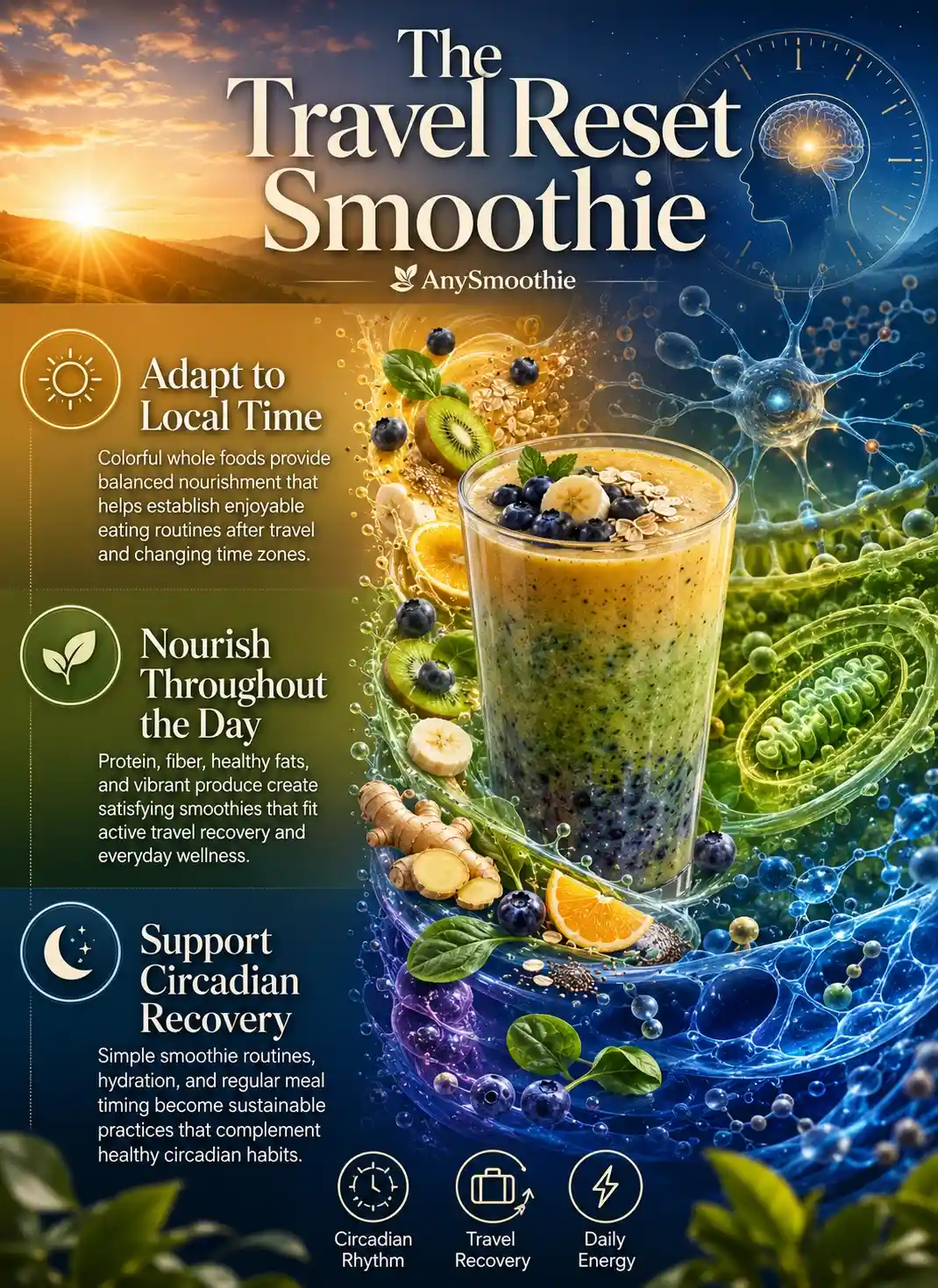
Build a Travel Reset Smoothie With Four Helpful Components
Start with a hydrating base such as water, dairy milk, or unsweetened plant milk. Use enough liquid for a portable blender to process the ingredients, but avoid turning the drink into a sugary beverage.
Next, add a protein source. Plain Greek yogurt, kefir, silken tofu, or an unflavored protein powder can help the smoothie function as part of a meal. Then choose fiber-rich produce, such as frozen berries, kiwi, oats, spinach, or kale.
Finally, add an optional fat source. One tablespoon of chia seeds, ground flaxseed, or nut butter can improve texture and add staying power. Check labels for added sugar, especially in flavored yogurt, protein powders, juice, and coconut water. Frozen fruit, single-serve yogurt, and shelf-stable milk are also easier to manage during travel.
3 Travel Reset Smoothies for Circadian Rhythm Support
These recipes use common ingredients and fit a hotel breakfast, airport routine, or portable blender. Wash fresh produce before blending, and keep perishable ingredients chilled.
| Smoothie | Best timing | Key ingredients | Main support goal | Travel-friendly adjustment |
|---|---|---|---|---|
| Morning Berry-Oat | After local waking | Berries, oats, yogurt, chia | Breakfast structure and steady fullness | Reduce oats for a thinner drink |
| Midday Tropical Protein | Local daytime | Mango, spinach, yogurt, lime | Fluids and balanced daytime nutrition | Use water instead of coconut water |
| Evening Kiwi-Cherry | Several hours before bed | Kiwi, tart cherries, yogurt, flax | Light evening meal routine | Use soy milk for a dairy-free option |
Use Smoothies With Light, Sleep, and Smart Travel Timing
Smoothies work best inside a routine rather than as a stand-alone fix. After arrival, match meals to the destination’s local time, even if your appetite still follows your departure city.
Seek bright outdoor light during the local morning, especially after waking. Reduce bright indoor and screen light near bedtime, and keep water available throughout the day. Gentle walking can add another consistent daytime cue. If you nap, keep it short when possible so nighttime sleep remains easier.
Morning daylight is one of the most effective ways to help reinforce a new daily schedule after travel. Explore the Healthy sleep recommendations for additional evidence-based habits that support consistent sleep routines.
Eastbound travel usually requires an earlier schedule, while westbound travel requires a later one. When practical, shift meals and sleep by about 30 to 60 minutes before departure. After landing, follow local time for meals and bedtime rather than waiting for hunger to fully catch up. If evening screen exposure is also delaying your bedtime after arrival, see our Eye health smoothies for screen time for complementary nutrition ideas.
Choose the Right Smoothie for Your Arrival Schedule
Choose the berry-oat smoothie after waking at the destination. Use the tropical protein blend during local daytime, and select the kiwi-cherry option when a lighter evening meal fits your schedule.
Early flights may call for a smaller portion and less caffeine later in the day. Overnight travelers may prefer plain water and a thin smoothie after landing. In hot climates, increase fluids through the day without relying on sweet drinks. If digestion feels sensitive, reduce seeds, use ripe fruit, and avoid oversized servings.
Food safety matters in a hotel room or airport. Keep yogurt, tofu, and cut fruit chilled, wash produce, and don’t leave a prepared smoothie at room temperature for long.
Common Mistakes That Can Work Against a Travel Reset
A smoothie loaded with juice, sweeteners, or flavored yogurt can deliver more added sugar than expected. Skipping protein may also leave you hungry soon after drinking it. Choose whole fruit, plain dairy or plant-based ingredients, and a portion that matches your meal.
Drinking a large smoothie right before bed can create discomfort. Late caffeine, alcohol, ignored morning sunlight, and long naps can also work against a consistent local schedule. Most importantly, treat one recipe as convenient nutrition, not a cure for jet lag.
If you have food allergies, diabetes, kidney conditions, are pregnant, or follow medication-related food restrictions, consult a qualified health professional before making major diet changes.
Conclusion
The berry-oat blend fits local mornings, the tropical Protein smoothie supports daytime eating, and the kiwi-cherry recipe works for a lighter evening meal. Consistent local-time meals, morning light, hydration, movement, and regular sleep provide the foundation. Choose one recipe, prepare its ingredients ahead of time, and follow your destination’s schedule for the next few days. A smoothie can support the transition, but your routine sets the pace.
🛡️ Safety Notes & Dietary Interactions
- Support Your Body Clock Naturally: These smoothies can complement healthy travel habits, but they cannot eliminate jet lag or instantly reset your circadian rhythm. Morning daylight, consistent local meal times, hydration, physical activity, and regular sleep remain the strongest factors supporting circadian adjustment.
- Choose Ingredients That Fit Your Needs: If you have diabetes, kidney disease, digestive disorders, food allergies, pregnancy, or follow a medically prescribed diet, personalize ingredients such as fruit, dairy, soy products, seeds, and oats with guidance from a qualified healthcare professional.
- Practice Safe Food Handling While Traveling: Keep yogurt, tofu, milk, and cut fruit refrigerated whenever possible. Avoid leaving prepared smoothies at room temperature for extended periods, and wash fresh produce before blending to reduce food safety risks.
- Keep Portions Moderate: Match smoothie size to your appetite, activity, and local meal schedule. Balanced smoothies work best as part of regular meals and hydration rather than relying on oversized portions or frequent sugary drinks during travel.
FAQs
Can a smoothie reset my circadian rhythm after travel?
No. A smoothie cannot reset your internal body clock on its own. Circadian adjustment is influenced primarily by light exposure, consistent sleep and wake times, meal timing, and physical activity. A balanced smoothie simply supports overall nutrition during the adjustment period.
When should I drink a travel reset smoothie?
Drink your smoothie according to your destination’s local schedule rather than your departure time. A nourishing breakfast after waking, a balanced daytime meal, or a lighter evening smoothie can help reinforce regular eating patterns while your body gradually adapts.
Which ingredients work well in travel smoothies?
Berries, kiwi, tart cherries, oats, spinach, yogurt, kefir, silken tofu, chia seeds, flaxseed, and unsweetened milk or fortified plant milk all travel well and provide protein, fiber, healthy fats, fluids, vitamins, minerals, and plant compounds in balanced combinations.
Should I avoid caffeine after crossing time zones?
It depends on your schedule and caffeine sensitivity. Moderate caffeine earlier in the local day may be appropriate for some travelers, but consuming it late in the afternoon or evening can make it more difficult to adapt to your destination’s sleep schedule.
Are travel smoothies enough to prevent jet lag?
No. Smoothies are only one part of a broader travel routine. Morning sunlight, consistent local meal times, regular hydration, physical activity, and appropriate sleep opportunities have a much greater influence on circadian adaptation than any single food or beverage.

Medical Disclaimer: AnySmoothie content is for educational purposes only and is not a substitute for professional medical advice. Consult a healthcare provider for personalized guidance. See our full Disclaimer & Terms of Use. AI Transparency: AnySmoothie may use AI to support content development. All content undergoes human editorial review for accuracy, clarity, and editorial quality. See our full AI Transparency.