
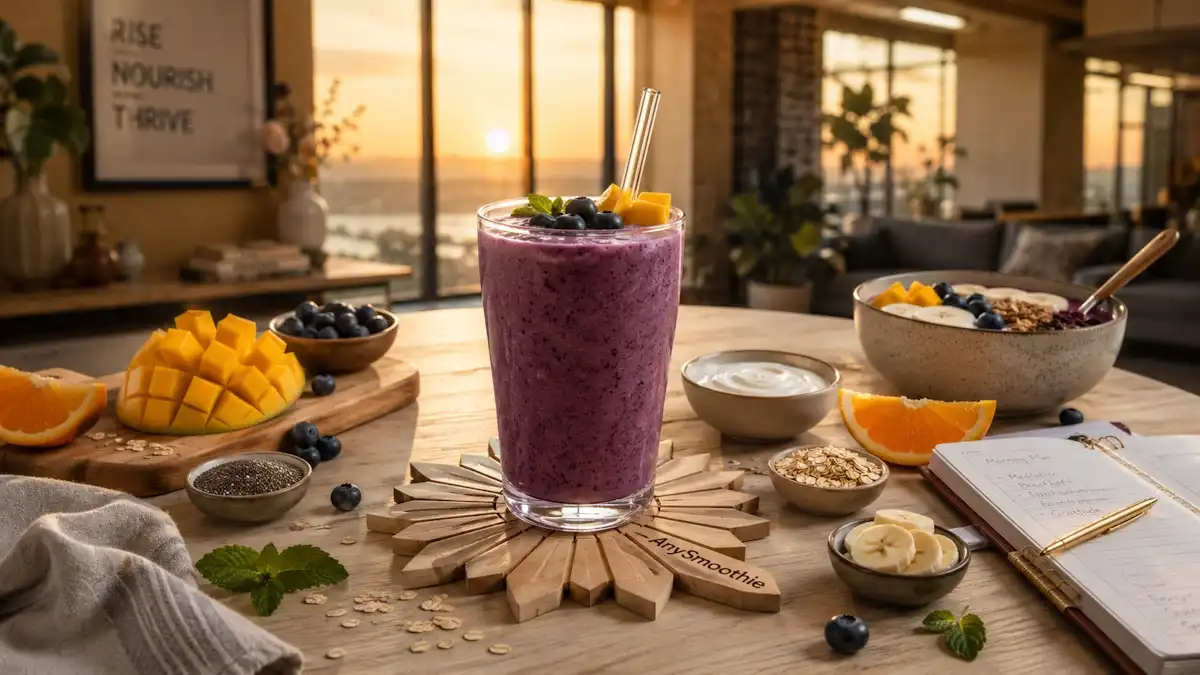
Your circadian clock genes help set the pace for energy, digestion, sleep, and repair. Food choice matters, but meal timing matters too.
That’s where smoothies for circadian clock gene alignment come in. A smoothie can support your day when it matches your body’s rhythm, or it can feel off when it doesn’t.
The goal is simple, build blends that fit morning, afternoon, and evening needs without turning every drink into a sugar bomb. When timing, light, sleep, and movement work together, smoothies can be an easy part of that pattern.
What circadian clock gene alignment means for your daily smoothie choices
Circadian rhythm is your body’s 24-hour timing system. It helps decide when you feel alert, when you digest well, and when your body wants to slow down.
Light is the strongest cue. So is meal timing. Sleep schedule and movement also send daily signals that keep internal clocks steady. Johns Hopkins Medicine notes that the time of day you eat can matter because the body handles food differently across the day, especially when timing gets out of sync with your rhythm. See their overview on meal timing and body clocks.
The main time cues your body responds to each day
Morning light tells your brain it’s time to wake up. Regular meals help the rest of the body stay on schedule. Sleep at a steady hour gives those clocks a chance to reset.
Movement adds another cue. Even a short walk can support a more stable daily pattern. Smoothies are not magic on their own, but they fit well inside a routine that already has some rhythm.
Why timing matters as much as the ingredients themselves
The same smoothie can feel different at 8 a.m. and 10 p.m. In the morning, your body is ready to use energy. Late at night, a heavy or sugary drink may feel out of place.
That is why timing and ingredients belong together. A blend that supports focus after waking may not be the best choice near bedtime. The body is always reading the clock.
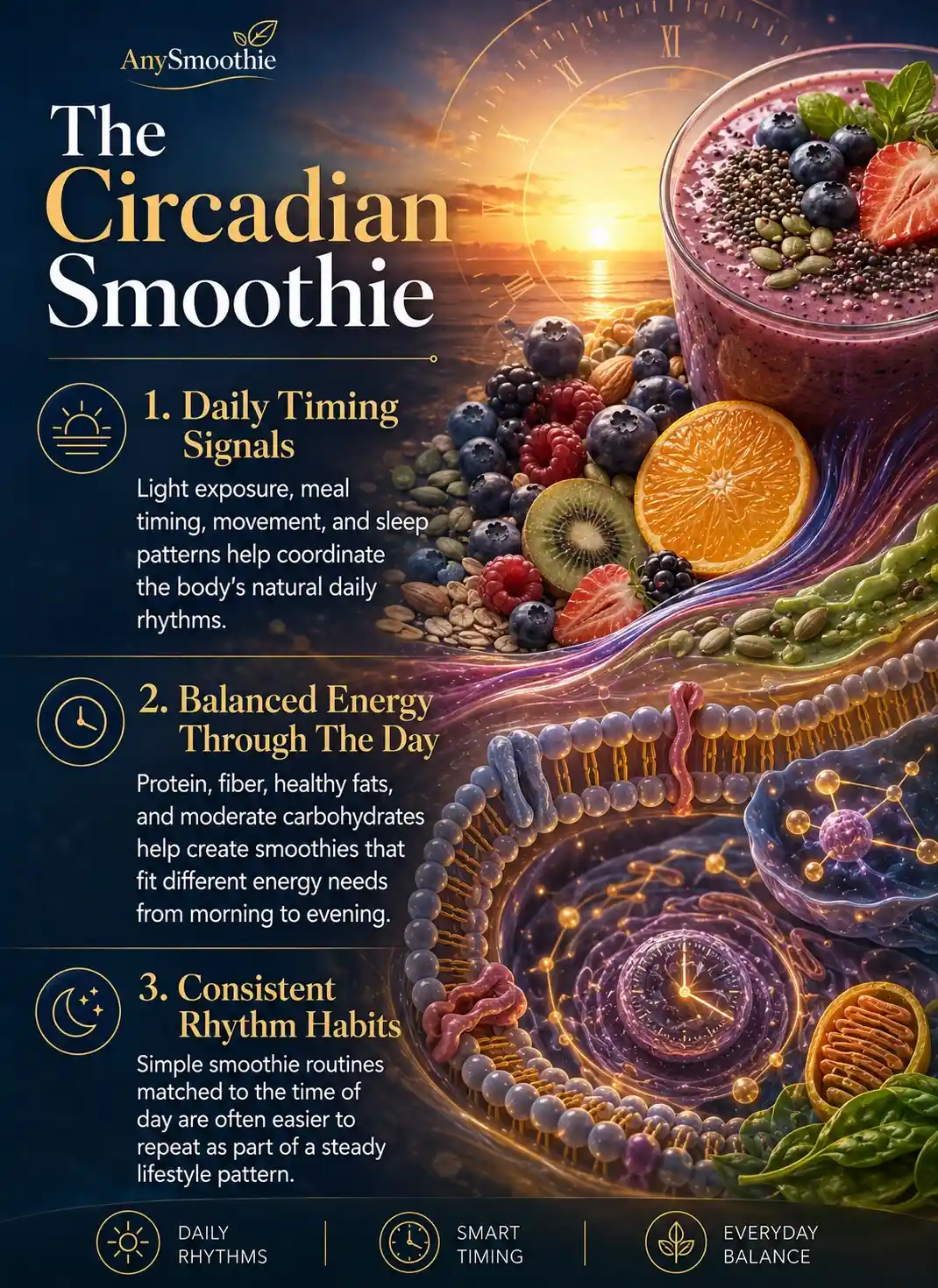
The best smoothie building blocks for circadian clock support
A good smoothie for rhythm support starts with balance. Protein helps slow digestion. Fiber helps steady blood sugar. Healthy fats add satiety and can keep the drink from feeling too sharp.
A recent MDPI review on chrononutrition links food timing with energy balance and metabolic timing. That makes the case for using smoothies with intent, not on autopilot. Morning blends usually work best with protein, fiber, and moderate carbs. Later blends often do better when they stay lighter and less sweet.
Protein, fiber, and healthy fats that help keep energy steady
Greek yogurt and kefir bring protein plus a creamy texture. Chia seeds and flaxseed add fiber and help thicken the drink. Nut butter gives richness and helps the smoothie feel more complete.
Protein powder can also help when you need a quick option. Use it with care, though. A smoothie still needs fiber and real food ingredients to feel balanced.
Fruits, greens, and add-ins that fit different times of day
Berries are a strong base because they bring flavor without a huge sugar load. Banana, mango, and pineapple work well too, but they raise the sugar level faster. Those brighter fruits often fit earlier in the day better.
Leafy greens, cucumber, avocado, cinnamon, ginger, and cacao can round out different smoothie styles. Greens and cucumber keep things light. Avocado adds creaminess. Cinnamon and ginger add depth without much sugar.
What to limit if you want better daily rhythm support
Added sugar can make a smoothie taste great and still work against your goals. Huge portions can also turn a snack into a heavy meal.
Late-day smoothies should be careful with stimulants. If you use caffeine, handle it with care because it can affect sleep timing. A cocoa-heavy blend at night may not suit everyone.
3 Smoothies for circadian clock gene alignment
These smoothie ideas keep the day in mind first. Each one fits a different timing window and a different energy need.
Morning smoothie for a strong start and stable energy
Use 1 cup mixed berries, 1 cup spinach, 3/4 cup plain Greek yogurt or a scoop of protein powder, 1 tablespoon chia seeds, and 1/4 cup rolled oats. Add unsweetened milk or water until it blends smoothly.
This blend gives you protein, fiber, and moderate carbs. It supports a steadier rise in energy after waking, especially if you drink it after morning light exposure.
Midday smoothie for focus without the crash
Blend 1 cup berries, 3/4 cup kefir or plain yogurt, 1 tablespoon ground flaxseed, a handful of greens, and a small piece of banana or apple. Add ice and water for texture.
This works well during the active part of the day. It can bridge meals without feeling heavy, which helps you stay sharp without a big slump.
Evening smoothie that stays light and sleep-friendly
Combine 3/4 cup tart cherries, 1/2 cucumber, 1/4 avocado, unsweetened almond milk, and a pinch of cinnamon. If you want more protein, add a small scoop and keep the portion modest.
This version stays lighter and less sugary. It fits better when you want something satisfying but do not want to overload your system near bedtime.
How to time your smoothie so it works with your body clock
A morning smoothie often fits best after waking and after you’ve had some light exposure. A midday smoothie can bridge lunch and the afternoon. Evening smoothies should be smaller and finished well before bed when possible.
A review on food timing and circadian rhythm points to food intake as one of the signals that helps reinforce daily timing. Consistency matters, so try to keep meal windows similar from day to day.
Simple timing rules for mornings, afternoons, and evenings
Keep the first smoothie nutrient-dense. Use the midday one to support steady work or activity. Make the late smoothie lighter and less sweet.
The best smoothie is the one that fits the hour, not only the ingredient list.
A quick comparison table for choosing the right smoothie
| Time of day | Best ingredients | What to limit | Main goal | Example smoothie style |
|---|---|---|---|---|
| Morning | Greek yogurt, berries, oats, chia, spinach | Heavy sugar loads | Steady energy after waking | Berry protein breakfast blend |
| Midday | Kefir, flaxseed, greens, berries, small banana | Huge portions | Focus without a slump | Green berry snack blend |
| Evening | Tart cherries, cucumber, almond milk, avocado | Caffeine, lots of fruit | Light support before bed | Cherry cucumber cooler |
Conclusion
Smoothies work best when they match the time of day. A morning blend can support a strong start, a midday blend can hold energy steady, and an evening blend can stay light enough to fit the night.
Circadian clock gene alignment depends on more than one habit. Light, sleep, movement, and meal timing all send the body the same message.
Start with one morning smoothie, one midday option, and one lighter evening recipe. That simple routine gives your day a clearer rhythm.
🛡️ Safety Notes & Dietary Interactions
- Timing Influences the Experience: The same smoothie can feel different depending on when you drink it. Matching ingredients and portion size to the time of day often supports a more consistent routine.
- Balanced Energy Delivery: Protein, fiber, and healthy fats help create a steadier nutritional profile than fruit-only smoothies. This combination may support longer-lasting satiety throughout the day.
- Evening Simplicity Matters: Lighter evening smoothies are often easier to fit into a sleep-supportive routine. Large portions, excess sweetness, or stimulating ingredients may feel less appropriate late at night.
- Consistency Reinforces Rhythm: Regular meal timing works alongside sleep, light exposure, and movement as part of a broader daily pattern. A repeatable smoothie habit is often more useful than constantly changing recipes.
FAQ
What does circadian clock gene alignment actually mean?
Circadian clock genes help coordinate the body’s internal timing systems. These systems influence sleep-wake cycles, digestion, energy regulation, hormone rhythms, and many other physiological processes. The article explains that food timing acts as one of several daily signals that help reinforce these natural patterns alongside light exposure, movement, and consistent sleep schedules.
Why does smoothie timing matter as much as the ingredients?
According to the article, the body responds differently to food depending on the time of day. A nutrient-dense smoothie in the morning may support energy needs after waking, while a heavy or highly sweetened smoothie late at night may feel less aligned with the body’s transition toward rest. Timing and ingredients work together rather than independently.
What ingredients work best in a morning circadian-support smoothie?
The article highlights Greek yogurt, protein powder, berries, spinach, chia seeds, oats, and other sources of protein and fiber. These ingredients create a more balanced nutritional structure that supports satiety and steady energy. Morning smoothies are generally designed to be more substantial than evening blends because they support the active part of the day.
Why are evening smoothies usually lighter?
Evening blends are intended to fit comfortably within a sleep-supportive routine rather than function as a large meal. Ingredients such as tart cherries, cucumber, avocado, unsweetened almond milk, and modest portions of protein help create a lighter texture and flavor profile. The article also recommends limiting excessive sweetness and stimulants near bedtime.
What is the most important lesson from the article?
The article repeatedly emphasizes that circadian rhythm support depends on multiple habits working together. Smoothies can contribute by matching nutrition to different parts of the day, but they are only one piece of the picture. Consistent sleep, regular light exposure, daily movement, and predictable meal timing remain the primary foundations of a well-structured circadian routine.

Medical Disclaimer: The information on AnySmoothie is for educational and informational purposes only. It is not intended as medical advice or a substitute for professional consultation with a healthcare provider. Always consult your physician before starting any new nutritional protocol, especially if you have underlying health conditions or are taking medication. By using this site, you agree to our full Disclaimer & Terms of Use.