
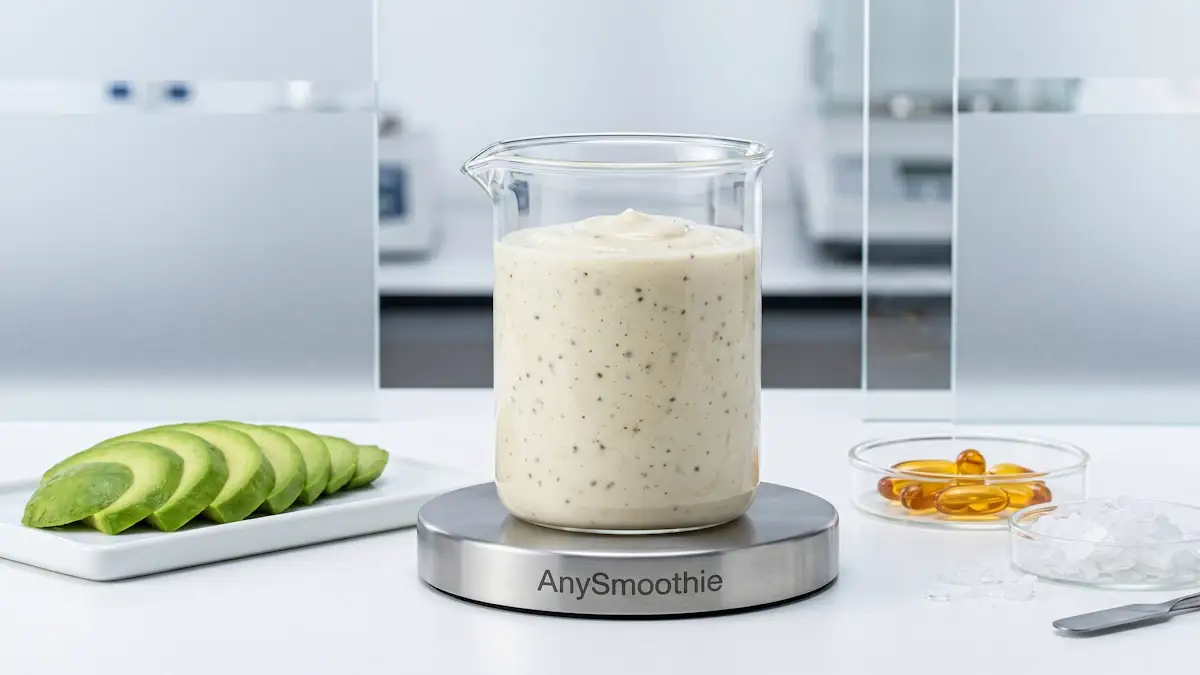
Calcium moves fast in the body. It helps muscles contract, nerves pass messages, and cells switch signals on and off. That makes calcium signaling part of everyday function, not a niche health topic.
Vitamin D helps regulate calcium balance, but it works best with the rest of the nutrition picture in place. That is the idea behind these vitamin D co-factor smoothies for calcium signaling, a food-first way to bring together fat, protein, magnesium-rich foods, and fortified ingredients in one easy glass.
What calcium signaling does in the body, and why vitamin D needs support
Calcium is a messenger, not just a mineral. Cells release it in short bursts to start an action, then pull it back down to stop the signal. In muscles, nerves, and blood vessels, timing matters as much as total amount. The Linus Pauling Institute’s calcium overview explains how calcium helps with nerve impulse flow and vessel control.
The role of calcium as a cell messenger
When calcium rises inside a cell, it can trigger contraction, release, or communication. When it drops, the signal ends. That quick rise-and-fall pattern is part of normal cell work.
A NIH review of neuronal calcium signaling shows how tightly this process supports nerve communication and energy use. The same basic idea applies across many tissues.
Why vitamin D works better with co-factors
Vitamin D helps the body manage calcium, but it does not act alone. The body still needs other nutrients to move calcium, use it well, and keep balance steady. If those co-factors are low, the system has less support.
Common co-factors to keep in the mix
Magnesium matters because it helps vitamin D metabolism and calcium handling. Vitamin K2 fits into a pattern of directing calcium support through food choices. Protein helps make a smoothie more useful as a meal. Healthy fats help your body absorb vitamin D more easily.
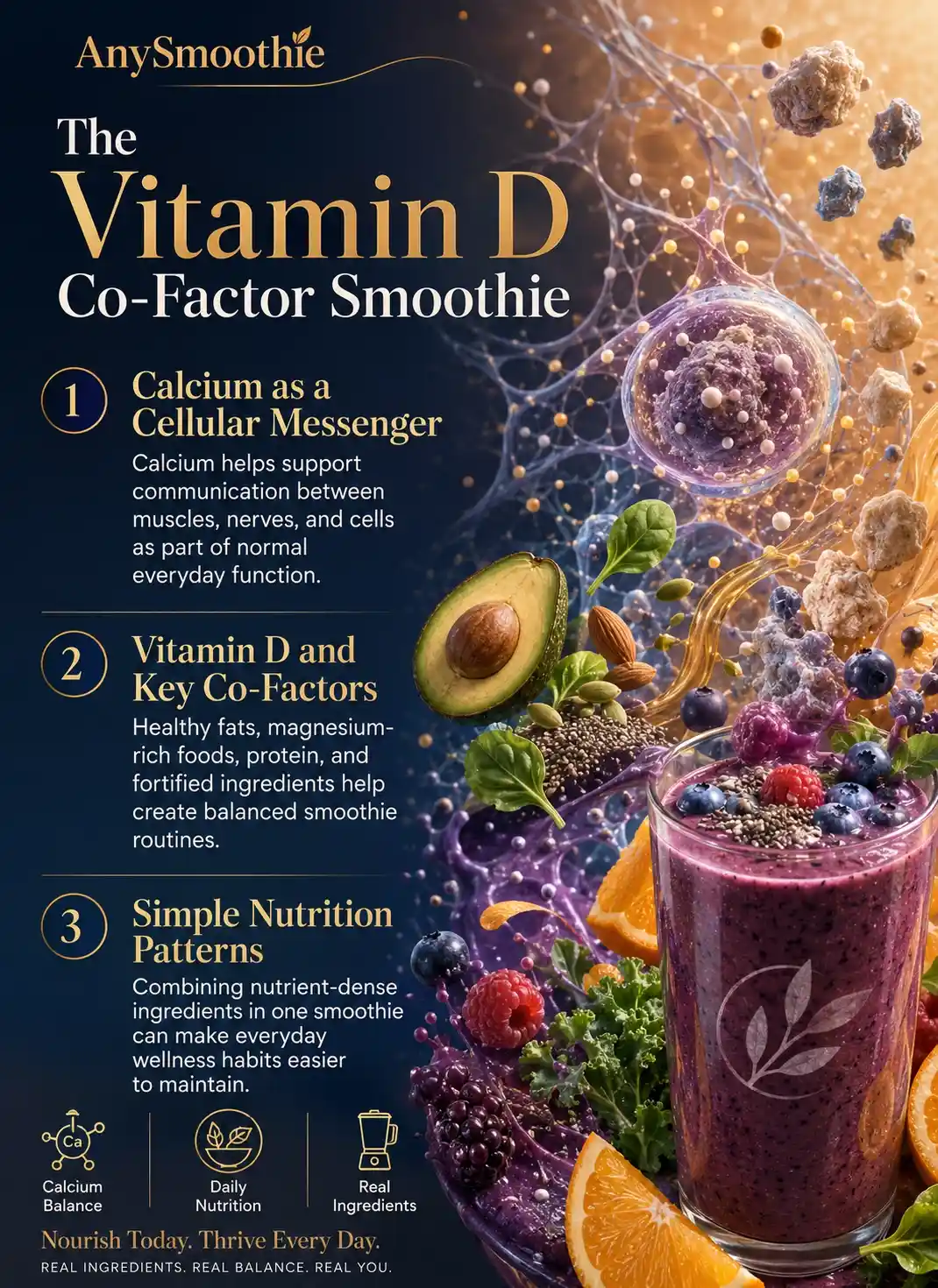
The best ingredients for vitamin D co factor smoothies for calcium signaling
The best smoothie ingredients do more than taste good. They give you fat for absorption, minerals for balance, and enough body to keep you full.
| Ingredient group | What it brings | Texture | Flavor profile | Easy examples |
|---|---|---|---|---|
| Healthy fats | Helps vitamin D absorption | Creamy | Mild, rich | Avocado, nut butter, chia |
| Magnesium-rich foods | Supports nutrient use and balance | Thick | Earthy, nutty | Spinach, cacao, oats, almonds |
| Fortified bases | Adds a vitamin D source | Smooth | Neutral, tangy | Fortified milk, fortified soy milk, fortified yogurt |
| Potassium-rich produce | Supports mineral balance | Light | Sweet, fresh | Banana, pineapple, berries |
| Fermented foods | Fits a K2-friendly pattern | Tangy | Sharp, cultured | Kefir, yogurt |
A smoothie built this way feels more like breakfast and less like a snack with a blender.
A fruit-only smoothie can taste good, but a little fat and protein makes it work harder for you.
Ingredients that help vitamin D absorb better
Avocado, yogurt, kefir, chia, flax, and nut butters all add fat. That matters because vitamin D is fat-soluble. A small amount goes a long way.
Magnesium-rich smoothie add-ins
Spinach, pumpkin seeds, cacao, oats, and almonds fit easily into smoothie recipes. They bring magnesium without a lot of fuss, and that keeps the mineral mix more balanced.
Vitamin K2 friendly foods to pair with vitamin D
Vitamin K2 shows up in fermented foods and some cultured dairy. In a smoothie, kefir and yogurt are the easiest fit. You can also pair your smoothie with a fermented side at a meal if that works better for your day.
3 Vitamin D co-factor smoothies for calcium signaling
Berry kefir smoothie with chia and spinach
Ingredients
- 1 cup fortified kefir
- 1 cup frozen mixed berries
- 1 handful spinach
- 1 tablespoon chia seeds
- 1 tablespoon ground flaxseed
- Ice, as needed
- 1/2 banana, optional
Blend until smooth.
This is the easiest entry point. The kefir gives a tangy, creamy base with protein, while chia and flax add fat and texture. Spinach brings magnesium, and berries keep the flavor bright. If you want a dairy-free version, use fortified soy yogurt instead.
Estimated Nutrition per Serving
Estimated with plain low-fat fortified kefir and without optional banana.
- Calories: ~355 kcal
- Protein: ~15 g
- Carbohydrates: ~45 g
- Fat: ~14 g
- Fiber: ~17 g
- Sugars: ~25 g
With both chia and flax in the glass, this one changes texture fairly quickly. I’d drink it soon after blending if you prefer a lighter consistency, or let it rest intentionally for a thicker breakfast-style finish.
Tropical green smoothie with avocado, pineapple, and pumpkin seeds
Ingredients
- 1 cup fortified unsweetened almond milk
- 1 cup pineapple
- 1/2 avocado
- 1 handful spinach
- 1 tablespoon pumpkin seeds
- Squeeze of lime
- Ice, as needed
Blend until smooth.
This one tastes fresh and light. Avocado adds the fat that helps vitamin D absorption, while pumpkin seeds and spinach bring a mineral-rich edge. Pineapple and lime keep the flavor lively. It works well after a workout or on a hot morning.
Estimated Nutrition per Serving
Estimated with fortified unsweetened almond milk.
- Calories: ~375 kcal
- Protein: ~10 g
- Carbohydrates: ~42 g
- Fat: ~21 g
- Fiber: ~12 g
- Sugars: ~22 g
Creamy cacao almond smoothie with oats and yogurt
Ingredients
- 1 cup Greek yogurt or high-protein soy yogurt
- 1 cup unsweetened milk
- 1 tablespoon unsweetened cacao
- 2 tablespoons almond butter
- 1/4 cup rolled oats
- Ice, as needed
- Cinnamon, optional
Blend until smooth.
This is the most filling option. It brings protein, fat, and slow carbs together, so it feels more like a real breakfast. Cacao and almonds add magnesium, while the yogurt keeps the texture thick. Use fortified milk if you want a stronger vitamin D base.
Estimated Nutrition per Serving
Estimated with nonfat plain Greek yogurt and unsweetened almond milk.
- Calories: ~520 kcal
- Protein: ~32 g
- Carbohydrates: ~48 g
- Fat: ~25 g
- Fiber: ~10 g
- Sugars: ~15 g
This is naturally a very thick combination, especially with a full cup of Greek yogurt plus oats. Blending the oats with the milk first gives a smoother base; if it still lands closer to spoonable than drinkable, a little extra milk fixes it without changing the flavor much.
How to build a smoothie routine that actually fits your day
A good smoothie has a job. It should match your schedule, taste good enough to repeat, and leave you satisfied. That usually means balancing fruit with protein and fat, then keeping the serving size realistic.
| Smoothie | Key ingredients | Co-factors highlighted | Best time to drink | Main focus |
|---|---|---|---|---|
| Berry kefir | Berries, kefir, spinach, chia, flax | Fat, magnesium, protein | Breakfast or mid-morning | Balanced and easy |
| Tropical green | Pineapple, avocado, spinach, pumpkin seeds | Fat, potassium, magnesium | Post-workout or morning | Bright and mineral-rich |
| Creamy cacao almond | Yogurt, cacao, almond butter, oats | Protein, fat, magnesium | Breakfast or afternoon snack | Filling and steady |
Simple timing and pairing ideas
Morning is the easiest time for many people. Post-workout also works well, especially if the smoothie has enough protein. If the smoothie feels too light, pair it with eggs, toast, or a small bowl of yogurt.
Easy swaps for dairy-free, higher-protein, or lower-sugar versions
For dairy-free smoothies, use fortified soy milk or soy yogurt. For more protein, add extra yogurt, silken tofu, or a scoop of protein powder. For less sugar, reduce fruit and lean on avocado, spinach, cucumber, or ice for volume.
Conclusion
These smoothies are not magic, but they are a simple way to support normal calcium signaling with food. When vitamin D gets paired with magnesium, healthy fats, and protein, the whole mix works better as an everyday habit.
Start with one recipe that matches your taste and schedule. Then adjust the sweetness, texture, and base until it feels easy to repeat.
🛡️ Safety Notes & Dietary Interactions
- Vitamin D Functions Within a Network: Vitamin D works alongside magnesium, protein, healthy fats, and other nutrients involved in calcium handling. Focusing on overall dietary balance is often more useful than emphasizing a single nutrient.
- Fat Supports Absorption: Because vitamin D is fat-soluble, including sources such as avocado, chia seeds, flaxseed, nut butter, or cultured dairy can help create a more complete smoothie structure.
- Magnesium Complements the Formula: Foods like spinach, pumpkin seeds, cacao, almonds, and oats contribute magnesium, which participates in many physiological processes related to nutrient utilization and cellular function.
- Food-First Consistency Matters: Fortified dairy products, fortified plant-based alternatives, protein-rich foods, and mineral-rich ingredients can help support a repeatable routine without relying on excessive supplementation.
FAQ
What does calcium signaling actually mean?
Calcium signaling refers to the way cells use calcium ions as internal messengers. The article explains that calcium levels rise briefly to trigger actions such as muscle contraction, nerve communication, and cellular responses, then return to baseline once the message is complete. This rapid signaling process plays a role in many normal physiological functions throughout the body.
Why is vitamin D connected to calcium signaling?
Vitamin D helps regulate calcium balance within the body and supports the systems involved in calcium utilization. The article emphasizes that vitamin D does not work independently. Instead, it functions within a broader nutritional framework that includes minerals, protein, healthy fats, and other dietary factors that contribute to normal calcium-related physiology.
Why are healthy fats included in these smoothies?
Vitamin D is a fat-soluble nutrient, meaning dietary fat helps support its absorption. Ingredients such as avocado, chia seeds, flaxseed, almond butter, and cultured dairy products contribute healthy fats while also improving texture and satiety. The article repeatedly highlights fat as an important component of a well-balanced smoothie formula.
Which ingredients provide magnesium in these recipes?
Spinach, pumpkin seeds, cacao, oats, almonds, chia seeds, and flaxseed are highlighted as practical magnesium-containing foods. Magnesium participates in numerous physiological pathways and is frequently discussed alongside vitamin D and calcium. These ingredients also add fiber, texture, and nutritional depth to the smoothie without requiring complicated preparation.
What is the biggest takeaway from the article?
The article consistently focuses on nutritional teamwork rather than isolated nutrients. Calcium signaling depends on a variety of interacting systems, and vitamin D functions best when paired with supportive foods that provide healthy fats, protein, magnesium, and other complementary nutrients. A simple smoothie built around these principles is presented as a practical habit that can fit naturally into an everyday wellness routine.

Medical Disclaimer: AnySmoothie content is for educational purposes only and is not a substitute for professional medical advice. Consult a healthcare provider for personalized guidance. See our full Disclaimer & Terms of Use. AI Transparency: AnySmoothie may use AI to support content development. All content undergoes human editorial review for accuracy, clarity, and editorial quality. See our full AI Transparency.