
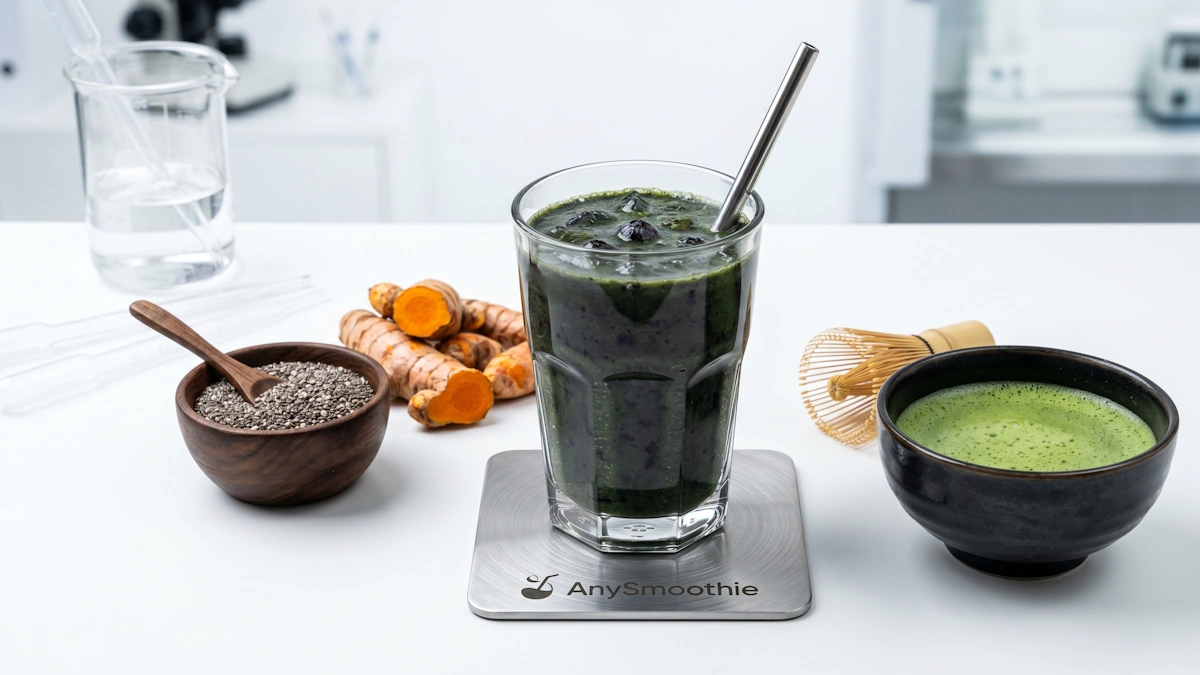
Metabolic efficiency relies heavily on the precise balance of micronutrients within cellular environments. When mineral partitioning is disrupted, specifically regarding free-floating iron, it can trigger localized oxidative stress that impacts mitochondrial integrity. Supporting the body’s natural sequestration pathways is a fundamental protocol for maintaining systemic redox balance.
In this article, we focus on the biochemical mechanics of mineral transport and the strategic use of natural chelators. By leveraging polyphenols like EGCG and tannins, we can optimize the body’s physiological systems for processing minerals without resorting to medical claims. The goal is clear: optimize your metabolic firewall, protect the liver’s oxidative status, and support the natural elimination pathways to ensure peak physiological performance.
The Fenton Reaction: Why Excess Iron is a Pro-Oxidant Threat
Excess iron acts as a spark in the body. Free ferrous iron (Fe2+) meets hydrogen peroxide. Boom. The Fenton reaction kicks off. It spits out hydroxyl radicals. These rip through cell membranes and DNA. Mitochondria take the worst hit. Energy factories grind down.
In hemochromatosis, ferritin soars past 1000 ng/mL. Iron floods liver, heart, pancreas. Symptoms pile on: fatigue saps your drive, joints stiffen, skin darkens. Fibrosis sets in over time. Heart rhythm falters. Diabetes risks climb.
Smoothies counter this. Polyphenols quench radicals. They shield mitochondrial integrity. You partition nutrients better for repair. For details on iron overload damage, check this Wikipedia overview.
Blood tests flag it early. Track ferritin and TSAT. Aim under 100 ng/mL ferritin for calm. Phlebotomy helps, but diet stacks the odds.
Hepatic Protection: Shielding the Liver from Iron-Induced Fibrosis
Iron jams hepatocytes. Oxidative stress scars tissue. Fibrosis builds to cirrhosis. ALT and AST enzymes spike as proof.
Iron-blocking smoothies cut the load. Green tea’s EGCG detoxes liver cells. Polyphenols mop radicals. Expect lower enzymes in weeks.
Make it routine. Sip one pre-meal. It optimizes your oxidative balance. Your metabolic firewall strengthens.
Strategic Chelation: Using Polyphenols to Block Iron Absorption
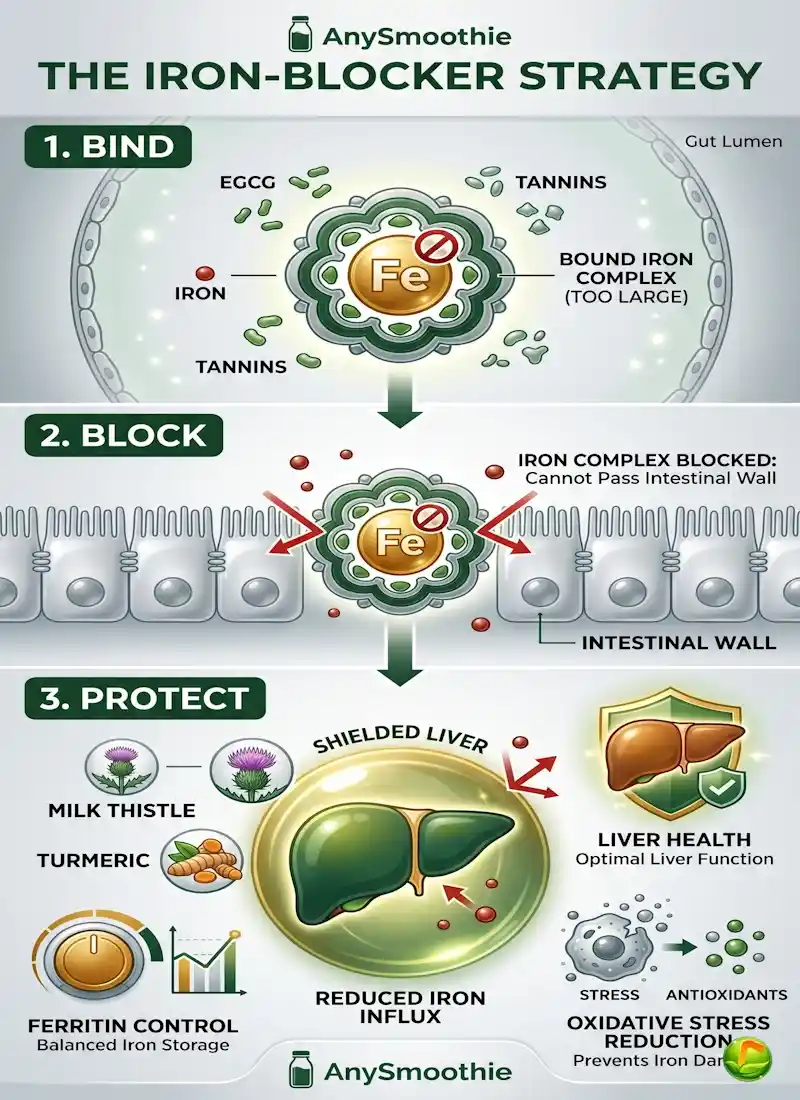
Chelation binds iron tight. Polyphenols from plants grab non-heme iron in the gut. No uptake. Ferritin drops over months.
Tea leads with tannins. Turmeric’s curcumin inhibits hepcidin. Berries add quercetin punch. They team for synergy.
EGCG shines for gold standard. It slashes absorption by 60% in studies. Pair with low-iron bases for max effect. For study-backed proof on polyphenols in hemochromatosis, see this research on polyphenol supplements. These enhance your chelation efficiency. Iron stays out, chelators get in.
Here’s a quick comparison of top binders:
| Compound | Chelation Mechanism | Antioxidant Power | Best Smoothie Pairing | Flavor Profile |
|---|---|---|---|---|
| EGCG (Green Tea) | Binds non-heme iron; cuts ferritin | High (quenches OH radicals) | Banana, almond milk | Earthy, fresh |
| Curcumin (Turmeric) | Inhibits hepcidin; reduces uptake | Medium-high | Black pepper, coconut water | Spicy, warm |
| Phytates (Seeds/Grains) | Forms insoluble complexes | Medium | Yogurt, lemon | Nutty, neutral |
For study-backed proof on polyphenols in hemochromatosis, see this research on polyphenol supplements.
The Calcium and Phytate Buffer: Creating a Non-Absorbable Mineral Complex
Calcium from yogurt clumps iron. Phytates from seeds lock it further. Insoluble junk passes out.
Blend dairy with chia. Hit it between meals. Absorption drops 50%. Keep portions modest for gut ease.
Timing matters. Drink post-iron foods. It buffers without overload.
3 Iron-Blocking Smoothie Recipes (Low-Iron Focus)
These pack chelators. Skip spinach or beets. Focus low-iron bases. Each serves one, 200 calories. Blend 1 minute. Prep in five.
Taste rules. They refresh without iron boost. Daily use partitions chelators to gut lining. Ferritin trends down.
Biohacking the Lab Results: Managing Ferritin Through Dietary Synergy
Track ferritin quarterly. Smoothies stack with low-iron meals. Studies show 20-30% drops in six months.
Combine chelators. Tea mornings, seeds evenings. Liposomal forms absorb faster if you upgrade.
Consult your doc first. This aids phlebotomy, not replaces it. Consistency builds wins. Log energy too.
Diet sites like this dietitian’s guide back the approach.
Vitamin C Timing: Why You Must Separate High-C Fruits from Iron Sources
Vitamin C ramps non-heme iron uptake. Don’t mix in chelation smoothies.
Save oranges for later. One hour post-meal ok. Chart it:
- Chelator smoothie: Morning, no C.
- Iron meal: Lunch, skip C.
- C boost: Afternoon snack.
This partitions right. Iron stays low.
Conclusion
Excess iron fuels Fenton chaos. Chelators in smoothies block it cold. Recipes deliver easy wins: tannin shield, EGCG twist, seed blocker. Track ferritin. Watch energy climb. Small sips yield big drops. Try one today. Your liver thanks you. Stack these for metabolic edge.
⚠️ Safety Notes for Mineral Modulation Protocols
Synergy with Systemic Protocols: Dietary modulation and mineral-blocking smoothies are supportive strategies for nutrient partitioning. They are designed to complement, not replace, professional procedures for systemic clearance or mineral management.
Vitamin C Pathway Interaction: Ascorbic acid significantly upregulates the absorption pathways of non-heme minerals. Avoid adding high-Vitamin C precursors (such as camu-camu or acerola) to smoothies consumed in close proximity to mineral-dense inputs.
Extract Concentration vs. Whole Inputs: While EGCG supports hepatic redox status, excessive isolation of these compounds in synthetic form can impact metabolic pathways. Prioritize whole-leaf infusions as the liquid base for optimal enzymatic synergy.
Oxalate Management: Many mineral-modulating ingredients (like specific teas and seeds) contain oxalates. Support renal clearance by maintaining high hydration levels and rotating bioactive ingredients to prevent accumulation.
Bioactive-Nutrient Interactions: Potent modulators like curcumin can influence systemic circulation signaling. If you are utilizing specific protocols for vascular integrity, coordinate these nutritional biohacks with your supervising specialist.
FAQ
How does the Fenton reaction impact the integrity of mitochondrial systems?
The Fenton reaction involves free ferrous iron reacting with hydrogen peroxide to generate highly reactive hydroxyl radicals. These radicals can penetrate mitochondrial membranes, disrupting the biochemical mechanics of energy production. Supporting natural sequestration pathways optimizes the physiological systems responsible for neutralizing these pro-oxidants, thereby maintaining systemic redox balance and protecting the structural integrity of cellular powerhouses.
In what way do polyphenols like EGCG support mineral partitioning?
Polyphenols such as EGCG act as natural chelators that bind to non-heme iron within the digestive tract. This biochemical mechanism prevents the uptake of free minerals into the bloodstream, supporting the physiological systems involved in maintaining ideal ferritin levels. By optimizing these natural pathways, the body can effectively manage mineral flux and reduce the risk of localized oxidative stress.
How do calcium and phytates create a physiological mineral buffer?
Calcium and phytates support the physiological systems of mineral regulation by forming insoluble complexes with iron in the intestinal lumen. These large molecular structures are not absorbed and are instead moved through natural elimination pathways. This biochemical process optimizes the body’s ability to partition minerals externally, preventing excess iron from entering systemic circulation and burdening hepatic oxidative status.
Why is Vitamin C timing critical for optimizing natural metabolic pathways?
Vitamin C serves as a potent biochemical reducer that converts ferric iron into a highly absorbable ferrous state. To support the physiological systems of iron modulation, it is essential to separate Vitamin C consumption from mineral-dense meals. This strategic timing optimizes natural pathways of nutrient partitioning, ensuring that iron uptake remains controlled and does not overwhelm the body’s sequestration mechanisms.
How does strategic chelation support the physiological systems of the liver?
Strategic chelation using tannins and curcumin supports the physiological systems of hepatocyte protection by reducing the influx of reactive minerals. These compounds optimize the natural pathways of antioxidant defense, mopping up radicals before they can trigger cellular stress. This biochemical support strengthens the “metabolic firewall,” ensuring the liver maintains its oxidative status and peak metabolic efficiency during mineral processing.

Medical Disclaimer: AnySmoothie content is for educational purposes only and is not a substitute for professional medical advice. Consult a healthcare provider for personalized guidance. See our full Disclaimer & Terms of Use. AI Transparency: AnySmoothie may use AI to support content development. All content undergoes human editorial review for accuracy, clarity, and editorial quality. See our full AI Transparency.