
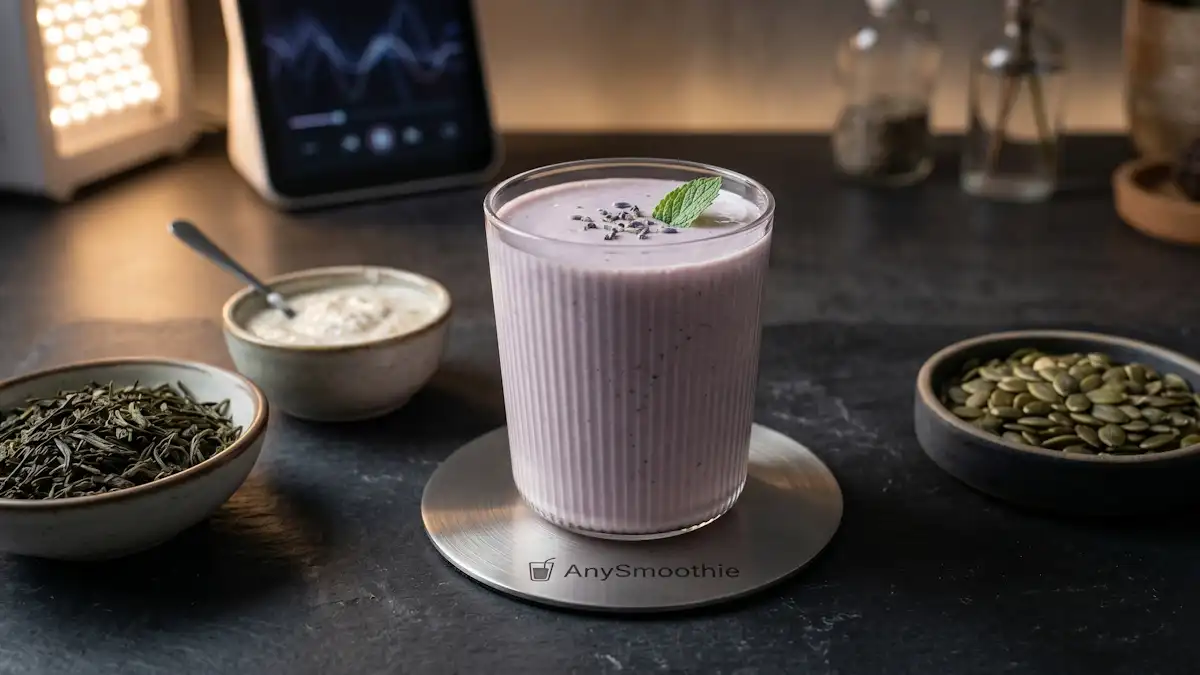
GABA smoothies are simple blends built to support the body’s calm-signaling systems. People use them for steadier focus, a smoother afternoon reset, or an easier evening wind-down.
The goal is not a medical fix. It’s about giving the nervous system the right inputs so it can shift toward parasympathetic balance. With smart ingredient pairing, a smoothie can do more than taste good, it can help the body move out of stress mode with less friction.
The GABAergic System: Understanding the Brain’s Primary Off-Switch
GABA is the brain’s main braking signal. In NCBI’s GABA physiology review, GABA is described as the primary inhibitory neurotransmitter, which means it helps slow overactive signaling in the nervous system. That matters when your day feels loud, fast, and scattered.
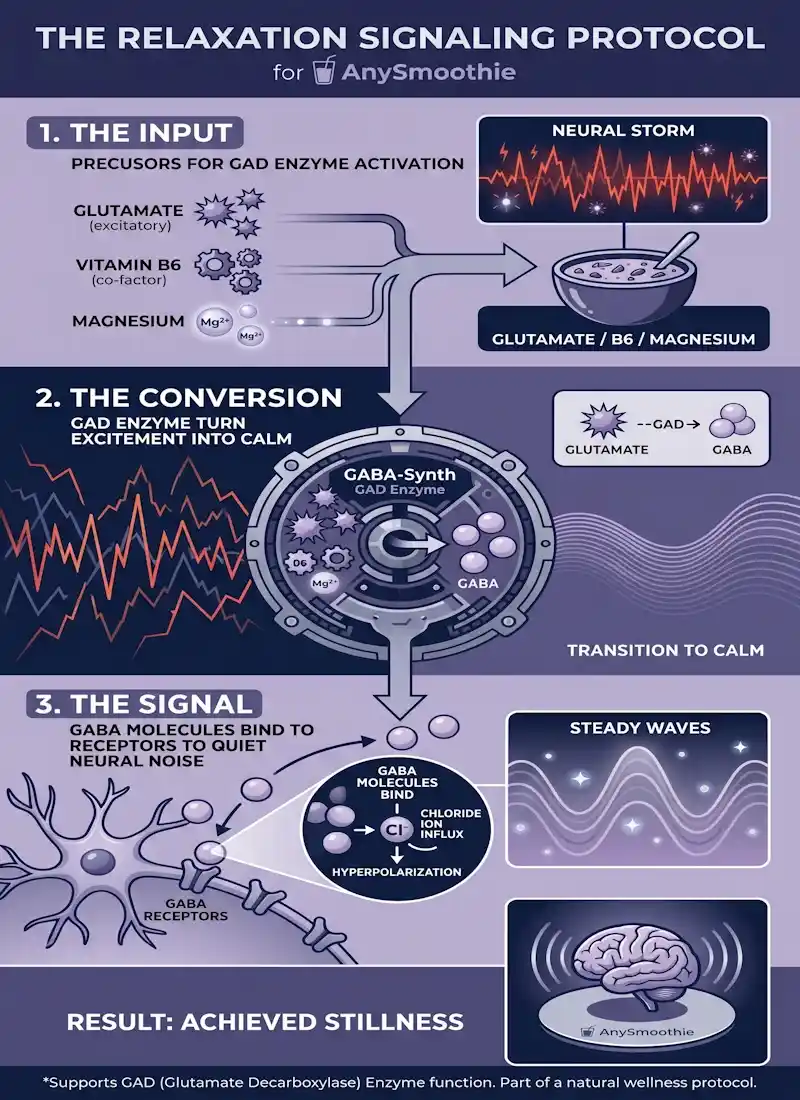
Glutamate does the opposite job. It pushes neurons to fire, which helps with alertness, learning, and movement. Calm is not the absence of activity. It is a better balance between push and brake.
Glutamate vs. GABA: why balance matters for relaxation signaling
When glutamate runs high and GABA tone runs low, the brain can feel revved up. That does not mean something is broken. It means the system is leaning too far toward excitation.
Relaxation signaling works best when the body can downshift on demand. A well-built smoothie can support that shift by supplying amino acids, minerals, and plant compounds that fit the nervous system’s normal rhythm. On busy days, that matters more than chasing a quick fix.
Why smoothies are a practical delivery format for calm-support ingredients
Smoothies are easy to use consistently. They also let you combine ingredients that work better together, such as amino acids, magnesium, fats, and fruit polyphenols.
That pairing matters for nutrient partitioning. A little fat can help with absorption. A creamy texture also makes the drink more satisfying, so the habit sticks. In practice, that means less guesswork and more repeatable calm-support nutrition.
The Relaxation Stack: L-Theanine, Magnesium, and B6 Synergy
A focused calm smoothie usually starts with three support layers. L-theanine helps the mind stay clear. Magnesium supports normal nerve and muscle function. Vitamin B6 helps enzymes that make neurotransmitters, including the GAD enzyme that converts glutamate into GABA.
For a plain-language breakdown of how L-theanine fits into that stack, Cleveland Clinic’s L-theanine guide is useful. It explains why timing and pairing matter so much. In smoothie form, that often means using flavors that feel light, clean, and easy to drink.
L-theanine for relaxed alertness without the crash
L-theanine is popular because it supports relaxed alertness without making people feel flat. Some research links it with alpha-wave activity, which is associated with a calm, focused state.
That makes it a strong fit for daytime smoothies. Green tea, citrus, mint, and light fruit all work well with it. The point is clarity, not heaviness.
Magnesium and vitamin B6 as quiet helpers in the calm pathway
Magnesium supports normal nerve signaling and muscle control. Vitamin B6 helps several enzyme steps in neurotransmitter production. A recent PubMed review on sleep nutrients notes that B6, magnesium, and other nutrients help shape excitability and GABA-related pathways.
These ingredients work best as part of a wider diet. They are support pieces, not standalone answers. Still, they matter when your schedule keeps stress chemistry high.
Direct GABA, fermented foods, and what they can add to a smoothie
Some smoothies use direct GABA or fermented ingredients to support calm-focused routines. Kefir, yogurt, and fermented plant bases can add a tangy flavor and a more GABA-friendly profile.
Direct GABA ingredients are used by many people, but they should be framed as one part of the mix. They are not a guarantee. Fermented foods can still be valuable because they add texture, protein, and a more complete food matrix.
A quick comparison of three neural relaxants for smoothie use
Here is a fast scan of how the main options differ.
| Ingredient | Mechanism of action | Impact on alertness | Best smoothie pairing | Synergistic co-factor |
|---|---|---|---|---|
| L-theanine | Supports alpha-wave activity and calm signaling | Relaxed alertness, usually without lethargy | Green tea, citrus, light berries | Small caffeine dose or vitamin C foods |
| GABA, direct or fermented | Supports inhibitory signaling and may act through receptor-related pathways | Calmer feel, sometimes more evening-focused | Kefir, yogurt, tart cherry, banana | Magnesium |
| Valerenic acid | Helps modulate GABA-related signaling, including GABA-transaminase pathways | More likely to feel sleepy than alert | Warm spice, cherry, oat milk | Magnesium or a bedtime routine |
Valerenic acid is best kept for evening blends, since it can feel more drowsy than the other two.
3 “Relaxation-Signal” GABA Support Smoothie Recipes
When to drink a GABA smoothie for the best calm-signaling effect
Timing changes the effect. A calm smoothie after a hard afternoon block can help you reset before stress piles up. For evening routines, 60 to 90 minutes before bed works well for many people.
Digestion also matters. A lighter smoothie is easier to use when your stomach feels sensitive. Start small, then notice how your body responds over a few days.
How the vagus nerve and gut-brain signaling shape the relaxation response
The gut and brain talk all day long. That conversation runs through nerves, hormones, and the food you eat. When you sip slowly, breathe more deeply, and keep the recipe simple, you give the parasympathetic system a cleaner signal.
That does not require perfection. It only asks for consistency.
Conclusion
GABA smoothies for relaxation signaling work best when the ingredients support the same goal. Balance matters, because GABA, glutamate, magnesium, B6, and L-theanine each play a different part in the calm response. The smartest routine is also the simplest one. Pick one recipe, use it at the right time, and adjust it based on how you feel. That is how a smoothie becomes more than a drink, it becomes a steady signal to downshift.
⚠️ Safety Notes for GABA & Relaxation Smoothies
CNS Depressant Interaction: If you are taking benzodiazepines, barbiturates, or other sedative medications, consult your psychiatrist before adding direct GABA supplements or high doses of L-theanine, as they may potentiate the sedative effects to dangerous levels.
Valerian and Liver Health: While useful for sleep, high doses or long-term use of Valerian root have been rarely associated with liver toxicity. Avoid using it daily for more than 4-6 consecutive weeks without a break.
L-Theanine and Blood Pressure: L-theanine can have a mild hypotensive (blood pressure lowering) effect. If you have chronic hypotension or are taking antihypertensive drugs, monitor your levels to avoid lightheadedness.
B6 Toxicity: While B6 is water-soluble, extremely high doses (from supplements, not food) over long periods can cause peripheral neuropathy. Ensure your total daily intake remains within safe therapeutic limits.
Kefir and Histamine Intolerance: If you suffer from histamine intolerance, fermented bases like kefir or yogurt may trigger headaches, hives, or digestive distress. Swap with coconut milk or almond milk.
FAQ
What is “Relaxation Signaling” in the context of GABA
Relaxation signaling is the body’s ability to communicate to the nervous system that it is safe to enter a parasympathetic state. GABA is the primary inhibitory neurotransmitter that facilitates this. By using a smoothie to support the natural pathways of GABA synthesis, you aren’t forcing the brain to shut down; instead, you are providing the biochemical “words” the brain needs to signal a state of calm, supporting the physiological systems that manage stress resilience.
How does L-Theanine support GABA without causing drowsiness
L-Theanine, an amino acid found in green tea, is structurally similar to glutamate but has the unique ability to support the natural production of GABA. Biochemically, it promotes the generation of alpha brain waves—associated with a state of “relaxed alertness.” This optimizes the neural pathways of focus and calm simultaneously, making it an ideal ingredient for someone who wants to quiet the mind without losing cognitive metabolic efficiency.
Why is Vitamin B6 essential for GABA smoothies
Vitamin B6, specifically in its active P5P form, is the necessary co-factor for the enzyme glutamate decarboxylase (GAD). This enzyme is responsible for converting the excitatory neurotransmitter glutamate into the calming neurotransmitter GABA. Without sufficient B6, this conversion pathway is less efficient, leading to an accumulation of “neural noise.” Including B6-rich foods like sunflower seeds or bananas in your smoothie supports this critical enzymatic balance.
Can fermented ingredients in a smoothie influence GABA signaling
Yes, through the gut-brain axis. Certain strains of bacteria in fermented foods like kefir or yogurt are capable of producing GABA or its precursors. These metabolites can signal to the brain via the vagus nerve. By incorporating fermented bases, you support the physiological systems involved in “bottom-up” relaxation signaling, where the gut environment helps prime the brain for a more stable and calm baseline.
When should I consume a GABA-support smoothie for best results
For those looking to optimize their evening wind-down, consuming this smoothie 60 to 90 minutes before rest is ideal. This timing allows the nutrients to be partitioned and metabolized, supporting the natural transition of the circadian rhythm. However, because it promotes relaxed focus rather than sedation, it can also be used during high-stress afternoon periods to support neural stability and mitochondrial priming during demanding cognitive tasks.

Medical Disclaimer: AnySmoothie content is for educational purposes only and is not a substitute for professional medical advice. Consult a healthcare provider for personalized guidance. See our full Disclaimer & Terms of Use. AI Transparency: AnySmoothie may use AI to support content development. All content undergoes human editorial review for accuracy, clarity, and editorial quality. See our full AI Transparency.