
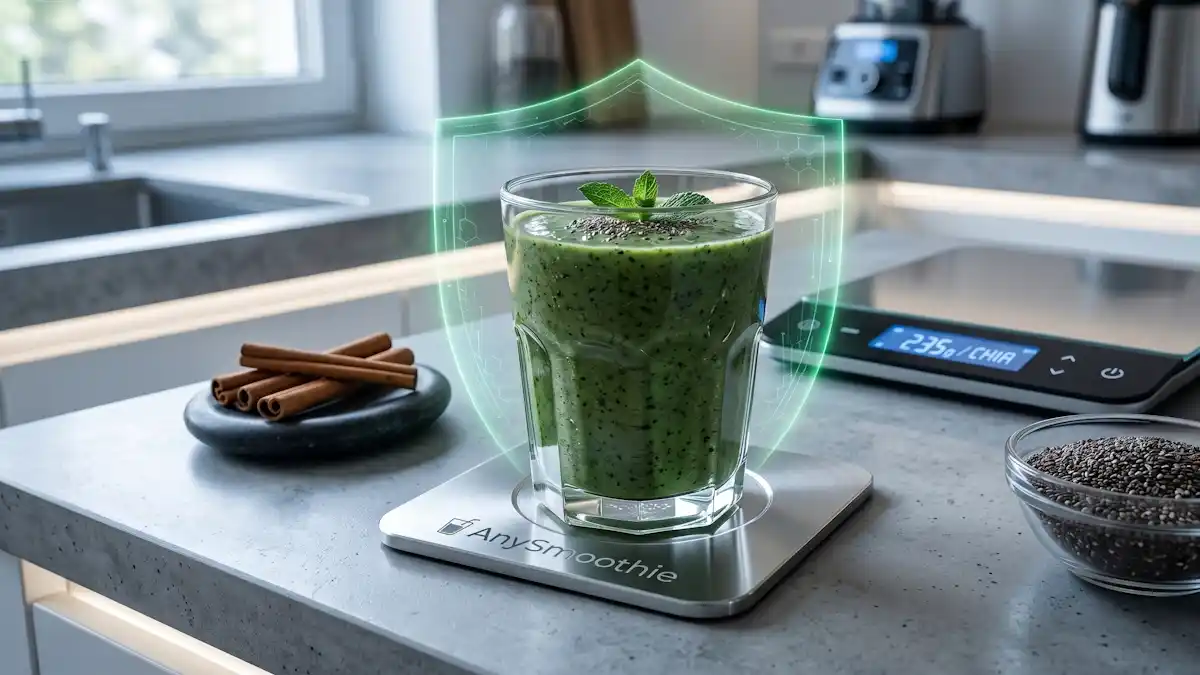
Tired of blood sugar crashes that leave you foggy and fatigued after lunch? Those post-meal slumps kill your drive, pack on stubborn fat, and slow your metabolism to a crawl. You need a fix that works fast.
Enter the Glycemic-Shield, a simple metabolism boost smoothie. It builds a fiber shield in your gut to trap glucose spikes. This primes your mitochondria for fat burn and stabilizes energy all day. You’ll get science-backed ingredients that shift nutrients to muscles, not fat stores.
Busy schedule? No problem. These recipes take under five minutes. You’ll learn the fiber matrix, mitochondrial primers, three tasty blends, and perfect timing. Drink one before your biggest meal. Watch energy soar and hunger fade.
Let’s start with the core: your intestinal shield.
The Shield Mechanism: How to Build an Intestinal Fiber Matrix
Viscous fibers turn your gut into a glucose trap. They form a gel that slows carb breakdown. Glucose enters your blood slowly. Insulin stays low. Fat oxidation ramps up.
Glucomannan and psyllium lead the pack. They expand in your stomach. This creates a physical barrier. Carbs digest slower. Your body partitions nutrients better: more to muscle fuel, less to fat.
High-viscosity fibers boost metabolic efficiency. They cut post-meal spikes by 30-50%. Satiety lasts hours. No more crashes.
Here’s a quick comparison of top shielding agents:
| Shielding Agent | Viscosity/Gelling Power | Impact on Post-Prandial Glucose Spike | Best Way to Integrate into Smoothies | Primary Benefit |
|---|---|---|---|---|
| Glucomannan (Konjac) | High | Strong reduction | Blend powder into liquid base | Ultimate glucose trap, satiety, starch-blocking |
| Chia Seeds | Medium | Moderate control | Soak and add whole seeds | Sustained fiber matrix |
| Apple Cider Vinegar | Low | Mild flattening | Dilute in liquid base | Enhanced digestion |
Glucomannan tops the list. For details on how it stacks up against psyllium for glucose control, check this fiber supplement comparison. Start with 1 gram per smoothie.
Viscous Fiber: Using Glucomannan and Psyllium to Trap Glucose
Glucomannan swells 50 times its size in water. It coats food particles. Enzymes struggle to reach carbs. Glucose absorption drops.
Psyllium gels slower but holds steady. Both beat insoluble fibers for blood sugar control. Use 1 gram glucomannan or 1 teaspoon psyllium per serving. Always drink extra water to avoid bloating.
They improve nutrient partitioning. Glucose heads to muscles first. Fat storage falls. Add to your blender with liquid. Stir well before blending. Smooth integration, big results. Studies show viscous fibers like these flatten glucose curves effectively, as in this review on soluble fiber effects.
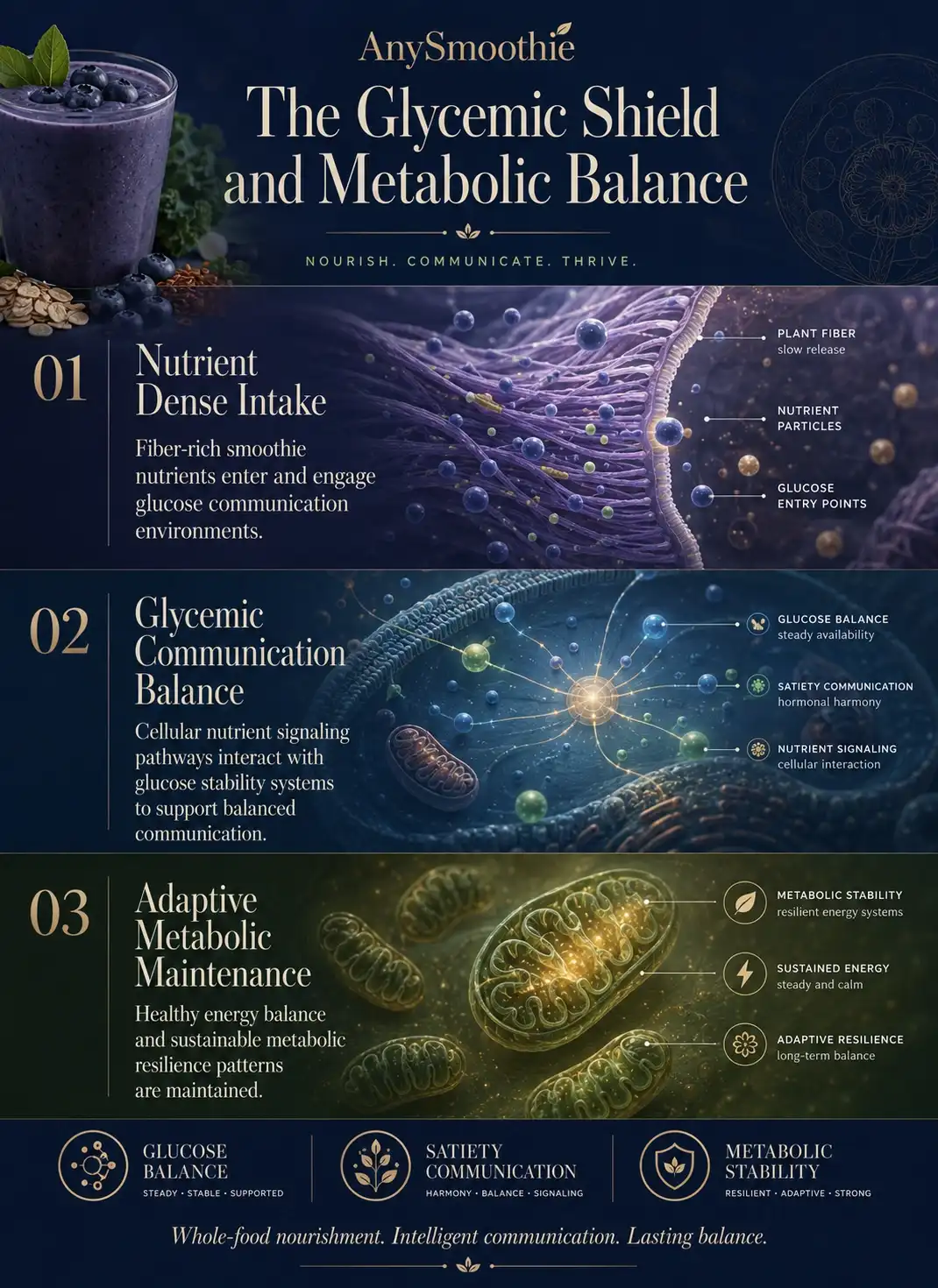
Mitochondrial Priming: Forcing the Shift from Sugar to Fat Oxidation
Your mitochondria are fat-burning engines. Prime them right, and they hum. Alpha-lipoic acid (ALA) and CoQ10 act like spark plugs. They boost electron transport. ATP flows. Fat oxidizes over sugar.
Take 200mg ALA and 100mg CoQ10 daily. They synergize with your fiber shield. Steady energy replaces crashes. Liposomal forms absorb best.
Think of it as revving your engine before a drive. Mitochondria shift gears. Glucose uptake improves in muscles. Fat burn accelerates. Metabolic efficiency climbs.
Alpha-Lipoic Acid and CoQ10: The Spark Plugs of the Glycemic-Shield
ALA recycles antioxidants. It pulls glucose into cells for energy, not storage. CoQ10 powers ATP production. Together, they induce PGC-1α, a master switch for mitochondrial biogenesis. See this study on their combo effects.
Users report all-day focus. Source pure powders. Mix 200mg ALA and 100mg CoQ10 into smoothies. Feel the switch in days.
3 Metabolism-Boost Smoothie Recipes (Shield-Protocol)
These blends pack fiber matrix and primers. Low net carbs, high fiber. Prep in under five minutes. One serving each. Taste great, deliver results.
Strategic Timing: Using the Shield Before Your Largest Meal
Drink 15-30 minutes pre-meal. Fiber gels form. Primers activate. Your biggest meal hits a prepared gut.
Post-meal glucose flattens. Partitioning improves. Fat burn peaks. Target dinner if carb-heavy.
Post-Prandial Biohacking: Measuring the “Flattened Curve” Success
Grab a finger-prick meter or CGM. Test baseline, then 30/60/90 minutes post-meal. Without shield: peaks over 140mg/dL. With it: under 140, smooth drop.
Apps like Levels track trends. Success means steady energy, less hunger. Metabolism speeds up. Tweak recipes based on data.
Conclusion
The Glycemic-Shield delivers stable blood sugar, primed fat burn, and easy wins. Fiber traps spikes. Primers shift to oxidation. Recipes fit any day.
Pick one blend. Try for a week. Track your curve and energy. Consult a doctor if you have conditions.
You control your metabolism now. Stable power awaits.
🛡️ Safety Notes & Dietary Interactions
- Viscous Fiber Matrix and Glucose Absorption Modulation: Fibers like glucomannan, psyllium, and chia form gel-like structures inside the digestive tract that slow carbohydrate breakdown and soften post-meal glucose elevation. This slower nutrient pacing may help support steadier insulin signaling, longer satiety, and more stable energy patterns compared to highly refined low-fiber meals.
- Mitochondrial Priming and Fat Oxidation Support: Alpha-lipoic acid and CoQ10 are frequently discussed in metabolic-efficiency frameworks because they participate in mitochondrial electron transport and cellular energy conversion pathways. Their role is not stimulant-like energy production, but support for smoother ATP generation and steadier substrate utilization during changing glucose conditions.
- Pre-Meal Timing and Nutrient Partitioning Dynamics: Drinking fiber-rich smoothies shortly before larger meals may help create a more gradual glucose-entry curve by slowing digestion and improving satiety signaling. This timing structure is often used in glycemic-support strategies to encourage steadier nutrient partitioning rather than rapid post-meal energy spikes and crashes.
- Hydration Balance and Fiber Adaptation Considerations: Highly viscous fibers absorb substantial amounts of water during digestion. Increasing glucomannan, psyllium, or chia intake too aggressively without adequate hydration may lead to bloating or digestive heaviness, which is why gradual dosing and steady fluid intake generally create a smoother adaptation process.
FAQ
Why are viscous fibers considered so effective for blood sugar stability?
Viscous fibers form a gel-like matrix that slows how quickly carbohydrates interact with digestive enzymes and enter circulation. This softer absorption curve may help reduce rapid glucose spikes and support steadier insulin signaling after meals. Many people also notice improved fullness because these fibers increase gastric volume and slow digestion naturally.
How does glucomannan differ from psyllium in smoothie formulas?
Glucomannan generally creates a stronger and faster-forming gel structure, while psyllium thickens more gradually and tends to feel slightly heavier in texture. Both support glucose modulation and satiety, but glucomannan is often used in smaller amounts because of its high water-binding capacity. Smooth texture and hydration balance matter when working with either fiber.
Why are alpha-lipoic acid and CoQ10 paired together so often?
Both compounds participate in mitochondrial energy pathways tied to ATP production and oxidative metabolism. Alpha-lipoic acid is frequently discussed for glucose-handling and antioxidant recycling support, while CoQ10 helps facilitate electron transport inside mitochondria. Together, they fit naturally into metabolic-efficiency and fat-oxidation smoothie routines.
Why does drinking the smoothie before meals change the effect?
Pre-meal timing allows the fiber matrix to hydrate and expand before larger amounts of carbohydrates enter digestion. This may help flatten the post-meal glucose curve and create earlier satiety signaling, which often translates into steadier energy and reduced hunger afterward. Many glycemic-support routines use this strategy specifically for larger or higher-carbohydrate meals.
How can someone tell if a glycemic-support smoothie is working well?
Most people notice steadier energy, fewer afternoon crashes, reduced reactive snacking, and smoother satiety after meals. Some also track post-meal glucose trends with finger-prick testing or continuous glucose monitors to observe whether their glucose curve becomes flatter and more stable after using higher-fiber pre-meal smoothie routines consistently.

Medical Disclaimer: AnySmoothie content is for educational purposes only and is not a substitute for professional medical advice. Consult a healthcare provider for personalized guidance. See our full Disclaimer & Terms of Use. AI Transparency: AnySmoothie may use AI to support content development. All content undergoes human editorial review for accuracy, clarity, and editorial quality. See our full AI Transparency.