

Low energy often sends people straight to coffee, but food can help the body do part of the work itself. The NAD+ salvage pathway is one way cells recycle niacin-related building blocks so they can keep making NAD+.
Smoothies fit this topic because they can pack fruit, greens, protein, and key minerals into one easy meal. That matters when you want steady support for normal energy metabolism and recovery, not a quick spike. They also work well on rushed mornings and after training. A good smoothie can do that without feeling heavy, and the best ones stay simple enough to repeat.
What the NAD+ salvage pathway does, and why it matters
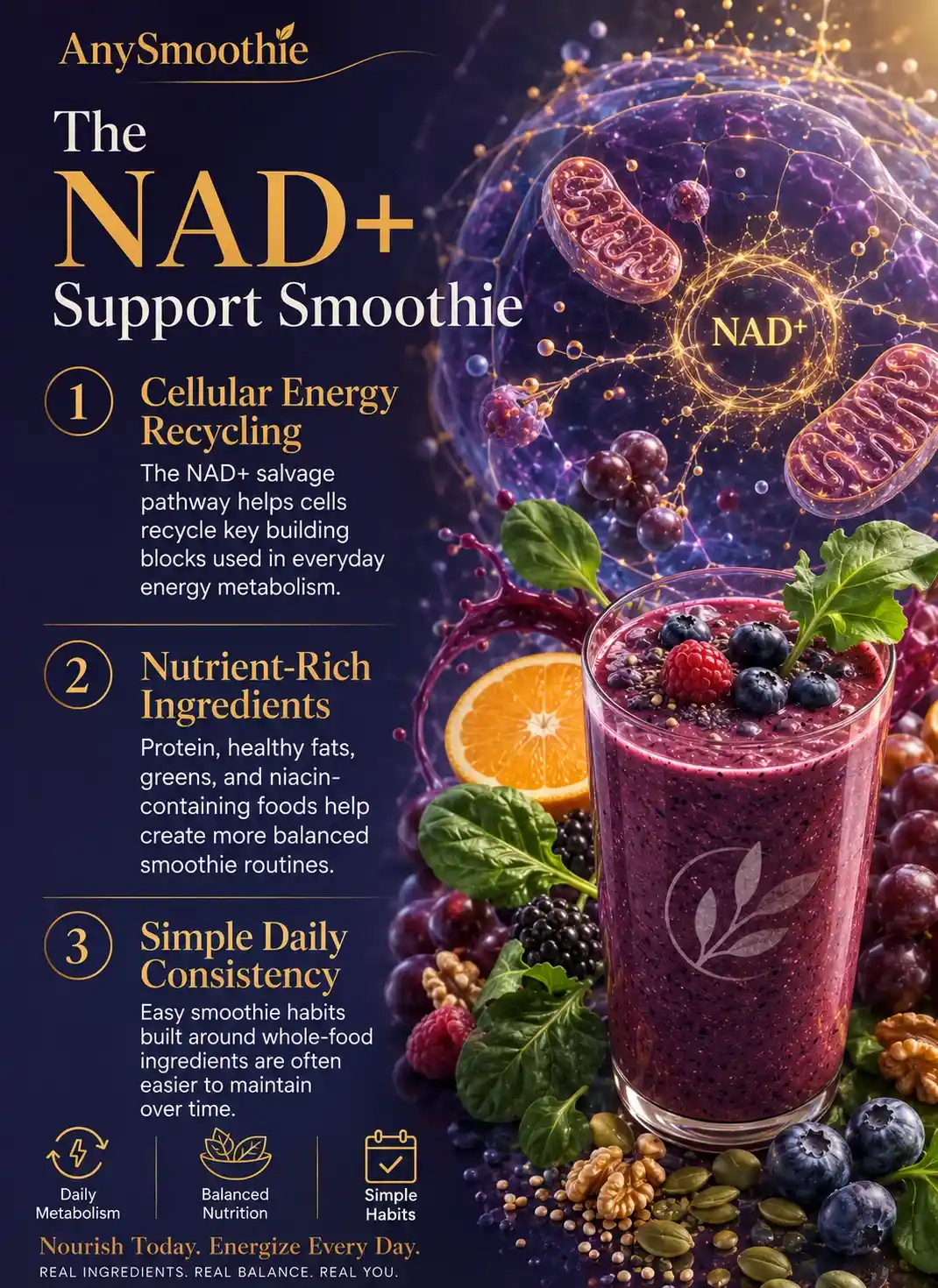
NAD+ is a coenzyme, which means cells use it as a helper in many basic jobs. It helps move energy through metabolism, supports repair processes, and keeps normal cell signaling on track. The salvage pathway keeps that helper molecule available by recycling nicotinamide, a niacin-related compound. That lets the body reuse what it already has instead of rebuilding everything from scratch. A systems approach to NAD+ restoration describes this recycling route as a short, efficient loop.
That efficiency matters because the body uses NAD+ all the time. When the pool stays steady, cells have room to handle everyday energy demand and maintenance. When the pool runs low, the system has less to work with.
How the body recycles nicotinamide into NAD+
The body breaks down NAD+ during daily cell activity, then reuses part of the leftover nicotinamide to make more. Vitamin B3 forms, including niacin and nicotinamide, give the pathway its raw material. Enzymes handle the conversion step by step, so the process stays practical when nutrient intake is steady. In plain terms, the body is putting old pieces back to work.
Why NAD+ levels can feel harder to maintain with age, stress, or low nutrient intake
Recycling can get less efficient with age. Higher physical demand, poor sleep, and low intake of precursor nutrients can make the job harder. The result is a smaller buffer for normal energy needs. Research on aging muscle links the salvage pathway with oxidative stress control and mitochondrial NAD+ pools. A Frontiers review on aging muscle covers that connection.
The best smoothie ingredients for NAD+ salvage pathway support
The best blends start with whole foods that bring precursor nutrients, antioxidants, and enough protein or fat to keep the drink balanced. A PubMed paper on the NAD+ salvage pathway gives a broader biochemical view of why precursor availability matters for energy production.
These ingredients cover the basics without making the smoothie fussy.
| Ingredient | Key Nutrients | Why It Helps | Best Pairings | Easy Use in Smoothies |
|---|---|---|---|---|
| Greek yogurt or kefir | Protein, B vitamins, calcium | Adds a niacin-friendly base and helps steady the drink | Berries, oats, flax | Use plain and unsweetened |
| Oats | Fiber, carbs, some niacin | Gives slow fuel and mild B-vitamin support | Banana, nut butter, yogurt | Blend 1/4 to 1/2 cup |
| Chia or flax | Fiber, omega-3 fats, minerals | Supports satiety and adds healthy fat | Berries, cocoa, kefir | Add 1 tbsp ground |
| Spinach or kale | Folate, magnesium, plant compounds | Rounds out the mineral side of metabolism | Citrus, berries, yogurt | Use a small handful |
| Almond butter or almonds | Fat, protein, vitamin E | Makes the smoothie more filling | Banana, cocoa, oats | Blend 1 tbsp smooth butter |
The pattern is simple, one precursor-rich base, one fruit, one green, and one source of protein or fat.
Niacin-rich and tryptophan-rich foods to build around
Yogurt and kefir bring protein plus B vitamins. Oats add slow carbs and a little niacin. Seeds, nuts, bananas, and legumes help round out the amino acid mix, including tryptophan. The body can use that in its own NAD+ production chain. These foods won’t force a result, but they do give the pathway steady raw material.
Berry, greens, and citrus add-ons that support cellular defense
Berries bring anthocyanins, citrus adds vitamin C, and leafy greens add folate and magnesium. Those nutrients help support healthy oxidative balance, which matters when cells are under everyday stress. A handful of spinach can disappear into a berry smoothie without changing the flavor much.
Protein and fat add-ins that keep the smoothie useful for real life
Greek yogurt, collagen, chia, flax, almond butter, and avocado help the smoothie feel like food, not a sugar drink. Protein supports fullness. Fat slows the hit from fruit and gives the blend more staying power. That makes it easier to use the smoothie as breakfast or a recovery snack.
3 Smoothie recipes for NAD+ salvage pathway support
How to make your smoothie work better for NAD+ support
Build the glass around balance. Pair precursor-rich foods with protein, then use fruit for flavor instead of turning the smoothie into dessert. Keep added sugar low, because a sweet drink can crowd out the fats and amino acids that make the meal steadier. Whole ingredients usually beat sweetened powders, since they bring fiber and a wider nutrient mix.
Hydration matters too. Use water, milk, kefir, or unsweetened plant milk, then adjust the texture to fit your appetite. A medium portion works well for a snack or light breakfast.
The best smoothie for NAD+ support is one you can repeat without thinking about it.
Easy swaps if you are dairy-free, low sugar, or high protein
If you skip dairy, use unsweetened soy yogurt, almond milk, or coconut yogurt. If you want less sugar, lean on berries, spinach, cucumber, and cinnamon instead of extra banana or juice. If you want more protein, add soy protein, pea protein, or a little more Greek yogurt if dairy fits.
Conclusion
Smoothies make it easy to bring precursor nutrients, antioxidants, protein, and healthy fats into one routine. That mix supports normal NAD+ recycling and gives cells a steadier nutritional base for energy metabolism. The goal is consistency, not perfection. A simple berry blend one day and a green seed blend the next can do more for your routine than a complicated plan you never repeat. Keep the ingredients real, and let the habit do the work.

Medical Disclaimer: AnySmoothie content is for educational purposes only and is not a substitute for professional medical advice. Consult a healthcare provider for personalized guidance. See our full Disclaimer & Terms of Use. AI Transparency: AnySmoothie may use AI to support content development. All content undergoes human editorial review for accuracy, clarity, and editorial quality. See our full AI Transparency.