
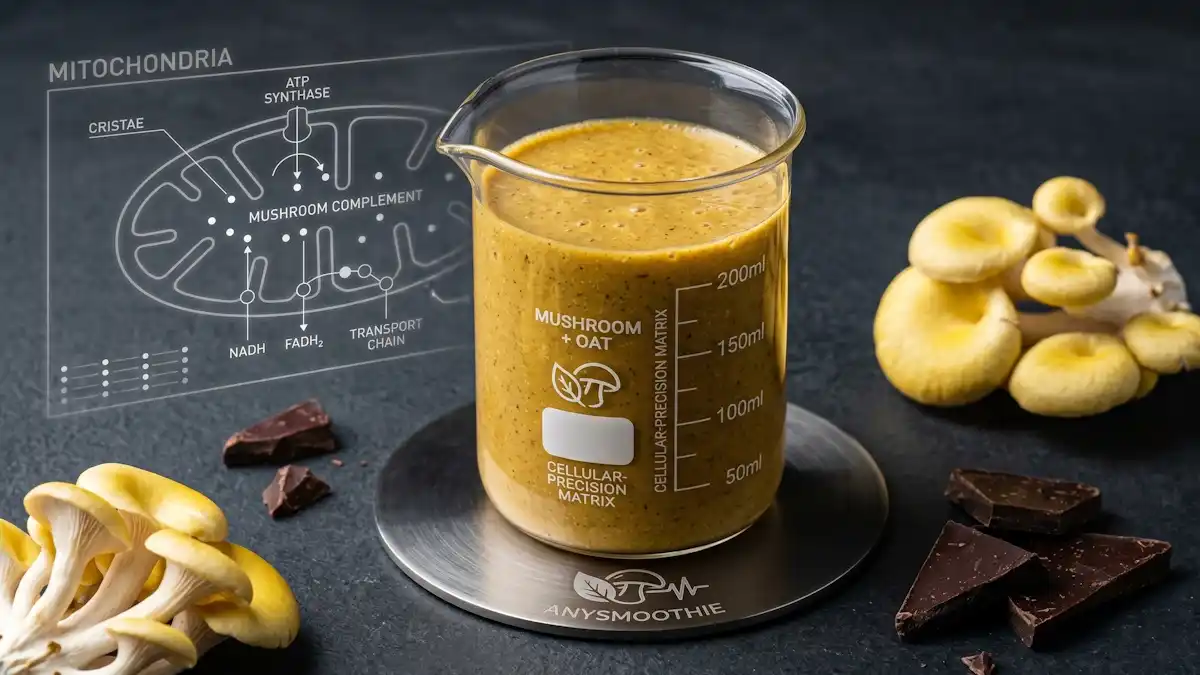
Mitochondria turn food into usable energy, so they shape how steady you feel from morning to night. When people start looking at ergothioneine, they’re usually after a food compound that supports cellular defense without making the routine complicated.
That makes ergothioneine smoothies for mitochondrial integrity a practical idea, not a lab-only one. Smoothies can hold mushrooms, fruit, and other nutrient-dense ingredients in one glass, and they are easy to repeat on busy days.
What ergothioneine is, and why it matters for mitochondrial integrity
Ergothioneine is a naturally occurring compound found in certain foods, especially mushrooms. A ScienceDirect review of ergothioneine discusses its role in healthy aging research, which is one reason it keeps showing up in nutrition conversations.
For mitochondrial integrity, the goal is simple. You want mitochondria to stay structurally sound and functionally active. They help turn food into energy, so they depend on a steady nutrient supply and a manageable oxidative load. Ergothioneine is interesting because it fits into the body’s own defense systems. It is not a cure-all, and it does not need to be. In everyday eating, it is one more food-based way to support cellular function.
A simple look at ergothioneine’s antioxidant role
Ergothioneine helps support the body’s normal defense against oxidative stress. Oxidative stress rises when reactive compounds outpace the body’s cleanup systems. That can happen after poor sleep, a string of processed meals, hard training, or plain old stress.
A PMC review on oxidative stress looks at ergothioneine in that context. For smoothies, the point is simple, use foods that help keep the balance steady.
Why mitochondria are so sensitive to oxidative stress
Mitochondria are busy, and busy systems wear the most. They sit near the center of energy production, so they can feel the effects of sleep loss, low-quality food, and environmental strain.
When that pressure adds up, energy can feel less smooth. That is one reason people build meals around nutrient density instead of chasing a single fix. Small inputs, repeated often, usually matter more than one dramatic change.
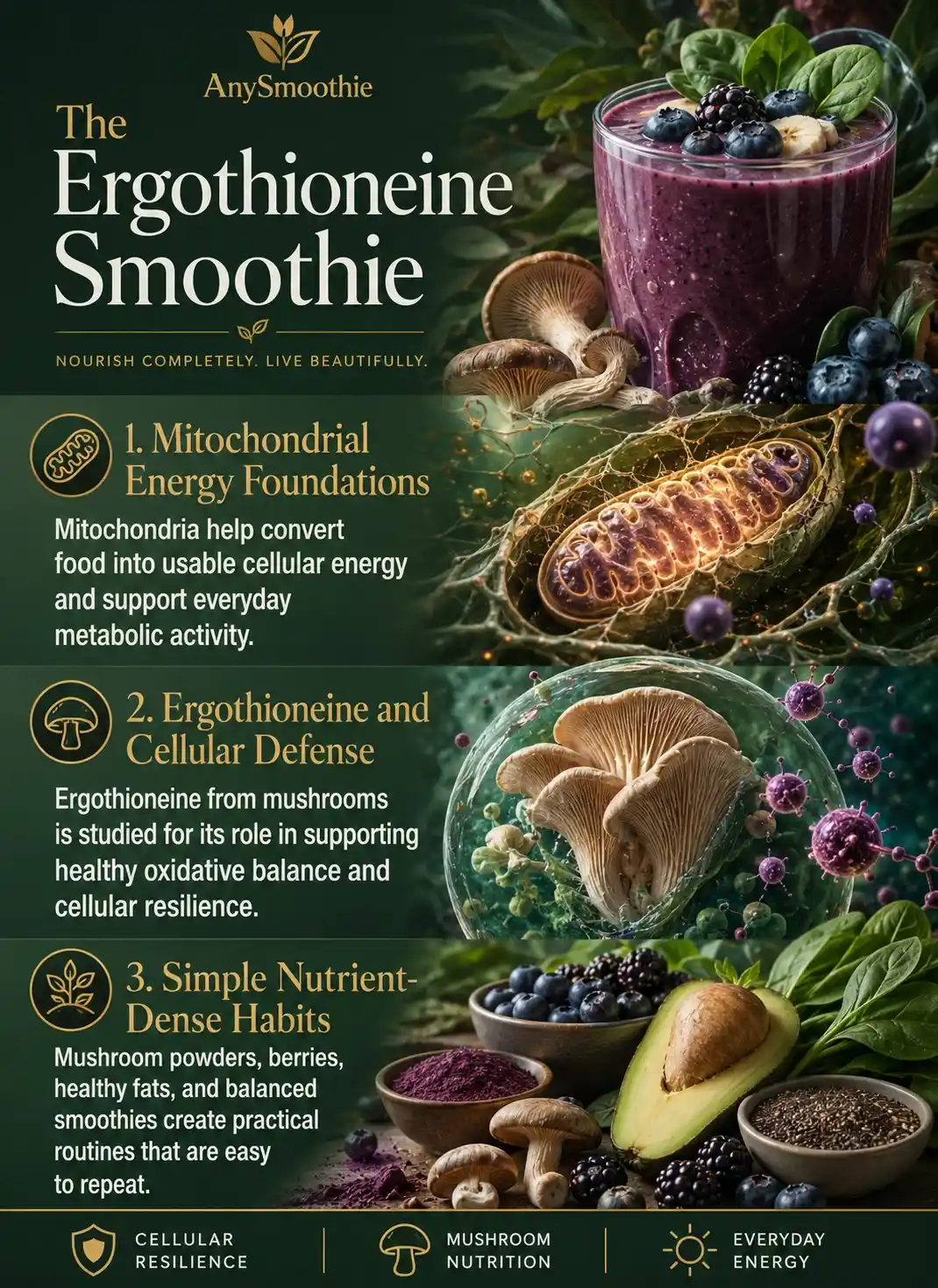
How smoothies can help deliver ergothioneine-rich foods
Smoothies work well because they let you hide the earthy edge of mushrooms behind fruit, fat, and acid. They also make it easy to start small and adjust the flavor over time.
| Ingredient | Ergothioneine relevance | Other key nutrients | Flavor role | Best use in smoothie |
|---|---|---|---|---|
| Oyster mushrooms | One of the best-known food sources | B vitamins, potassium, fiber | Mild and earthy | Bright fruit blends |
| Shiitake mushrooms | Naturally contains ergothioneine | Copper, B vitamins, umami compounds | Deep, savory edge | Cocoa or coffee-style smoothies |
| Maitake mushrooms | Common in mushroom blends | Fiber, B vitamins | Earthy but balanced | Green smoothies |
| Frozen berries | No ergothioneine, but they help cover mushroom flavor | Vitamin C, polyphenols, fiber | Tart and sweet | Beginner-friendly blends |
Oyster, shiitake, and maitake are the most useful starting points. The fruit and fat choices decide whether the drink tastes bright, rich, or green.
Which foods naturally bring ergothioneine into a smoothie
Mushrooms do the heavy lifting here. Oyster mushrooms are the easiest starting point because their flavor is mild. Shiitake adds a deeper note, while maitake sits in the middle.
Lightly cooked and cooled mushrooms, or a small amount of culinary mushroom powder, blend better than a large raw handful. They also pair well with berries, banana, citrus, and vanilla yogurt alternatives. Those ingredients do not add ergothioneine, but they make the smoothie worth repeating.
How to build a smoothie that tastes good and blends well
Start with a cold liquid, then add fruit for sweetness and body. Use banana or yogurt alternatives for creaminess, a little fat for mouthfeel, and fiber from berries or greens for texture.
Cocoa, cinnamon, and citrus help cover mushroom flavor without making the drink heavy. If the taste feels too earthy, lower the mushroom amount and add more acid or sweetness. The goal is a smoothie that drinks like breakfast, not a project.
3 Ergothioneine smoothie recipes for mitochondrial integrity
Berry mushroom smoothie for a bright, beginner-friendly option
Start here if you want the mildest taste. Berry sweetness and a creamy base keep the mushroom note low.
Ingredients
- 1 cup frozen mixed berries
- 1/2 banana
- 1 cup unsweetened kefir or almond yogurt
- 1 teaspoon oyster mushroom powder
- 3/4 cup cold water or almond milk
Blend until smooth. This fits a morning start because the berry flavor stays front and center.
Estimated Nutrition per Serving
Estimated with plain low-fat kefir and cold water. Mushroom powder values vary by product.
- Calories: ~315 kcal
- Protein: ~13 g
- Carbohydrates: ~57 g
- Fat: ~5 g
- Fiber: ~10 g
- Sugars: ~36 g
Cocoa and banana smoothie for a richer, more filling blend
This version feels richer and works well after training or as an afternoon snack.
Ingredients
- 1 banana
- 1 tablespoon unsweetened cocoa
- 1 teaspoon shiitake mushroom powder
- 1 tablespoon almond butter
- 1 cup oat milk
- Pinch of cinnamon
Blend until creamy. Cocoa and banana cover the earthy notes and make the drink feel substantial.
Estimated Nutrition per Serving
Estimated with unsweetened oat milk. Mushroom powder values vary by product.
- Calories: ~355 kcal
- Protein: ~9 g
- Carbohydrates: ~53 g
- Fat: ~14 g
- Fiber: ~8 g
- Sugars: ~21 g
I’d blend the cocoa and mushroom powder into the oat milk first. Once dispersed, they integrate much more evenly with the almond butter and you get a smoother chocolate flavor throughout.
Green smoothie with citrus for a fresher, lighter profile
This one is lighter and less sweet.
Ingredients
- 1 cup baby spinach
- 1/2 orange, peeled
- 1/2 green apple
- 1 teaspoon maitake mushroom powder
- 1 tablespoon hemp seeds
- 3/4 cup water or coconut water
Blend well. Citrus keeps the flavor crisp, so the greens and mushrooms stay in the background.
Estimated Nutrition per Serving
Estimated with unsweetened coconut water. Mushroom powder values vary by product.
- Calories: ~210 kcal
- Protein: ~7 g
- Carbohydrates: ~36 g
- Fat: ~6 g
- Fiber: ~7 g
- Sugars: ~23 g
If the maitake comes through more strongly than expected, using a sweeter green apple can soften the earthy edge without adding another ingredient or changing the character of the smoothie.
How to get the most from an ergothioneine smoothie habit
Consistency matters more than perfection. One smoothie won’t do much on its own, but a repeated habit can fit into a broader food pattern that supports energy production.
Breakfast is an easy time for many people. Post-workout is another good fit, and a mid-afternoon snack works when you want something light.
The best smoothie habit is the one you can repeat on a normal Tuesday.
Pair the smoothie with enough protein, good hydration, sleep, and plenty of colorful whole foods. Those basics shape mitochondrial health far more than any single ingredient. Ergothioneine fits best inside that bigger routine.
Conclusion
Ergothioneine smoothies for mitochondrial integrity work because they are simple, not flashy. Mushrooms bring the compound, fruit improves the taste, and smart pairings make the drink easy to keep in rotation.
That food-first approach matters. It lets you support cellular defense without turning breakfast into a chore or a supplement stack.
Pick one blend, keep it mild, and adjust from there. A steady smoothie habit is a small step, and small steps are how strong routines get built.
🛡️ Safety Notes & Dietary Interactions
- Mitochondrial Support Depends on the Whole Pattern: Ergothioneine-containing foods fit best within routines that also prioritize sleep, hydration, physical activity, and nutrient-dense meals. No single ingredient determines mitochondrial function.
- Start Small With Mushroom Ingredients: Mushroom powders and cooked mushrooms can have strong flavors. Beginning with modest amounts often improves taste and makes smoothies easier to enjoy consistently.
- Protein Improves Practicality: Pairing mushrooms with protein-rich foods such as kefir, yogurt, soy yogurt, or protein powders helps create a more satisfying smoothie that functions as a meal or recovery snack.
- Colorful Plants Add Nutritional Depth: Berries, citrus fruits, greens, cocoa, seeds, and nuts contribute a broader range of phytonutrients that complement mushroom-based smoothie recipes and support overall dietary quality.
FAQ
What is ergothioneine and why is it associated with mitochondrial integrity?
Ergothioneine is a naturally occurring compound found primarily in mushrooms and certain other foods. The article discusses it because researchers are interested in its role within the body’s antioxidant systems and healthy aging research. It is often included in nutrition-focused discussions about cellular resilience and the maintenance of normal mitochondrial function.
Why are mushrooms the main focus of these smoothies?
Mushrooms are among the richest known dietary sources of ergothioneine. Oyster mushrooms, shiitake mushrooms, and maitake mushrooms are highlighted because they naturally contain the compound while also contributing fiber, B vitamins, minerals, and unique plant compounds. These foods provide the foundation for the smoothie’s ergothioneine content.
Why are berries and citrus fruits paired with mushroom ingredients?
The article emphasizes taste and nutritional balance. Berries contribute polyphenols, fiber, and natural sweetness that help soften earthy mushroom flavors. Citrus fruits add brightness and acidity, making mushroom-containing smoothies more enjoyable while also contributing vitamin C and other beneficial plant compounds.
How can someone make mushroom smoothies taste better?
According to the article, ingredients such as banana, berries, cocoa, cinnamon, yogurt alternatives, citrus fruits, nut butters, and creamy bases help reduce the intensity of mushroom flavors. Starting with small amounts of mushroom powder and gradually adjusting the recipe often creates a more approachable smoothie that remains enjoyable over time.
What is the biggest takeaway from the article?
The article repeatedly emphasizes consistency rather than chasing a single compound. Ergothioneine-rich foods can contribute to a broader nutrition strategy that includes protein, colorful produce, healthy fats, hydration, and overall dietary quality. A simple smoothie that fits comfortably into everyday life is presented as more valuable than a complicated routine that is difficult to maintain.

Medical Disclaimer: AnySmoothie content is for educational purposes only and is not a substitute for professional medical advice. Consult a healthcare provider for personalized guidance. See our full Disclaimer & Terms of Use. AI Transparency: AnySmoothie may use AI to support content development. All content undergoes human editorial review for accuracy, clarity, and editorial quality. See our full AI Transparency.