
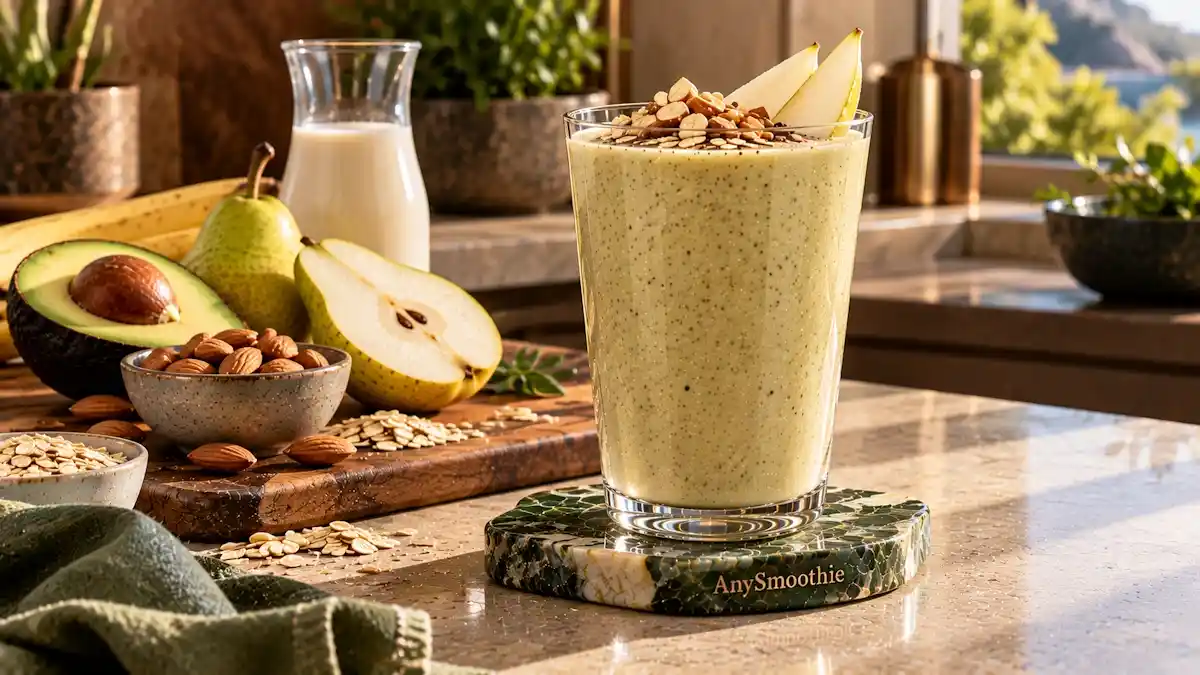
Berries, almond butter, and spinach can make a creamy smoothie that supplies vitamin E alongside nutrients involved in antioxidant recycling. That pairing supports normal physiological systems, but no smoothie can guarantee a measurable effect on tocopherol recycling.
For another food-based topic involving cellular defense, see sulforaphane-rich smoothies for cellular defense. Sulforaphane is a distinct plant compound, and its presence in a smoothie doesn’t establish an effect on vitamin E recycling.
If you’re curious about vitamin E and tocopherol recycling smoothies, start with food variety, rather than a promised biochemical boost. Understanding the basic science makes ingredient choices easier, and three simple recipes put those choices into practice.
How vitamin E and tocopherol recycling work in the body
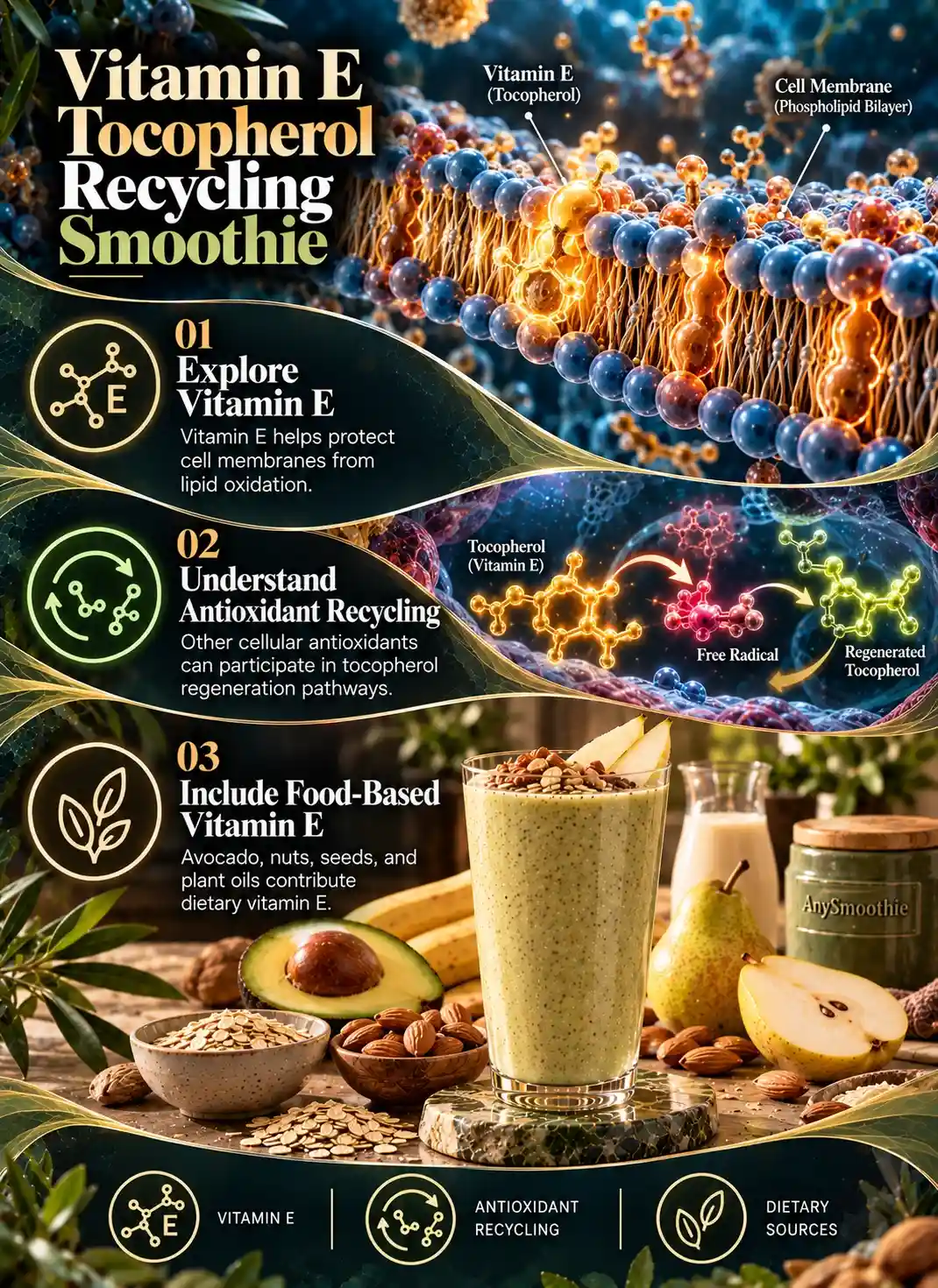
Tocopherols are forms of vitamin E. Alpha-tocopherol is the form used to meet human vitamin E needs. As part of normal physiology, vitamin E helps protect fatty cell components against oxidation.
Vitamin E helps protect fats in cells
When tocopherol interrupts reactions involving lipid radicals, it can become a tocopheroxyl radical. Other antioxidant systems can help restore it to its reduced form, allowing it to participate again.
Another fat-soluble antioxidant-related topic is astaxanthin smoothies for skin vitality. Astaxanthin is a carotenoid, distinct from vitamin E, so the two shouldn’t be treated as interchangeable.
This chemistry occurs within physiological systems that regulate nutrient transport and use. Eating a vitamin E-containing food supplies material for those systems, but it doesn’t tell you how much reaches a particular tissue.
Vitamin C can participate in recycling
Vitamin C can help regenerate oxidized vitamin E. Glutathione-related pathways also help maintain this interconnected antioxidant system, including by supporting vitamin C recycling. A review of vitamin C and E mechanisms describes these relationships.
For another plant-compound topic related to cellular defense, see ferulic acid smoothie for cellular defense. Ferulic acid has different chemical properties from vitamin E, and this related topic doesn’t establish that it changes tocopherol recycling.
Kiwi, strawberries, and oranges supply vitamin C. However, providing nutrients doesn’t directly control these reactions. Digestion, nutrient status, and cellular conditions all affect what happens after you eat.
A biochemical recycling reaction doesn’t establish that combining two foods will measurably change your vitamin E status.
Pairing foods containing these vitamins is a practical way to include both nutrients. However, digestion, absorption, and tissue availability separate the contents of your blender from reactions inside cells.
3 Vitamin E and Tocopherol Recycling Smoothies
This recipe makes one large serving. Choose unsweetened milk or fortified soy beverage, and use plain almond butter without added sweeteners.
Berry, Spinach, and Almond Butter Smoothie
Ingredients
- 1 cup frozen strawberries
- 1 packed cup baby spinach
- 1 tablespoon almond butter
- 3/4 cup unsweetened almond milk
- Water as needed
Instructions
Blend the almond milk and spinach first until smooth. Add the frozen strawberries and almond butter, then blend until creamy. Add a little water if needed to reach your preferred consistency. If using whole almonds instead of almond butter, a powerful blender will help reduce grittiness.
Estimated Nutrition (per serving)
- Calories: ~180 kcal
- Protein: ~6 g
- Carbohydrates: ~17 g
- Fat: ~11 g
- Fiber: ~5 g
- Sugars: ~8 g
Kiwi Avocado Seed Smoothie
Ingredients
- 2 medium kiwis, peeled
- 1/4 medium avocado
- 1 tablespoon unsalted, shelled sunflower seeds
- 3/4 cup unsweetened soy milk
- Cold water as needed
Instructions
Add the soy milk, peeled kiwis, avocado, and sunflower seeds to a blender. Blend until smooth and the seeds are finely processed. Add cold water a tablespoon at a time to adjust the consistency. Ripe kiwis provide natural sweetness, while avocado creates a creamy texture without adding much sweetness.
Estimated Nutrition (per serving)
- Calories: ~255 kcal
- Protein: ~10 g
- Carbohydrates: ~27 g
- Fat: ~14 g
- Fiber: ~9 g
- Sugars: ~14 g
A ripe avocado makes this smoothie extra creamy, while the kiwi adds a fresh, tangy flavor that keeps every sip bright and refreshing.
Mango, Orange, and Wheat Germ Smoothie
Ingredients
- 1/2 cup frozen mango
- 1/2 medium orange, peeled
- 2 tablespoons wheat germ
- 1/3 cup plain low-fat yogurt
- 2 teaspoons sunflower seed butter
- 1/2 cup water
Instructions
Combine the frozen mango, peeled orange, wheat germ, yogurt, sunflower seed butter, and water in a blender. Blend until smooth, adding a little more water if needed to adjust the consistency. For a dairy-free version, substitute a suitable unsweetened plant-based yogurt. Wheat germ contains gluten, so replace it with suitable seeds if gluten avoidance is necessary.
Estimated Nutrition (per serving)
- Calories: ~245 kcal
- Protein: ~11 g
- Carbohydrates: ~35 g
- Fat: ~9 g
- Fiber: ~5 g
- Sugars: ~25 g
Ingredients and their roles
| Ingredient | Amount | Main contribution | Flavor | Texture |
|---|---|---|---|---|
| Milk or fortified soy beverage | 3/4 cup | Protein, varying by product | Mild | Liquid base |
| Strawberries | 1 cup | Vitamin C | Sweet-tart | Thick when frozen |
| Raw spinach | 1/2 cup, loosely packed | Some vitamin E | Mildly leafy | Soft when blended |
| Almond butter | 1 tablespoon | Vitamin E and fat | Nutty | Creamy |
| Rolled oats, optional | 2 tablespoons | Carbohydrate and fiber | Mild | Thicker |
The NIH’s vitamin E food guidance identifies almonds, sunflower seeds, and spinach as dietary sources. Here, almond butter supplies vitamin E alongside fat, while strawberries contribute vitamin C.
Because vitamin E is fat-soluble, dietary fat helps with its absorption. There’s no need to add oil to this recipe. Nutrient amounts vary with brands, produce, and portions.
Build a smoothie with vitamin E, vitamin C, and healthy fats
Use a simple formula: a vitamin E-containing ingredient, vitamin C-rich produce, a source of unsaturated fat, and enough liquid to blend. Some ingredients fill two roles. Almond butter, for example, supplies both vitamin E and fat.
Choose ingredients that blend well together
The NIH lists nuts, seeds, and spinach among food sources of vitamin E. Strawberries pair well with almond butter, while kiwi’s tartness balances creamy avocado. Orange also works with mango and wheat germ.
For another fruit-based example involving plant polyphenols, see ellagic acid smoothies for polyphenol support. Ellagic acid is distinct from vitamin E, but it provides a complementary topic for readers interested in the variety of compounds found in plant foods.
Nutrient content varies with the food, variety, and portion. Use these combinations as practical food choices, without assuming every glass delivers identical amounts.
Adjust sweetness and texture
Start with unsweetened milk, a suitable plant-based beverage, or water. Then adjust thickness with small splashes of liquid.
Frozen fruit adds body without syrup or juice concentrate. For a less sweet smoothie, reduce mango and add more plain yogurt. Also, choose ingredients that fit your allergies; nut butter and seed butter aren’t interchangeable for everyone.
Olive leaves are another source of plant compounds explored in nutrition-related recipes. See olive leaf smoothie for polyphenol support. This is a separate polyphenol-focused topic, not a proven way to improve vitamin E recycling.
Make the Smoothie Fit Your Day Safely
A smoothie is one optional way to include nutrient-rich foods. It fits alongside varied meals, rather than replacing the range of foods you eat throughout the day.
Match the portion to your appetite
As written, this drink can work as a substantial snack or part of breakfast. Whether it feels like enough depends on your appetite and what else you’re eating.
Optional oats add thickness and carbohydrate. Meanwhile, the base affects protein content: dairy milk and many soy beverages provide more protein than many almond beverages. Compare nutrition labels when choosing a base that suits your usual meals.
You don’t need every ingredient at every meal. Across the day, vegetables, fruit, grains, protein foods, and sources of unsaturated fat provide different nutrients. A smoothie can add variety, but it doesn’t make the rest of your eating pattern irrelevant.
Keep supplements and individual needs separate
Food ingredients and concentrated vitamin E supplements aren’t interchangeable. The National Center for Complementary and Integrative Health’s antioxidant supplement guidance describes safety considerations that don’t follow simply from a nutrient’s antioxidant role.
Don’t add vitamin E capsules or antioxidant powders to chase a stronger recycling effect. This recipe doesn’t establish a supplement dose or a need for supplementation.
If you use vitamin E supplements or manage a health condition, ask a qualified health professional about your individual needs. Dietary restrictions may also affect your choice of milk, soy, nuts, or seeds.
For allergies, choose ingredients you already know are appropriate for you. A seed butter substitution isn’t automatically suitable for everyone.
Conclusion: Bring the ingredients together without the promises
Combine vitamin E-containing foods, vitamin C-rich produce, and a modest source of fat for a satisfying smoothie. Almond butter, strawberries, spinach, and your preferred base keep the recipe straightforward.
Enjoy it as part of a varied eating pattern, without treating the ingredient combination as a measurable intervention. Food supplies nutrients that support normal physiological systems, but no smoothie guarantees a particular result.
🛡️ Safety Notes & Dietary Interactions
- Nut and seed allergies: Almond butter and sunflower seeds are prominent ingredients, while soy milk and yogurt add other potential allergens. Choose substitutions only when they match your known tolerances and dietary restrictions.
- Gluten considerations: The mango-orange smoothie contains wheat germ, so it is unsuitable for gluten avoidance unless replaced appropriately. Check plant-based yogurt and other packaged substitutions for relevant labeling.
- Supplement caution: Food sources of vitamin E should not be treated like concentrated vitamin E supplements. Avoid adding capsules or antioxidant powders simply to pursue a stronger recycling effect.
- Portion and texture: Avocado, seeds, nut butter, and optional oats can make these smoothies relatively dense or thick. Adjust liquid and portion size according to appetite and individual digestive tolerance.
FAQs
Which smoothie provides the most fiber?
The kiwi avocado seed smoothie provides the most estimated fiber, at about 9 grams per serving. The berry-spinach version provides approximately 5 grams, while the mango-orange-wheat-germ smoothie provides about 5 grams. Actual amounts can vary with produce size, brands, and substitutions.
Why is dietary fat included with vitamin E foods?
Vitamin E is fat-soluble, and dietary fat helps with its absorption. In these recipes, almond butter, avocado, sunflower seeds, and sunflower seed butter provide fat without requiring added oil. This supports a practical food combination, but it doesn’t guarantee a particular vitamin E absorption or recycling outcome.
Can I replace almond butter with sunflower seed butter?
Yes, sunflower seed butter can replace almond butter when it suits your dietary needs. The recipes use both nuts and seeds as sources of dietary fat and vitamin E-related nutrition, but their nutrient profiles differ. A seed-based substitute isn’t automatically appropriate for someone with seed allergies or other dietary restrictions.
Is the mango-orange smoothie suitable for a gluten-free diet?
Not as written, because it contains wheat germ. The article recommends replacing the wheat germ with suitable seeds when gluten avoidance is necessary. You should also check packaged ingredients such as yogurt or plant-based alternatives for labeling that fits your dietary requirements.
Does combining vitamin C and vitamin E foods guarantee better tocopherol recycling?
No. Vitamin C can participate in regenerating oxidized vitamin E, but eating both nutrients together doesn’t establish a measurable change in tocopherol recycling. Digestion, absorption, nutrient status, and cellular conditions all influence what happens after the smoothie is consumed.

Medical Disclaimer: AnySmoothie content is for educational purposes only and is not a substitute for professional medical advice. Consult a healthcare provider for personalized guidance. See our full Disclaimer & Terms of Use. AI Transparency: AnySmoothie may use AI to support content development. All content undergoes human editorial review for accuracy, clarity, and editorial quality. See our full AI Transparency.