
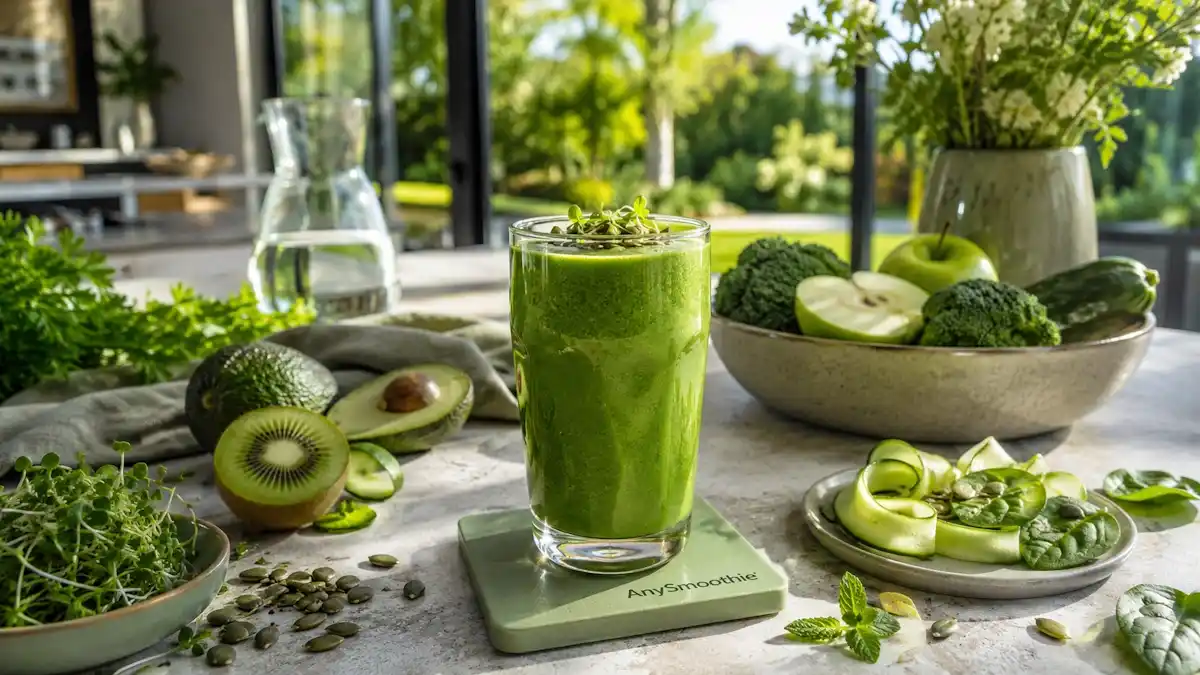
Pollution, poor sleep, and ultra-processed food all put pressure on your cells. A smoothie will not erase that load, but it can help your daily routine support the systems that handle it.
That is where sulforaphane-rich smoothies for cellular defense fit in. Sulforaphane comes from broccoli sprouts and other cruciferous plants, and it works best when you build the drink around fresh ingredients that taste good together.
The goal is simple, make the blend easy to repeat, keep the compound active, and keep the flavor bright enough that you actually want it again tomorrow.
How sulforaphane supports the body’s natural defense systems
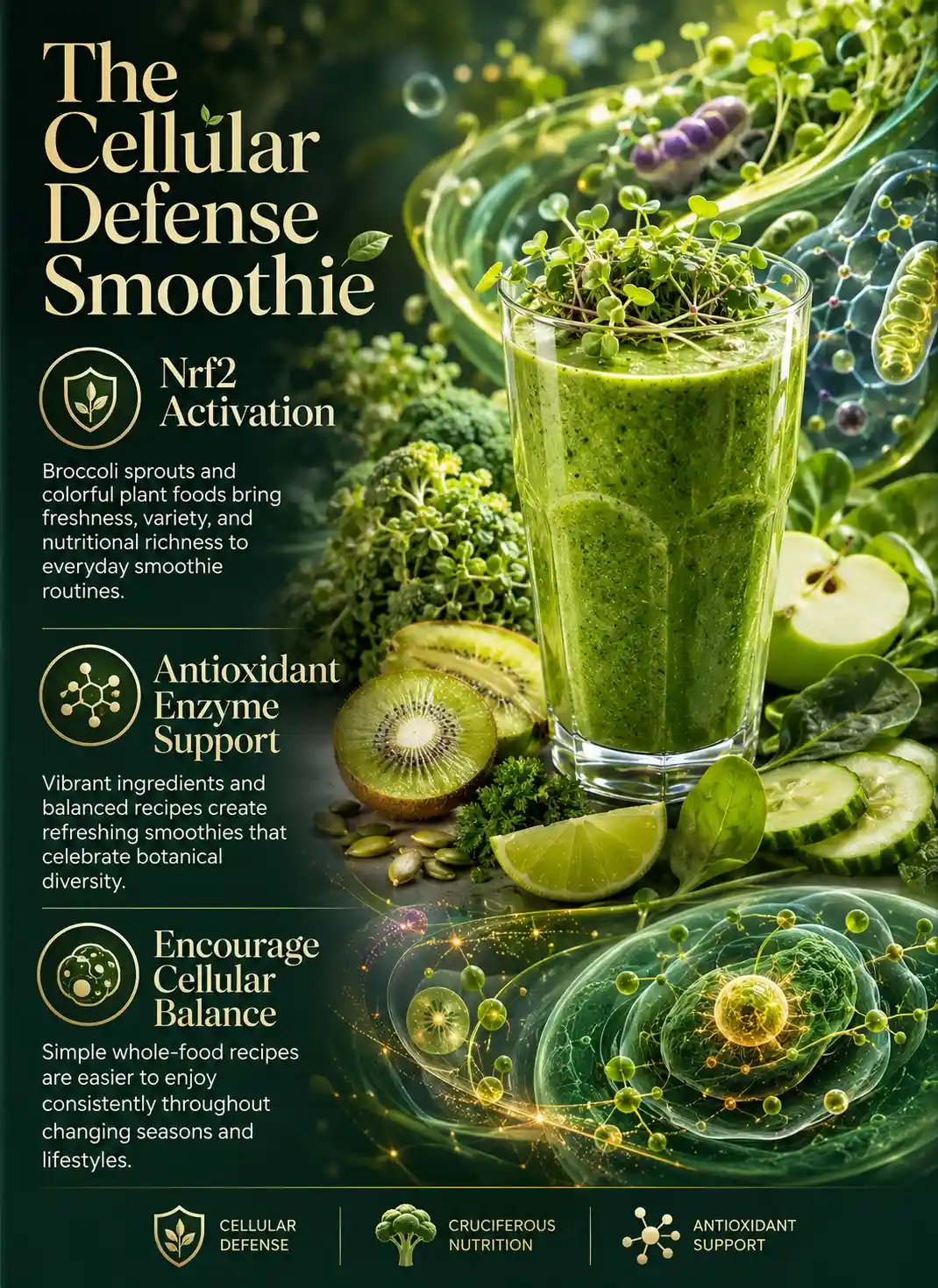
Sulforaphane gets attention because it talks to the body’s own defense code. It helps support the NRF2 pathway, which is tied to antioxidant enzymes, redox balance, and the systems that handle everyday oxidative stress. A NIH review on sulforaphane and Nrf2 explains why this plant compound keeps showing up in nutrition research.
Cruciferous plants fit well into a cellular health routine for the same reason. They carry glucoraphanin, and when plant tissue breaks, the enzyme myrosinase helps turn that compound into sulforaphane. That is why broccoli sprouts work so well in a smoothie.
This is a food-first way to support healthy detox pathways without chasing extremes. The point is regular exposure, simple prep, and ingredients you can drink often.
Why broccoli sprouts are the top source to use in smoothies
Broccoli sprouts are young, but they are concentrated. Compared with mature broccoli, they usually offer much more sulforaphane potential in a smaller serving.
That makes them easier to blend into a daily smoothie without turning breakfast into a pile of greens. A small handful goes a long way when the rest of the recipe is built around taste and texture.
What makes sulforaphane different from general antioxidants
Most antioxidants work like cleanup crews. Sulforaphane acts more like a signal.
It helps the body turn on its own protective enzymes instead of only neutralizing stress directly. That is a big reason these blends matter for cellular defense. You are feeding a signal, not just adding another green ingredient.
How to build sulforaphane-rich smoothies without losing potency
A good green blend starts with fresh, cold broccoli sprouts. Use them soon after buying, keep them chilled, and blend them with ingredients that soften the peppery edge. If you like a steadier base, the structure used in smoothies for gut microbiome support works well here too, because fiber and fat help the drink feel less sharp.
Fresh sprouts matter because the enzyme side of the recipe depends on raw plant tissue. A Nature study on cellular antioxidant defense shows why researchers pay attention to this pathway, but the practical kitchen move is simple, use chilled ingredients and skip long prep times.
Fresh broccoli sprouts matter more than fancy add-ins. If the base is weak, the smoothie just tastes busy.
Ingredients that help sulforaphane stay effective
Fruit and herbs matter because sulforaphane can be punchy. Citrus brings a clean edge. Berries add sweet-tart balance and color. Cucumber cools the flavor and thins the texture.
Avocado makes the drink creamy and filling. Mint and ginger keep the profile bright without adding much sugar. Those ingredients do not replace broccoli sprouts, they make the sprouts easy to use.
Common smoothie mistakes to avoid
A few habits can flatten the result. Overblending warms the smoothie and dulls the flavor. Old sprouts with a sour smell or slimy texture should go straight in the compost.
Added sugar can hide the taste for one sip and ruin the balance by the end of the glass. Green powders also are not the same as fresh sprouts, so don’t assume one scoop gives the same result.
This quick comparison helps you choose the right support ingredient.
| Ingredient | Sulforaphane support | Taste profile | Best use | Prep note |
|---|---|---|---|---|
| Broccoli sprouts | Main source | Peppery, earthy | Core base | Use fresh and cold |
| Lemon or lime | Helps the blend feel brighter | Sharp, clean | Citrus blends | Juice right before blending |
| Mixed berries | Balances bitterness | Sweet-tart | Morning smoothies | Frozen works well |
| Avocado | No sulforaphane, but it softens the mix | Mild, creamy | Filling option | Use a quarter to half |
| Ginger | No sulforaphane, but it lifts the flavor | Spicy, fresh | Wake-up blends | A small knob is enough |
The best blends use sprouts as the base, then add flavor helpers that make the glass easier to finish.
3 Sulforaphane-Rich smoothies for cellular defense
Each of these blends starts with broccoli sprouts and keeps the rest of the recipe practical. Use 1/4 to 1/2 cup sprouts per smoothie if you are new to the taste, then adjust sweetness and texture until the drink fits your routine.
Conclusion
These smoothies work best when they stay simple. Fresh broccoli sprouts, smart pairings, and a short ingredient list do more than a complicated blend.
Sulforaphane-rich smoothies for cellular defense are about consistency, not perfection. If you keep the sprouts cold and the flavors balanced, the drink becomes easy to repeat.
Start with one recipe, then adjust the fruit, herbs, or texture until it suits your taste. A smoothie you enjoy is the one you keep making.
🛡️ Safety Notes & Dietary Interactions
- Fresh Sprout Safety: Use fresh, properly refrigerated broccoli sprouts from reliable sources. Discard sprouts that develop an unpleasant odor, slimy texture, or visible spoilage, as fresh quality is important for both food safety and overall smoothie enjoyment.
- Digestive Tolerance: Cruciferous vegetables and broccoli sprouts may cause bloating or digestive discomfort in some individuals. Begin with a smaller serving and gradually increase the amount as your digestive system becomes accustomed to the additional fiber.
- Medication Considerations: If you take blood-thinning medications, manage a thyroid condition, or have other ongoing medical concerns, discuss significant increases in cruciferous vegetable intake or concentrated supplements with a qualified healthcare professional before changing your routine.
- Supplement Quality: If using broccoli sprout powders or sulforaphane supplements instead of fresh sprouts, choose products from reputable manufacturers that provide clear ingredient sourcing, standardized formulations, and third-party quality testing whenever possible.
FAQ
What foods contain the most sulforaphane?
Broccoli sprouts are widely recognized as one of the richest natural sources of sulforaphane potential because they contain high levels of glucoraphanin and active myrosinase. Other cruciferous vegetables, including broccoli, kale, Brussels sprouts, cabbage, and cauliflower, also contribute compounds involved in sulforaphane formation.
Can I make sulforaphane smoothies every day?
Many people enjoy sulforaphane-rich smoothies as part of a balanced daily nutrition routine. Using fresh broccoli sprouts alongside fruits, healthy fats, and fiber makes the smoothie easier to repeat consistently while providing variety from whole-food ingredients rather than relying on highly processed products.
Why are fresh broccoli sprouts better than powders?
Fresh broccoli sprouts naturally contain both glucoraphanin and the enzyme myrosinase, which work together during preparation to support sulforaphane formation. Some powdered products may contain different amounts of these compounds depending on processing methods, storage conditions, and overall product quality.
What ingredients help broccoli sprouts taste better?
Sweet fruits like pineapple, berries, pears, green apples, and mango help soften the peppery flavor of broccoli sprouts. Creamy ingredients such as avocado, yogurt, or chia seeds also improve texture, while ginger, mint, and citrus add freshness without relying on excessive added sugars.
Should sulforaphane smoothies be blended immediately before drinking?
Yes. Preparing the smoothie shortly before drinking helps preserve freshness, flavor, and texture. Using chilled ingredients, avoiding unnecessary blending time, and consuming the smoothie soon after preparation are practical habits that support both taste quality and an enjoyable daily routine.

Medical Disclaimer: AnySmoothie content is for educational purposes only and is not a substitute for professional medical advice. Consult a healthcare provider for personalized guidance. See our full Disclaimer & Terms of Use. AI Transparency: AnySmoothie may use AI to support content development. All content undergoes human editorial review for accuracy, clarity, and editorial quality. See our full AI Transparency.