
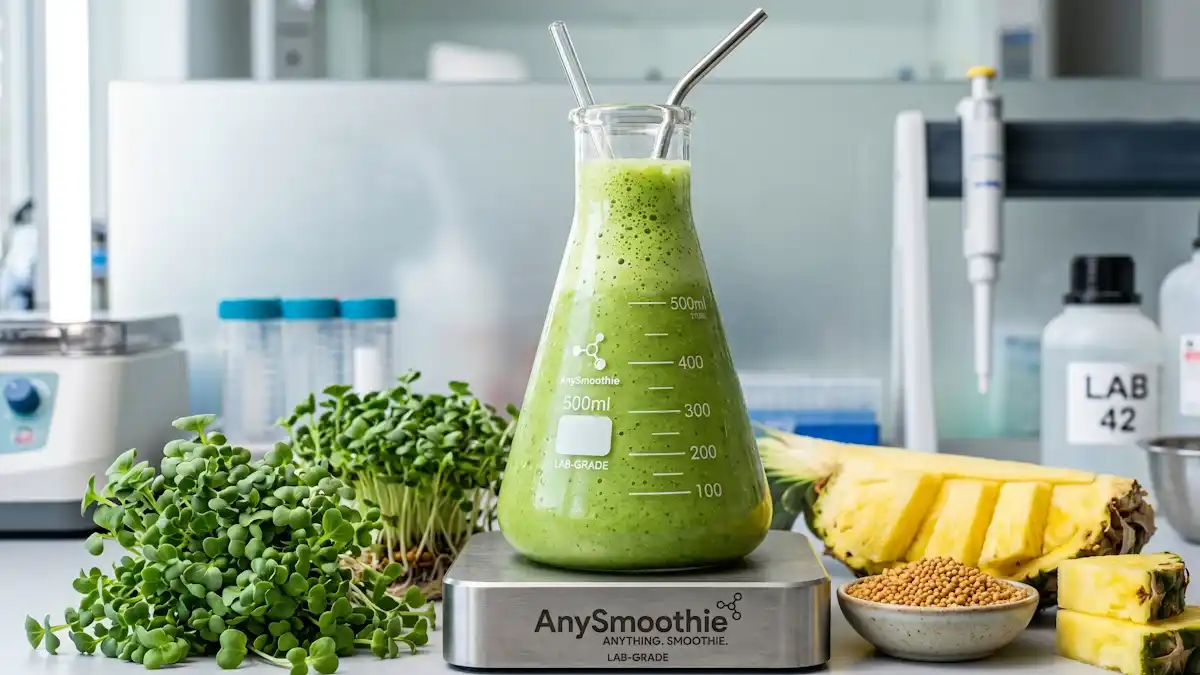
Nrf2 is one of the body’s main switches for stress defense. When it turns on, cells increase their own antioxidant and detox support, instead of relying only on what you eat in the moment.
That’s why people pay so much attention to sulforaphane, especially from broccoli sprouts. A sulforaphane smoothie for Nrf2 pathway support is a practical, food-first way to work with that system, not a treatment.
The details matter, though. You need the right source, the right prep, and the right recipe balance. Here’s how sulforaphane works, how to keep it active, and how to fit it into a simple biohacking routine.
The Nrf2 Master Switch and Why Sulforaphane Matters
Nrf2 is a transcription factor, which means it helps turn genes on and off. In plain language, it tells cells to make more of their own defense tools, including glutathione-related enzymes and other Phase II enzymes.
That matters because the body handles stress better when its own systems are ready. Exercise, cooked foods, pollution, and normal metabolism all create compounds that need to be processed. Nrf2 helps with that load.
A clinical trial on broccoli sprouts and Nrf2 activation is listed on ClinicalTrials.gov, and it reflects why this topic keeps getting attention. Fresh broccoli sprouts are one of the richest food sources of sulforaphane precursors.
Beyond direct antioxidants, why the body’s own defense system matters
Swallowing an antioxidant and turning on an antioxidant response are not the same thing. Direct antioxidants can help in the short term, but Nrf2 supports the body’s own response pathways.
That includes phase II support, which helps cells tag unwanted compounds for clearance. It also supports cellular resilience, because the system gets better at handling oxidative and electrophilic stress over time.
A simple way to think about it is this. Food can either bring a short burst of support, or it can teach the body to defend itself better. Sulforaphane does the second one well.
How sulforaphane compares with curcumin and EGCG
Here’s a quick comparison of three common Nrf2-supportive compounds.
| Criterion | Sulforaphane, from broccoli sprouts | Curcumin, from turmeric | EGCG, from green tea |
|---|---|---|---|
| Physiological potency for Nrf2 induction | Highest of the three, especially from fresh broccoli sprouts | Moderate | Moderate |
| Primary biochemical mechanism | Keap1 modification that frees Nrf2 | MAPK signaling and related stress pathways | Electrophilic and redox signaling |
| Best smoothie pairing | Pineapple, mustard seed, lemon | Mango, ginger, black pepper | Berries, citrus, mint |
| Co-factor or useful helper | Myrosinase | Piperine | Vitamin C |
A recent review in PMC also notes sulforaphane’s strong bioactivity and high bioavailability compared with many plant compounds. For Phase II support, it is the standout naturally occurring choice.
How to Make Sulforaphane Available in a Smoothie
Sulforaphane does not appear fully formed in the plant. Broccoli sprouts carry glucoraphanin, and an enzyme called myrosinase converts it into sulforaphane.
That conversion is the whole game. If the enzyme is inactive, you lose a big part of the value.
Heat is the easiest way to waste the enzyme that turns broccoli sprout compounds into sulforaphane.
The myrosinase key that unlocks sulforaphane
Myrosinase is the missing key. It can come from intact sprouts, lightly crushed seeds, or a small amount of fresh mustard. That matters because it helps restore conversion if the plant tissue was handled gently.
If you buy broccoli sprouts, choose fresh ones and keep them cold. If you use broccoli sprout powder, check whether the product preserves myrosinase or adds a source of it.
A review of KEAP1-NRF2 signaling in PubMed explains why this pathway gets so much interest. The mechanism is clear enough to matter, and sulforaphane is one of the best food-based triggers.
Temperature, timing, and pairings that protect yield
Gentle prep helps. Avoid hot liquid, boiling water, and long cook times. Blend with cold water, chilled fruit, or ice instead.
Fruit helps with taste, and citrus adds a clean edge. A small amount of fat is fine for texture, but keep it modest if you want a lighter drink. The goal is a smooth, easy routine, not a heavy breakfast shake.
3 Sulforaphane Smoothie Recipes for Nrf2 Support
These recipes are simple on purpose. They are built for consistency, taste, and clean nutrient partitioning.
How to Use a Sulforaphane Smoothie in a Real Biohacking Routine
The best time is usually morning or between meals. That gives you a clean slot and keeps the smoothie from competing with a heavy meal.
Think of it as part of a simple stack. Pair it with sleep, light exercise, and steady meal timing. Those habits support mitochondrial priming and metabolic efficiency without making the routine complicated.
Simple ways to support mitochondrial priming and metabolic efficiency
A brisk walk, a short lift session, or a low-stress morning all fit well with this smoothie. The idea is to support the body’s natural response systems, not overload them.
Keep the rest of the day clean too. If the smoothie is a stress-response tool, the rest of your habits should not fight it.
Who should be careful with brassica-heavy smoothies
Some people do better easing in slowly. Large amounts of cruciferous foods can bother digestion for a few people, and special diets may need extra attention.
If you have a medical condition or take medication that affects your diet, ask a clinician before making brassica-heavy smoothies a daily habit. A measured start is usually the smartest move.
Conclusion
A good sulforaphane smoothie is simple. Start with fresh broccoli sprouts, protect myrosinase, and build a recipe that you can repeat.
That is the real value of a sulforaphane smoothie for Nrf2 pathway support. It works through your own defense systems, not by pushing a quick fix.
Pick one recipe, keep the prep gentle, and make it part of a routine you can stick with.
🛡️ Safety Notes & Contraindications: Sulforaphane smoothies
Thyroid interference (Goitrogens): like all cruciferous plants, broccoli sprouts contain progoitrin which can interfere with iodine uptake; individuals with hypothyroidism or Hashimoto’s should monitor thyroid levels and avoid excessive daily consumption of raw sprouts.
Myrosinase activation: sulforaphane is only formed when the enzyme myrosinase contacts glucoraphanin; do not use boiling water or high heat in the smoothie, as temperatures above 60°C deactivate the enzyme, rendering the Nrf2 support ineffective.
Bacterial contamination: raw sprouts are a high-risk food for Salmonella and E. coli; always wash sprouts thoroughly, buy from reputable sources, and avoid use if you are immunocompromised or pregnant.
Drug metabolism induction: sulforaphane induces Phase II enzymes (like GST) and can affect Cytochrome P450 activity; this may accelerate the clearance of certain medications, such as acetaminophen or specific anti-cancer drugs, potentially reducing their therapeutic window.
Digestive sensitivity: the sulfur compounds in sprouts can cause significant bloating, gas, or abdominal discomfort in individuals with sensitive digestion or SIBO; start with a small pinch of sprouts (5g) and increase gradually.
FAQ
How does Sulforaphane initiate the Nrf2 “Master Switch” for antioxidant defense?
Sulforaphane acts as a potent electrophilic inducer that modifies specific cysteine residues on the Keap1 protein. Biochemically, this modification releases the Nrf2 transcription factor, allowing it to translocate into the nucleus and bind to the Antioxidant Response Element (ARE). Supporting this physiological system optimizes the natural pathways of endogenous antioxidant production, facilitating the synthesis of glutathione and other Phase II enzymes directly within the cell for long-term redox resilience.
Why is the enzyme Myrosinase essential for Sulforaphane bioavailability?
Sulforaphane is not natively present in broccoli sprouts; it exists as its precursor, glucoraphanin. The enzyme myrosinase is required to catalyze the conversion of glucoraphanin into active sulforaphane upon cellular disruption (like blending). Biochemically, heat can denature this enzyme, rendering the precursor inactive. Supporting this physiological system by using cold prep methods and adding myrosinase-rich co-factors like mustard seed optimizes the natural pathways of nutrient conversion and systemic bioactivity.
How does Nrf2 activation support Phase II Detoxification and cellular clearance?
Nrf2 activation triggers the expression of a broad battery of Phase II detoxification enzymes, including quinone reductase and glutathione-S-transferase. Biochemically, these enzymes support the physiological systems involved in neutralizing reactive intermediates and facilitating their exit from the cell. By optimizing these natural pathways, sulforaphane supports the biochemical mechanics of metabolic cleanup, ensuring that cells can handle electrophilic stress without compromising genomic stability or mitochondrial priming.
What is the “Electrophilic Stress” response and how does Sulforaphane modulate it?
Electrophilic stress occurs when reactive molecules threaten to disrupt cellular proteins and DNA. Sulforaphane acts as a mild, beneficial stressor (hormetic agent) that primes the physiological systems of defense. Biochemically, this low-level signaling “trains” the cell to upregulate its protective machinery. Optimizing this natural pathway ensures that the cellular environment remains resilient, providing a biochemical shield that supports systemic metabolic efficiency and longevity.
Why is the synergy between Sulforaphane and Vitamin C important for redox balance?
While sulforaphane induces the production of internal antioxidant enzymes, Vitamin C provides a direct, water-soluble electron source to handle immediate oxidative load. Biochemically, this synergy supports the physiological systems involved in recycling antioxidants and maintaining the redox steady-state. Including citrus or berries in a sulforaphane smoothie optimizes the natural pathways of cellular protection, ensuring that the biochemical mechanics of defense are supported from both an endogenous and exogenous perspective.

Medical Disclaimer: AnySmoothie content is for educational purposes only and is not a substitute for professional medical advice. Consult a healthcare provider for personalized guidance. See our full Disclaimer & Terms of Use. AI Transparency: AnySmoothie may use AI to support content development. All content undergoes human editorial review for accuracy, clarity, and editorial quality. See our full AI Transparency.