
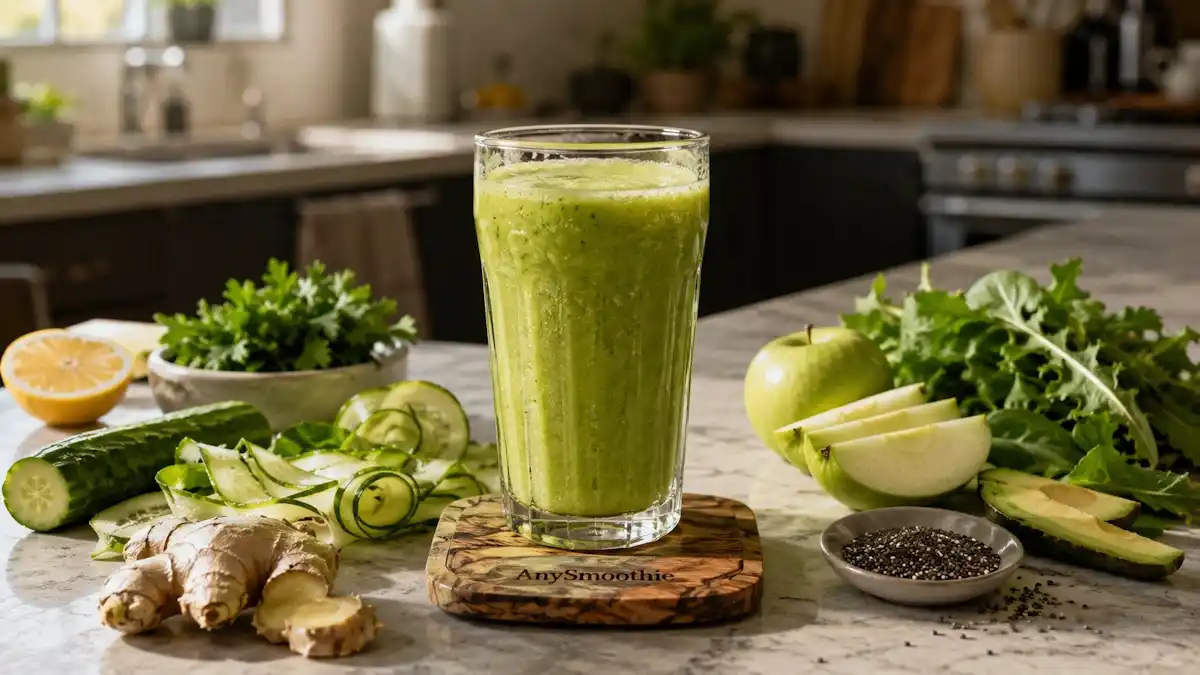
Fat digestion starts with bile. If bile output is slow, a meal can feel heavy and fat-soluble nutrients can move less efficiently into use. A well-built smoothie can support that process with bitter plants, a few targeted nutrients, and the right fat base.
That is where choleresis and bile-duct motility come in. One part is making bile, the other is moving it well. When both work together, digestion feels smoother and nutrient handling is cleaner.
The blends below stay food-first. They use artichoke, dandelion, turmeric, ginger, and simple kitchen ingredients that fit into a real routine.
The bile flow engine, choleresis vs. cholekinesis
Choleresis is bile production. Cholekinesis is bile movement and release. You need both. If the liver makes bile but the flow stays sluggish, the system does not work as well as it should.
The liver makes bile in hepatocytes, the cells that package bile acids and other bile components. A pilot study on artichoke extract and bile secretion found a clear rise in bile output after dosing. That matters because bile is the body’s built-in emulsifier for fats.
More bile does not help much if it sits still. Movement matters as much as volume.
How the liver makes bile and why hepatocyte support matters
Hepatocytes handle the raw material. They build bile acids, process cholesterol, and keep the whole bile stream usable. Bitter compounds, antioxidants, and dense plant foods can support that work.
A PubMed review on artichoke pharmacology links artichoke with hepato-biliary support and digestive comfort. Artichoke is useful here because cynarin supports both bile production and hepatocyte protection. That makes it a strong anchor ingredient for a smoothie built around bile flow.
What bile duct motility means in plain English
Bile duct motility is the coordinated movement that gets bile out of the liver and into the small intestine. The gallbladder stores bile, then contracts when the body gets the right signal. The ducts move that flow along, and the sphincter of Oddi opens the exit path.
When that timing is smooth, bile arrives where it needs to go. That helps fats break into smaller droplets and keeps digestion from feeling stuck.
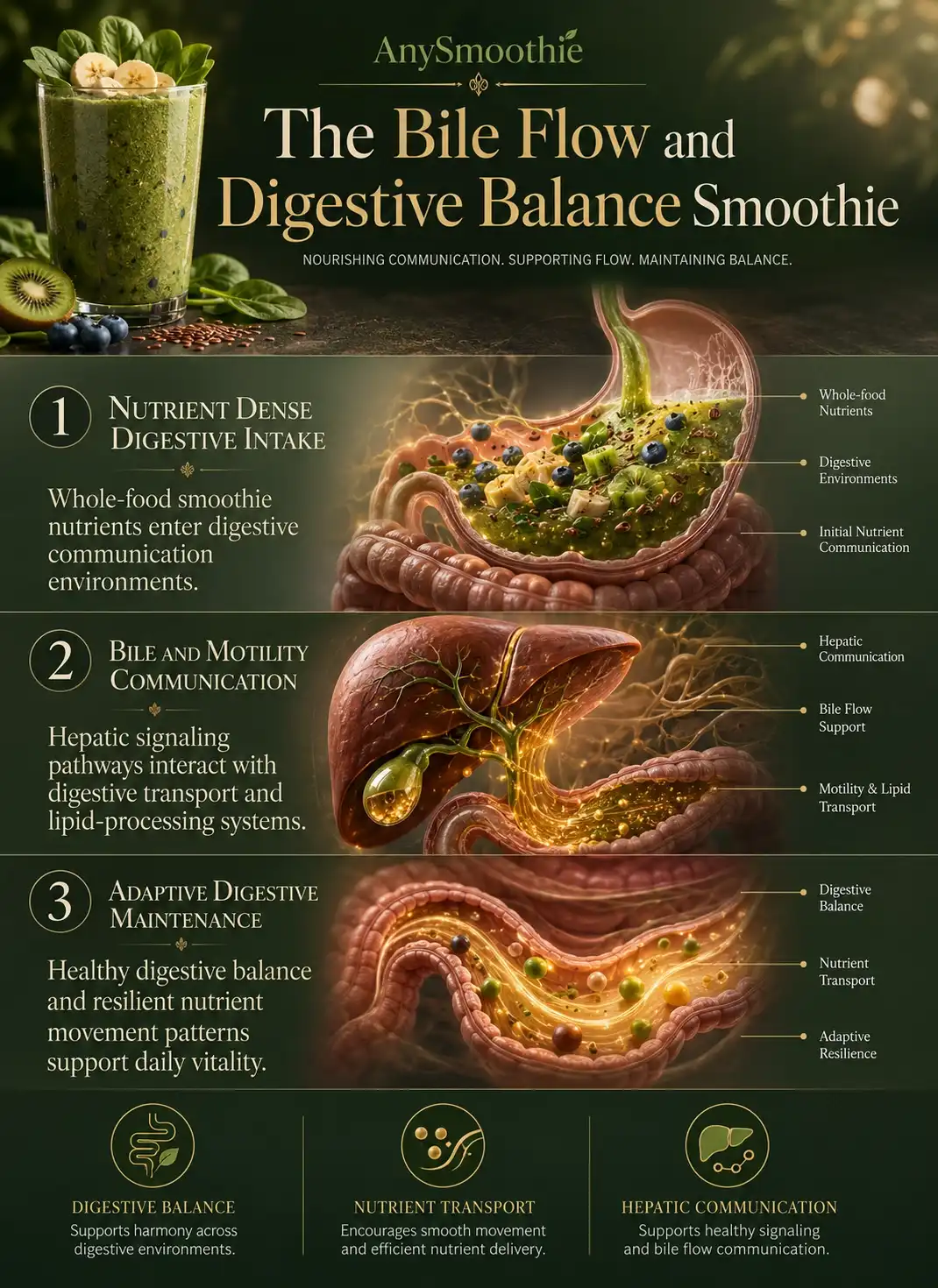
Why bitter compounds are the core of a choleresis smoothie
Bitter plants send a clear digestive signal. That signal can help the body shift into “digest and move” mode. Artichoke and dandelion are the classic examples, and turmeric or ginger can make the blend easier to tolerate.
The goal is not a harsh tonic. The goal is a balanced mix with bitter compounds, supportive fats, and a little fiber. That way, the smoothie does more than taste green and earthy. It fits the job.
Cynarin, taraxacin, and taurine, the 3 ingredients that do the heavy lifting
| Physiological Action | Primary Target Site | Best Smoothie Pairing | Synergistic Bio-enhancer |
|---|---|---|---|
| Cynarin supports increased bile volume and hepatocyte protection | Liver cells and bile production pathways | Coconut milk, lemon, turmeric | Ginger or a small amount of healthy fat |
| Taraxacin supports bitter signaling and bile release | Liver and gallbladder signaling | Pear, cucumber, mint | Lemon zest or ginger |
| Taurine supports bile acid conjugation and bile handling | Liver and bile acid metabolism | Avocado, chia, kefir | Olive oil or coconut fat |
Cynarin is the standout for a bile-flow smoothie because it helps with both output and liver cell support. Taraxacin gives dandelion its bitter edge. Taurine fits best when you want bile chemistry and fat handling to stay efficient.
How the CCK response helps coordinate gallbladder release
Bitter compounds and fat in the same smoothie can support a natural cholecystokinin, or CCK, response. CCK helps the gallbladder contract and move bile onward. A NCBI Bookshelf overview of cholecystokinin explains that this hormone is the main trigger for gallbladder contraction.
That is one reason these blends often work best near a meal with healthy fats. The signal is clearer, the timing is better, and bile release fits the food you are about to eat.
3 bile-flow smoothie blends that are easy to make and easy to adjust
Here are three simple formulas, each built for a slightly different goal.
A review on bile acids, taurine, and microbiota is a good reminder that bile is part of a larger digestive loop, not a single-path process.
How to time these blends for better digestion and metabolic efficiency
Use these smoothies before a meal, with breakfast, or during periods of sluggish digestion. The best timing is often close to a meal that contains healthy fats. That helps the bile signal match the food load.
Start small with bitter ingredients. A teaspoon can be enough. If taste and comfort are good, increase slowly. The right dose is the one you can repeat.
Pairing bile support with lipase, fiber, and healthy fats
Bile and lipase work together. Bile breaks fat into tiny droplets, then lipase finishes the job. When a smoothie includes fiber and balanced fats, the whole process feels more complete and less abrupt.
That helps nutrient partitioning and makes the meal easier to use. It also keeps the texture satisfying, which matters more than people think.
Keeping the gut ecosystem in balance while supporting bile flow
Steady bile movement supports a healthier intestinal environment. When bile stays stagnant, digestive sluggishness often follows. A regular flow helps keep the upper gut less stagnant and more organized.
That is one reason these smoothie routines work best when they stay simple. Consistency matters more than intensity.
Conclusion
A good choleresis and bile duct flow smoothie supports two jobs at once, making bile and moving it well. Bitter plants like artichoke and dandelion set the signal. Helpful fats, turmeric, ginger, and taurine-friendly ingredients help the rest of the process.
Keep the blends simple. Match them to your tolerance. Start with one formula for a week, then adjust the bitter level, fat load, and citrus based on taste, energy, and digestion.
🛡️ Safety Notes & Contraindications: Bitter smoothies for bile flow
Biliary obstruction: if you have known gallstones or a history of bile duct obstruction, avoid potent cholagogues (like artichoke or dandelion) as they can trigger gallbladder contractions that may dislodge a stone, causing a medical emergency.
Acute cholecystitis: do not consume bile-stimulating smoothies during acute gallbladder inflammation or infection; increased bile pressure can worsen pain and tissue damage.
Peptic ulcer risk: bitter compounds and ginger stimulate gastric acid secretion; individuals with active stomach ulcers or severe GERD should use caution as these blends may aggravate the stomach lining.
Asteraceae allergy: artichoke and dandelion belong to the Asteraceae (daisy) family; if you are allergic to ragweed, marigolds, or daisies, you may experience an allergic reaction to these ingredients.
Diuretic effect: dandelion is a natural diuretic; ensure adequate electrolyte and water intake, especially if you are taking blood pressure medications or other diuretics.
FAQ
What is the biochemical difference between Choleresis and Cholekinesis?
Choleresis refers to the physiological process of bile production by hepatocytes in the liver. Biochemically, this involves the synthesis of bile acids from cholesterol. Cholekinesis, on the other hand, is the mechanical contraction and emptying of the gallbladder to release stored bile into the duodenum. Supporting both physiological systems through bitter compounds ensures that bile is not only produced in sufficient volume but also effectively moved through the biliary tree, optimizing the natural pathways of fat digestion.
How does Cynarin from artichoke support hepatocyte protection during bile production?
Cynarin is a phenolic acid derivative that supports the physiological systems of the liver by acting as a choleretic agent. Biochemically, it stimulates hepatocytes to increase bile flow while simultaneously providing antioxidant defense against oxidative stress generated during metabolic processing. This dual-action approach optimizes the natural pathways of hepatic clearance, ensuring that the biochemical mechanics of bile acid synthesis remain efficient without compromising the structural integrity of the liver cells.
Why are “Bitter Signals” essential for triggering the CCK response?
Bitter compounds, such as taraxacin from dandelion, interact with T2R receptors (bitter taste receptors) in the gut. This interaction supports the physiological systems involved in the release of Cholecystokinin (CCK), a hormone that signals the gallbladder to contract and the sphincter of Oddi to relax. Optimizing this natural pathway through bitter-rich smoothie ingredients facilitates the timely delivery of bile to the small intestine, enhancing the biochemical mechanics of lipid emulsification and preventing biliary stasis.
How does Taurine conjugation influence bile acid solubility and function?
Bile acids must be conjugated with amino acids like taurine or glycine to become fully functional and water-miscible. Biochemically, taurine-conjugated bile acids are more effective at forming micelles and are less cytotoxic to the intestinal lining. Supporting this physiological system through taurine-friendly inputs optimizes the natural pathways of fat-soluble nutrient transport (Vitamins A, D, E, K), ensuring that the biochemical mechanics of lipid partitioning are supported for peak systemic metabolic efficiency.
In what way does Bile Flow support the “Intestinal Ecosystem” balance?
Steady bile flow acts as a natural surfactant that supports the physiological systems of microbial balance in the small intestine. Biochemically, bile acids have mild antimicrobial properties that help maintain the structural integrity of the gut environment by preventing stagnation. Optimizing the natural pathways of biliary movement ensures that the upper gastrointestinal tract remains an organized environment, facilitating efficient nutrient absorption and supporting long-term mitochondrial priming through cleaner metabolic signaling.

Medical Disclaimer: AnySmoothie content is for educational purposes only and is not a substitute for professional medical advice. Consult a healthcare provider for personalized guidance. See our full Disclaimer & Terms of Use. AI Transparency: AnySmoothie may use AI to support content development. All content undergoes human editorial review for accuracy, clarity, and editorial quality. See our full AI Transparency.