
A bright smoothie can do more than rescue fruit from the back of your freezer. Ellagic acid smoothies for polyphenol support bring berries, pomegranate, nuts, and greens into one practical daily habit.
Ellagic acid is a plant polyphenol found in foods such as raspberries, strawberries, blackberries, pomegranate, walnuts, and pecans. These drinks can add variety to a balanced diet, but they don’t treat health conditions or replace medical care.
Start with whole ingredients, unsweetened liquids, and flavors you will want to repeat.
Why Ellagic Acid and Other Polyphenols Matter in a Balanced Smoothie
Ellagic acid is a naturally occurring plant compound. Many foods contain larger compounds called ellagitannins, which can release ellagic acid during digestion. Gut microbes then process some of these compounds further into metabolites called urolithins, and production varies between people.
A review of ellagitannins, ellagic acid, and their gut-derived urolithins describes foods such as pomegranate, walnuts, and strawberries as dietary sources of these polyphenols. Gut microbes can further transform ellagic acid into urolithins, with substantial differences between individuals.
Polyphenols participate in a wide range of biological processes and are extensively transformed during digestion and metabolism. Whole strawberries and blackberries also bring water, fiber, vitamin C, and texture, while nuts add fats, minerals, and a more satisfying finish.
Your smoothie gets more useful when it contains several plant foods, not when it relies on an oversized portion of one fruit.
A serving of fruit is a sensible starting point. Rotate ingredients across the week so different polyphenols, fibers, and flavors earn a place in your routine.
For another fruit-forward way to use one of the best-known ellagitannin-rich foods, pomegranate smoothie: the fresh vitality ritual is a natural next option.
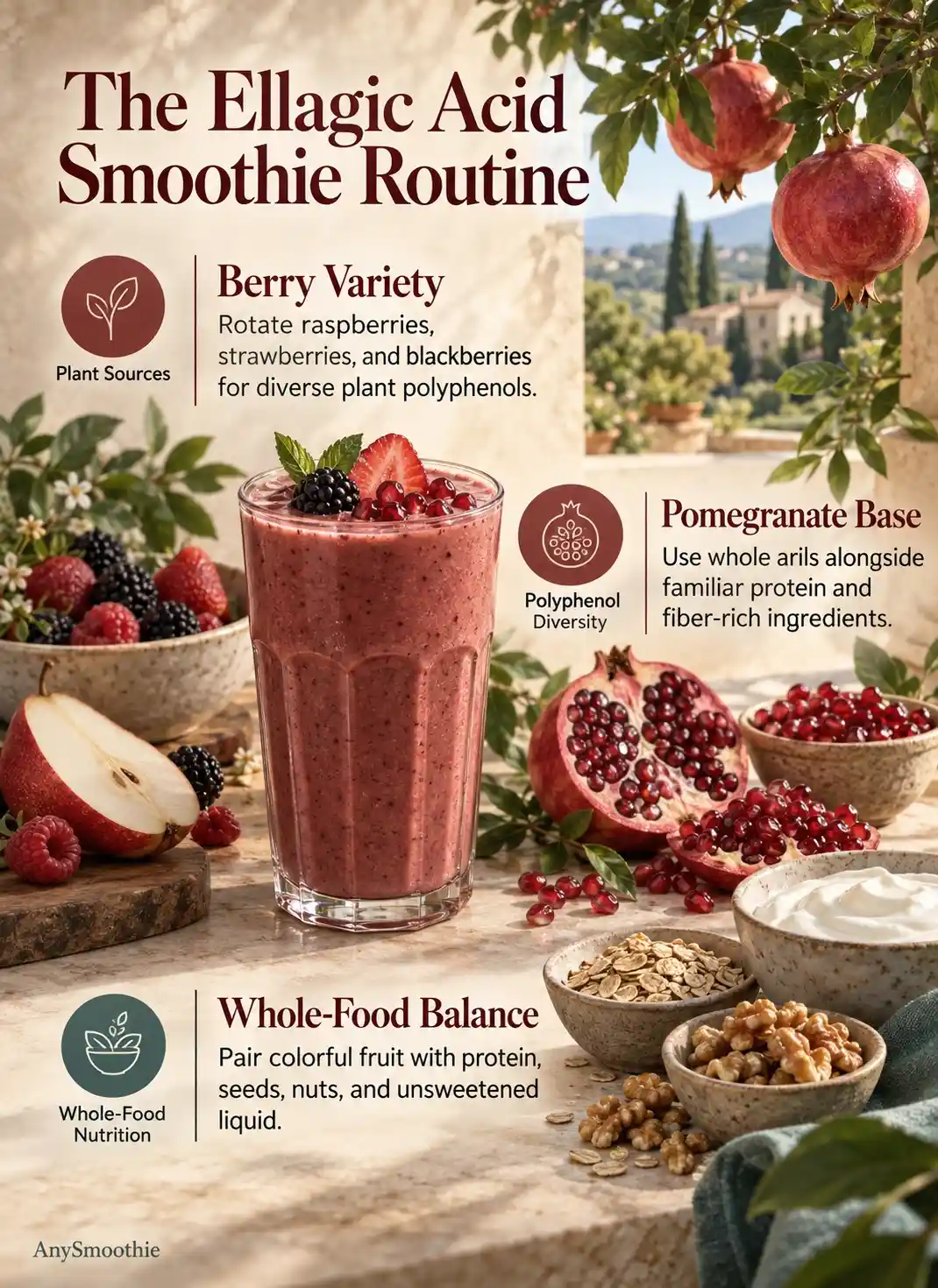
3 Ellagic Acid Smoothies for Polyphenol Support
These ellagic acid smoothies for polyphenol support make one generous serving each. Use a high-speed blender for the smoothest result, especially when nuts or frozen berries are involved. If the mixture stalls, add liquid one tablespoon at a time.
Ruby Berry Yogurt Blend
Ingredients
- 1 cup frozen raspberries
- 1/2 cup strawberries
- 3/4 cup plain Greek yogurt
- 1 tablespoon ground flaxseed
- 3/4 cup unsweetened soy milk
- 1 teaspoon fresh lemon juice
Steps
Add the soy milk first, followed by the Greek yogurt, raspberries, strawberries, flaxseed, and lemon juice.
Blend until completely creamy. Add water one tablespoon at a time if you prefer a thinner consistency.
Raspberries bring a strong ellagitannin presence, while strawberries add sweetness without relying on syrup or juice. Yogurt supplies protein, and ground flax adds fiber with a mild nutty flavor.
If tart berries feel too sharp, use half a small banana. That change softens the flavor while keeping the berry portion front and center.
For another simple berry-and-yogurt combination, strawberry smoothie recipe with yogurt offers a useful variation built around familiar ingredients.
Estimated Nutrition per Serving
- Calories: ~290 kcal
- Protein: ~23 g
- Carbohydrates: ~36 g
- Fat: ~7 g
- Fiber: ~13 g
- Sugars: ~18 g
Estimate uses plain nonfat Greek yogurt and unsweetened soy milk without the optional banana.
If I wanted to keep the berries as the main flavor, I’d taste the finished blend before adding banana rather than automatically increasing the sweetness.
Pomegranate Green Smoothie
Ingredients
- 1/2 cup pomegranate arils
- 3/4 cup frozen blackberries
- 1 packed cup baby spinach
- 1 tablespoon chia seeds
- 3/4 cup plain unsweetened kefir
- 1/4 teaspoon cinnamon
Steps
Add the kefir first, followed by the spinach, pomegranate arils, blackberries, chia seeds, and cinnamon.
Blend until smooth. Let the smoothie sit for about five minutes if you want the chia to create a thicker texture.
Pomegranate and blackberries provide the polyphenol-focused base, while spinach adds another plant food without dominating the flavor.
Choose arils when you want the whole fruit structure in the blend. Unsweetened pomegranate juice can also work as a variation, but use a smaller amount because it changes both texture and carbohydrate concentration.
Estimated Nutrition per Serving
- Calories: ~265 kcal
- Protein: ~10 g
- Carbohydrates: ~43 g
- Fat: ~8 g
- Fiber: ~13 g
- Sugars: ~25 g
Estimate uses plain unsweetened kefir and whole pomegranate arils.
Blackberry Walnut Cooler
Ingredients
- 1 cup frozen blackberries
- 1/2 cup plain yogurt
- 1 tablespoon walnuts
- 1 tablespoon chia seeds
- 3/4 cup unsweetened almond milk
- 1 teaspoon vanilla extract
Steps
Add the almond milk first, followed by the yogurt, blackberries, walnuts, chia seeds, and vanilla.
Blend for 45 to 60 seconds so the walnuts and berry pieces break down thoroughly. Add a splash of cold water if needed.
Blackberries and walnuts create a deeper, earthier profile than a typical fruit smoothie. Walnuts contribute fats, while chia helps the drink stay thick without ice cream or sweetened protein powder.
For a lighter version, swap half the yogurt for cold water. If you use fresh blackberries, add a few ice cubes after the other ingredients have blended.
Estimated Nutrition per Serving
- Calories: ~275 kcal
- Protein: ~10 g
- Carbohydrates: ~28 g
- Fat: ~16 g
- Fiber: ~13 g
- Sugars: ~13 g
Estimate uses plain low-fat yogurt and unsweetened almond milk.
If I wanted a more drinkable texture, I’d add water before reducing the walnuts or chia so the original ingredient balance stays intact.
How to Build a Polyphenol-Rich Smoothie That Fits Your Routine
A repeatable formula keeps shopping simple. Pick one or two colorful fruits, add a protein source, include a fiber-rich seed or healthy fat, then adjust liquid and flavor. Plain yogurt, kefir, tofu, and unsweetened soy yogurt all work well.
Rotating berries, pomegranate, nuts, seeds, and leafy greens gives you broader food variety than using the same smoothie every morning. Berries and nuts are among the food groups that can provide ellagitannins and related polyphenols.
For another way to explore how different plant compounds interact with food and the gut environment, apple polyphenol smoothies for microbiome balance offers a broader polyphenol-focused direction.
| Ingredient | Main Polyphenol Contribution | Helpful Pairing | Flavor Profile | Practical Note |
|---|---|---|---|---|
| Strawberries | Ellagic acid and flavonoids | Plain yogurt | Sweet, mild | Frozen berries thicken smoothies |
| Raspberries | Ellagitannins | Lemon and flax | Tart, bright | Seeds add texture |
| Blackberries | Ellagitannins and anthocyanins | Walnuts | Deep, jammy | Blend longer for smoothness |
| Pomegranate | Ellagitannins | Kefir and spinach | Tangy, crisp | Use arils or small amounts of juice |
| Walnuts | Ellagitannins | Blackberries | Earthy, rich | One tablespoon adds richness |
| Pecans | Polyphenols including ellagic-acid-related compounds | Strawberries | Buttery, sweet | Toasting changes the flavor |
Add liquid first, then yogurt or greens, followed by fruit and nuts. Frozen fruit reduces the need for ice, while unsweetened milk keeps added sugar low. Portion awareness matters too, especially when combining fruit, juice, nut butter, and sweetened yogurt.
Conclusion: A Colorful Habit That Adds Up
Berries, pomegranate, nuts, greens, and cultured ingredients can make smoothies that support polyphenol variety within a balanced eating pattern. The best ellagic acid smoothies for polyphenol support are the ones built from unsweetened ingredients you enjoy consistently.
Start with one recipe, then rotate your fruit and add-ins over time. Regular food habits matter more than any single drink, and your personal dietary needs should guide every ingredient choice.

Medical Disclaimer: AnySmoothie content is for educational purposes only and is not a substitute for professional medical advice. Consult a healthcare provider for personalized guidance. See our full Disclaimer & Terms of Use. AI Transparency: AnySmoothie may use AI to support content development. All content undergoes human editorial review for accuracy, clarity, and editorial quality. See our full AI Transparency.