
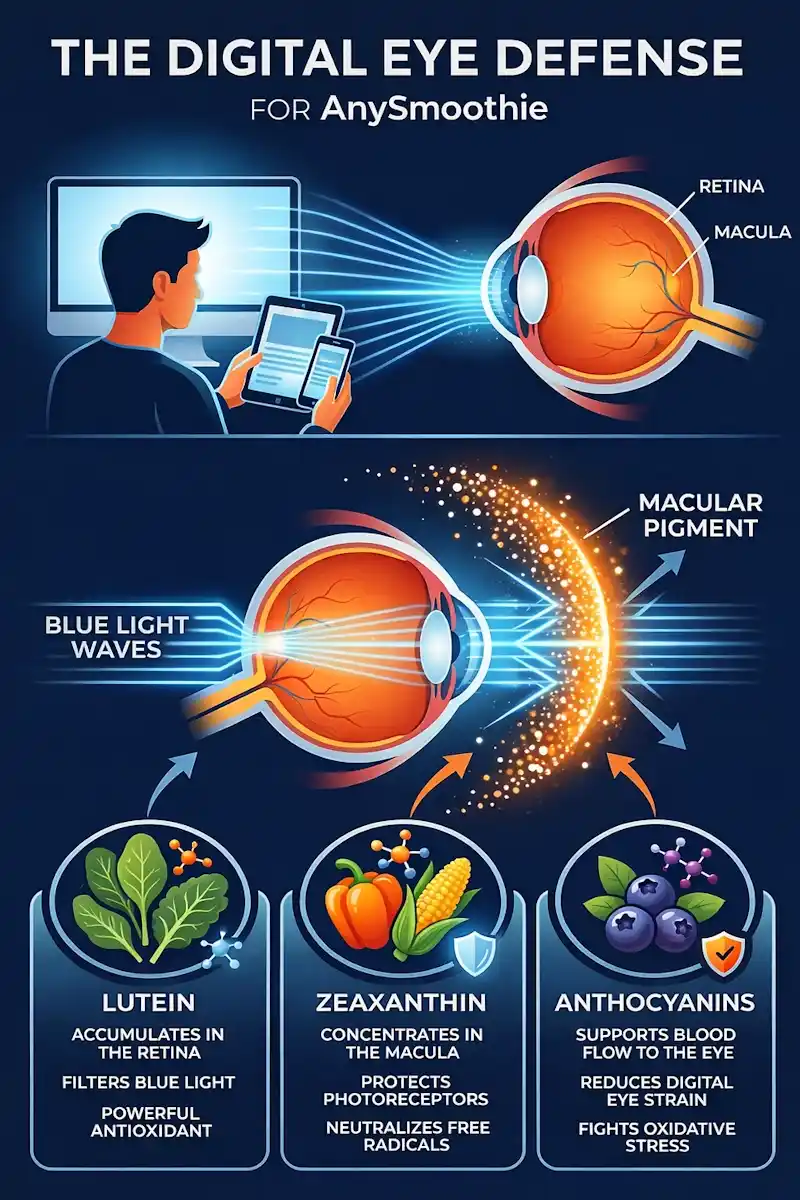
Adults now average over 11 hours of screen time each day in 2026. That constant glow from phones, laptops, and TVs bathes your eyes in blue light. This high-energy light penetrates deep into the retina. It sparks oxidative stress and slowly depletes macular pigment over time.
You feel it as digital eye strain: dry, itchy eyes, nagging headaches, and fuzzy vision after hours online. Your macular pigment acts like a natural filter, but screens fade it fast. Eye health smoothies for screen time offer a simple fix. They pack lutein, zeaxanthin, and other defenders right into a tasty drink.
This post covers how strain hits your vision, key nutrients that fight back, biohacker upgrades, three easy recipes, and bonus habits. You’ll get sharper focus and less fatigue, no pills needed. Let’s build your daily defense.
How Digital Strain Affects Your Vision and Macular Pigment
Screens emit blue light that scatters inside your eye. It hits the retina hard. This causes oxidative damage and thins macular pigment density. Think of that pigment as fading sunglasses built into your eyes.
Symptoms build quickly. Dry eyes burn after staring. Headaches pulse behind your temples. Blurred edges appear on text or images. Studies like AREDS2 show pigment loss links to worse contrast and slower recovery.
Screen workers face this daily. Your eyes lack built-in breaks from the barrage. Proactive steps matter now. Nutrients can rebuild that filter and ease strain.
Long sessions worsen it all. Fatigue sets in by afternoon. Vision sharpens with the right fuel, though.
The Role of Lutein and Zeaxanthin as Internal Sunglasses
Lutein and zeaxanthin concentrate in the macula. These yellow carotenoids absorb 40 to 90 percent of blue light. They work like shades inside your eyes.
Diet ramps up levels in weeks. Kale, spinach, eggs, and corn deliver them best. They pair for full-spectrum block. Trials show better contrast sensitivity and less glare.
Your body can’t make them, so eat them often. Smoothies make it simple. Levels rise fast with steady intake.
Critical Nutrients to Combat Blue Light Damage
Lutein and zeaxanthin lead the charge. They form your base layer against blue light. Anthocyanins from berries boost blood flow and cut inflammation. Vitamin A, or beta-carotene, renews rhodopsin for clear sight in dim light.
Smoothies shine here. They blend raw foods for high bioavailability. Your gut absorbs them better than cooked meals. Fats help too.
Here’s a quick comparison of top nutrients:
| Nutrient | Primary Eye Benefit | Key Food Source | Time to See Results | Biohacker Synergy |
|---|---|---|---|---|
| Lutein/Zeaxanthin | Macular Protection | Leafy greens | 2-4 weeks | Best paired with zeaxanthin |
| Astaxanthin | Eye Fatigue | Salmon or algae | 4-6 weeks | Fats like avocado |
| Saffron | Neural Support | Saffron threads | 1-3 months | Omega-3s |
Lutein and zeaxanthin stand out as foundational internal sunglasses. They block blue light first. Stack others for full coverage.
Bioavailability jumps in liquid form. Your eyes get nutrients fast.
Why Anthocyanins and Vitamin A Are Essential for Retina Health
Anthocyanins strengthen eye capillaries. They tame inflammation from light stress. Blueberries and blackberries pack them tight.
Vitamin A repairs cells and aids night vision. Carrots and sweet potatoes provide beta-carotene safely. Food sources avoid excess risks.
Together, they fight oxidative hits. Retinas stay resilient. Add them daily for repair.
Top Biohacker Ingredients for Visual Performance
Saffron’s crocin guards photoreceptors. It ramps blood flow too. A pinch in smoothies works wonders.
Astaxanthin crosses the blood-retina barrier. This super-antioxidant slashes fatigue. Get it from wild salmon or algae powder.
Stack them for synergy. Fats boost uptake three times. Track your focus after two weeks. You’ll notice crisper edges.
Prep is easy. Infuse saffron in warm water first. Blend algae with creamy bases. For saffron benefits in AMD trials, see Saffron therapy for age-related macular degeneration.
Biohackers log less blur and steady gaze time.
Combining Saffron and Astaxanthin for Neural Eye Support
Saffron sharpens neural signals. Astaxanthin builds muscle endurance under strain. The duo cuts dry eye and boosts accommodation.
Use a pinch of saffron daily. Take 4 to 12 mg astaxanthin. Trials confirm relief in weeks.
Source pure threads or powder. Store cool and dry. Blend into morning drinks.
3 Powerful Smoothies for Digital Fatigue Relief
These recipes serve one. Prep takes five minutes. Each hits about 250 calories. They target blue light with fresh twists.
Tweak for seasons. Freeze extras for grab-and-go.
Lifestyle Habits to Optimize Your Ocular Health Routine
Pair smoothies with breaks. Follow the 20-20-20 rule. Drink upon waking. Dim screens at night.
Hydrate extra. Sleep seven hours minimum. These stack for peak performance.
Make a plan: Smoothie first, then work blocks with timers.
The 20-20-20 Rule and the Importance of Healthy Fats for Absorption
Every 20 minutes, look 20 feet away for 20 seconds. Apps like Eye Care Plus remind you.
Fats multiply uptake 3 to 5 times. Avocado or nuts pair perfect. Stack with your drink.
Habit forms fast. Strain drops quick.
Blue light threats loom large with screens. Eye health smoothies for screen time deliver lutein, zeaxanthin, anthocyanins, and biohacker boosts like saffron. They rebuild pigment and cut fatigue.
Start one recipe daily. Track clarity in a week. Your eyes reclaim sharpness.
Share your favorite blend in comments. Consult your doctor for tailored advice.
Conclusion
Screens dominate our days. They dry out eyes and cause strain. Smoothies pack nutrients that fight back. Start with carrots. They deliver beta-carotene, which your body turns into vitamin A for sharp vision. Add spinach or kale next. These greens supply lutein and zeaxanthin. Both shield retinas from blue light damage.
Blueberries bring antioxidants too. They reduce inflammation and support blood flow to eyes. Blend in a banana for creaminess, plus orange juice for extra vitamin C. A simple recipe: one carrot, a handful of spinach, half a cup of blueberries, one banana, and juice from one orange. Mix until smooth. Drink one mid-morning.
Some say pills work better. However, whole foods absorb faster and taste great. Smoothies beat staring at bottles. They hydrate too, which screens steal from you. Pair this habit with the 20-20-20 rule. Every 20 minutes, look 20 feet away for 20 seconds. Your eyes thank you. Grab ingredients today and sip your way to clearer sight.
⚠️ Safety Notes
Saffron Dosage: Do not exceed a “pinch” (approx. 20-30mg) per day. High doses of saffron (above 5g) can be toxic and may cause digestive upset or more serious complications.
Vitamin A and Supplementation: If you are already taking a multi-vitamin containing pre-formed Vitamin A (Retinol), be mindful of your total intake. Beta-carotene from carrots is safe, but excessive retinol can lead to toxicity over time.
Astaxantina and Blood Pressure: Astaxanthin can naturally lower blood pressure and blood sugar. If you are on medications for hypertension or diabetes, monitor your levels closely.
Thyroid and Raw Brassicas: Leafy greens like kale and spinach contain goitrogens. If you have hypothyroidism, consider lightly steaming your greens before freezing them to protect your thyroid function.
Pregnancy and Saffron: High medicinal doses of saffron are not recommended during pregnancy as they may stimulate uterine contractions. Stick to standard culinary amounts or consult your OB-GYN.
FAQ: The Digital Eye Defense
How long does it take for eye health smoothies to reduce digital strain?
Most clinical studies on lutein and zeaxanthin show that macular pigment density begins to increase significantly after 4 to 8 weeks of consistent daily intake. However, many users report less eye dryness and “fatigue” within the first 14 days.
Can I use frozen vegetables like spinach or kale for these smoothies?
Yes. Frozen leafy greens are excellent because they are often processed at peak freshness, preserving the lutein content. They also provide a thicker, creamier texture to your smoothie without needing extra ice.
Do I really need to add fats like avocado or seeds for eye health?
Absolutely. Lutein and zeaxanthin are fat-soluble carotenoids. Without a source of healthy fats (like nuts, avocado, or chia seeds), your body cannot efficiently absorb these nutrients, significantly reducing the effectiveness of the smoothie.
Is saffron safe to put in a daily smoothie?
Yes, in small culinary amounts. A “pinch” (approx. 20-30mg) is the standard dose used in clinical trials for ocular health. It is potent, so you don’t need much to reap the neuroprotective benefits for the retina.
Does drinking these smoothies replace the need for blue light glasses?
Think of smoothies as “internal protection” and glasses as “external protection.” While smoothies rebuild your macular pigment (your natural filter), blue light glasses can provide an extra layer of comfort during prolonged night-time sessions.

Medical Disclaimer: AnySmoothie content is for educational purposes only and is not a substitute for professional medical advice. Consult a healthcare provider for personalized guidance. See our full Disclaimer & Terms of Use. AI Transparency: AnySmoothie may use AI to support content development. All content undergoes human editorial review for accuracy, clarity, and editorial quality. See our full AI Transparency.