

Your cells replace, fold, repair, and recycle proteins every day, even while you sleep. Because proteins help form enzymes, transporters, muscle tissue, and structural parts of cells, their quality and upkeep matter for everyday function.
Proteostasis is the body’s continuous system for producing, folding, repairing, and recycling proteins throughout life. Smoothies can bring several supportive foods together in one convenient meal, but they aren’t treatments or cures. These three recipes pair protein with plants, fiber, healthy fats, and fluids, while the guide below helps you adjust them to your needs.
How Smoothies Can Support Healthy Proteostasis
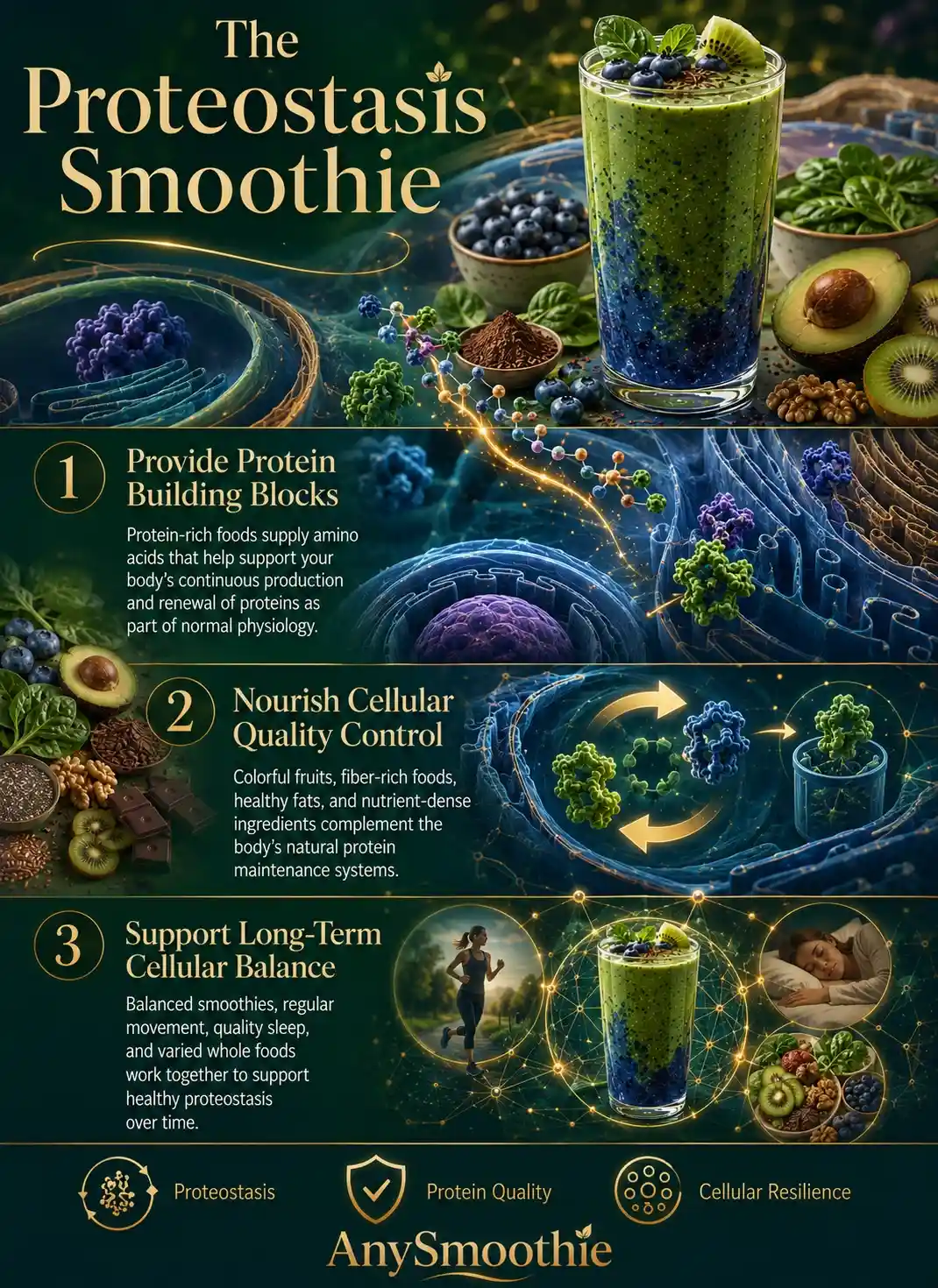
Proteostasis begins with protein production. Your body needs Amino acids to build new proteins, and foods such as Greek yogurt, soy milk, tofu, and cottage cheese provide useful amounts. Greek yogurt and soy also contain a broad range of essential amino acids, which your body can’t make on its own.
Once produced, proteins must fold into precise shapes. Special cellular proteins help guide that process, while other systems identify proteins that no longer work properly. Repair mechanisms can address some damage, and the proteasome and autophagy pathways help break down and remove proteins that cells no longer need.
Protein quality control relies on coordinated cellular systems that fold, repair, and recycle proteins throughout life. Learn more about Protein homeostasis (proteostasis) and its role in healthy aging.
A smoothie can’t control these pathways directly. However, it can contribute nutrients that support normal physiology. Berries and cocoa provide polyphenols, oats and fruit add fiber, and chia or flaxseed supply omega-3 Fatty acids in the form of ALA. Magnesium and zinc from seeds, oats, cocoa, and other whole foods help many normal enzyme reactions.
The strongest formula combines several food groups instead of relying on one supposed superfood. Protein supplies amino acids, plants add fiber and polyphenols, and a small amount of healthy fat can improve texture and satisfaction. Sleep, regular physical activity, hydration, and a varied diet all contribute to the body’s ongoing cellular maintenance. If you want more ideas centered on fiber, try these Fiber-rich smoothie recipes for digestion.
3 Smoothies for Proteostasis Support
These recipes are practical food combinations, not medical formulas. Nutrition estimates vary by brand, ingredient size, and serving choice.
Berry Oat Yogurt Smoothie
Ingredients
- 3/4 cup plain Greek yogurt
- 1 cup frozen blueberries or mixed berries
- 1/4 cup rolled oats
- 1 tablespoon ground flaxseed
- 3/4 cup water or unsweetened milk
- Cinnamon, optional
Add everything to a blender and blend until smooth. Let it sit for two minutes if you prefer a thicker texture.
This smoothie provides roughly 20 to 23 grams of protein and 9 to 12 grams of fiber, depending on the yogurt and fruit. The yogurt supplies amino acids, while berries add polyphenols and oats contribute soluble fiber. Ground flaxseed adds ALA and helps create a more satisfying drink without added sugar.
Cocoa Soy-Chia Smoothie
Ingredients
- 1 cup unsweetened soy milk
- 1/2 cup silken tofu
- 1/2 cup frozen dark cherries
- 1 tablespoon unsweetened cocoa powder
- 1 tablespoon chia seeds
- Cinnamon or vanilla extract, optional
Blend the soy milk and tofu first. Add the remaining ingredients, then blend again until creamy. Give the chia seeds a few minutes to thicken the mixture.
Expect about 14 to 17 grams of protein and 8 to 10 grams of fiber. Soy milk and tofu create a dairy-free protein base, while chia seeds provide fiber and ALA. Cocoa and cherries add plant compounds with a rich flavor, so the recipe needs little or no sweetener.
Green Pear Hemp Smoothie
Ingredients
- 1/2 cup low-fat cottage cheese
- 1/2 ripe pear
- 1 cup fresh spinach
- 1/4 cup rolled oats
- 1 tablespoon hemp hearts
- 1 cup cold water
- Fresh ginger, optional
Blend the cottage cheese, pear, spinach, oats, hemp hearts, and water until smooth. Add more water for a thinner consistency.
This combination contains roughly 20 to 23 grams of protein and 6 to 8 grams of fiber, based on typical ingredient values. Cottage cheese supplies protein, while pear, spinach, and oats add fiber. Hemp hearts bring a small portion of healthy fat and minerals without overpowering the mild flavor.
For a dairy-free version, replace cottage cheese with silken tofu or unsweetened soy yogurt. The recipes are nut-free as written. To lower calories, reduce the oats or seeds and use water instead of milk. Keep the protein base in place when possible.
How to Choose and Use Smoothies for Proteostasis Support
Build a smoothie with four decisions: choose one protein base, add one or two produce items, include one fiber-rich ingredient, and finish with a small portion of healthy fat. Greek yogurt, cottage cheese, soy milk, tofu, and unsweetened soy yogurt all work well. Berries, pears, cherries, spinach, and kiwi bring different flavors and textures.
Use oats, chia, flax, or fruit for fiber. A tablespoon of seeds is often enough because seeds contain concentrated calories. Water or unsweetened milk makes a better everyday liquid than fruit juice, which can add sugar without much fiber.
| Smoothie | Main protein source | Fiber-rich ingredients | Best feature | Simple swap |
|---|---|---|---|---|
| Berry Oat Yogurt | Greek yogurt | Berries, oats, flax | High fiber and tangy flavor | Use soy yogurt |
| Cocoa Soy-Chia | Soy milk, tofu | Cherries, chia, cocoa | Dairy-free and chocolatey | Use berries for cherries |
| Green Pear Hemp | Cottage cheese | Pear, spinach, oats | Mild taste with substantial protein | Use silken tofu |
Drink a smoothie when it fits your appetite and schedule. It can work at breakfast, after exercise, or as a convenient snack. Timing doesn’t give it a special cellular effect. For another balanced blend with fruit, protein, fat, and fluid, see this energy boosting smoothie recipe.
Regular physical activity, adequate sleep, and a balanced dietary pattern all contribute to healthy cellular function. The Physical activity guidelines for americans also emphasize the importance of long-term healthy lifestyle habits.
Common mistakes include skipping protein, using juice as the main liquid, adding several sweeteners, and pouring in large portions of nut butter or seeds. A smoothie also shouldn’t replace every whole-food meal. Chewing whole foods adds variety and makes it easier to include legumes, vegetables, grains, and other foods that a single drink may lack.
Food allergies, diabetes, kidney conditions, and medication-related food restrictions can change which ingredients fit your diet. Check with a qualified clinician or registered dietitian when you need individualized guidance.
Conclusion
The best smoothies for proteostasis support are balanced, repeatable combinations that provide protein, fiber, plant compounds, healthy fats, and fluids. No single recipe controls proteostasis, and long-term habits matter more than one drink.
Start with one smoothie, adjust its ingredients to suit your appetite and dietary needs, and keep eating varied whole foods throughout the day. A practical rule is simple: build every smoothie around protein plus plants and fiber.
🛡️ Safety Notes & Dietary Interactions
- Support Normal Physiology: These smoothies provide protein, fiber, healthy fats, and plant-based nutrients that support overall nutrition. They cannot directly regulate proteostasis, reverse age-related protein changes, or treat diseases involving protein metabolism.
- Adjust Recipes to Your Health Needs: People with kidney disease, diabetes, food allergies, digestive disorders, pregnancy, or medically prescribed diets should personalize ingredients such as dairy, soy, seeds, oats, and fruit with guidance from a qualified healthcare professional.
- Use Protein Supplements Thoughtfully: Whole-food protein sources such as Greek yogurt, cottage cheese, tofu, and fortified soy products are often sufficient for Balanced smoothies. If you use protein powders or other supplements, follow product directions and seek professional advice when appropriate.
- Think Beyond One Smoothie: Healthy proteostasis depends on adequate protein intake, regular physical activity, Quality sleep, hydration, and a varied diet over time. Smoothies can complement these habits but are only one part of an overall healthy lifestyle.
FAQs
What is proteostasis?
Proteostasis, or protein homeostasis, refers to the body’s system for producing, folding, maintaining, repairing, and recycling proteins. These processes help cells function normally by ensuring proteins remain properly structured and removing those that become damaged or no longer work effectively.
Can a smoothie improve proteostasis?
A smoothie cannot directly control proteostasis or cellular protein quality. However, balanced recipes containing protein, fiber, healthy fats, vitamins, minerals, and plant compounds can provide nutrients that support normal physiological processes involved in overall health and cellular function.
Which protein sources work best in proteostasis-supportive smoothies?
Greek yogurt, cottage cheese, fortified soy milk, unsweetened soy yogurt, and silken tofu are excellent options because they provide high-quality protein while blending into a smooth texture. Choose the option that best matches your dietary preferences, allergies, and nutritional needs.
Why include fiber and healthy fats with protein?
Fiber from oats, fruit, chia, or flax helps create a more satisfying smoothie, while healthy fats from seeds or hemp hearts improve texture and contribute additional nutrients. Combining these with protein creates a more balanced smoothie than relying on fruit or juice alone.
Can I drink these smoothies every day?
Yes. These smoothies can be part of a balanced daily eating pattern when combined with a variety of whole foods throughout the day. Rotating protein sources, fruits, vegetables, and fiber-rich ingredients helps broaden nutrient intake and supports long-term dietary variety.

Medical Disclaimer: The information on AnySmoothie is for educational and informational purposes only. It is not intended as medical advice or a substitute for professional consultation with a healthcare provider. Always consult your physician before starting any new nutritional protocol, especially if you have underlying health conditions or are taking medication. By using this site, you agree to our full Disclaimer & Terms of Use.