
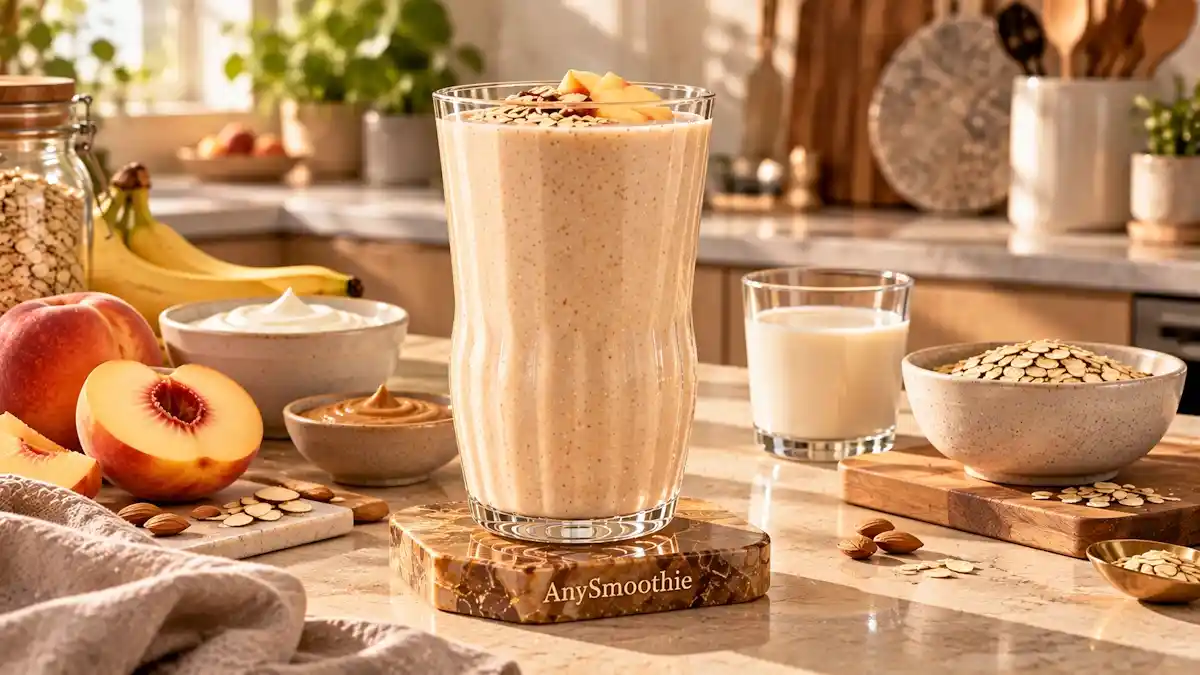
A smoothie can provide nutrients your body uses to form bone, depending on its ingredients. Osteoblasts are bone-building cells that produce the framework where minerals are deposited.
Food supports normal physiology, but a smoothie doesn’t treat or prevent bone disease. Its contribution depends on your overall diet and individual needs.
Understanding the nutrient science makes choosing ingredients easier. Start with what osteoblasts do, then try three recipes that combine familiar foods with nutrients involved in bone formation.
How nutrition supports osteoblast mineralization
Osteoblasts produce osteoid, a framework made largely of collagen and other proteins. During mineralization, calcium and phosphate form crystals within this framework. These crystals, mainly hydroxyapatite, give bone its hardness.
This process forms part of ongoing bone renewal. While osteoblasts build bone, other cells called osteoclasts break down older tissue. Hormones, mechanical loading, and nutrient availability all help regulate this cycle. For a related look at signaling proteins involved in bone formation, see smoothies for bone morphogenetic protein (BMP).
Several nutrients participate in bone formation and mineralization, but they have different jobs. Some provide structural materials, while others help the body absorb minerals or produce functional proteins.
No single ingredient switches mineralization on by itself. Eating calcium-rich foods, for example, supplies calcium to the body; it doesn’t direct that calcium straight into newly formed bone. A smoothie fits into this larger system as food, with its contribution shaped by the rest of your eating pattern.
Choose smoothie ingredients that supply key bone nutrients
Calcium supplies a major part of bone mineral. The NIH calcium fact sheet identifies dairy foods, fortified beverages, and calcium-set tofu as useful sources. Plain yogurt, milk, or fortified soy beverage can give a smoothie a calcium-containing base.
Vitamin D helps the intestine absorb calcium and supports normal calcium regulation. Fortified milk and some fortified plant beverages provide it, but yogurt and plant-based products aren’t automatically fortified. Their labels tell you whether vitamin D is present. For a more focused look at this relationship, see vitamin D Co-Factor smoothies for calcium signaling.
Vitamin K helps activate proteins involved in bone physiology, including osteocalcin. This activation involves carboxylation, a chemical modification that allows these proteins to bind calcium. Kale and other leafy greens contribute vitamin K.
Magnesium participates in bone structure and the regulation of calcium-related processes. Pumpkin seeds, almonds, oats, and other whole foods supply magnesium. Small amounts of seeds or nut butter can fit a smoothie, although their contribution depends on the portion.
Protein supplies amino acids used to make collagen and other body proteins. Yogurt, milk, soy beverage, and tofu are practical options. However, almond, oat, and coconut beverages often contain less protein than milk or soy beverage, so they’re not nutritionally interchangeable.
For another nutrient-specific perspective on bone nutrition, see boron-rich smoothies for healthy bone nutrition.
You don’t need every nutrient in every glass. Smoothies can complement a varied diet, rather than replace meals or individualized care.
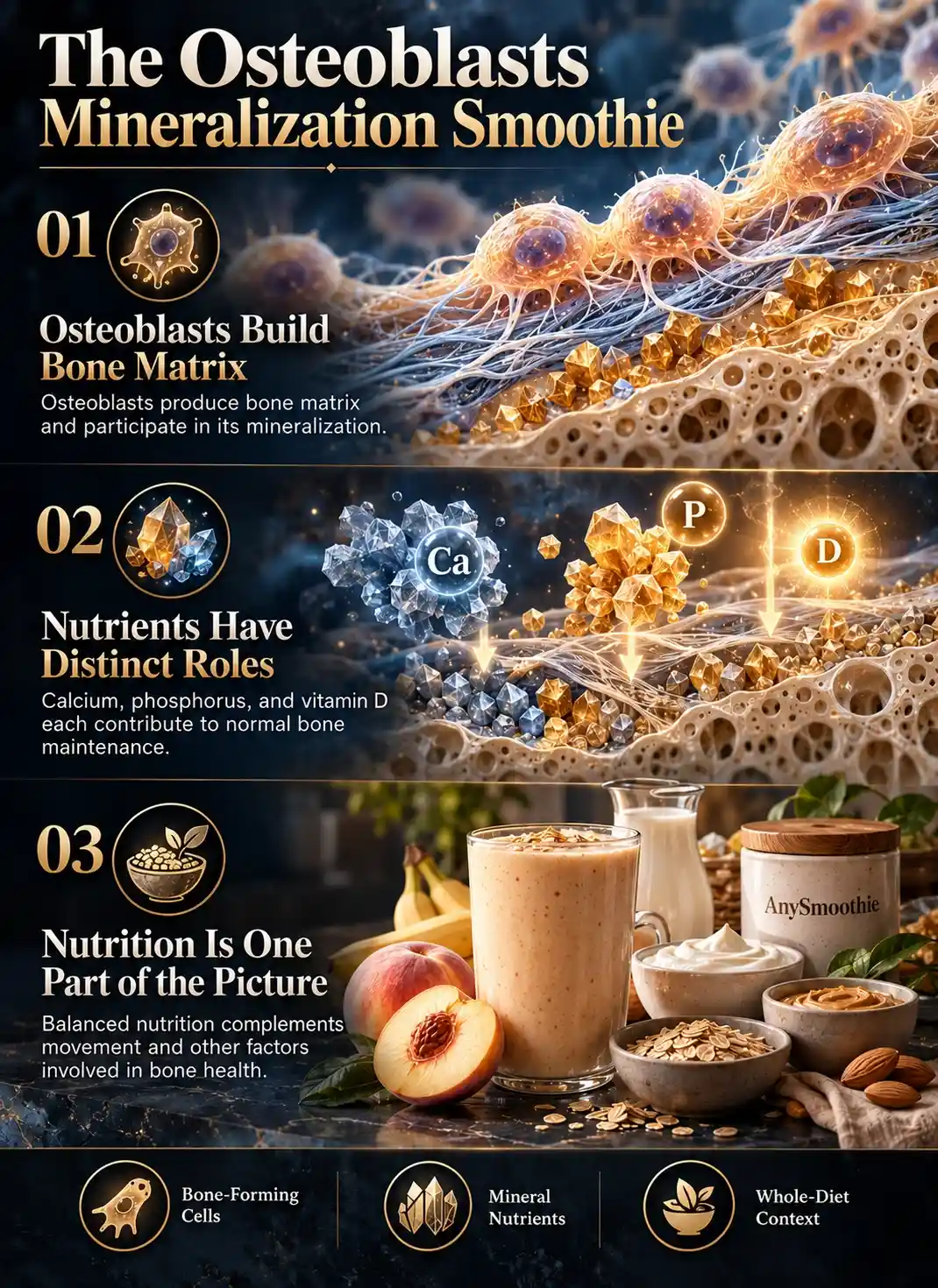
3 Smoothies Supporting Osteoblast Mineralization
Each recipe makes one serving. Blend until smooth, adding a little water if needed.
Berry yogurt smoothie with calcium and protein
Ingredients
- 3/4 cup plain low-fat yogurt
- 1/2 cup frozen berries
- 1/4 cup water
- 1 teaspoon chia seeds
Steps
Blend the yogurt, frozen berries, water, and chia seeds until smooth.
Yogurt contributes calcium and protein, while berries add flavor without requiring sweetened juice. A calcium-fortified yogurt alternative also works, although its protein content may differ. These ingredients contribute nutrients within a balanced eating pattern.
Estimated Nutrition per Serving
- Calories: ~175 kcal
- Protein: ~11 g
- Carbohydrates: ~24 g
- Fat: ~4 g
- Fiber: ~6 g
- Sugars: ~18 g
For a thicker, creamier smoothie, use just enough water to help the ingredients blend, then add a little more if needed to reach your preferred consistency.
Citrus, greens, and fortified milk smoothie
Ingredients
- 3/4 cup fortified 2% dairy milk
- One small peeled orange
- 1/2 cup chopped kale
Steps
Remove tough kale stems first. Blend the milk, orange, and kale until smooth.
The beverage supplies calcium and, when fortified, vitamin D. Kale contributes vitamin K. Check the nutrition label because fortification varies by product; the word “plant-based” alone doesn’t describe its nutrient content.
Estimated Nutrition per Serving
- Calories: ~140 kcal
- Protein: ~7 g
- Carbohydrates: ~21 g
- Fat: ~4 g
- Fiber: ~3 g
- Sugars: ~18 g
Tofu, banana, and tahini smoothie
Ingredients
- 1/2 cup calcium-set silken tofu
- One small banana
- 1 teaspoon tahini
- 1/2 cup water
Steps
Blend the tofu, banana, tahini, and water until creamy.
Tofu provides protein and can supply calcium, while tahini contributes some magnesium. Check the ingredient list for calcium sulfate or another calcium-containing coagulant. Tofu made with different coagulants can have substantially different calcium levels.
A quick label check is useful here: two silken tofu products can look similar but provide different amounts of calcium.
Estimated Nutrition per Serving
- Calories: ~180 kcal
- Protein: ~8 g
- Carbohydrates: ~26 g
- Fat: ~6 g
- Fiber: ~3 g
- Sugars: ~13 g
The nutrition estimates are approximate. They assume plain low-fat dairy yogurt and include chia seeds in the berry recipe, use fortified 2% dairy milk in the citrus recipe, and use soft tofu made with calcium sulfate in the tofu recipe. Different products and substitutions can change the values.
Use this comparison to choose a flavor and base.
| Smoothie | Key ingredients | Nutrients highlighted | Flavor | Simple swap |
|---|---|---|---|---|
| Berry yogurt | Yogurt, berries, chia | Calcium, protein | Tangy, fruity | Fortified soy yogurt |
| Citrus greens | Fortified milk, orange, kale | Calcium, vitamin D, vitamin K | Bright, grassy | Fortified soy beverage |
| Tofu banana | Calcium-set tofu, banana, tahini | Calcium, protein, magnesium | Creamy, nutty | Almond butter for tahini |
Swaps change the nutrient profile, so compare labels when choosing substitutes.
Make bone-supportive smoothies fit your routine
A smoothie is one option among many foods supplying calcium and vitamin D. Your usual meals and overall eating habits matter more than any single drink.
Keep portions suited to your appetite and the rest of your meal. Start with unsweetened bases and whole fruit; honey, syrups, and sweetened yogurt add sugar without being necessary for these recipes.
Read labels for calcium, vitamin D, protein, and added sugars. Shake fortified plant beverages as directed, since added minerals can settle.
Also account for allergies: these recipes may contain milk, soy, sesame, or nuts. Substitutions need to suit both your allergy needs and nutritional goals.
If you have dietary restrictions, kidney disease, or questions about supplements, ask a registered dietitian or another qualified health professional. If you take warfarin, discuss substantial changes in vitamin K intake with your clinician.
Conclusion: Put nutrient variety first
Smoothies can make it easier to include foods that supply nutrients used in normal bone physiology. Their contribution depends on the wider diet, product choices, and individual needs.
Keep variety central rather than expecting a particular ingredient to change osteoblast activity. Try one recipe, check the labels on its base ingredients, and choose a portion that fits alongside your meals.
🛡️ Safety Notes & Dietary Interactions
- Calcium and kidney considerations: These smoothies provide calcium-rich foods, but people with kidney disease or individualized mineral restrictions may need different amounts. Discuss regular high-calcium choices with a qualified clinician or dietitian.
- Vitamin K consistency: The citrus-kale smoothie supplies vitamin K, which matters particularly for people taking warfarin. Keep vitamin K intake reasonably consistent and discuss substantial dietary changes with the prescribing clinician.
- Allergen awareness: The recipes can contain dairy, soy, sesame, chia, almonds, or other nuts depending on the base and substitutions. Check labels carefully, especially for fortified alternatives and tahini.
- Product differences: Fortified beverages, yogurt, and calcium-set tofu do not all provide the same nutrient amounts. Check labels for calcium, vitamin D, protein, and the tofu’s calcium-containing coagulant rather than assuming equivalent products.
FAQs
Which smoothie provides the most direct combination of calcium and vitamin D?
The citrus, greens, and fortified milk smoothie specifically combines calcium with vitamin D when the milk is fortified, while kale contributes vitamin K. Check the milk label because fortification varies. The other recipes can provide calcium and protein but don’t necessarily contain meaningful vitamin D.
Why does the tofu recipe specify calcium-set tofu?
Calcium-set tofu can provide substantially more calcium than tofu made with other coagulants. The article recommends checking the ingredient list for calcium sulfate or another calcium-containing coagulant because two otherwise similar silken tofu products can have very different calcium levels.
Does drinking these smoothies directly increase osteoblast activity?
The article does not establish that any of these smoothies directly switches on or increases osteoblast activity. They provide nutrients involved in normal bone physiology, including calcium, protein, vitamin K, magnesium, and potentially vitamin D, as part of the wider dietary pattern.
Is the kale smoothie appropriate if I take warfarin?
It may be included, but the vitamin K content of kale makes consistency important for people taking warfarin. Rather than suddenly adding or removing large amounts of kale, discuss meaningful dietary changes with your prescribing clinician and follow their individualized guidance.
Can I use plant-based alternatives without changing the nutritional value?
Not automatically. Plant-based beverages and yogurts vary in calcium, vitamin D, and protein, while tofu calcium content depends on its coagulant. Choose fortified products when appropriate and compare nutrition labels because substitutions can materially change the nutrient profile.

Medical Disclaimer: AnySmoothie content is for educational purposes only and is not a substitute for professional medical advice. Consult a healthcare provider for personalized guidance. See our full Disclaimer & Terms of Use. AI Transparency: AnySmoothie may use AI to support content development. All content undergoes human editorial review for accuracy, clarity, and editorial quality. See our full AI Transparency.