

Finding time to eat during a demanding pharmacy shift can be harder than packing lunch. Smoothies for pharmacists offer a portable option, but they aren’t a substitute for every meal or a guaranteed fix for fatigue.
A useful blend combines protein, carbohydrates, and fiber, with portions that suit your appetite and schedule. Start with a simple ingredient formula, then choose among three recipes you can prepare at home, adjust to taste, and keep safely chilled until your break.
Choosing Ingredients for a Balanced Pharmacist Shift Smoothie
Start with a protein source, such as plain Greek yogurt, dairy milk, or unsweetened soy milk. Add carbohydrate-rich fruit or rolled oats, then enough liquid to blend. Peanut butter or chia seeds can contribute unsaturated fat, although neither is essential.
Carbohydrates break down into sugars that cells use for fuel. Meanwhile, protein supplies amino acids for tissue maintenance and other normal processes. Harvard’s guide to dietary protein explains protein’s roles in tissues, enzymes, and other body components.
Fiber affects digestion and how quickly nutrients become available for absorption. For example, soluble fiber in oats forms a gel in the digestive tract and can slow digestion. Blending whole fruit retains its fiber, although it changes the food’s texture and structure.
These ingredients support normal physiological systems; they don’t guarantee better concentration or resolve tiredness during a demanding shift.
Portions depend on your appetite, dietary needs, and other meals. A smaller blend may suit a snack break, while a larger one may work alongside toast or another food. During a long shift, plan additional food rather than expecting one cup to cover everything. For another workplace-focused approach to smoothie planning, see smoothies for busy office workers.
Also, plant drinks vary in protein, so choose one that fits the rest of your blend. For more ideas built around plant-based protein sources, see seed and grain plant based protein smoothie.
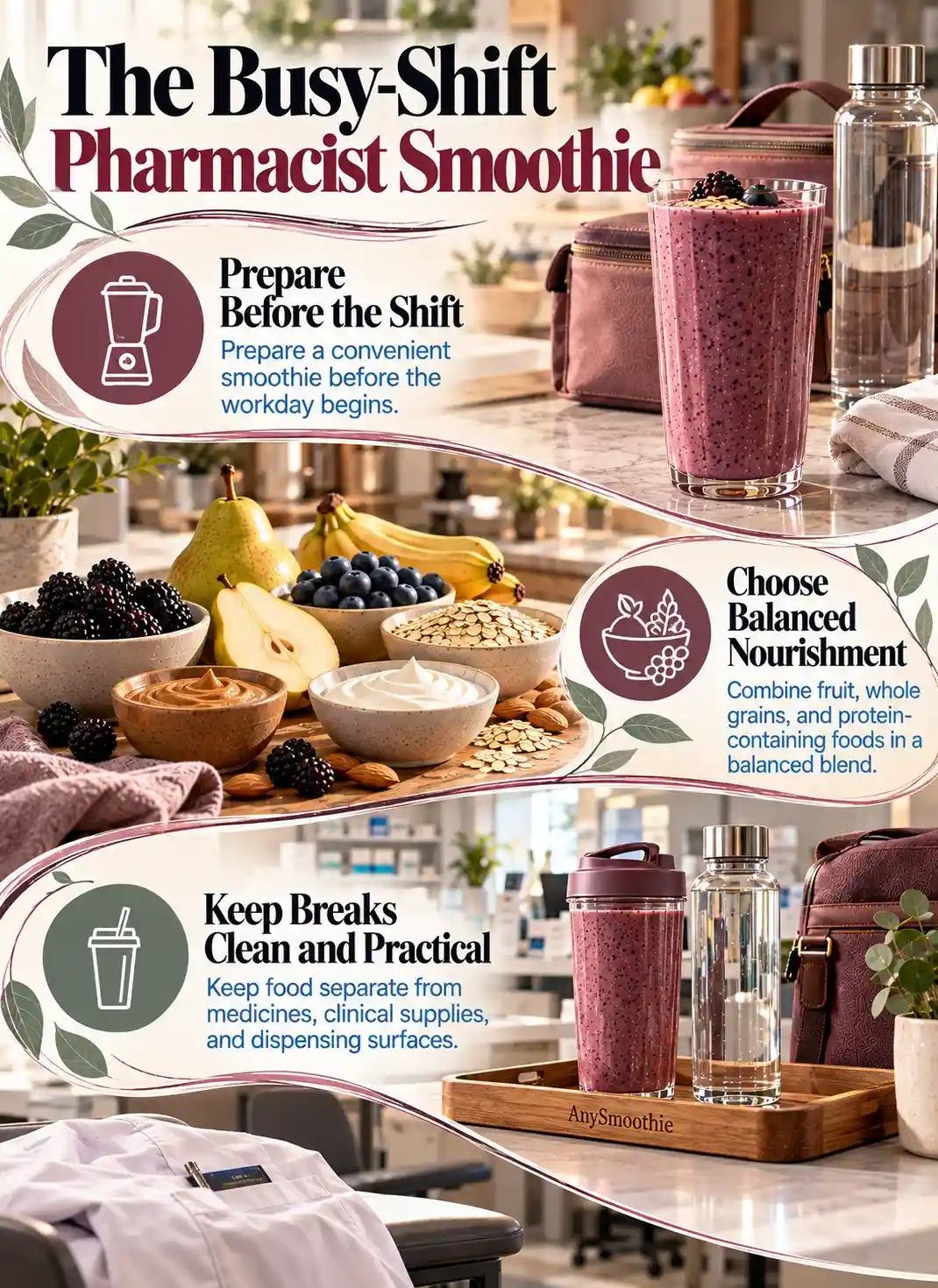
3 Smoothies for Pharmacists During Busy Shifts
Each recipe makes one serving. Blend until smooth, then transfer to a clean, leakproof cup and refrigerate promptly.
The nutrition estimates below use 2% dairy milk and plain nonfat Greek yogurt where specified. The banana-peanut butter estimate assumes dairy milk and excludes the optional oats. Different brands and plant-based alternatives will change the values.
Berry Oat Smoothie for a Steady, Filling Break
Ingredients
- 3/4 cup frozen mixed berries
- 1/4 cup rolled oats
- 3/4 cup plain Greek yogurt
- 1/2 cup milk
Steps
Blend the berries, oats, yogurt, and milk until the oats are finely broken down. Letting the oats soak in the milk first can soften the texture.
Berries and oats contribute carbohydrates and fiber, while yogurt and milk supply protein. For a dairy-free version, use unsweetened soy milk and a protein-rich soy yogurt. Add liquid one tablespoon at a time for a thinner drink. If it’s too tart, blend in a small piece of ripe banana.
Estimated Nutrition per Serving
- Calories: ~290 kcal
- Protein: ~24 g
- Carbohydrates: ~38 g
- Fat: ~4 g
- Fiber: ~9 g
- Sugars: ~19 g
Banana Peanut Butter Smoothie for a Quick Breakfast
Ingredients
- One medium banana
- One tablespoon peanut butter
- 3/4 cup milk or unsweetened soy milk
- Optional: two tablespoons rolled oats
Steps
Blend the banana, peanut butter, and milk or unsweetened soy milk until smooth. Add the optional oats if you’d like a thicker drink.
A frozen banana gives it a colder, creamier texture without extra ice.
Banana and oats provide carbohydrates, while peanut butter contributes unsaturated fat and some protein. Milk or soy milk adds more protein. Follow workplace allergy rules before bringing nut ingredients. Where appropriate, sunflower seed butter is a substitute. Thin with extra milk; a riper banana adds sweetness without syrup.
Estimated Nutrition per Serving
- Calories: ~290 kcal
- Protein: ~11 g
- Carbohydrates: ~39 g
- Fat: ~12 g
- Fiber: ~4 g
- Sugars: ~25 g
On rushed mornings, keeping a ripe banana and a small jar of peanut butter within reach can make breakfast feel a little less hectic.
Mango Spinach Smoothie for a Lighter Snack
Ingredients
- 3/4 cup frozen mango
- 1/2 cup loosely packed baby spinach
- 1/2 cup plain Greek yogurt
- 1/2 cup cold water
Steps
Blend the spinach with the water first, then add the mango and yogurt. Blend until smooth. Use milk instead of water for a creamier version.
Mango contributes carbohydrates, spinach adds some fiber, and yogurt supplies protein. These ingredients contribute nutrients without promising an energy or focus boost. For a dairy-free version, choose protein-rich soy yogurt. Add water gradually to thin it, or use riper mango for a sweeter blend.
Estimated Nutrition per Serving
- Calories: ~145 kcal
- Protein: ~13 g
- Carbohydrates: ~23 g
- Fat: ~1 g
- Fiber: ~2 g
- Sugars: ~21 g
Here’s how the three options compare.
| Smoothie | Main ingredients | Protein source | Carbohydrate and fiber sources | Best fit for a shift |
|---|---|---|---|---|
| Berry oat | Berries, oats, yogurt, milk | Greek yogurt and milk | Berries and oats | A filling break |
| Banana peanut butter | Banana, peanut butter, milk, optional oats | Milk and peanut butter | Banana and optional oats | Breakfast alongside other food |
| Mango spinach | Mango, spinach, yogurt, water | Greek yogurt | Mango and spinach | A lighter snack |
Choose according to your appetite and the food you’ve already packed.
Prep Smoothies Safely Around a Pharmacist’s Schedule
Batch-prep ingredients rather than leaving several finished smoothies in the refrigerator. Portion fruit and washed spinach into freezer containers. Keep measured oats, chia seeds, and other dry ingredients separate until blending.
For a practical routine, blend the night before or the morning of your shift. Refrigerate promptly at 40°F or below. During your commute, use an insulated bag with frozen cold packs, then move the cup into a refrigerator when available. For further guidance on making smoothies ahead while managing storage and quality, see smoothie storage and micronutrient stability.
One small practical check before leaving home is to test the cup’s seal over the sink; even a leakproof design depends on closing the lid properly.
USDA’s packed-lunch safety guidance limits perishable food to two hours at room temperature, or one hour above 90°F. Count travel and counter time together. Discard a smoothie that exceeds those limits; smell alone can’t establish safety.
Wash reusable cups, lids, seals, and blender parts after each use. Follow the manufacturer’s cleaning directions, especially around gaskets where residue collects. Also, rinse fresh produce under running water before preparation.
Smoothies are food, not medication vehicles. Don’t blend medicines into them. Follow medication-specific labeling for food-related timing and interactions. The FDA’s drug-interaction guidance explains why food and beverages can matter. Ask a pharmacist or prescriber when individual instructions are unclear.
For another shift-focused example of portable smoothie planning, see long-shift smoothies for security guards.
Conclusion: Make Your Next Break Easier
A practical smoothie combines a protein source with carbohydrate-rich ingredients and fiber. Adjust the portion to your appetite, and pack other food when your shift calls for more.
Try one recipe, then change its thickness or sweetness to suit your taste. Plan cold storage before leaving home so your drink is ready when your break arrives.
🛡️ Safety Notes & Dietary Interactions
- Medication separation: Smoothies should not be used to mix or disguise medicines. Food and beverages can affect some medications, so follow medication-specific instructions and ask a pharmacist or prescriber when timing is unclear.
- Cold-chain safety: Milk, yogurt, spinach, and prepared fruit are perishable. Keep finished smoothies at 40°F or below, use insulated transport with frozen packs, and discard drinks kept beyond recommended room-temperature limits.
- Allergen awareness: The recipes include dairy, peanut butter, soy, oats, and potentially seed-butter substitutions. Check labels and workplace allergy policies carefully, particularly in shared pharmacy break areas or kitchens.
- Shift-day digestion: Berry-oat provides substantial fiber, while peanut butter adds more fat. If you’re not accustomed to these ingredients, use a familiar portion rather than testing a heavier blend during a busy shift.
FAQs
Which smoothie is best for a longer pharmacy shift?
The berry oat smoothie is the most substantial option, providing about 290 kcal, 24 g of protein, and 9 g of fiber per serving. It may suit a filling break, although one smoothie isn’t necessarily enough food for an entire demanding shift.
Can I drink a smoothie during a short pharmacy break?
Yes, provided your workplace permits food and drinks in the designated break area. The mango spinach smoothie is the lightest option at about 145 kcal and may be easier to finish quickly than the thicker, more substantial berry oat blend.
How should I keep a smoothie cold during my commute?
Keep the finished smoothie refrigerated until departure, then place it in an insulated bag with frozen cold packs. Move it into a refrigerator when you reach work. Count commute and counter time together rather than assuming refrigeration later makes earlier warm storage safe.
Is the banana peanut butter smoothie suitable if my pharmacy has allergy concerns?
It may not be. Peanut butter can create an allergy concern in shared workplaces, depending on your employer’s rules and colleagues’ needs. When appropriate, sunflower seed butter can provide an alternative, but check the product label and workplace policy before using it.
Should I put medication into my smoothie?
No. The article specifically advises treating smoothies as food rather than medication vehicles. Don’t blend medicines into the drink unless medication-specific instructions explicitly support that method. Food and beverages can affect some medications, so follow the medicine’s labeling and ask a pharmacist or prescriber when unsure.

Medical Disclaimer: AnySmoothie content is for educational purposes only and is not a substitute for professional medical advice. Consult a healthcare provider for personalized guidance. See our full Disclaimer & Terms of Use. AI Transparency: AnySmoothie may use AI to support content development. All content undergoes human editorial review for accuracy, clarity, and editorial quality. See our full AI Transparency.