
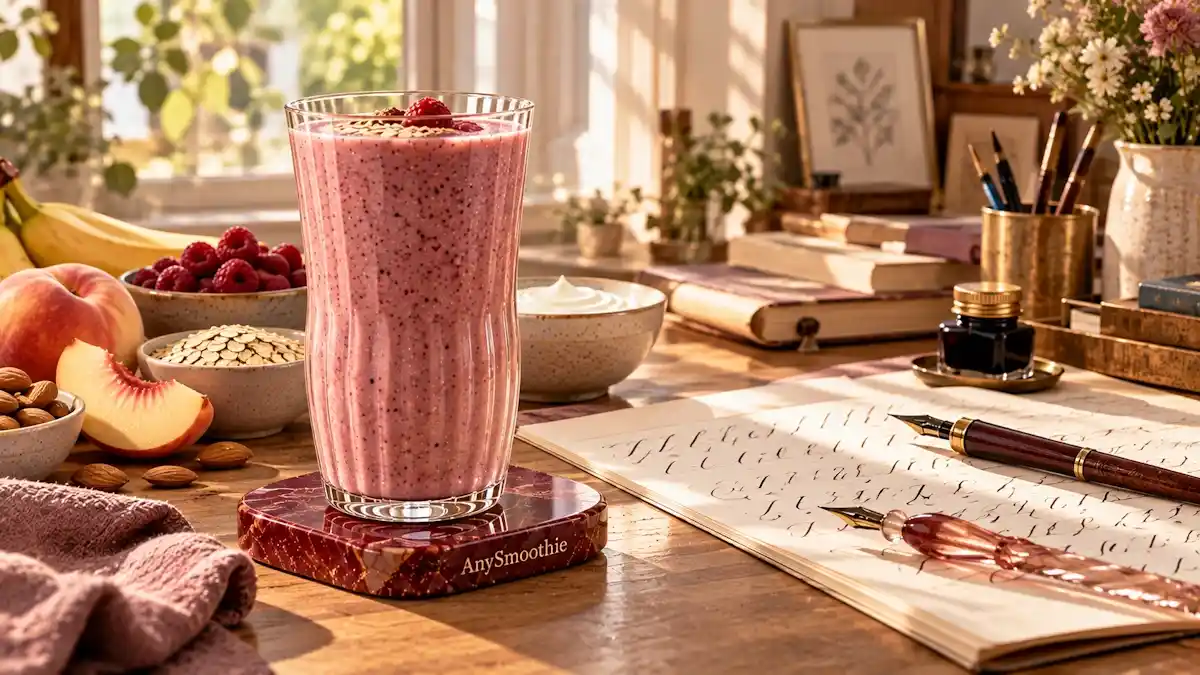
A smoothie makes a convenient snack for a calligraphy break, provided you keep it well away from your paper. The most practical smoothies for calligraphy sessions combine ingredients you enjoy with a texture that’s easy to sip through a straw.
You don’t need specialty powders or a complicated recipe to make a satisfying drink. Start with fruit or vegetables, add a liquid, and consider an ingredient that contributes protein, fat, or fiber.
A simple blending formula and a separate drink station make this pairing easier to manage. The same separation can be useful in other hands-on studios; see smoothies for pottery studio sessions for another craft-focused example.
How to build smoothies for calligraphy sessions
Start with roughly one cup of fruit or vegetables and three-quarters of a cup of liquid. Then add yogurt, oats, or nut butter according to your appetite and preferences.
Digestive enzymes break down sugars and starches into simpler sugars, including glucose. As MedlinePlus explains about carbohydrates, glucose supplies energy for the body’s cells. Fiber behaves differently: digestive enzymes don’t fully break it down, and some types absorb water and slow digestion. Protein and fat can also slow stomach emptying.
Choose ingredients that fit your session
Banana adds sweetness and body, while berries bring tartness. A small handful of spinach blends easily without making the drink especially thick.
Milk and unsweetened soy milk contribute protein. Yogurt creates a creamier texture, oats add fiber, and nut butter contributes fat and protein.
Choose ingredients around your dietary needs and allergies. Dairy, soy, and nuts aren’t suitable for everyone, and no single combination suits every reader. If you’re planning a longer craft session, smoothies for long sewing sessions offers another example of adapting a drink to a hands-on activity.
Adjust sweetness and thickness
Blend the fruit and liquid before adding sweeteners. Ripe banana or mango may provide all the sweetness you want.
For easier sipping, add liquid one tablespoon at a time. Frozen fruit makes a thicker drink, so avoid adding ice automatically. Oats also absorb liquid as the smoothie stands.
Test the smoothie through your straw before taking it to the studio; a spoon-thick blend is awkward to drink during a short break.
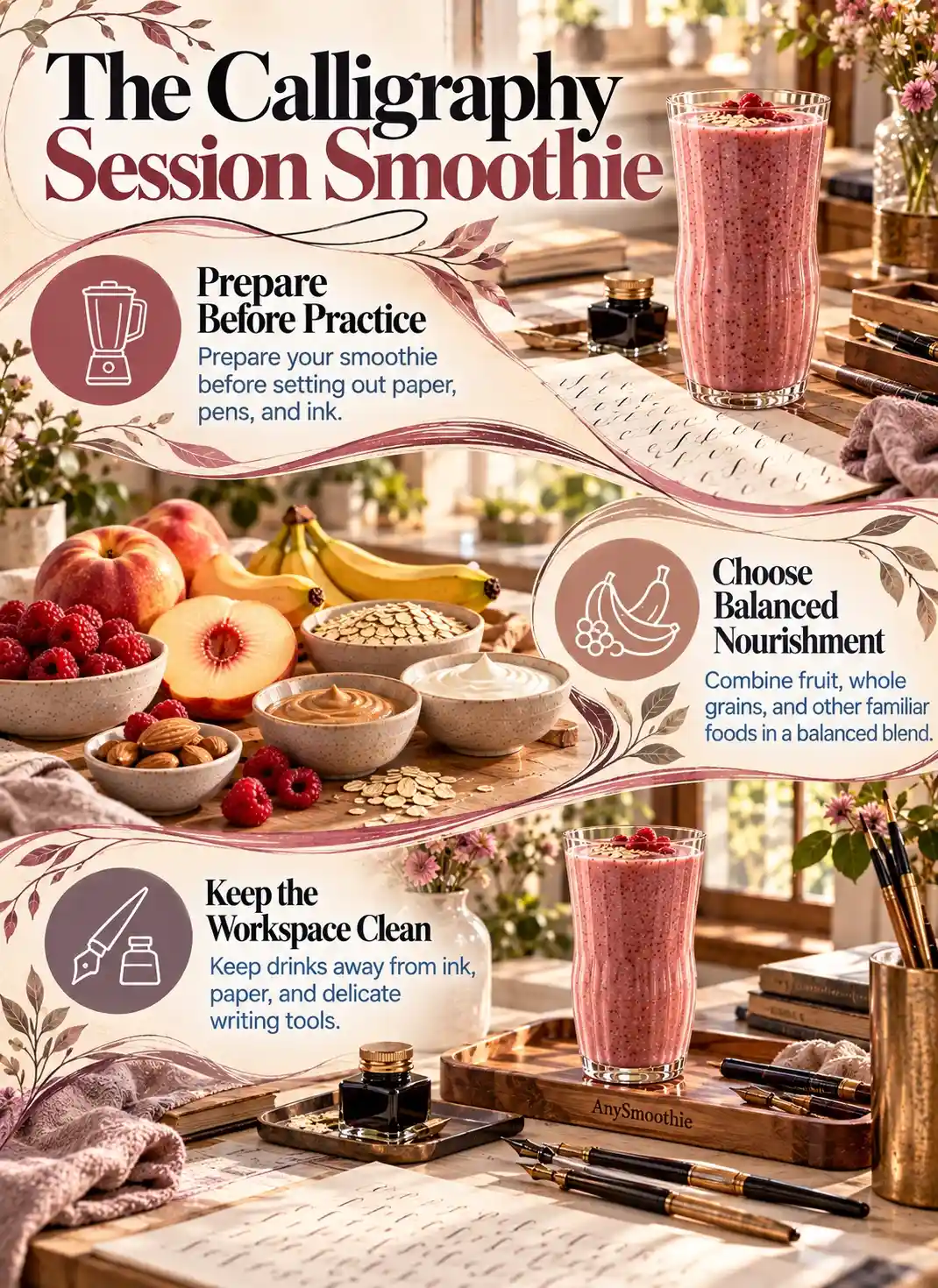
3 Smoothies for Calligraphy Sessions
Each recipe makes one serving, with approximate preparation times below. Milk, soy milk, and yogurt supply protein, which digestion breaks into amino acid building blocks for normal tissue maintenance.
Berry-oat blend for a longer practice block
Ingredients
- 3/4 cup frozen berries
- Half a banana
- 2 tablespoons rolled oats
- 3/4 cup milk or unsweetened plant-based milk
Steps
Blend the oats with the milk first, then add the fruit and blend until smooth. Thorough blending reduces the oats’ grainy texture. If the drink thickens while you practice, stir in a splash of milk before sipping.
Estimated Nutrition per Serving
- Calories: ~240 kcal
- Protein: ~9 g
- Carbohydrates: ~43 g
- Fat: ~5 g
- Fiber: ~9 g
- Sugars: ~24 g
Mango-yogurt blend for a quick break
Ingredients
- 3/4 cup frozen mango
- 1/2 cup plain yogurt
- 1/2 cup milk
Steps
Blend the mango, yogurt, and milk until creamy. Add another tablespoon or two of liquid if the blades struggle.
For a dairy-free version, use plain soy yogurt and unsweetened soy milk, provided soy suits your dietary needs. Taste before adding anything sweet, since ripe mango already supplies sweetness.
Estimated Nutrition per Serving
- Calories: ~210 kcal
- Protein: ~9 g
- Carbohydrates: ~31 g
- Fat: ~7 g
- Fiber: ~2 g
- Sugars: ~29 g
Green banana blend with a mild flavor
Ingredients
- One ripe banana
- 1/4 cup loosely packed spinach
- 1 tablespoon nut butter
- 3/4 cup milk or your chosen plant-based alternative
Steps
Combine the banana, spinach, nut butter, and milk. Blend until no visible spinach pieces remain. Add a little more liquid if needed.
Banana softens the greens’ flavor, while nut butter adds richness. The nut butter is optional; omit it for nut allergies and use clean equipment to avoid cross-contact. If you prefer a nut-butter recipe without banana, see peanut butter smoothie without banana.
Estimated Nutrition per Serving
- Calories: ~290 kcal
- Protein: ~11 g
- Carbohydrates: ~40 g
- Fat: ~12 g
- Fiber: ~4 g
- Sugars: ~25 g
Values are estimates, not laboratory measurements, and will vary with the type of milk, yogurt, and nut butter used.
The nutrition estimates below assume 2% dairy milk, plain dairy yogurt, and peanut butter where specified. Plant-based alternatives and different brands can change the values.
| Smoothie | Key ingredients | Texture | Prep time | Best time to sip |
|---|---|---|---|---|
| Berry-oat | Berries, banana, oats, milk | Thick, lightly textured | 5 minutes | Mid-session break |
| Mango-yogurt | Mango, yogurt, milk | Creamy | 5 minutes | Quick lettering break |
| Green banana | Banana, spinach, nut butter | Smooth, adjustable | 5 minutes | Before practice |
All three can be thinned with extra liquid for easier sipping.
Keep your smoothie and calligraphy supplies safely apart
A drink belongs outside the area where you move your writing hand, turn paper, or refill ink. Sip during planned breaks rather than while forming letters. The same practical concern applies to other precision-focused workspaces; smoothies for tattoo artists provides a related example of keeping drinks separate from specialist equipment.
Set up a spill-resistant drink station
Use a lidded cup with a straw, preferably on a separate side table. A lid reduces splashes, but placement still matters.
Before opening your notebook or laying out practice sheets:
- Set the cup on a stable, level surface away from table edges.
- Keep it beyond your elbow’s reach and away from ink bottles.
- Use a coaster or tray to catch condensation and drips.
Berries and other colorful ingredients can stain paper and surfaces. If a spill happens, move dry supplies away first, then blot and clean promptly. Dry your hands before handling paper, nibs, or brush pens again.
A small side table with a lidded cup and coaster creates a clear boundary between your drink and your writing area, especially when you’re working with fresh ink.
Prep ahead without sacrificing texture
Measure fruit and oats beforehand, but blend shortly before your session when possible. Wash fresh produce before preparation, and keep perishable ingredients refrigerated until needed.
If you blend ahead, refrigerate the smoothie promptly in a covered container. The USDA’s leftovers and food safety guidance sets a two-hour limit at room temperature, or one hour above 90°F.
Follow storage directions for milk, yogurt, and other perishable ingredients. Before drinking, shake the closed container or stir the smoothie, since separation is normal. Add a little liquid if oats or frozen fruit have made it too thick.
Conclusion: Make Your Lettering Break Easy to Enjoy
A useful smoothie starts with produce and liquid, plus optional yogurt, oats, or nut butter. Choose the berry, mango, or green banana recipe according to your taste, then adjust its thickness for comfortable sipping.
Keep paper protection part of the routine: use a lidded cup, place it safely away, and drink during breaks. The pairing stays simple when your snack fits your preferences and your workspace stays dry.
🛡️ Safety Notes & Dietary Interactions
- Workspace separation: Keep smoothies outside the calligraphy area, especially around ink, nibs, brush pens, and paper. Use a stable lidded cup and wash or dry hands before resuming lettering.
- Food safety: Milk, yogurt, plant-based alternatives, and prepared fruit can be perishable. Refrigerate smoothies promptly and use appropriate cold storage during longer sessions rather than relying on room temperature.
- Allergen awareness: The recipes may contain dairy, soy, peanuts, tree nuts, or oats. Check labels carefully, particularly when using plant-based substitutions, and prevent nut cross-contact with shared preparation equipment.
- Texture and digestion: Oats, frozen berries, banana, and nut butter can make smoothies thick or filling. Adjust liquid gradually and use familiar portions if drinking during a short lettering break.
FAQs
Which smoothie works best for a longer calligraphy session?
The berry-oat blend is the most substantial of the three, with about 240 kcal and 9 g of fiber per serving. Its combination of berries, banana, oats, and milk can provide a filling break without requiring a complicated preparation routine.
How can I prevent a smoothie from becoming too thick while I practice?
Oats and frozen fruit continue affecting texture as the smoothie stands. Blend the oats with milk first, then add the remaining ingredients. If the drink thickens during your session, add a small splash of milk or another suitable liquid before sipping.
Is a straw necessary for drinking a smoothie during calligraphy?
A straw isn’t required, but it can make sipping from a lidded cup easier while keeping the opening away from your hands and writing materials. More importantly, drink during a planned break and keep the cup on a separate, stable surface away from paper and ink.
Can I make these smoothies dairy-free?
Yes. The article specifically suggests plain soy yogurt and unsweetened soy milk for the mango-yogurt blend, provided soy suits your dietary needs. Other plant-based products can also work, but their protein, sweetness, and allergen profiles vary, so check the labels rather than assuming they are equivalent.
How long can a prepared smoothie stay at room temperature?
For the perishable ingredients used here, the article follows USDA guidance of up to two hours at room temperature, or one hour when temperatures exceed 90°F. If your session will last longer, keep the smoothie properly chilled and return it to refrigeration when appropriate.

Medical Disclaimer: AnySmoothie content is for educational purposes only and is not a substitute for professional medical advice. Consult a healthcare provider for personalized guidance. See our full Disclaimer & Terms of Use. AI Transparency: AnySmoothie may use AI to support content development. All content undergoes human editorial review for accuracy, clarity, and editorial quality. See our full AI Transparency.