
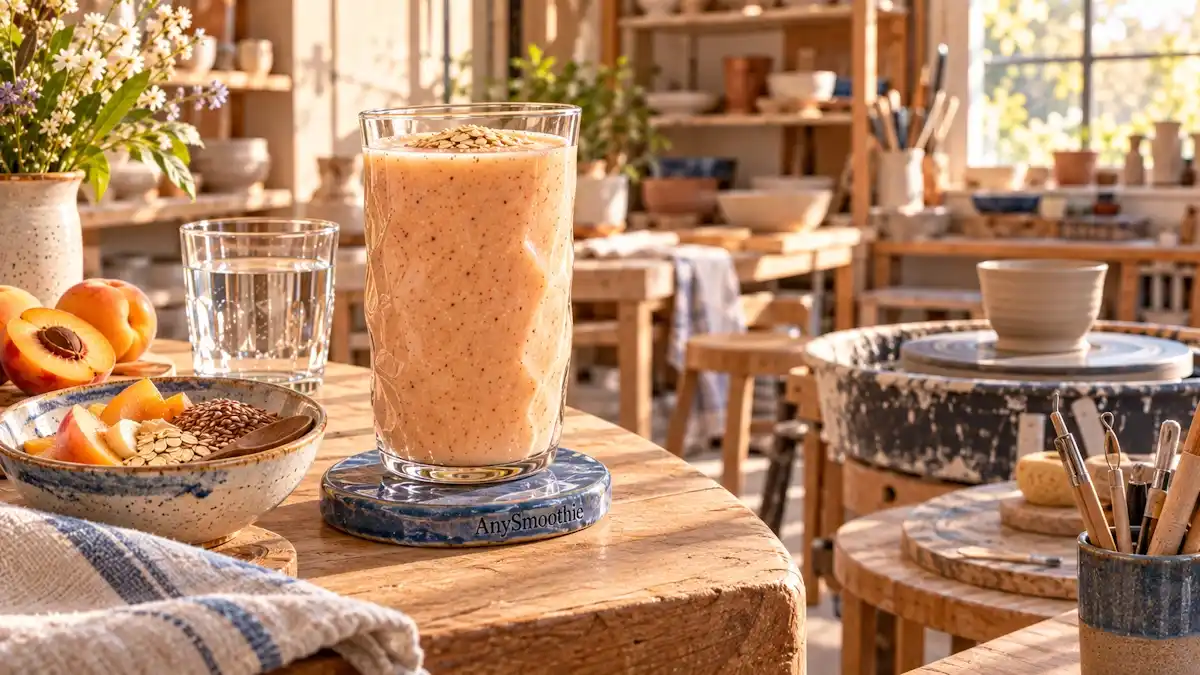
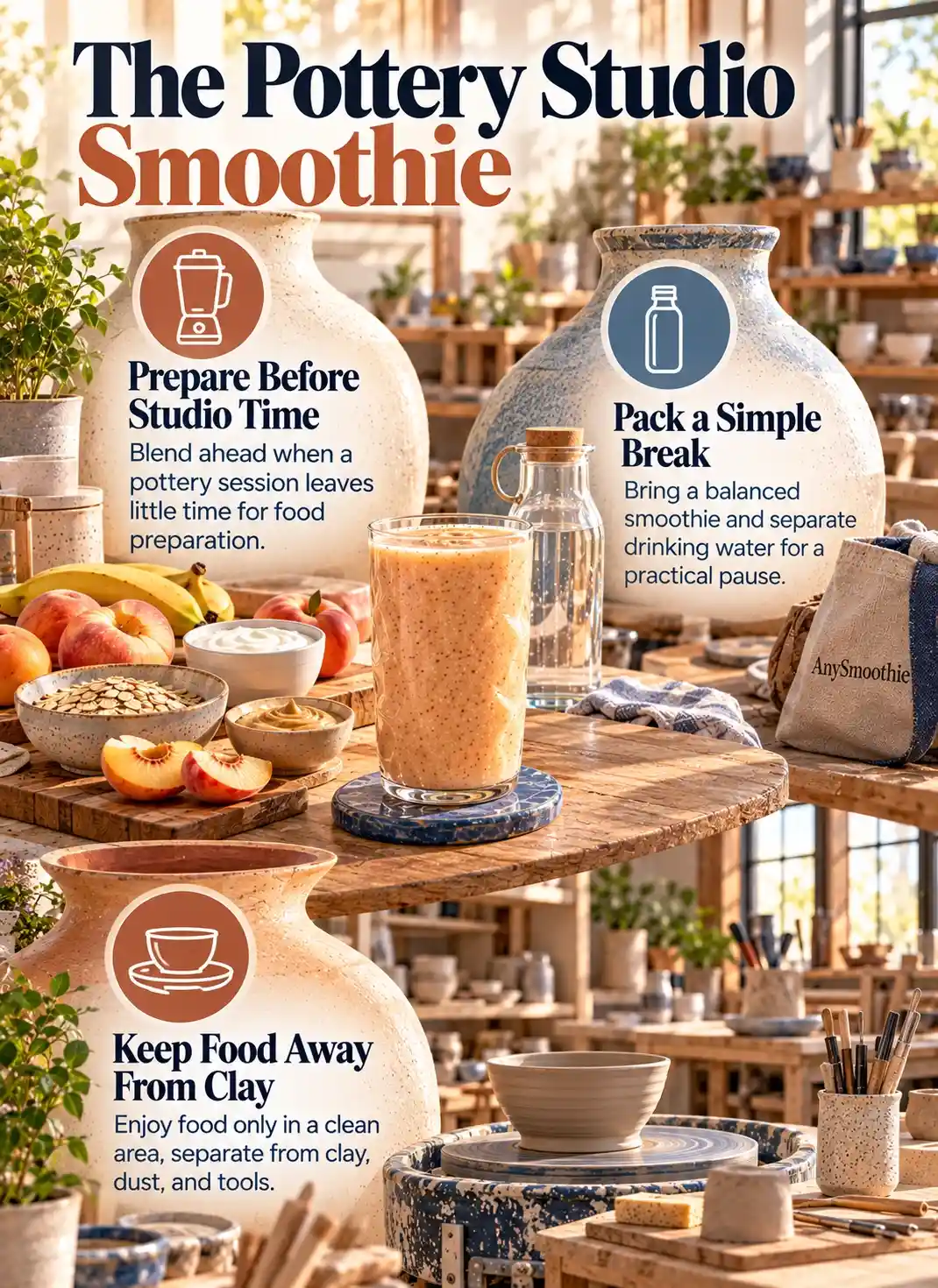
Clay-covered hands make even a quick snack awkward when you’re halfway through shaping a bowl. Smoothies for pottery studio sessions offer a practical option: blend ahead, pack a sealed cup, and drink during a proper break.
The most useful recipe suits your taste and stays separate from clay, glazes, and tools. A clean break area matters as much as a leakproof lid.
Start with one of these three blends, then adjust the texture and packing routine to fit your next studio visit.
Choose a smoothie that fits your pottery session
Match smoothies for pottery studio sessions to your break schedule and preferences. A thicker drink may suit a longer visit, while a lighter blend can be easier to sip during a short pause.
Adjust ingredients for fullness, taste, and dietary needs
Oats, yogurt, and nut butter make a blend thicker. Water or extra milk alternative makes it more pourable. Adjust gradually so you don’t dilute the fruit flavor.
Fruit and oats provide carbohydrates, which digestion breaks into simple sugars. Yogurt provides protein, which digestion breaks into amino acids. These processes support normal physiological systems; they don’t guarantee better energy or focus.
Check labels for milk, peanut, tree nut, soy, or other allergens relevant to you. Plant-based products vary in ingredients and sweetness, so don’t assume every carton is interchangeable. Choose unsweetened versions when you prefer less sweetness, and follow your studio’s rules about shared eating areas.
Make studio-friendly smoothies easy to carry
Use a leakproof cup with a secure lid, then carry it upright in an insulated bag with an ice pack. Test the lid at home before trusting it beside your belongings.
If the drink will sit through a session, use a refrigerator or keep it properly chilled. USDA’s cold-food safety guidance says not to leave perishable food unrefrigerated for more than two hours.
A sealed lid prevents spills, but it doesn’t replace cold storage or make a clay-covered cup clean.
Take a real break and wash your hands before handling the drinking opening. Keep beverages away from clay, glazes, tools, and work surfaces. Follow studio rules if food and drinks are restricted to a separate room.
3 Smoothies for Pottery Studio Sessions
Each recipe makes one serving. Blend at home, taste before packing, and leave enough room in your cup to close the lid without spilling.
Blend a banana-oat smoothie before a long session
Ingredients
- 1 medium banana
- 1/3 cup rolled oats
- 3/4 cup 2% dairy milk
- Optional peanut or almond butter for flavor
Steps
First, blend the oats with the milk until the mixture looks smooth. Add the banana and blend again until no oat flakes remain.
This is the thicker, more filling option. Chill it before packing, and add a splash of milk if it thickens more than you’d like.
Estimated Nutrition per Serving
- Calories: ~300 kcal
- Protein: ~12 g
- Carbohydrates: ~51 g
- Fat: ~5 g
- Fiber: ~5 g
- Sugars: ~20 g
If I were preparing this for a long studio session, I’d make it slightly thinner than usual so it stays easy to drink after chilling.
Pack a berry-yogurt smoothie for a quick break
Ingredients
- 1 cup mixed berries, fresh or frozen
- 1/2 cup plain low-fat yogurt
- 1/2 cup 2% dairy milk
- Optional sweetener to taste
Steps
Pour a little milk into the blender, add yogurt and berries, then blend until smooth. Add more liquid gradually until it pours easily. Taste before adding any sweetener.
Blueberries work well in berry and yogurt blends, while raspberries give a sharper flavor. For a dairy-free version, use plain plant-based yogurt and your preferred milk alternative.
Estimated Nutrition per Serving
- Calories: ~205 kcal
- Protein: ~10 g
- Carbohydrates: ~31 g
- Fat: ~4 g
- Fiber: ~5 g
- Sugars: ~22 g
Try mango and spinach for a bright, mild blend
Ingredients
- 1 cup mango
- 1 small handful spinach
- 1/2 cup unsweetened almond milk
- Additional water as needed
Steps
Add the liquid first, followed by spinach and mango. Blend until the leaves disappear into the mixture, adding liquid as needed.
For a thicker texture, include banana or plain yogurt. Frozen mango avoids peeling and cutting on a busy morning. If you’re new to green smoothies, keep the spinach portion small.
Estimated Nutrition per Serving
- Calories: ~125 kcal
- Protein: ~3 g
- Carbohydrates: ~27 g
- Fat: ~3 g
- Fiber: ~4 g
- Sugars: ~23 g
Compare the blends before you pack
The recipes differ mainly in thickness, sweetness, and preparation. These prep times are estimates for one serving with ingredients ready; chilling and washing the blender take additional time.
| Smoothie | Key ingredients | Flavor | Prep time | Best studio-use feature |
|---|---|---|---|---|
| Banana-oat | Banana, rolled oats, milk | Mild, creamy, optionally nutty | About 5 minutes | Thicker option for a planned break |
| Berry-yogurt | Berries, plain yogurt, milk | Fruity and tangy | About 5 minutes | Frozen berries need little preparation |
| Mango-spinach | Mango, spinach, water or milk alternative | Sweet with a mild green note | About 5 minutes | Easy to adjust for a lighter texture |
Choose banana-oat when you want something substantial, berry-yogurt when you prefer tartness, or mango-spinach when you want a brighter fruit flavor.
You can also blend the evening before. Follow USDA refrigeration guidance and keep the covered drink at 40°F or below. In the morning, shake or stir it before packing, since some separation can occur.
Conclusion: Prepare one blend for your next studio visit
Banana-oat offers a thicker option, berry-yogurt brings tart fruit flavor, and mango-spinach keeps the greens mild. Choose the blend that fits your taste and the break you expect to take.
Before your next pottery session, prepare one recipe and pack it chilled in a clean, sealed cup. Then enjoy it away from your work area, without balancing an open drink beside the piece you’re making.
🛡️ Safety Notes & Dietary Interactions
- Studio hygiene: Keep smoothies away from clay, glazes, tools, and work surfaces. Wash hands thoroughly before touching the cup opening, especially after handling materials.
- Cold storage: Milk, yogurt, and cut fruit are perishable. Keep prepared smoothies at 40°F or below, using refrigeration or an insulated bag with an ice pack.
- Allergen awareness: Banana-oat may include peanut or almond butter, while berry-yogurt and mango-spinach may contain dairy or almond ingredients. Check labels and studio rules carefully.
- Texture and fullness: Oats, yogurt, and nut butter can make smoothies thick and substantial. Adjust liquid gradually, particularly if you plan to drink during a short studio break.
FAQs
How should I drink a smoothie safely during a pottery session?
Take the smoothie only during a proper break in a clean area designated for eating and drinking. Keep it separate from clay, glazes, tools, and unfinished pottery. Wash your hands before opening the cup, and avoid setting the lid or drinking opening onto potentially contaminated studio surfaces.
Which of the three smoothies is easiest for a short pottery break?
The berry-yogurt smoothie is the most straightforward choice when you want a relatively light, pourable drink. Its berries, yogurt, and milk can be blended to a thinner consistency by gradually adding liquid. This makes it easier to sip without spending as much time adjusting a thicker mixture during your break.
Can I prepare these smoothies the night before pottery class?
Yes, provided the smoothie is covered and refrigerated promptly. Keep it at 40°F or below until you leave, then transport it in an insulated bag with an ice pack. Oat-based smoothies may thicken overnight, while berry and mango blends can separate slightly, so shake or stir before drinking.
What should I use if I cannot have dairy or nuts?
For dairy-free preparation, the article specifically suggests plain plant-based yogurt and a preferred milk alternative for the berry blend. Almond milk in the mango-spinach recipe can also be replaced with another suitable milk alternative. Check labels carefully, particularly for peanut, tree nut, soy, and other allergens relevant to you.
Which smoothie works best for a longer pottery studio session?
The banana-oat smoothie is the most substantial of the three, with oats, banana, and milk providing a thicker blend. If it becomes too dense after chilling, add a little milk before packing. If you use peanut or almond butter, consider your own dietary needs and the studio’s shared-space policies.

Medical Disclaimer: AnySmoothie content is for educational purposes only and is not a substitute for professional medical advice. Consult a healthcare provider for personalized guidance. See our full Disclaimer & Terms of Use. AI Transparency: AnySmoothie may use AI to support content development. All content undergoes human editorial review for accuracy, clarity, and editorial quality. See our full AI Transparency.